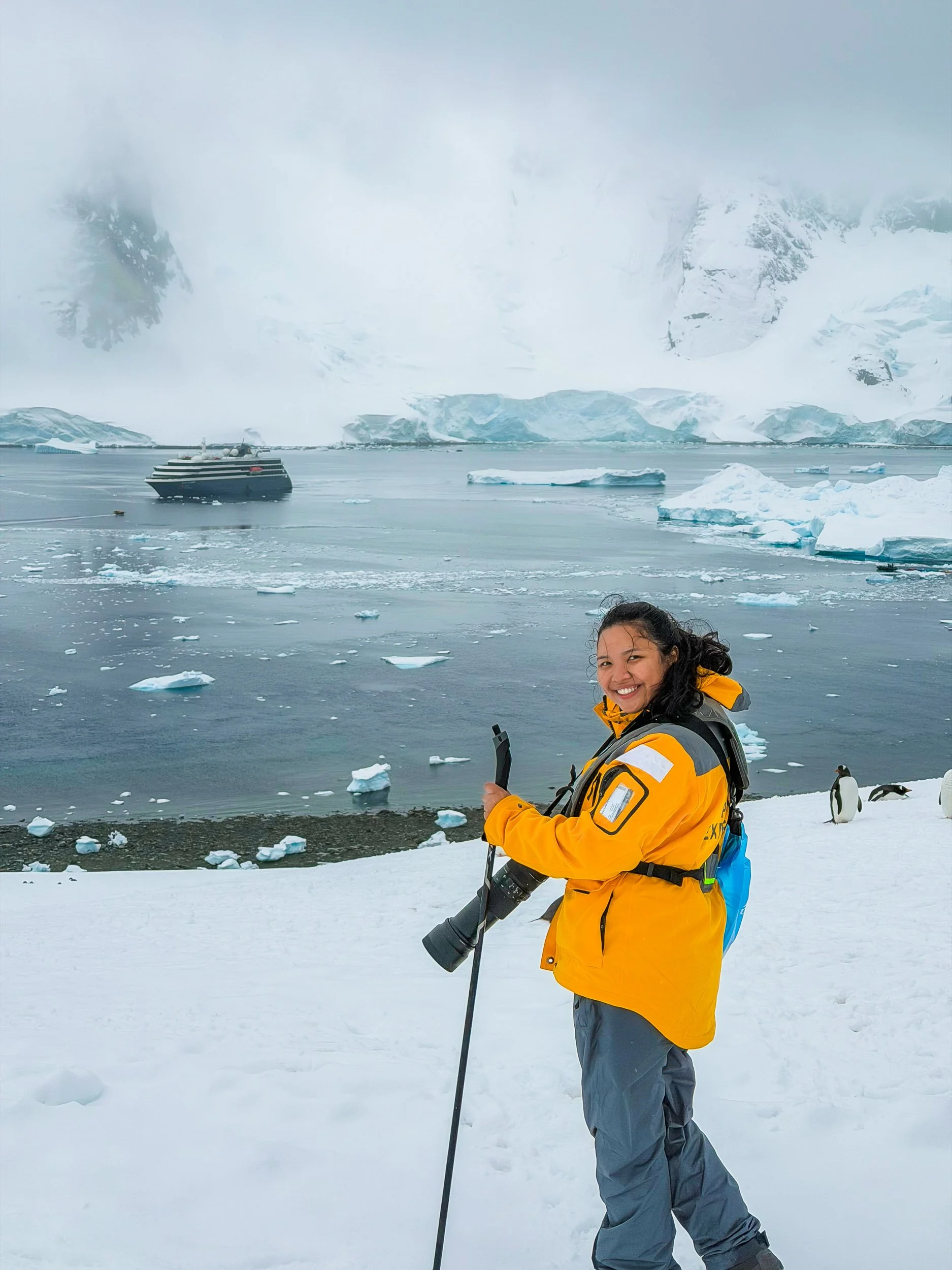
Memories of Antarctica: A Voyage That Transcended Dreams
Oh, dear Antarctica, where do I even begin?
In elementary school, all we were taught about Antarctica was that it is one of the seven continents, that it’s located at the bottom of the Earth, that it’s covered in snow and ice, and that it’s uninhabited by humans. It was a place so impossible to reach that I didn’t feel like it was even real. It felt like the stuff myths and legends were made of.
Which is why, never in my wildest imagination, did I think that I would someday be able to set foot in one of the remotest parts of our world.
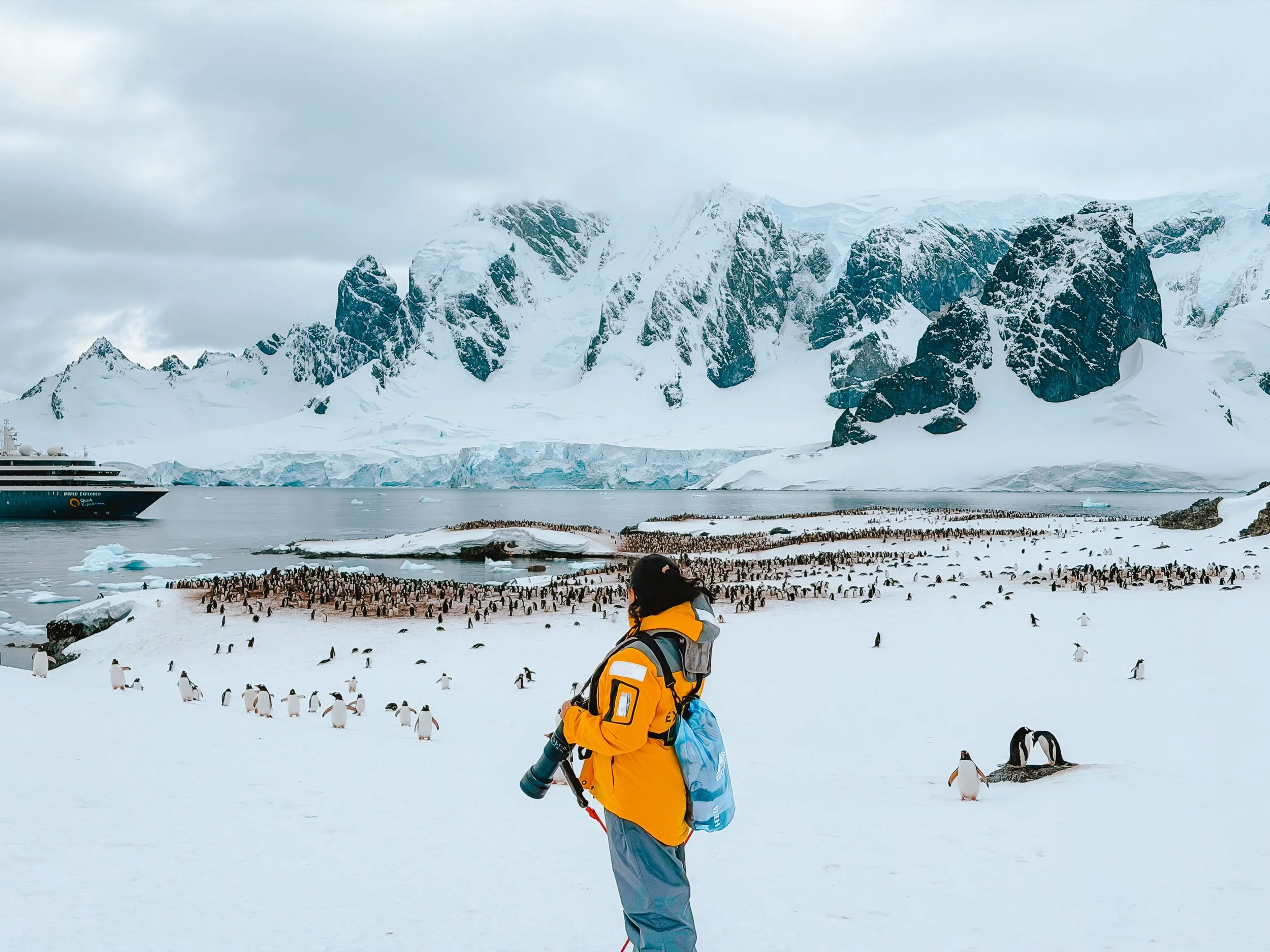
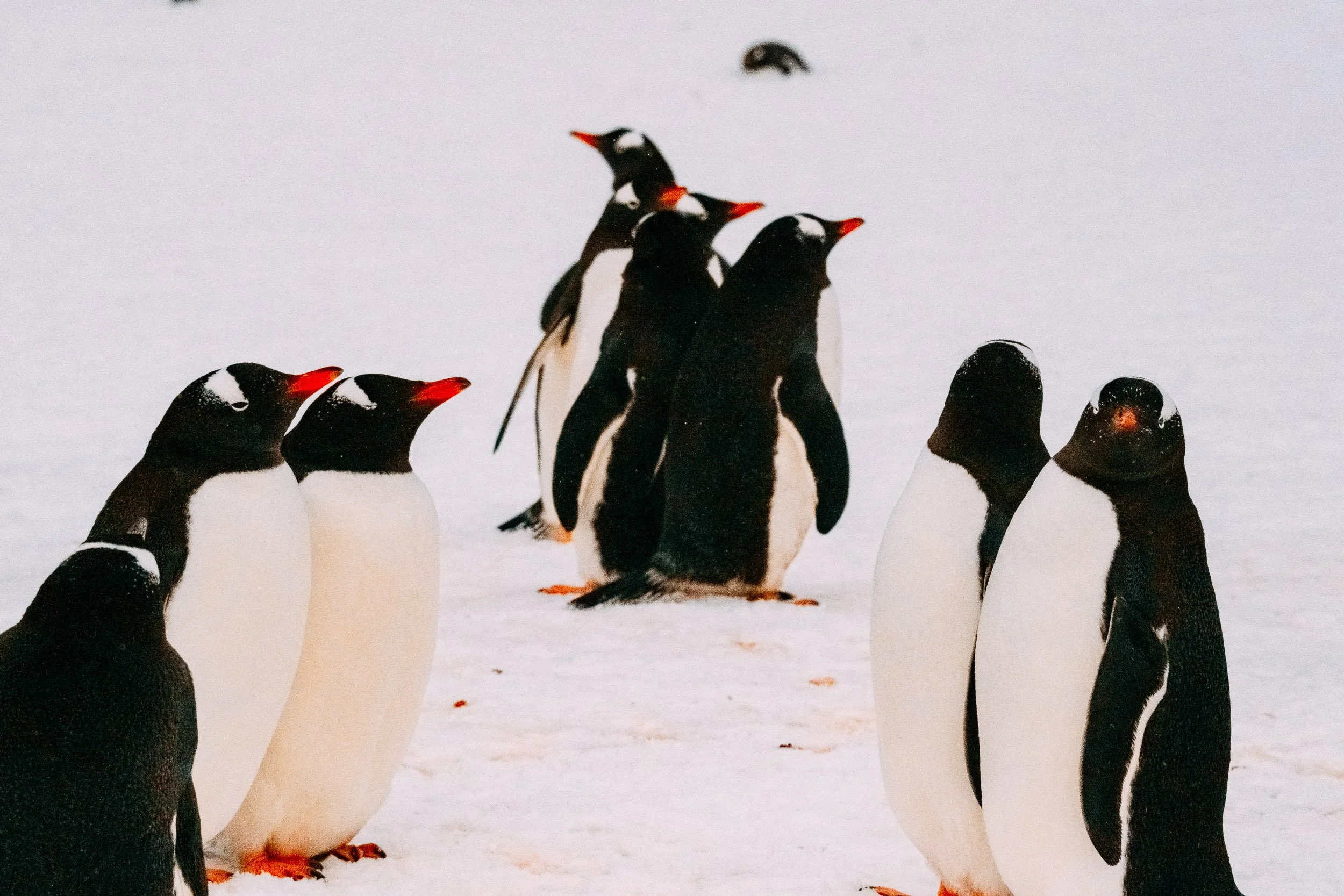
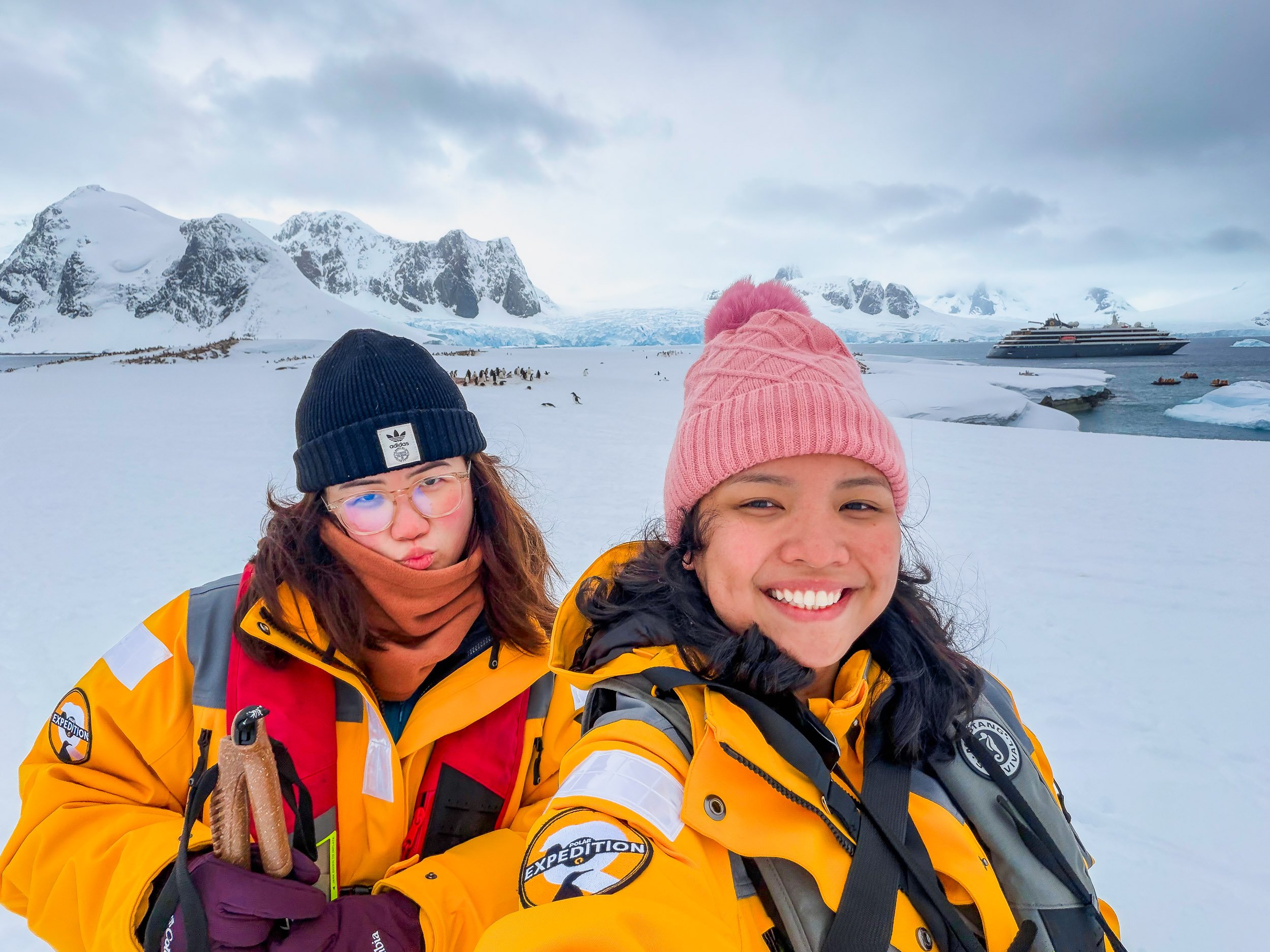
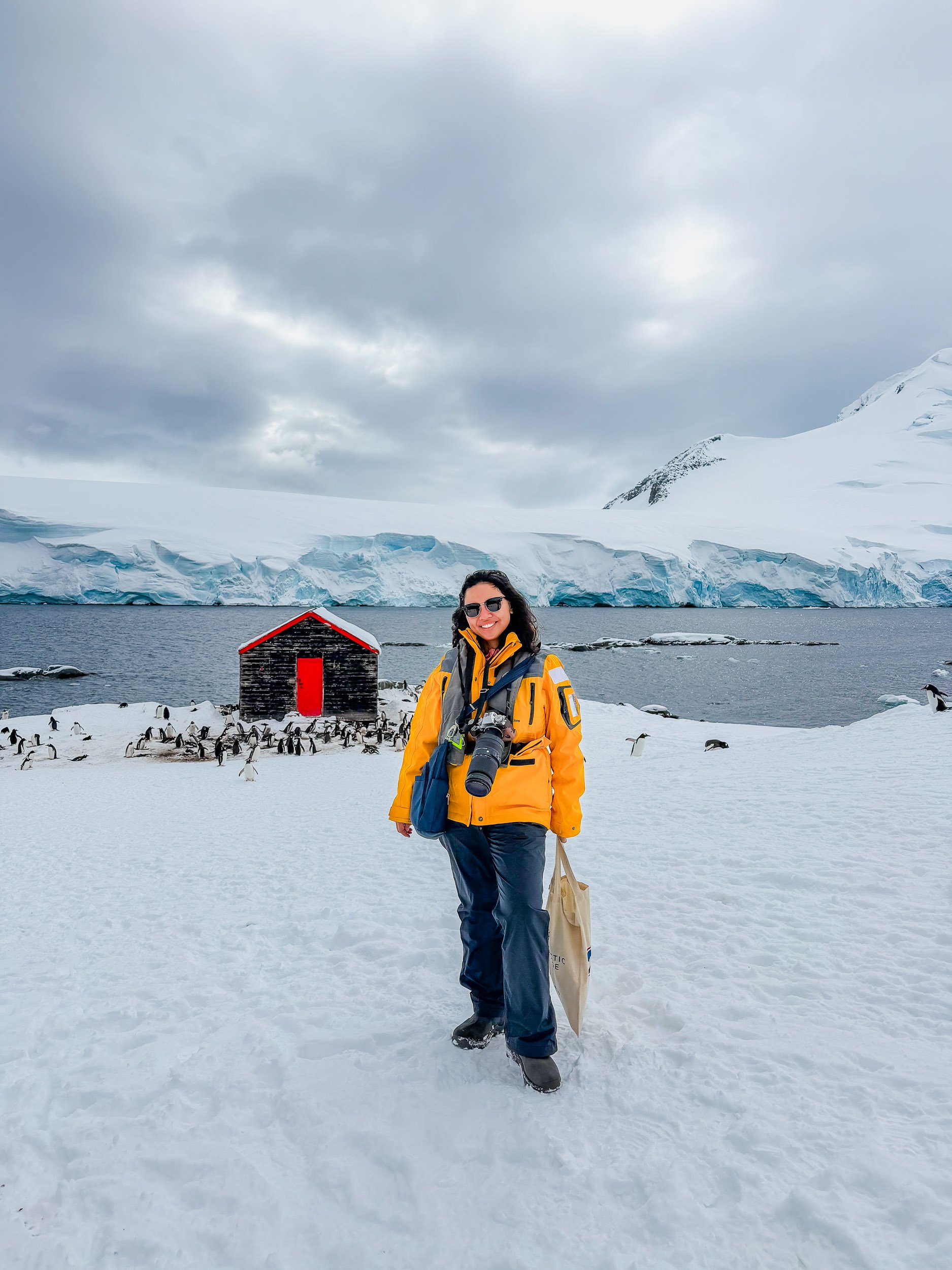
Standing among the Gentoo colony in Cuverville Island
My heart is bursting to share the many incredible things I’ve seen and experienced, and yet there’s also a little voice inside me that’s telling me to keep it a secret. I kind of want to hide it all away and keep it engraved in my deepest memory. That’s why I took my dear, sweet time writing it all down. And if someone asks me, “What feels illegal but isn’t?” I will answer, “Visiting Antarctica,” point-blank. There were multiple instances during this journey when I really wondered if I was allowed or even deserved to be there. While I acknowledge how privileged we were to be able to visit it, in a way, our presence there also felt like a burden.
I don’t even know how to sincerely describe it anyway. How do I confine and put into mere words a place so spectacular and phantasmagorical that there probably isn’t a word in any language that would truly do it justice? How do I even summarize the ultimate trip of my life into a few paragraphs, photos, and videos?
Truth is, I can’t. And I will never be able to. But decades down the line, I want to look back on this adventure and be grateful to myself for at least trying.
So heads up! This is gonna be a veryyy long one. I’m about to share a lot, but all of this is still barely scratching the surface. ;)
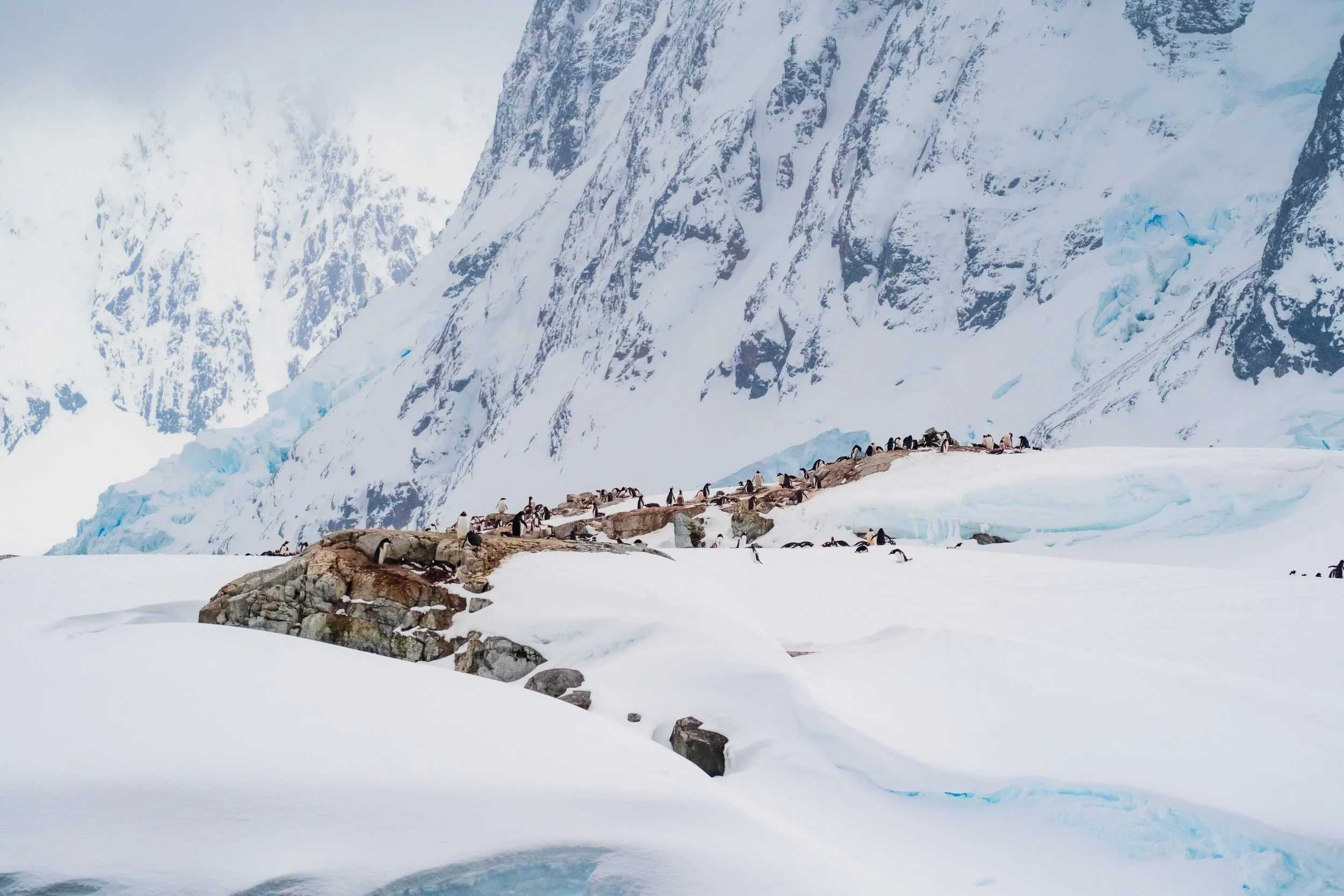
Table of Contents
3.1. Ushuaia
3.2. The Ship
3.3. Daily Life
3.4. Drake Passage
3.5.1. Deception Island
3.5.2. Cuverville Island
3.5.3. Danco Island
3.5.4. Lemaire Channel
3.5.5. Pleneau Island & Bay
3.5.6. Petermann Island
3.5.7. Jougla Point & Port Lockroy
3.5.8. Damoy Point & Hut
3.5.9. Portal Point
3.5.10. Cierva Cove & Base Primavera
3.6. Polar Plunge
The Dream
Like all great stories, it all started with innocent curiosity that evolved into a dream.
As I grew older, my ambitions became bigger. But at the core of it all is my passion to travel and explore. At first, I just wanted to visit Palawan, then Batanes, and then I wanted to visit all provinces of the Philippines. Then I moved to the US, and this whole other, grander door of opportunity opened for me. As I kept checking off my bucket list, counting countries and collecting visas and stamps, I realized maybe it was okay for me to keep wishing for more. Maybe I can hope to visit all the US states, and eventually, all the countries of the world. But the pandemic hit, and it slapped me back to reality. I had a full-time job that I couldn’t leave behind for multiple weeks each year to travel, and I realized I needed to be a little more of an adult and start thinking about my future. My life can’t be in constant adventure mode anymore.
Then I found out it was actually possible to visit Antarctica. So I scaled down my ambition to at least visit the seven continents in this lifetime.
And so here we are.
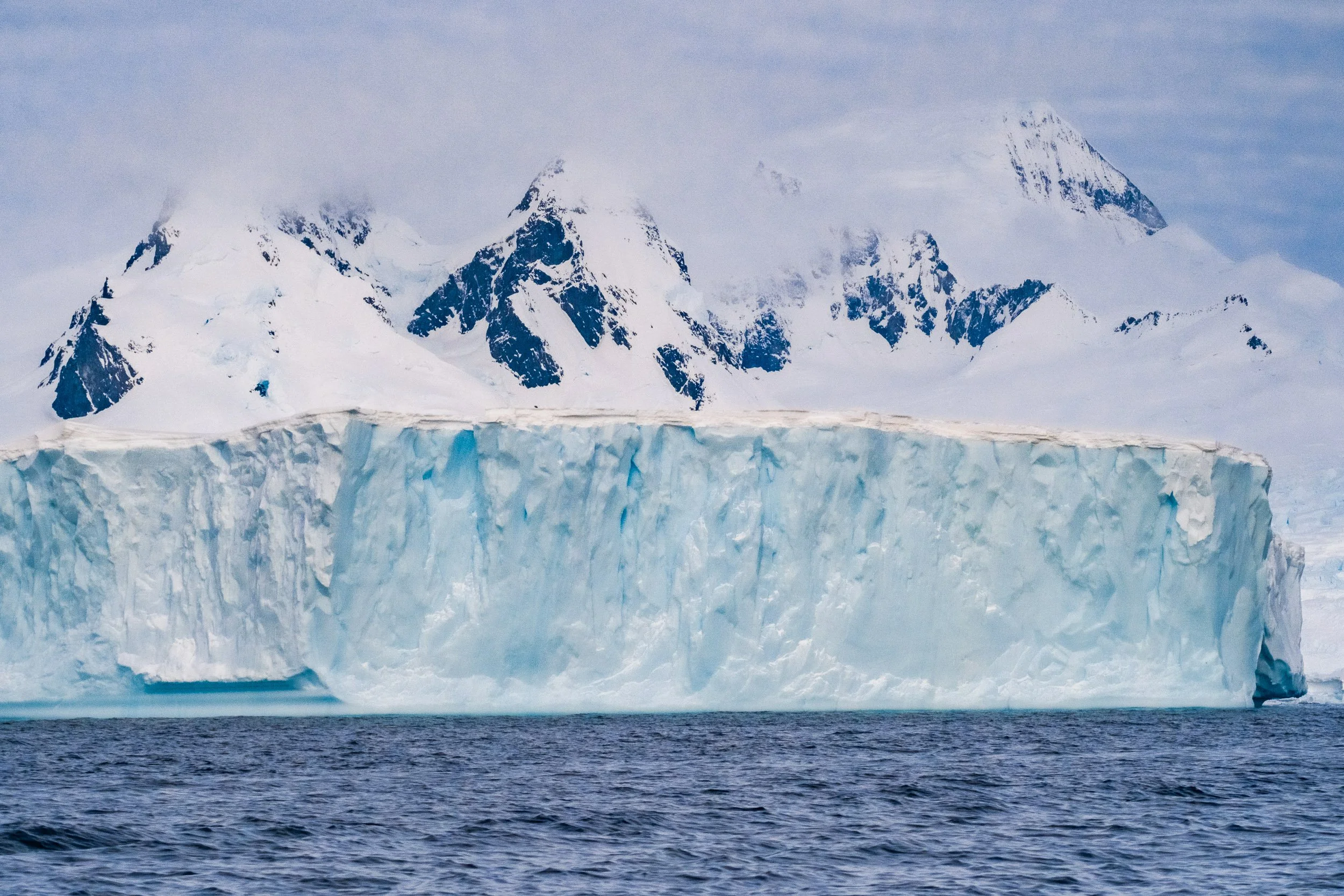
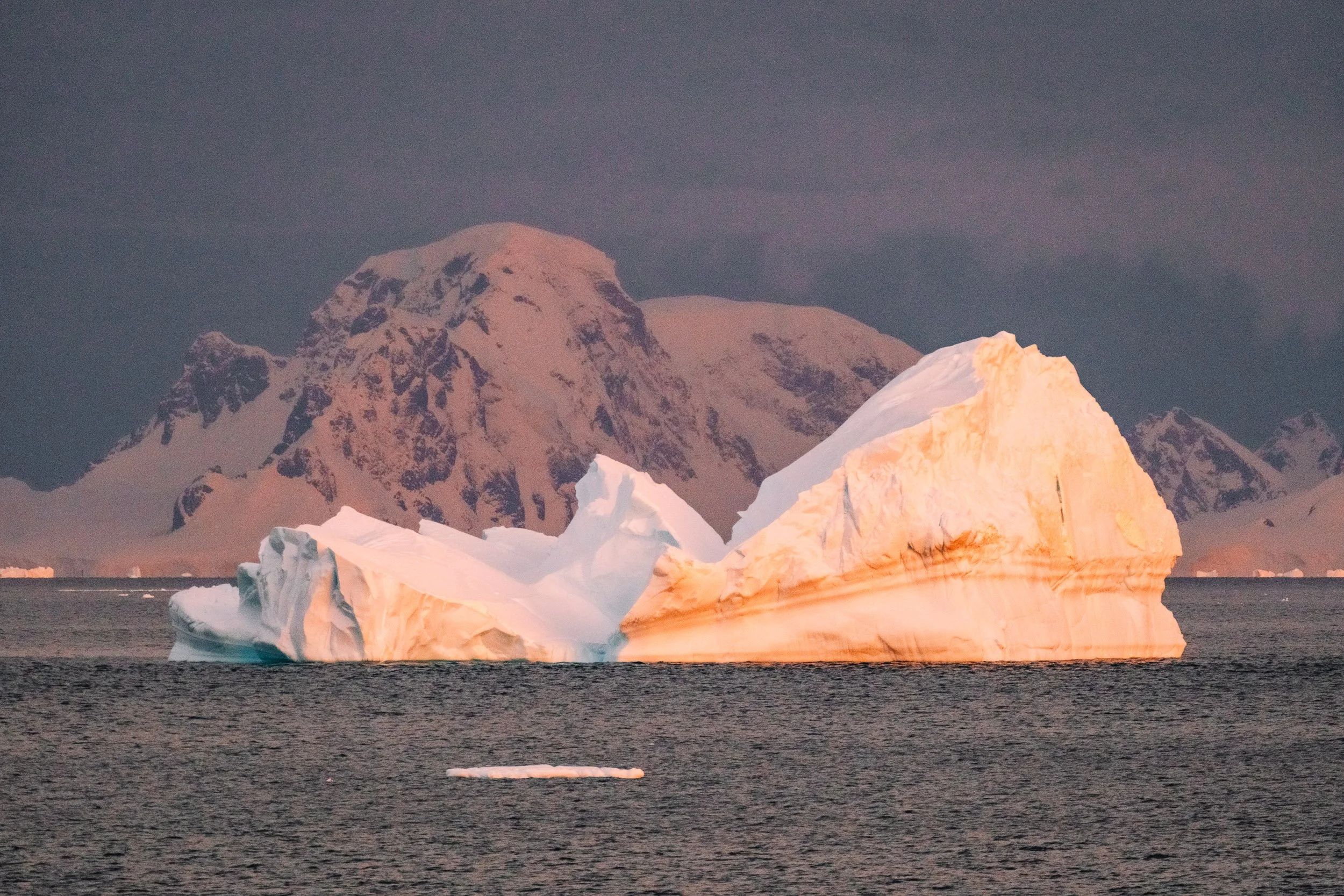
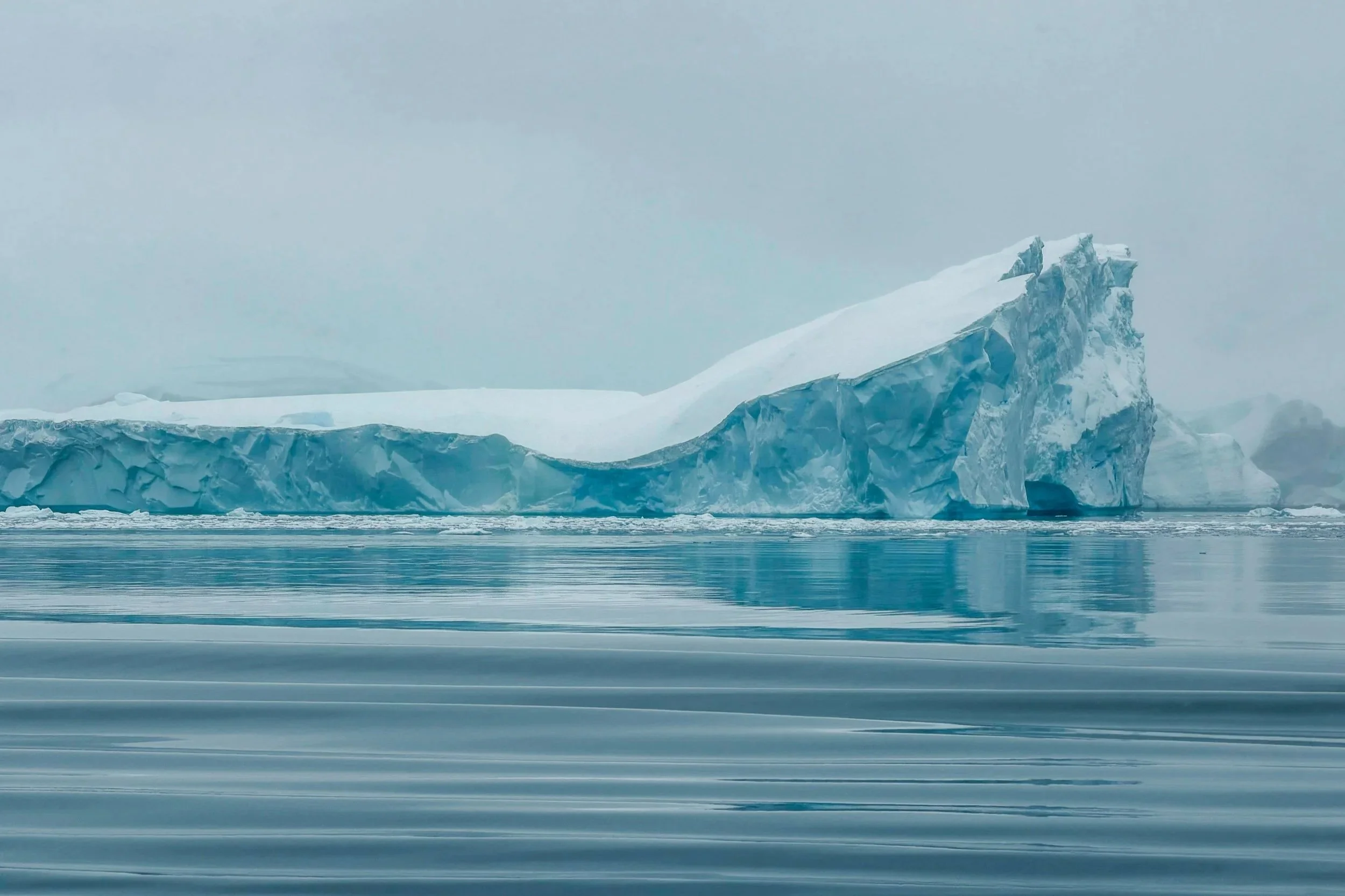
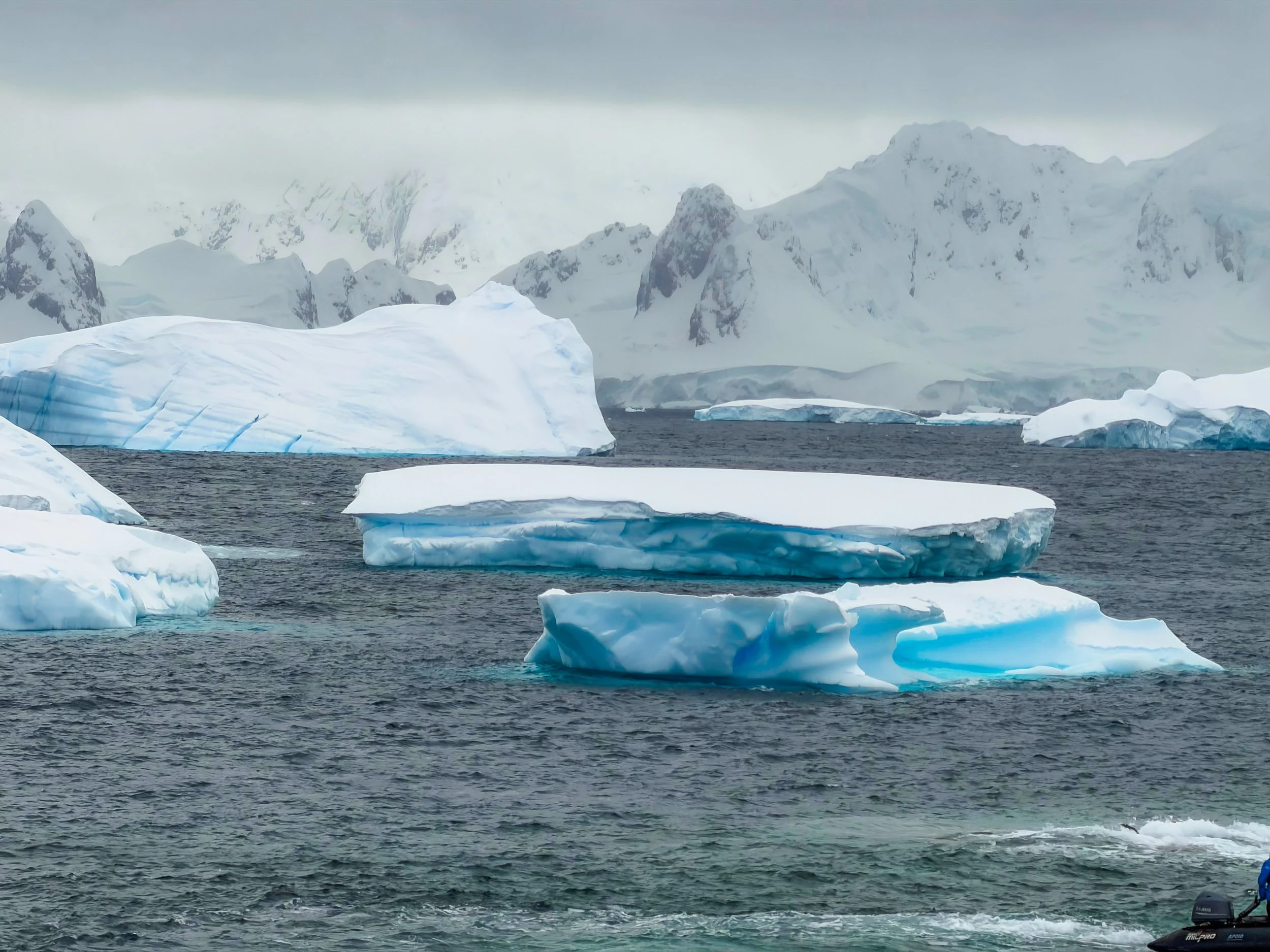
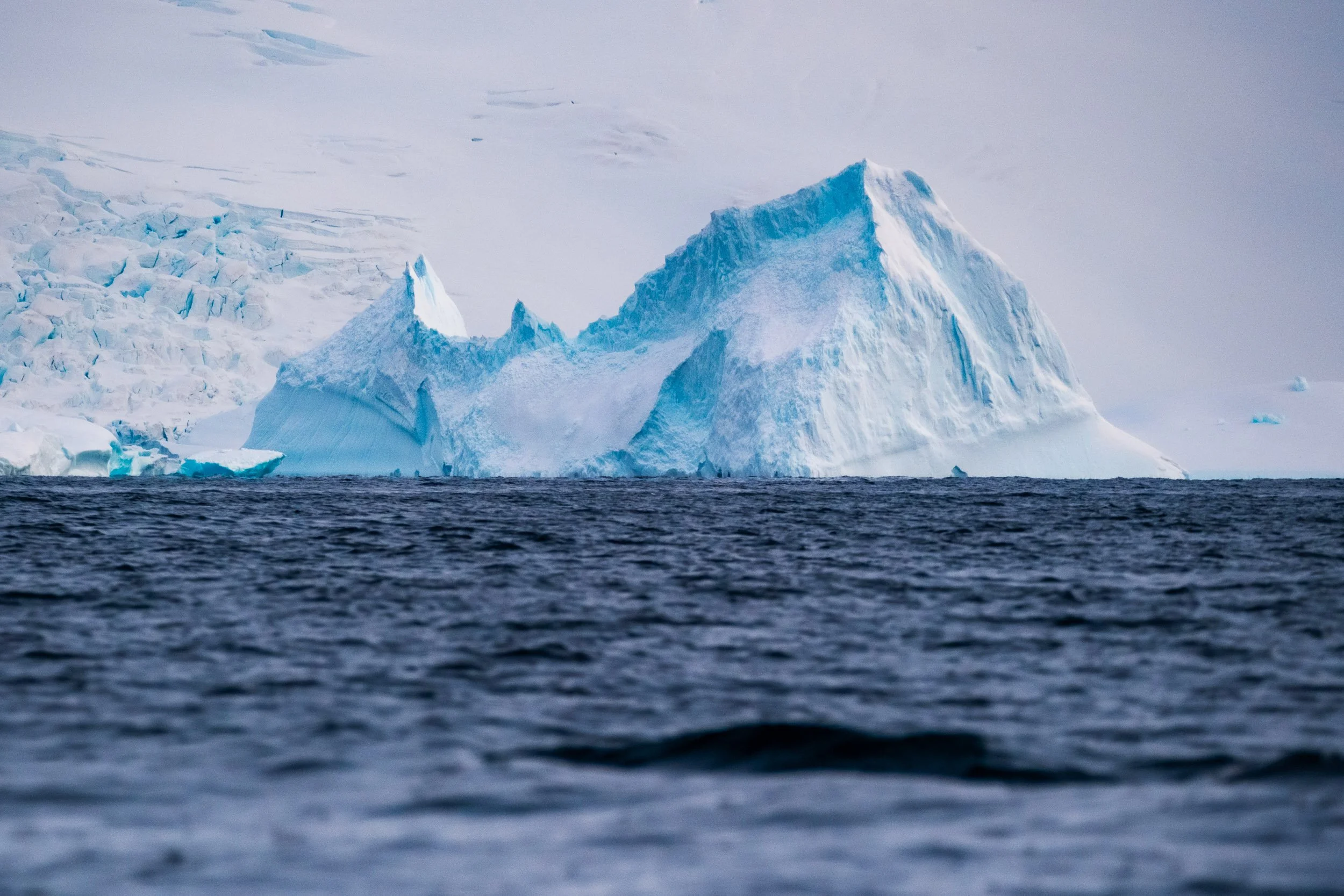
Massive iceberg in Cierva Cove
It would be hypocritical of me to say that Antarctica wasn’t another item on my bucket list to tick off. Because it was. For full disclosure, it was my own vanity that was my primary driving force behind visiting it. I just thought I might feel some sort of self-gratification if I did. It wasn’t because of any scientific, noble, or heroic reason. My initial intentions were purely selfish and even conceited. It was the grand finale of my seven-continent pilgrimage. And I thought I would be bragging and screaming at the top of my lungs, “I’ve made it!” by now. Instead, it humbled me. It made me feel trivial and worthless.
I may have visited it as part of my dream to visit the seven continents.
What I didn’t know was that Antarctica itself, not as the seventh continent, not as the polar south, was THE DREAM.
The Plan
Roughly three years ago, my friend Dionne and I had a conversation about travel. I casually divulged that I was aiming to visit the seven continents before I turned 30. I laid out my travel plans, and she was game to come with me. I managed to convince Lex to join us, and thus began this crazy, borderline obsessive chase for a dream. We knew the stakes, the logistics, and the expenses, but we were all more than prepared to do this undertaking.
The six continents were (kind of) easy, but I knew Antarctica would be a challenge. Obviously, it’s not easy to get there. It’s not a destination you can simply DIY. It is a sanctuary heavily protected by strict regulations. You only have two options: cruise or fly. Either choice is expensive as hell.
Cruising is longer and cheaper, but it still costs thousands of dollars. There are two types of cruises to Antarctica: the typical luxury cruise, catered to relaxation, and an expedition cruise designed for education. We ended up joining an expedition cruise, and we were more than happy with that decision.
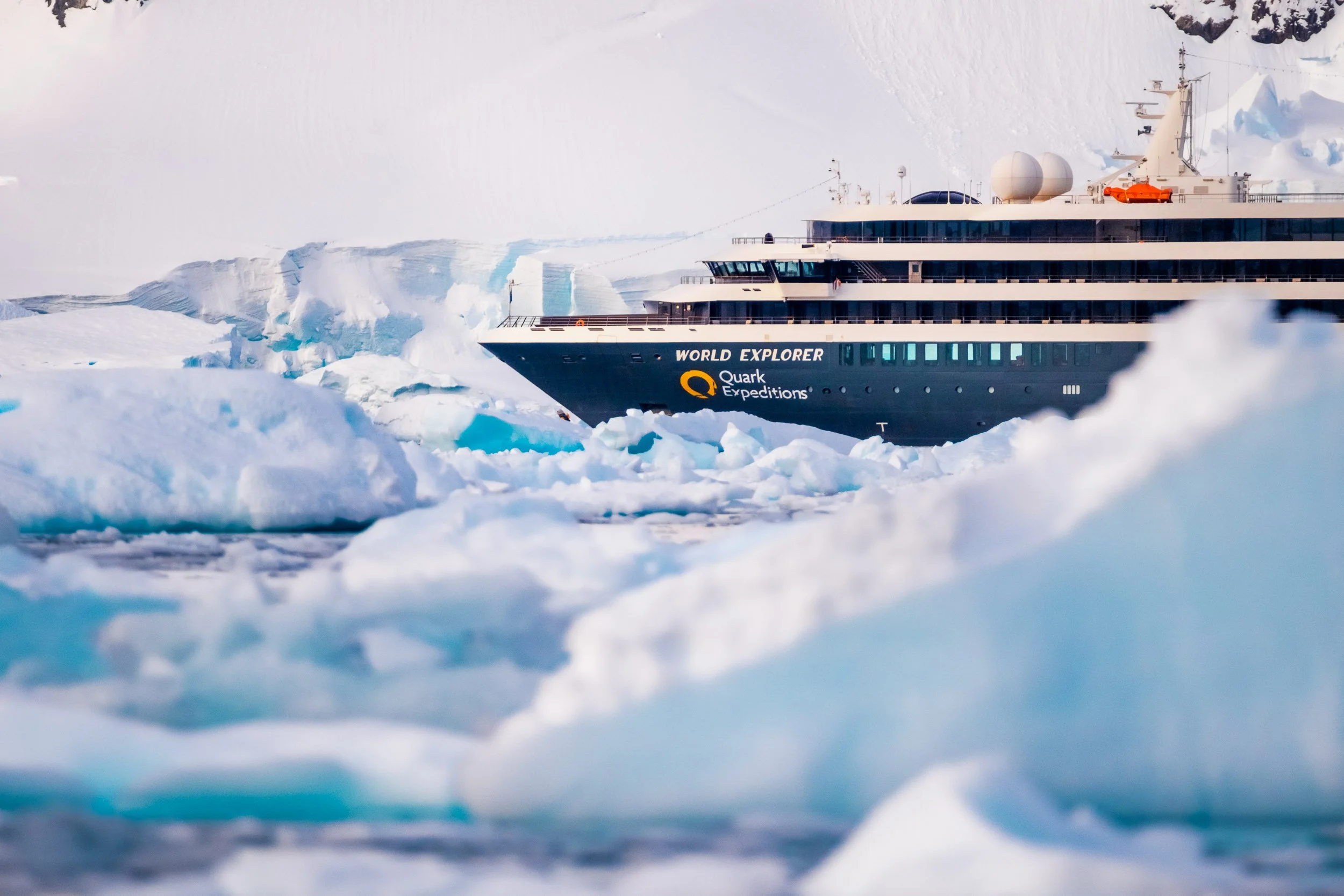
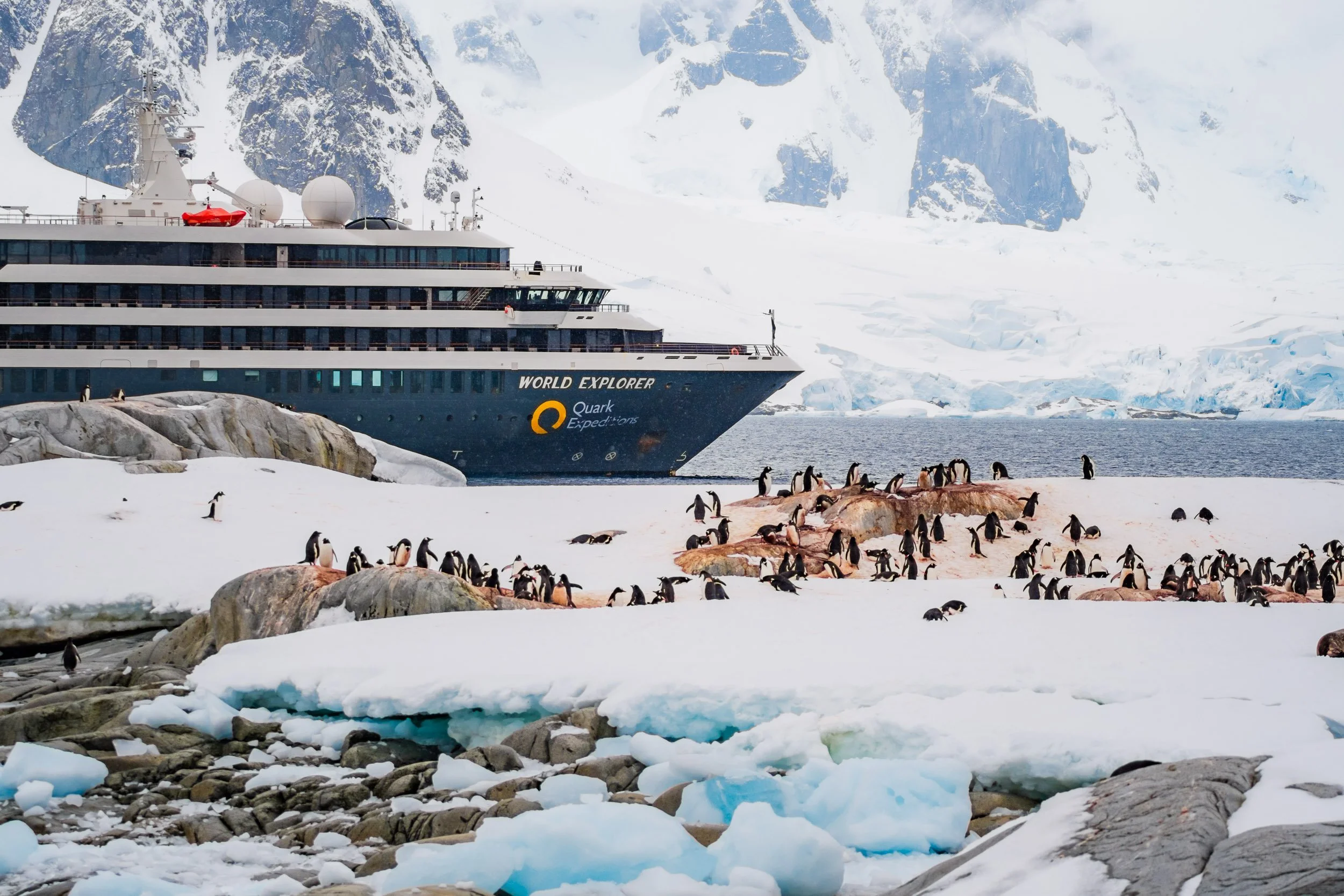
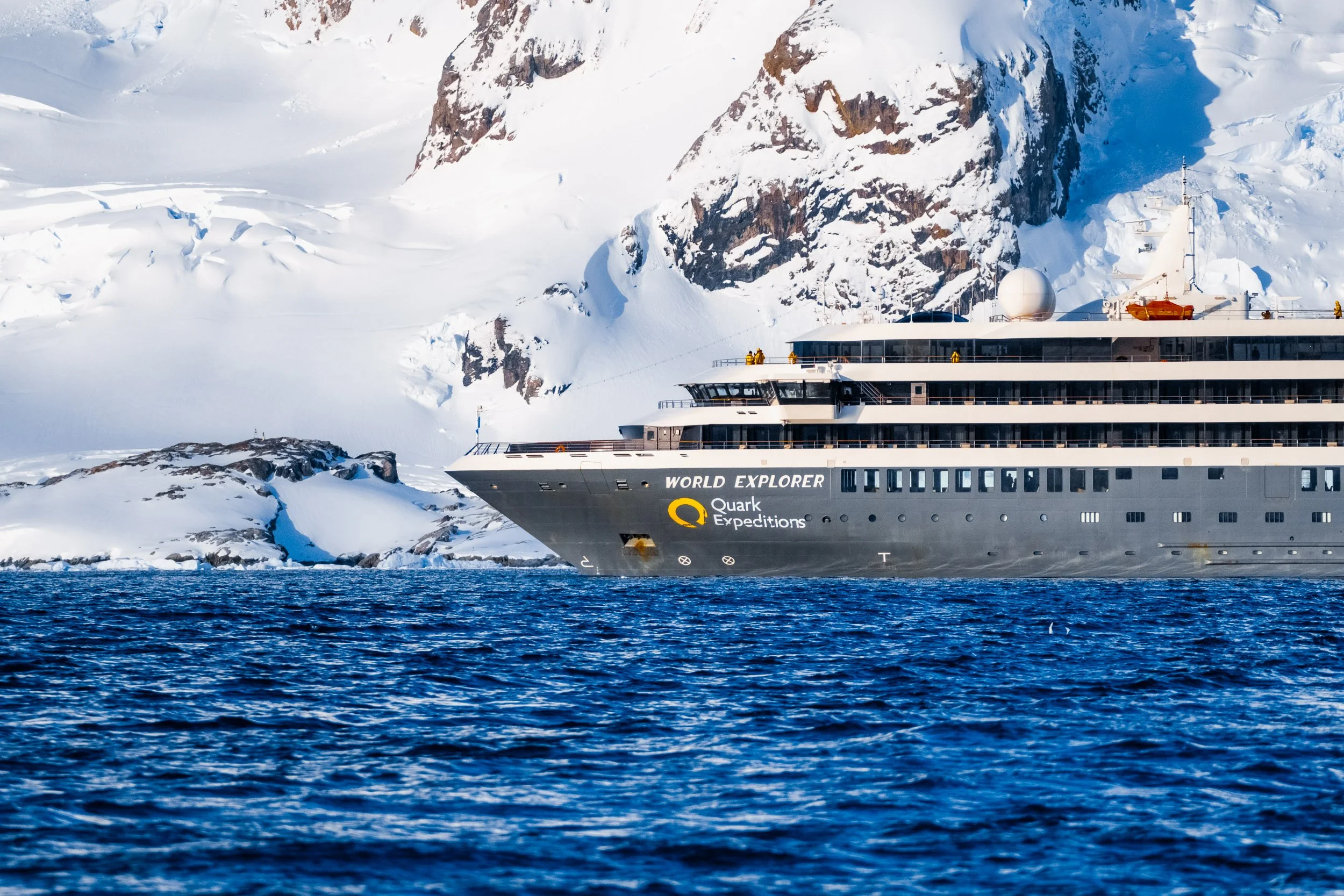
Our expedition ship, the World Explorer, peeking through the ice
Visiting Antarctica is only possible from late spring to early autumn. Since it’s in the Southern Hemisphere, that window is from November to March.
There are multiple jump-off points in the world. Embarking in Ushuaia (Argentina) is the most popular and cost-effective route, but some ships also leave from Punta Arenas (Chile). You can also visit from Cape Town (South Africa), Hobart (Australia), or a few cities in New Zealand. However, cruises from these areas are typically more expensive and take longer than voyages from South America due to the greater distance.
If you proceed with the South American route, you will have to cross the infamous Drake Passage. Do not underestimate it. It is not known to have the choppiest and most treacherous waters on the planet for nothing. Hope for the Lake, but always be prepared for the Shake. Load up on nausea and motion sickness meds like meclizine, or have your doctor prescribe you ondansetron or scopolamine patches.
Travel insurance is so important (and is actually mandatory). You are going to one of the most isolated places in the world, and medical evacuation will cost an arm and a leg in case of an emergency. Most tour operators will require you to have travel insurance that covers at least $50,000 in medical expenses. Personally, I bought my policy from Faye.
If you have medical conditions and/or take prescription drugs, you are required to get clearance from your doctor and have them fill out a second medical form. And make sure to pack enough of your medicines. There is a doctor on board and basic medical facilities, but their inventory is limited.
Ship size matters! Those that carry more than 500 passengers are not allowed to take guests out for landings or zodiac excursions. Luxury ships tend to be larger, offer more amenities, and carry more than 500 passengers. These cruises can’t land, though they are usually way less expensive. But unless you’re satisfied with just viewing landscapes and wildlife from the comfort of your room, I highly recommend joining an expedition cruise. You will gain greater knowledge and insights and a more meaningful and authentic experience of Antarctica. And seriously, what’s the point of spending a ton of money and enduring the perils of the Drake Passage if you can’t experience it to the fullest?
Most tour and cruise operators only stick to the Antarctic Peninsula and do not cross the Antarctic Circle (though some offer tours that do; needless to say, those take waaay longer). You will not technically touch continental land itself, except maybe in one or two instances. Most excursions will be done on the islands surrounding the peninsula. According to our expedition guides, there’s not much to see on the inner continent anyway, other than thousands of miles of snow-covered land. Life does not thrive beyond the coasts, though some extremophile microbes do exist inland.
While the ethical aspects of Antarctic tourism are an entirely different topic for debate, the fact is that more and more people are taking an interest in visiting this beautiful yet extremely fragile place. Though several countries have laid territorial claims to the continent, none actually oversees and regulates tourism. The International Association of Antarctica Tour Operators (IAATO) effectively serves as the regulatory body. It is an independent and voluntary organization comprising over a hundred tour companies that advocate for safe and environmentally responsible travel to Antarctica. It establishes tour guidelines and policies that stay true to this mission. So if you do decide to visit, make sure to go with a company that is an IAATO member.
Biosecurity is a highly important matter that requires serious attention. You wouldn’t want to accidentally introduce foreign matter and species onto Antarctic land that could potentially harm the natural flora and fauna. So be a responsible visitor!
I get asked a lot about how and how long we planned for our journey to Antarctica, but it wasn’t a lengthy or tedious process. My friends and I were determined to make this come true, so it was only a matter of when and which company to go with. And aside from expending a large chunk of our savings, my biggest hurdle was going through the agony of trying to get more than 2 weeks of vacation time approved (most of it unpaid, might I add).
Ultimately, we went with Quark Expeditions. They are one of (if not the) most reputable companies in the polar travel industry. Additionally, they are one of the founding companies of the IAATO. It wasn’t the cheapest, but at least it gave me confidence and peace of mind that they knew what they were doing.
We booked their 11-day Antarctic Explorer: Discovering the 7th Continent cruise (and that’s the shortest!) after I got back from my Europe birthday trip last July for a November 2025 departure. Heck, that aforementioned trip was more exhausting to plan than this one. Once we booked the cruise, we didn’t have to think or worry about anything else besides getting our Argentine visas, getting to and from Ushuaia, and what to pack. Because I have lived most of my life in generally warm places (the Philippines and San Diego), I barely have any winter clothes. I had to buy thermals, sweaters, and the required waterproof pants. I also asked my doctor to prescribe me scopolamine patches for motion sickness. We filled out the required forms (medical, parka and boot sizes, arrival and departure info, etc.), and they sent us the guidebook with everything we needed to know, including a packing list of what to bring.
The plan was to visit the seven continents before 30. I didn’t.
BUT. I did it by 30.
The Adventure
The days leading up to the trip were extremely hectic at work. I started packing a few weeks earlier, so I at least got that out of the way, but I hadn’t been able to spare a moment to feel anything yet. I was excited, sure, but I was mostly looking forward to being able just to breathe and get away from the pharmacy as soon as possible and for as long as possible. At that point, I was burnt out, so it hadn’t fully dawned on me that I was about to leave for a journey of this immense scale.
And then the day finally came. We went to LA for a concert the night before our flight, then drove back to San Diego afterward. We flew out to Houston in the morning, where we caught our 10-hour connecting flight to Buenos Aires. We spent a few days exploring the Argentinian capital, even crossing the Río de la Plata for a day in Colonia, Uruguay, before heading to the world’s southernmost city.
Ushuaia
Not that I had any to begin with, but I threw whatever expectations about Antarctica out the window the moment we landed in Ushuaia.
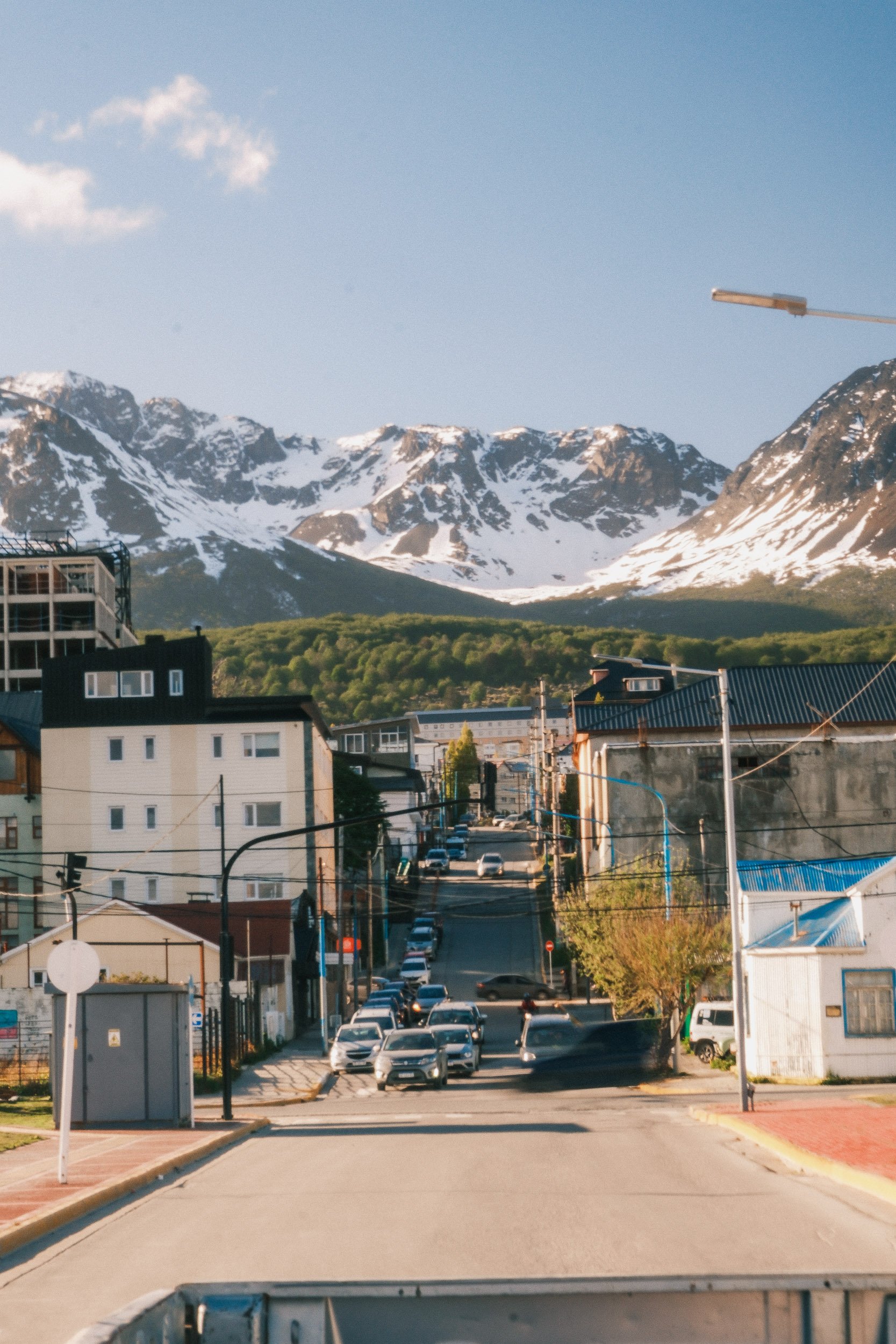
It’s such a laid-back and charming city that if I ever decide to abandon my entire life and go into hiding, you’ll probably find me here. It was also reminiscent of Alaska and Canada.
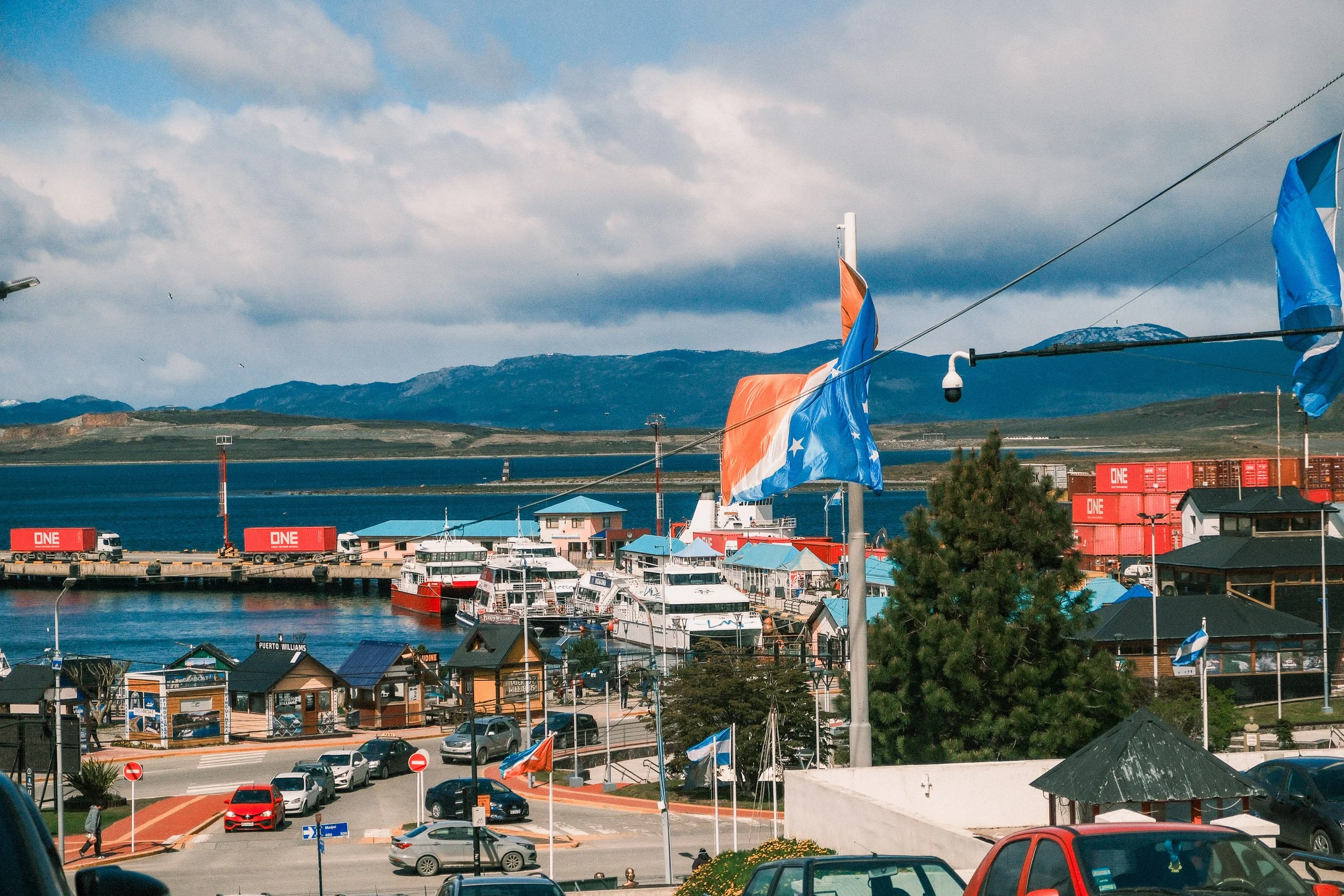
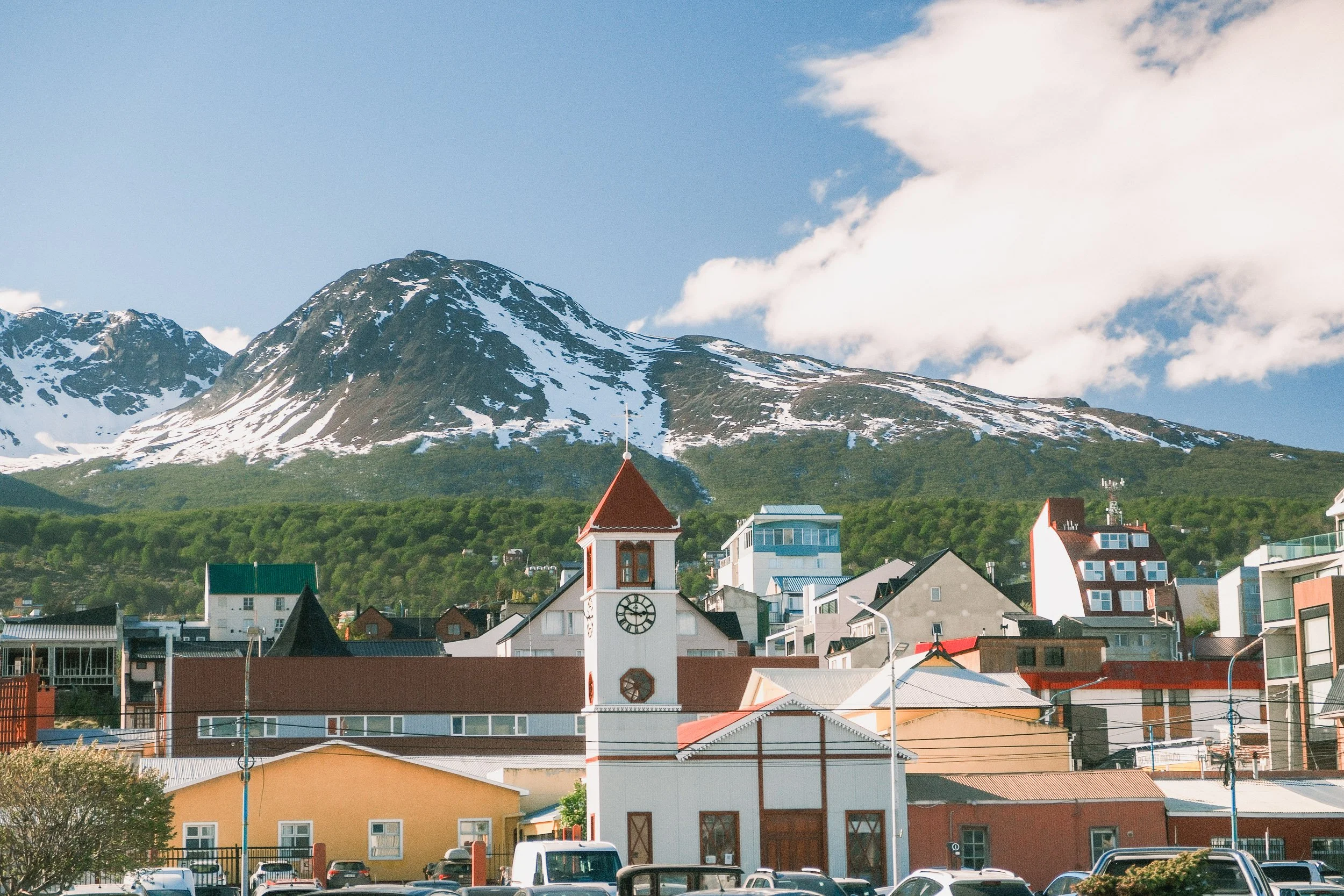
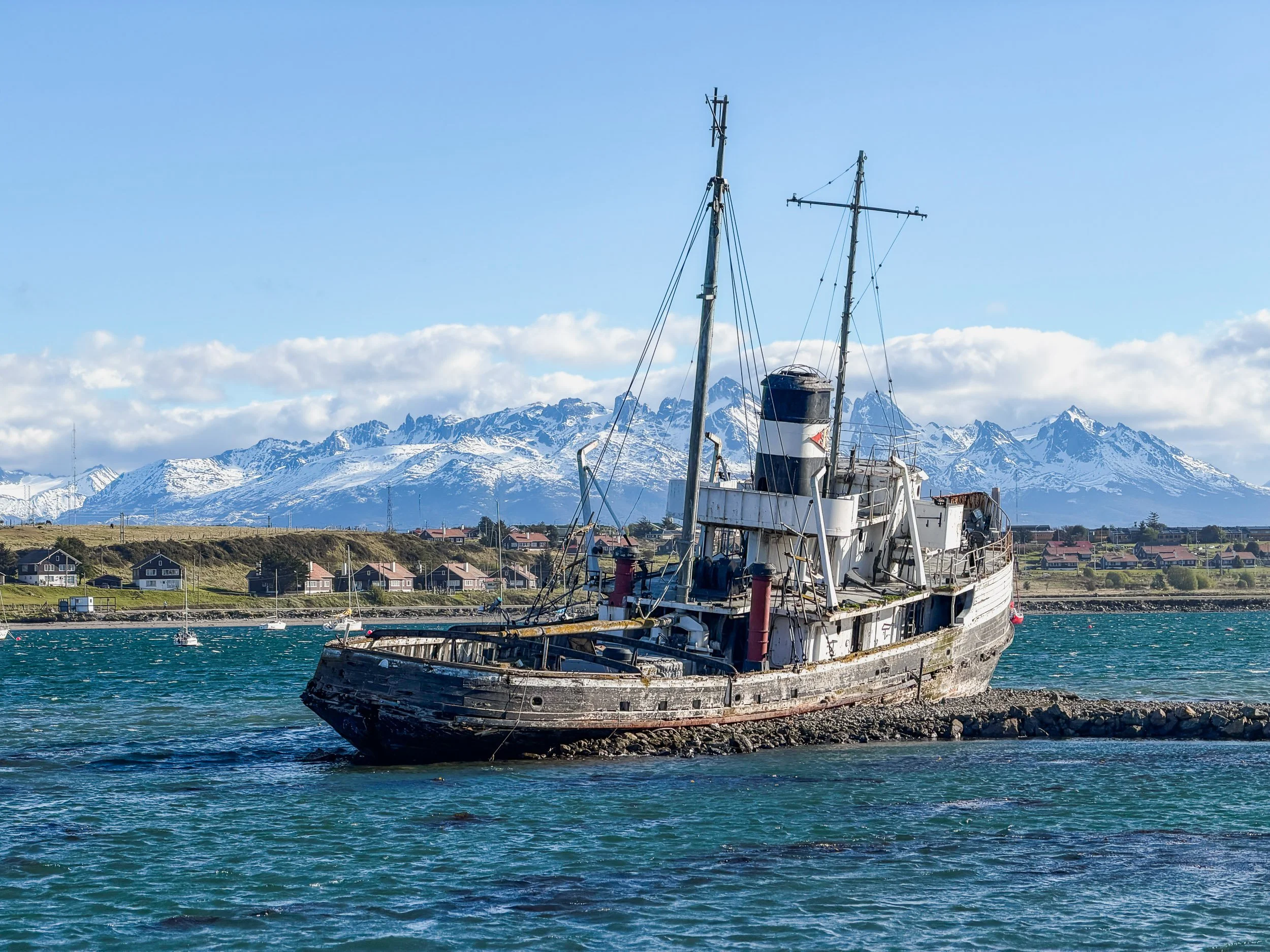
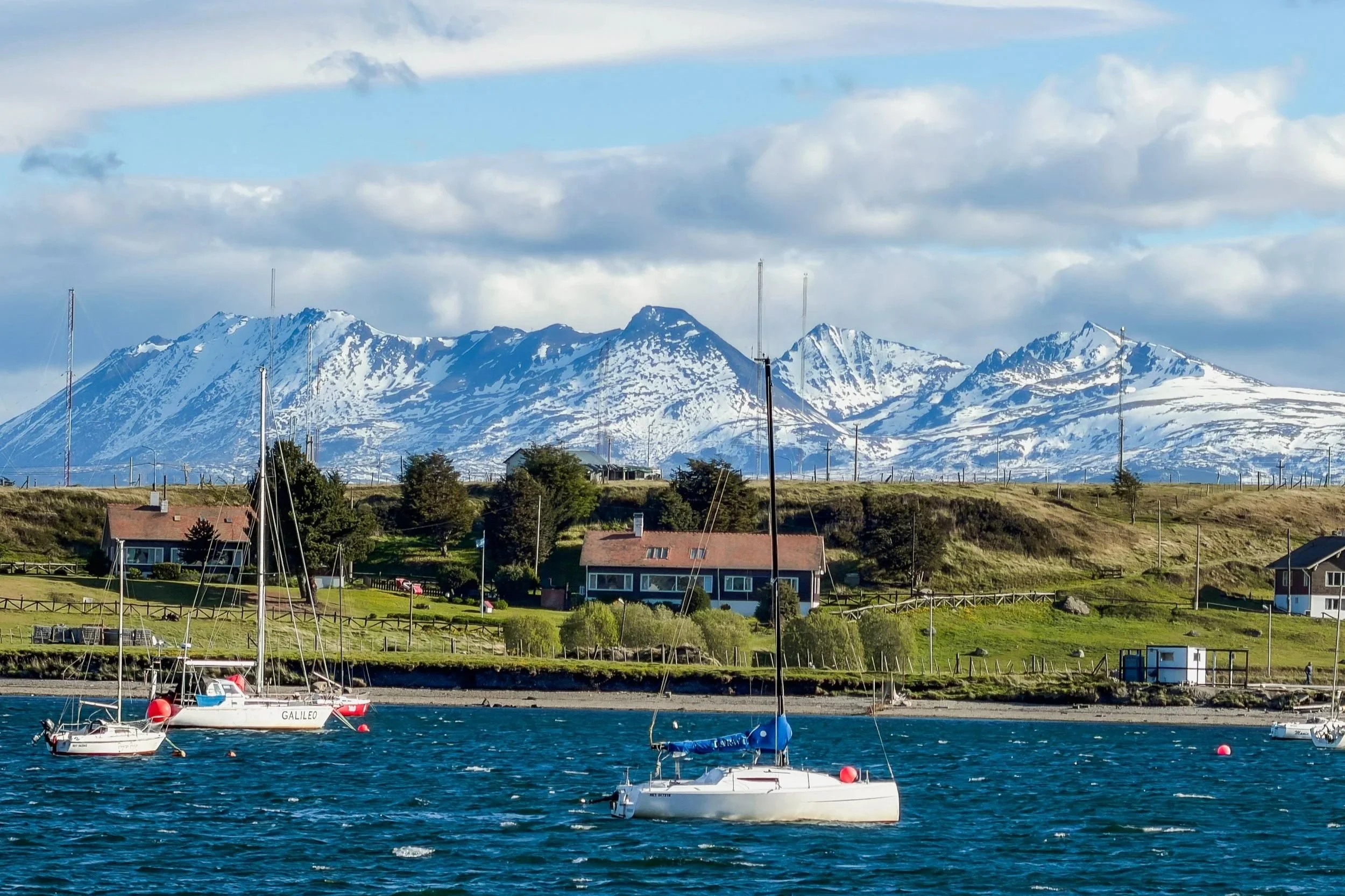
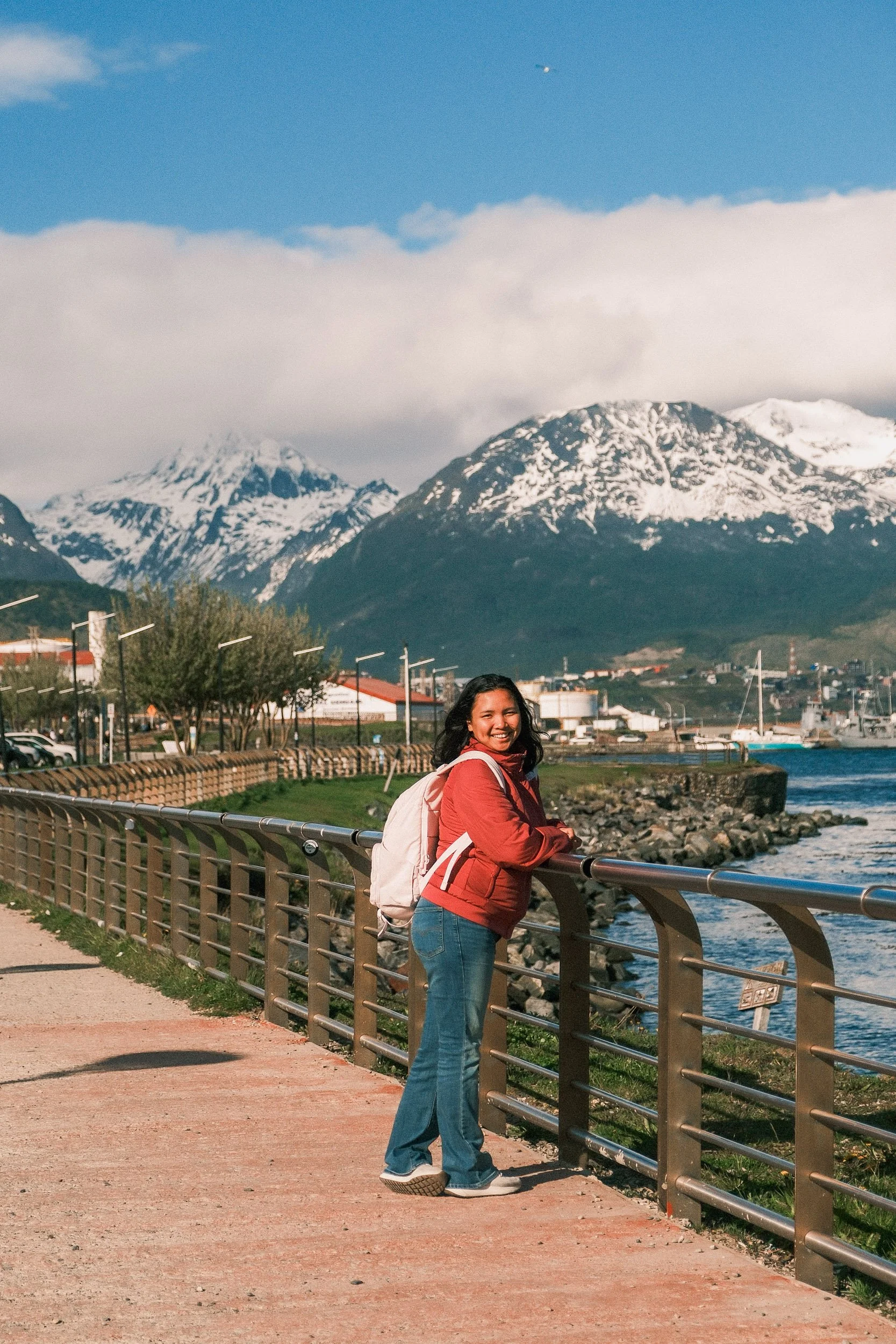
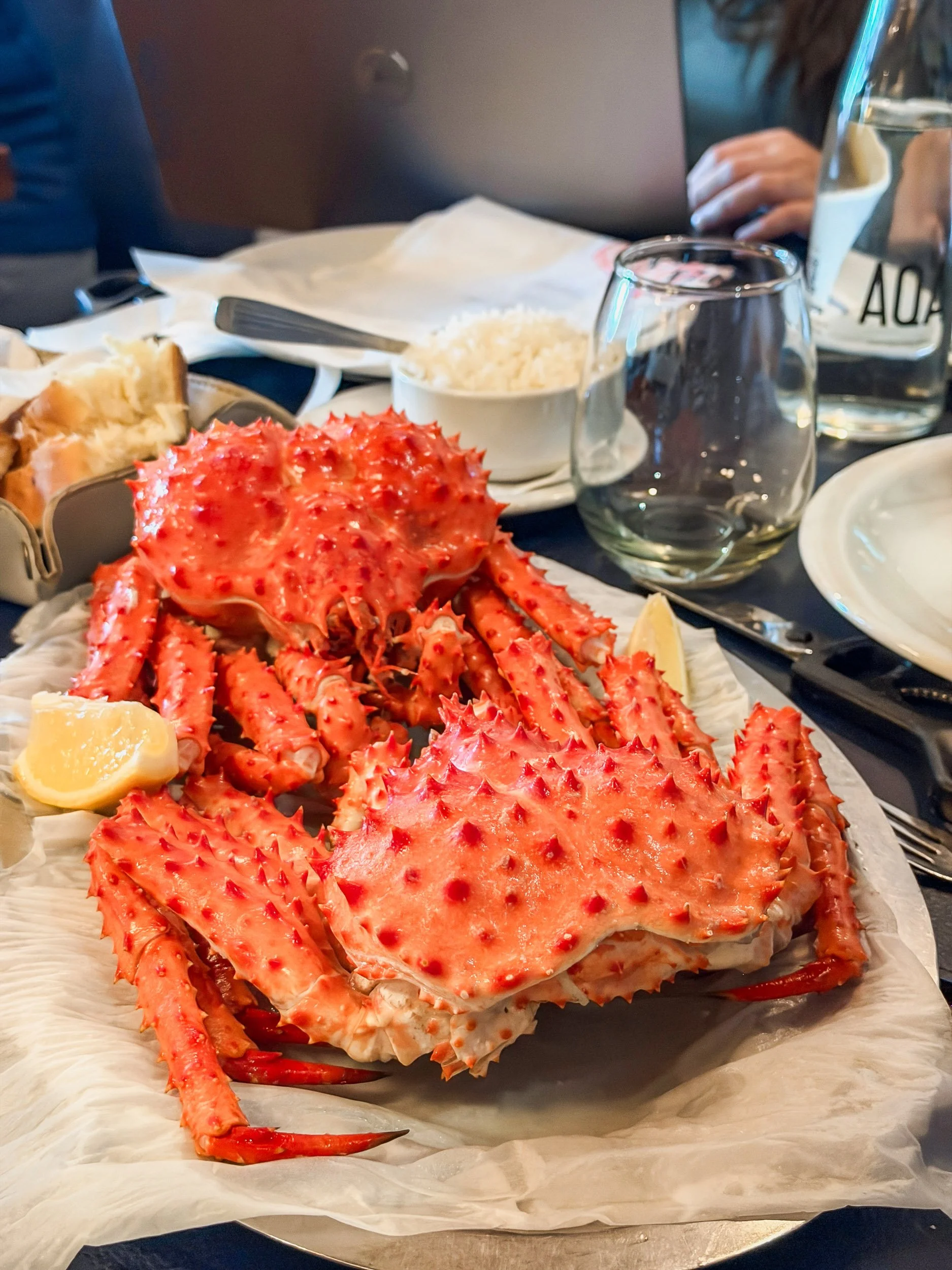
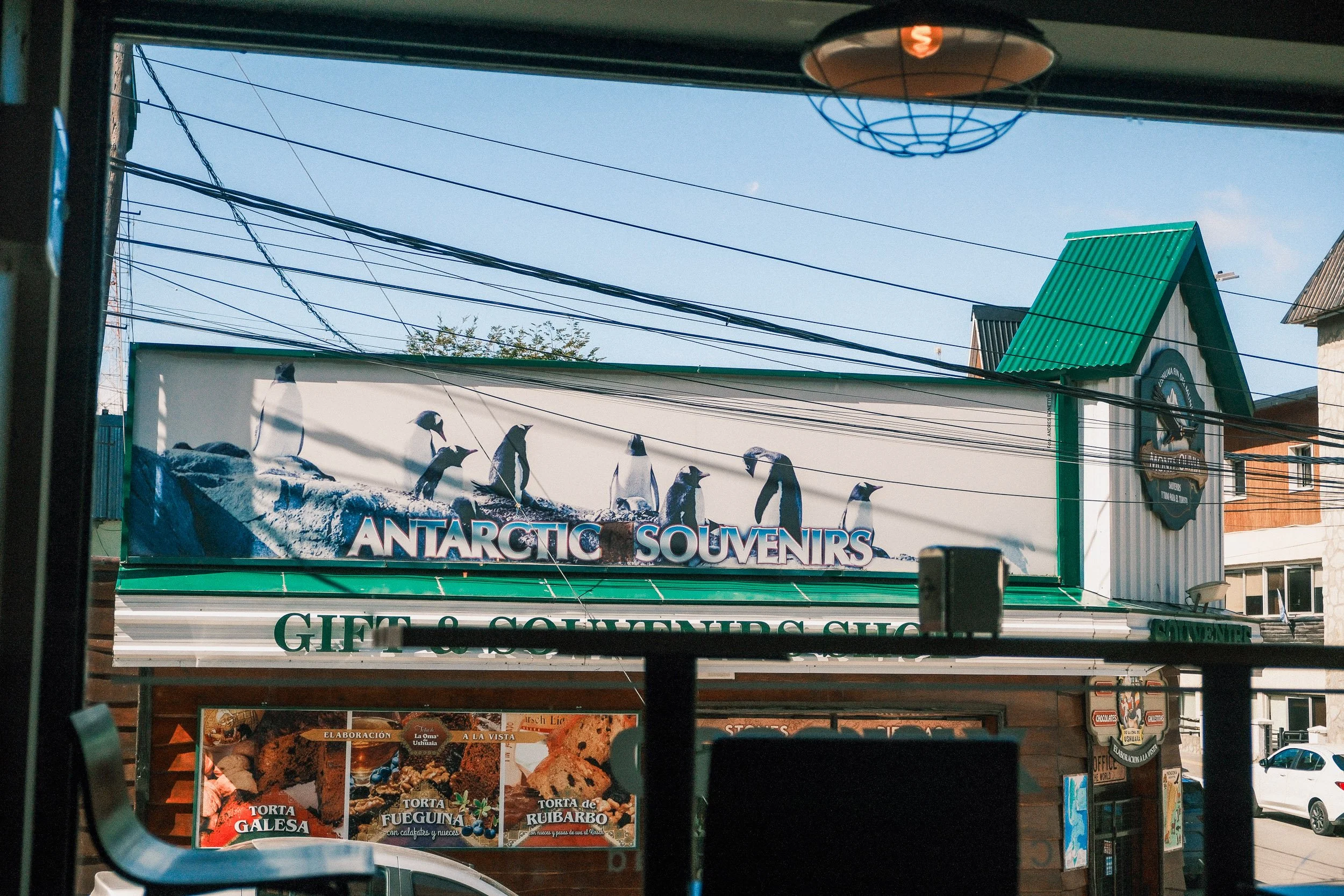
As it is a port city and the gateway to Antarctica, most visitors don’t really stay too long here. In our case, Quark's package included a one-night hotel stay, whether we used it or not. So we arrived the day before embarkation day and stayed at the Albatros Hotel. We just checked out the shops, walked around town, and ate so much seafood (king crabs galore!). It was windy as hell, though!
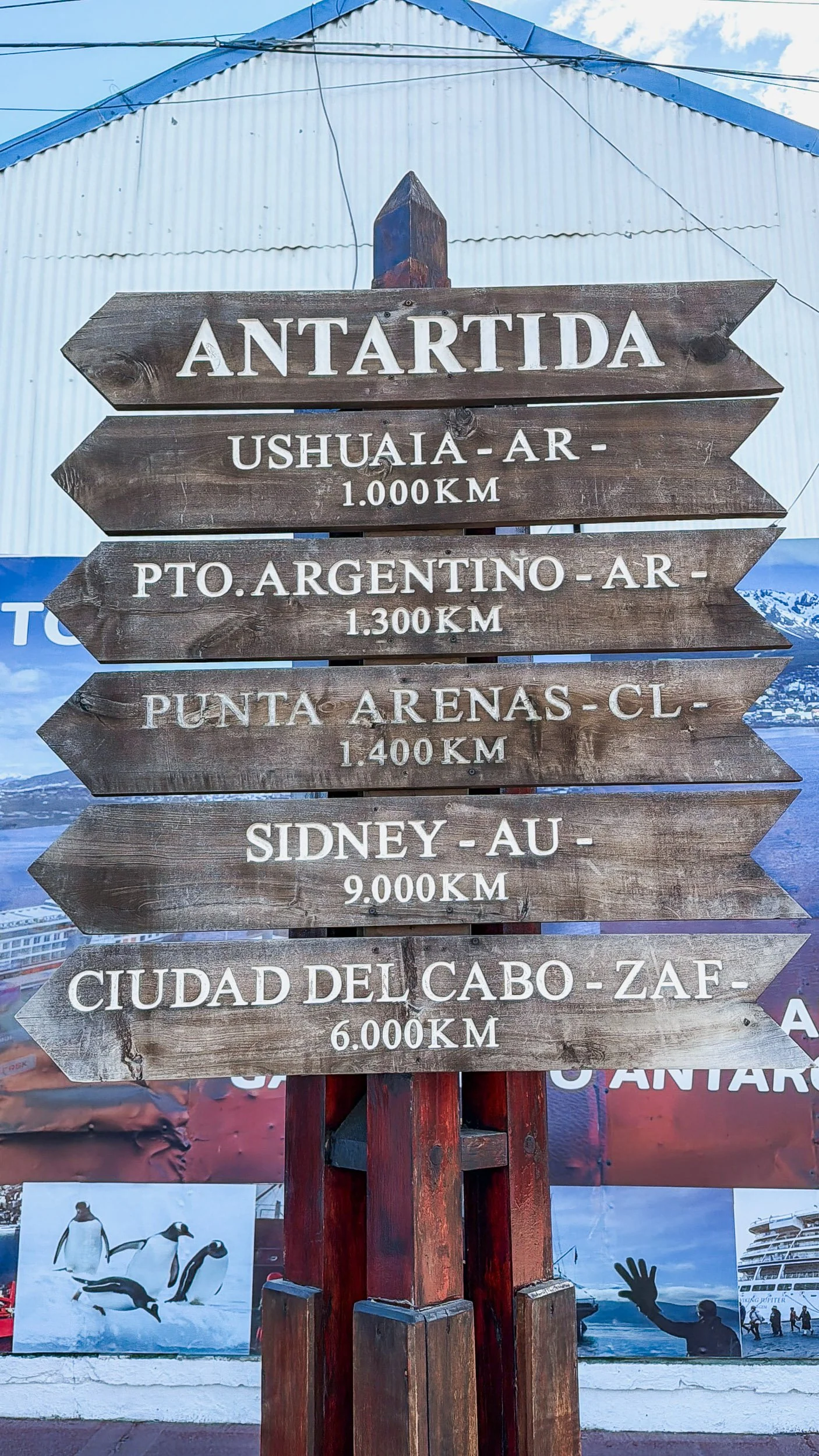
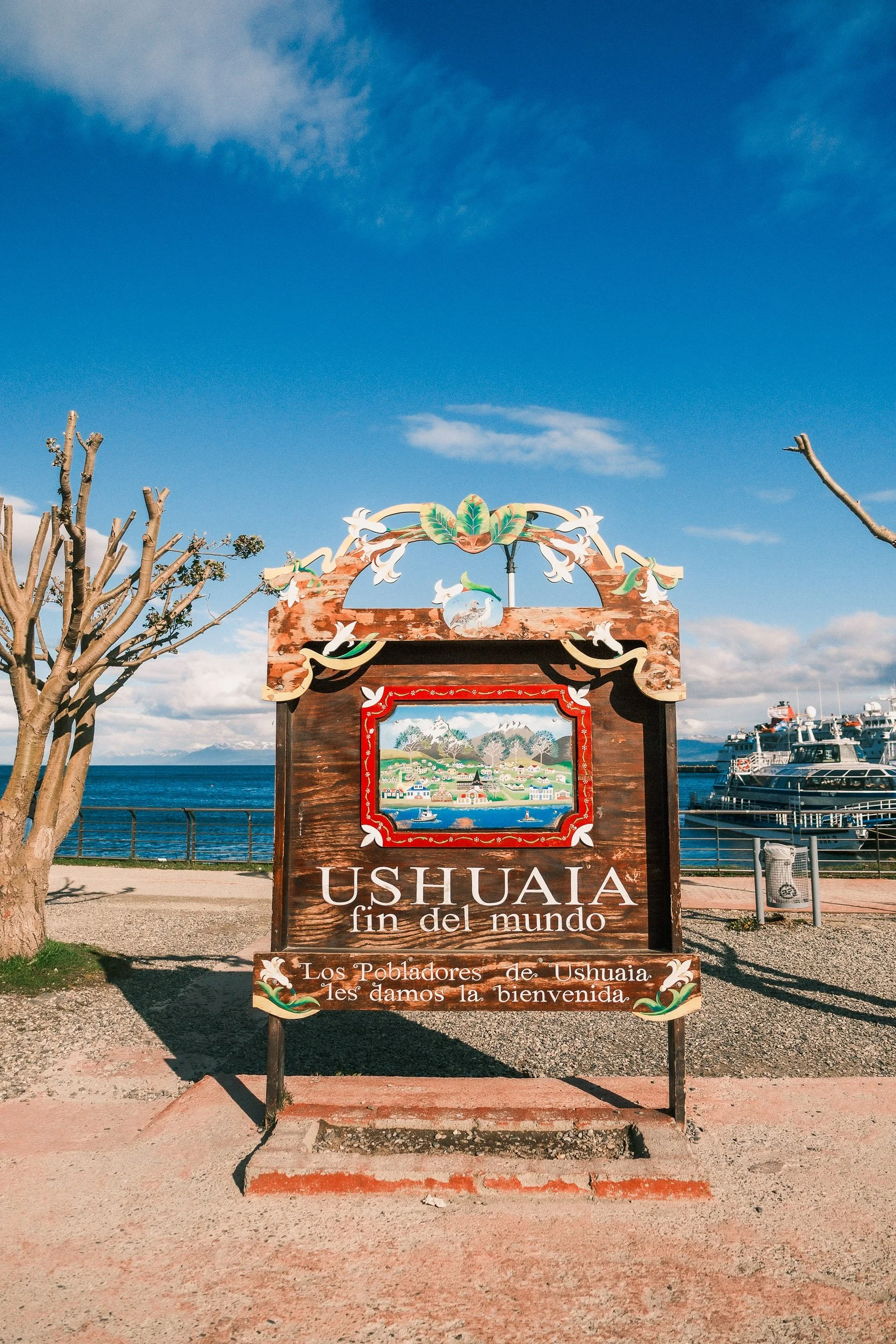
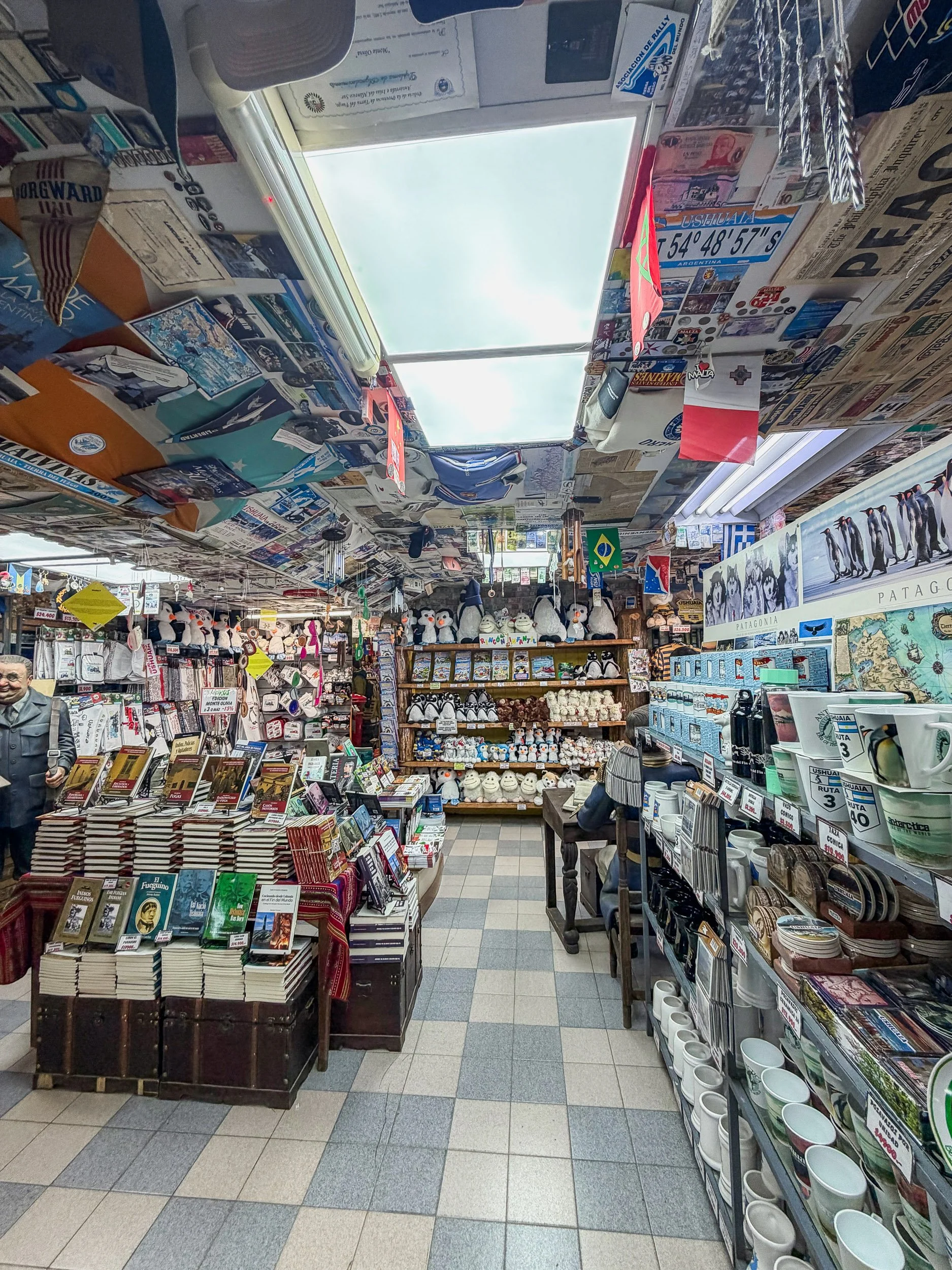
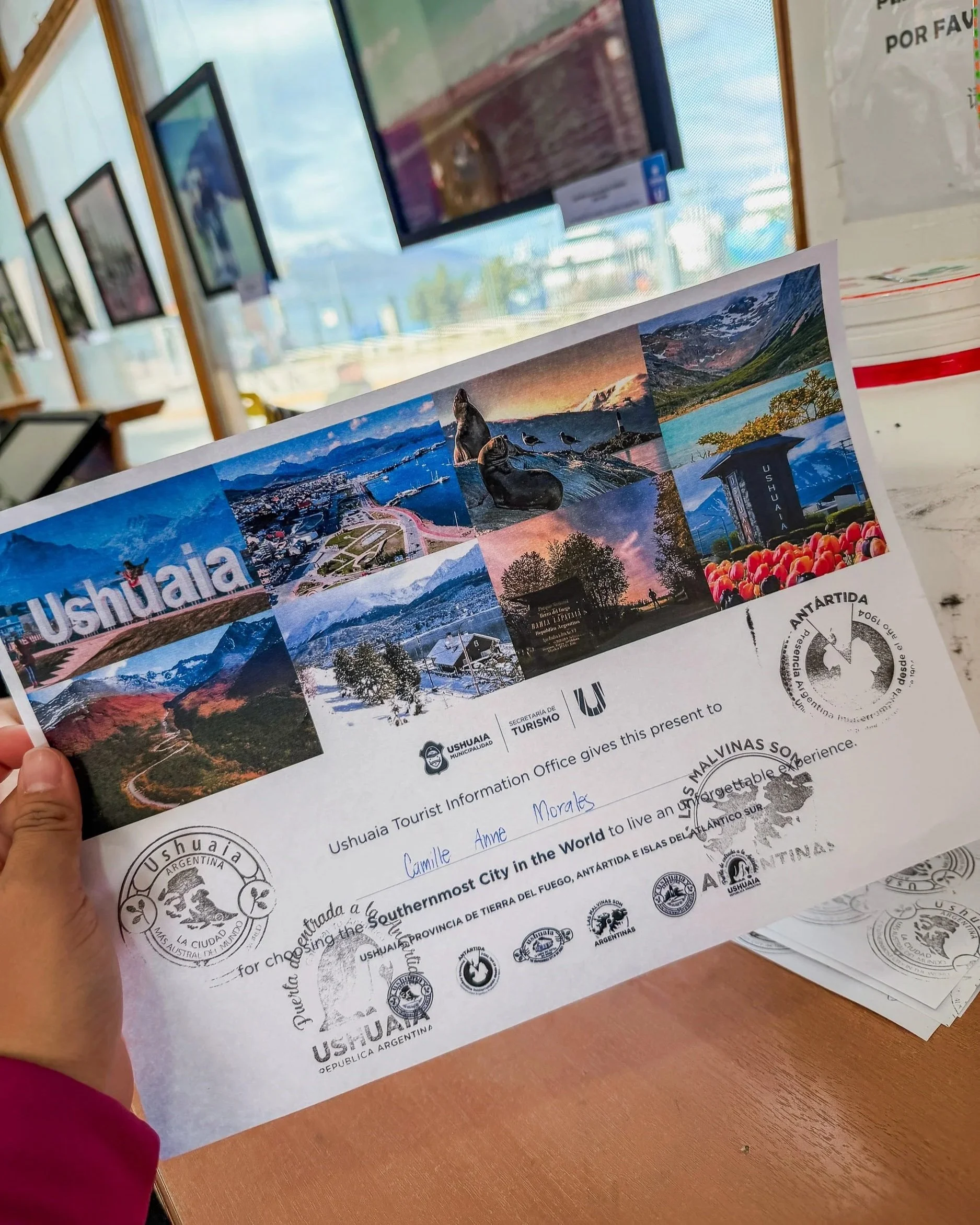
We also stopped by the city’s visitor center. They offer certificates stating that you reached the end of the world (free of charge for tourists). They also have free ink stamps for Antarctica, Ushuaia, and even Patagonia. (Reminder: do NOT place novelty stamps in your passport, as they could invalidate it. I saw a lady put one in hers. I hope she was able to go home! Keep a separate notebook or an expired passport for these.)
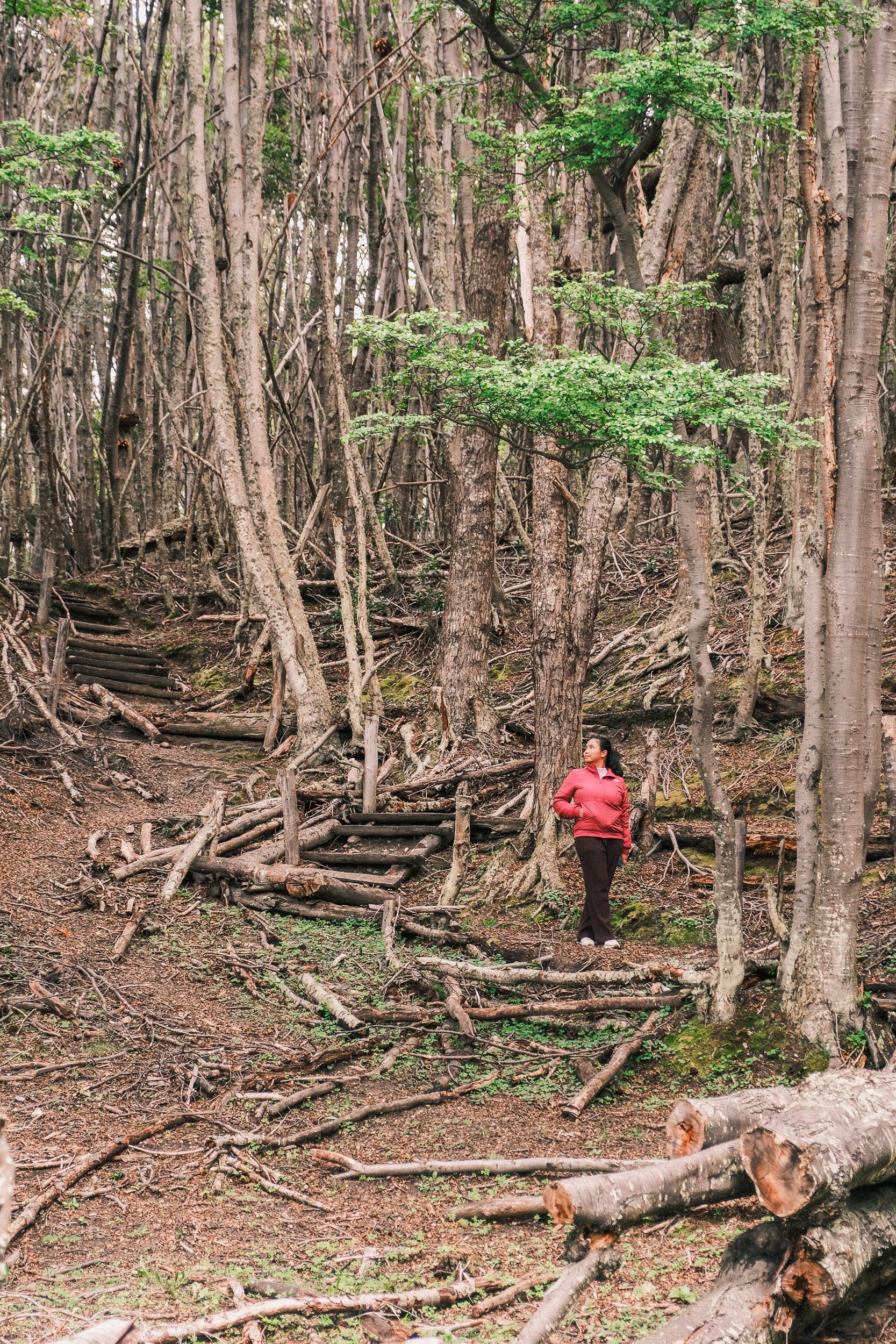
We also joined a half-day tour of Tierra del Fuego National Park on the morning of embarkation day.
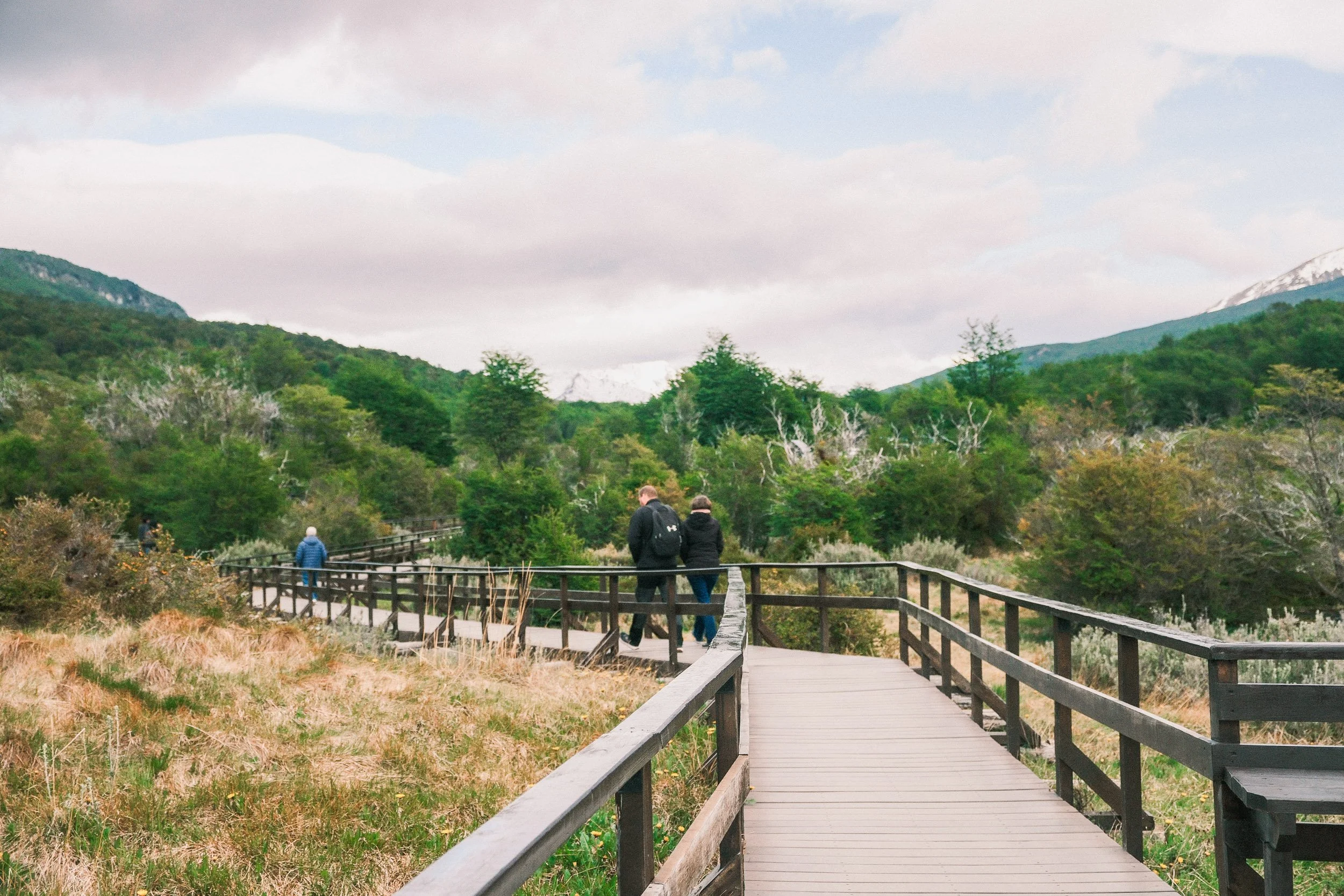
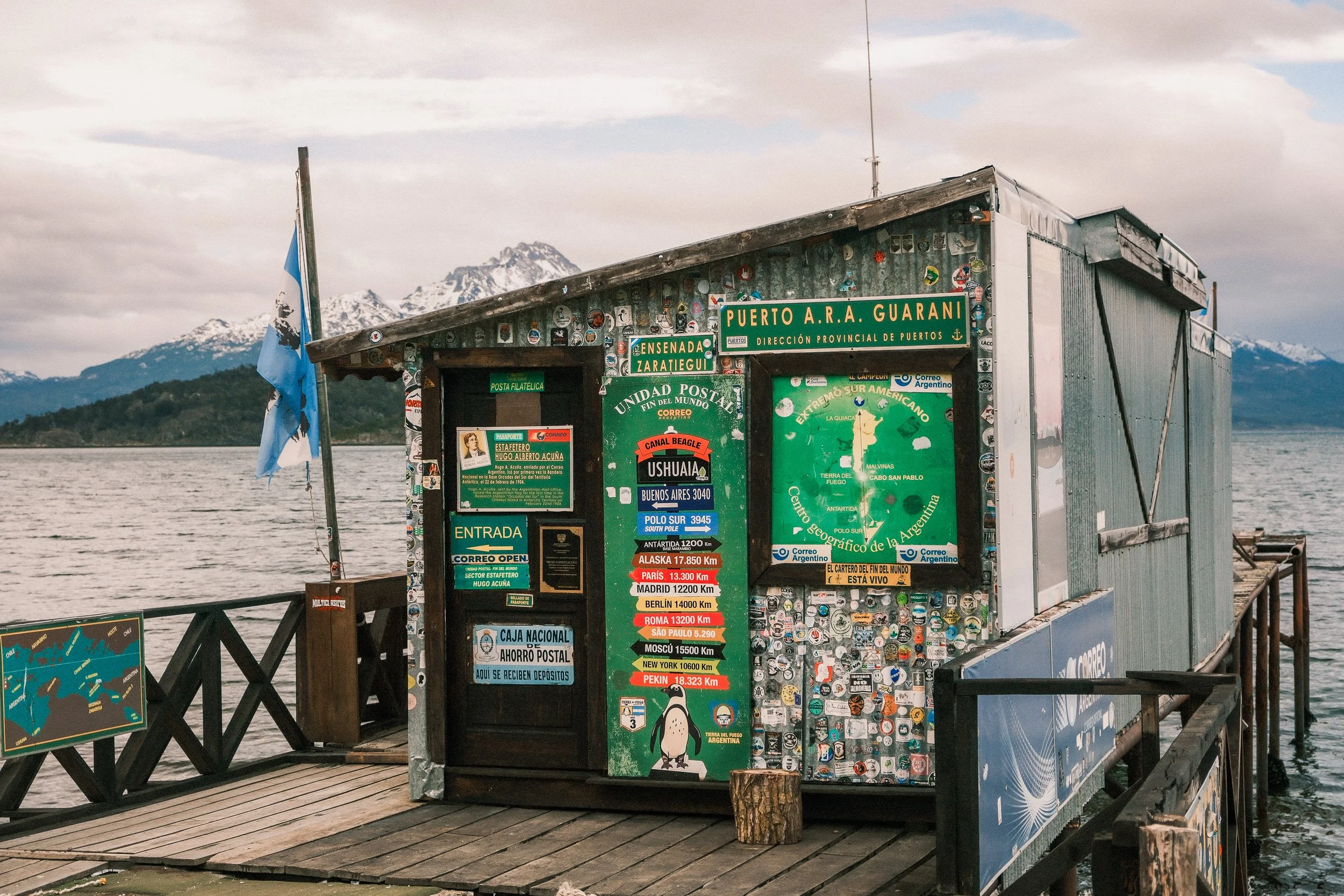
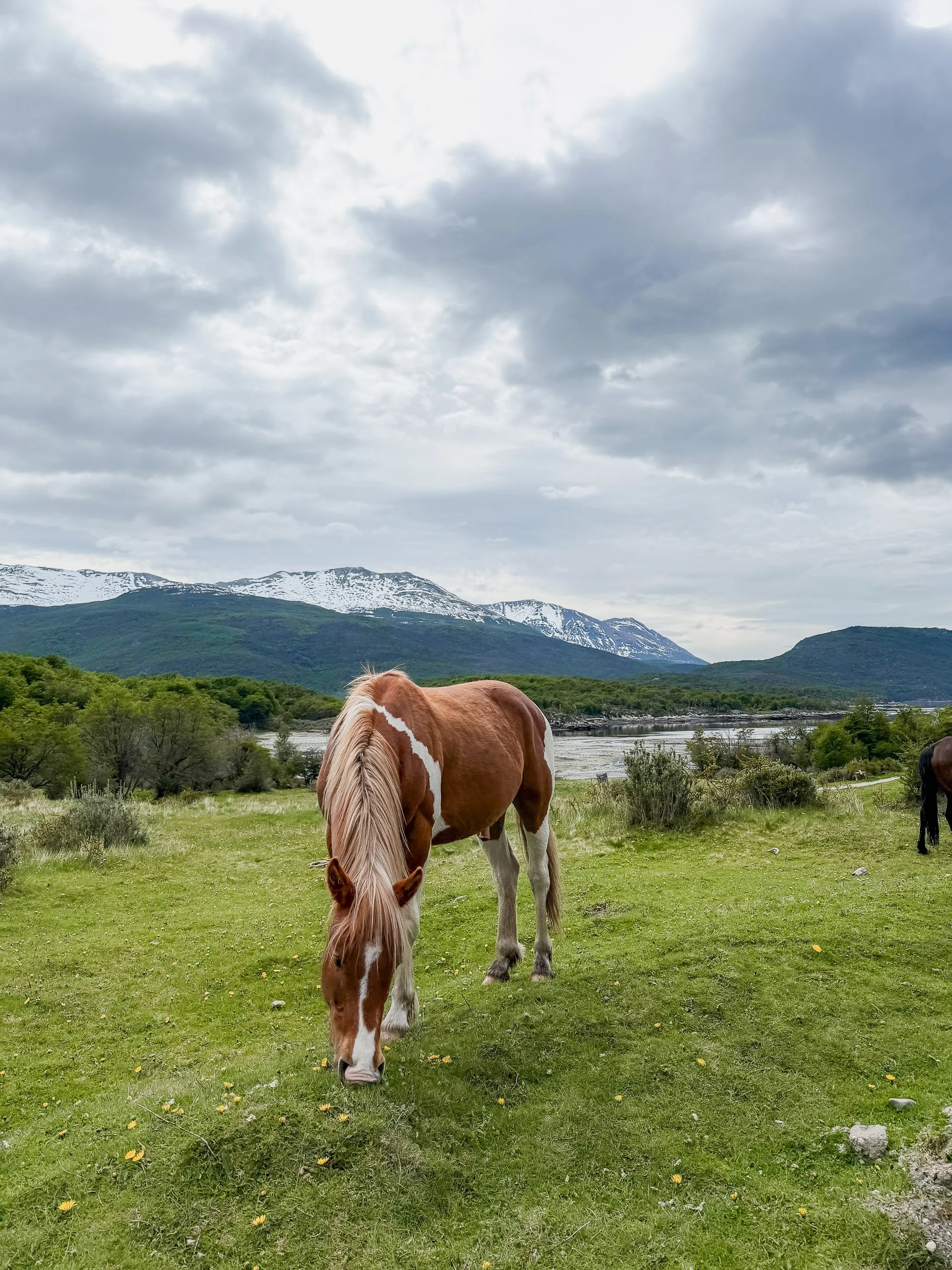
The Ship
The embarkation process was very organized, and we boarded our ship, the World Explorer, at around 4 pm.
We first saw the ship from afar the previous day when we were being dropped off at our hotel, and I thought it was small. I’m not going to lie: I got worried about whether it could actually cross the infamous Drake Passage and navigate the ice-filled waters of Antarctica in one piece. But once we got close to it and finally saw its full size, those fears were somewhat subdued. I realized I was probably just used to seeing the gigantic cruise ships docking at our ports in Subic and San Diego.
We received a warm welcome from the expedition team and the ship crew. After checking in and being given our key cards, we were shown to our room on Deck 6.
Dionne and I shared an Infinity Suite. Lex had a separate room on Deck 5 and got assigned a different roommate.
Our room was surprisingly spacious, considering we both had large luggage, and there was plenty of storage. It was also conveniently located near the rear viewing deck, so I could go out to take photos anytime I wanted. We didn’t have a balcony, but we had floor-to-ceiling glass so we could see the gorgeous views from our room. The bathroom was clean, and we had hot and cold running water. We had a TV that we could use to watch the lectures and daily programs. It felt like a nice, luxurious hotel room. We also found our yellow parkas and refillable water bottles on our beds.
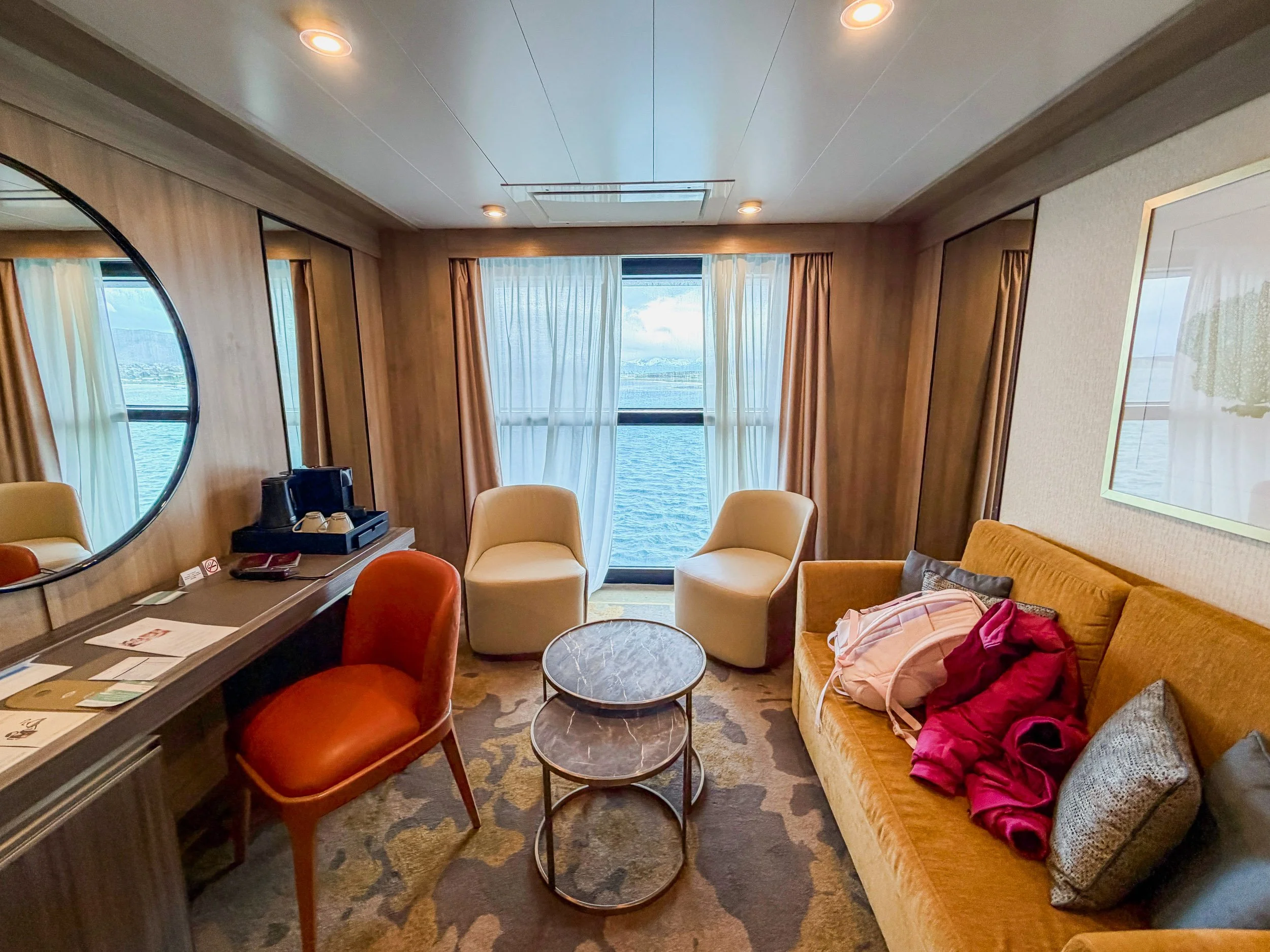
The living area was pretty spacious!
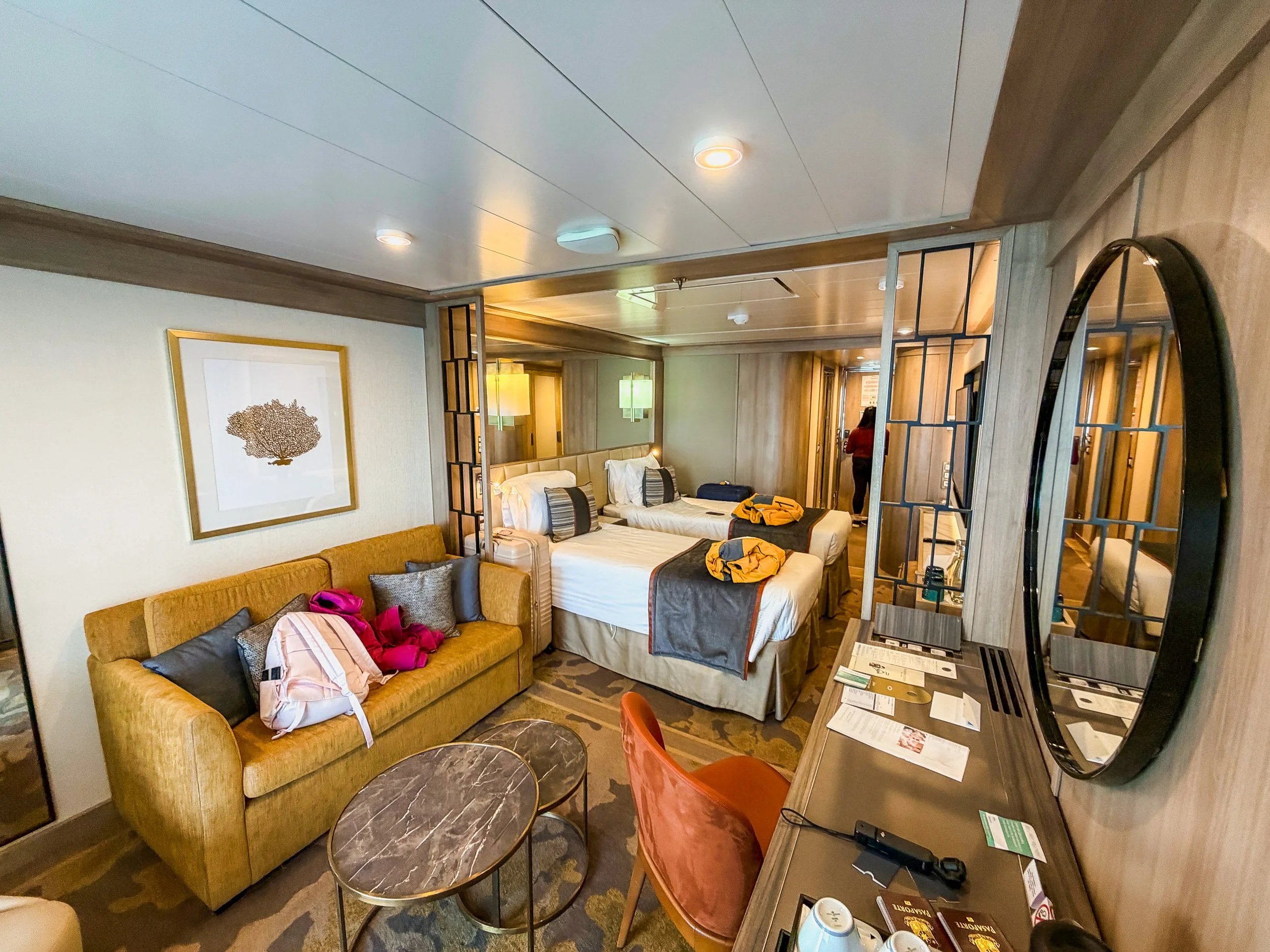
Tried to capture our entire room
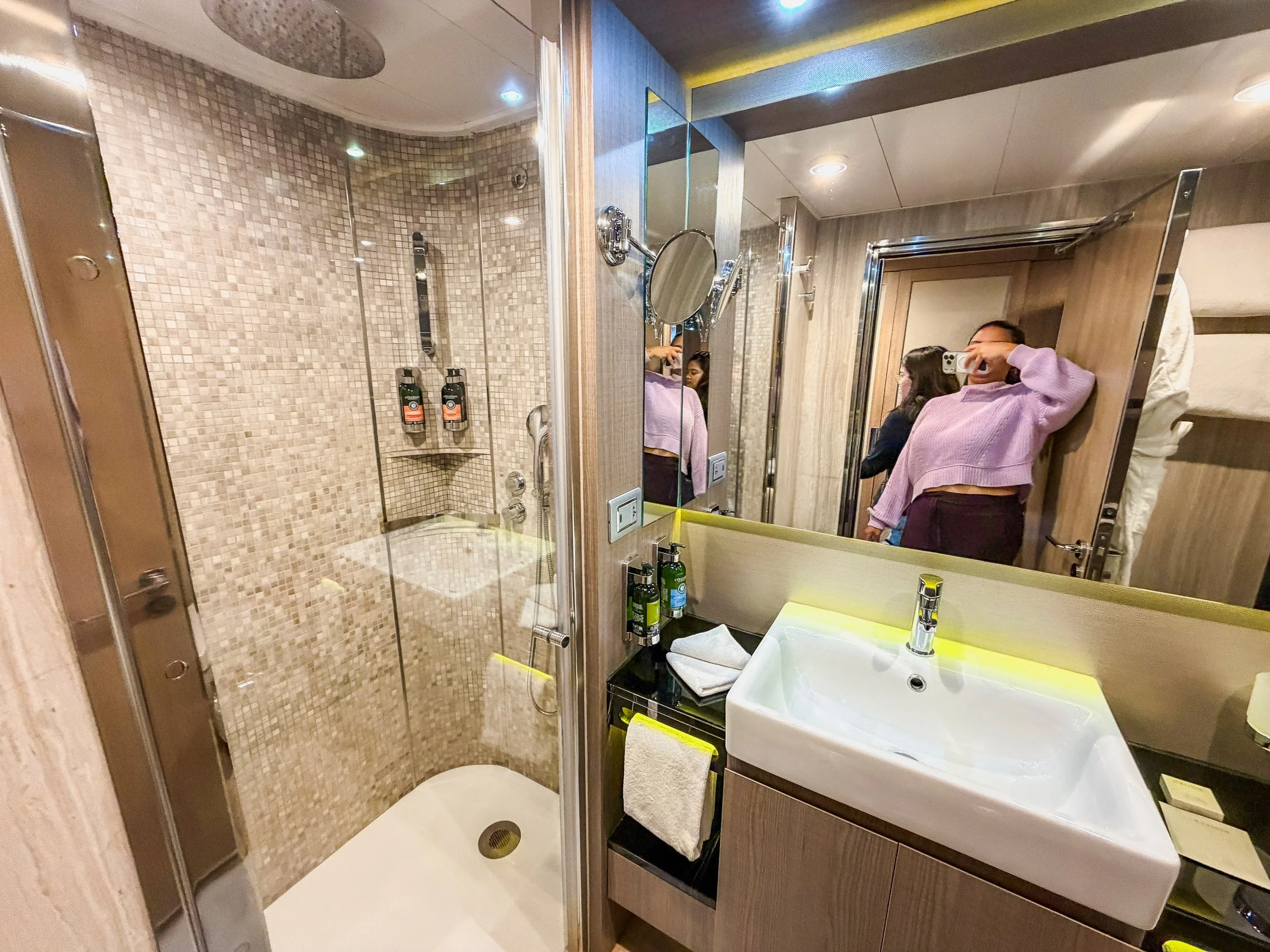
The bathroom
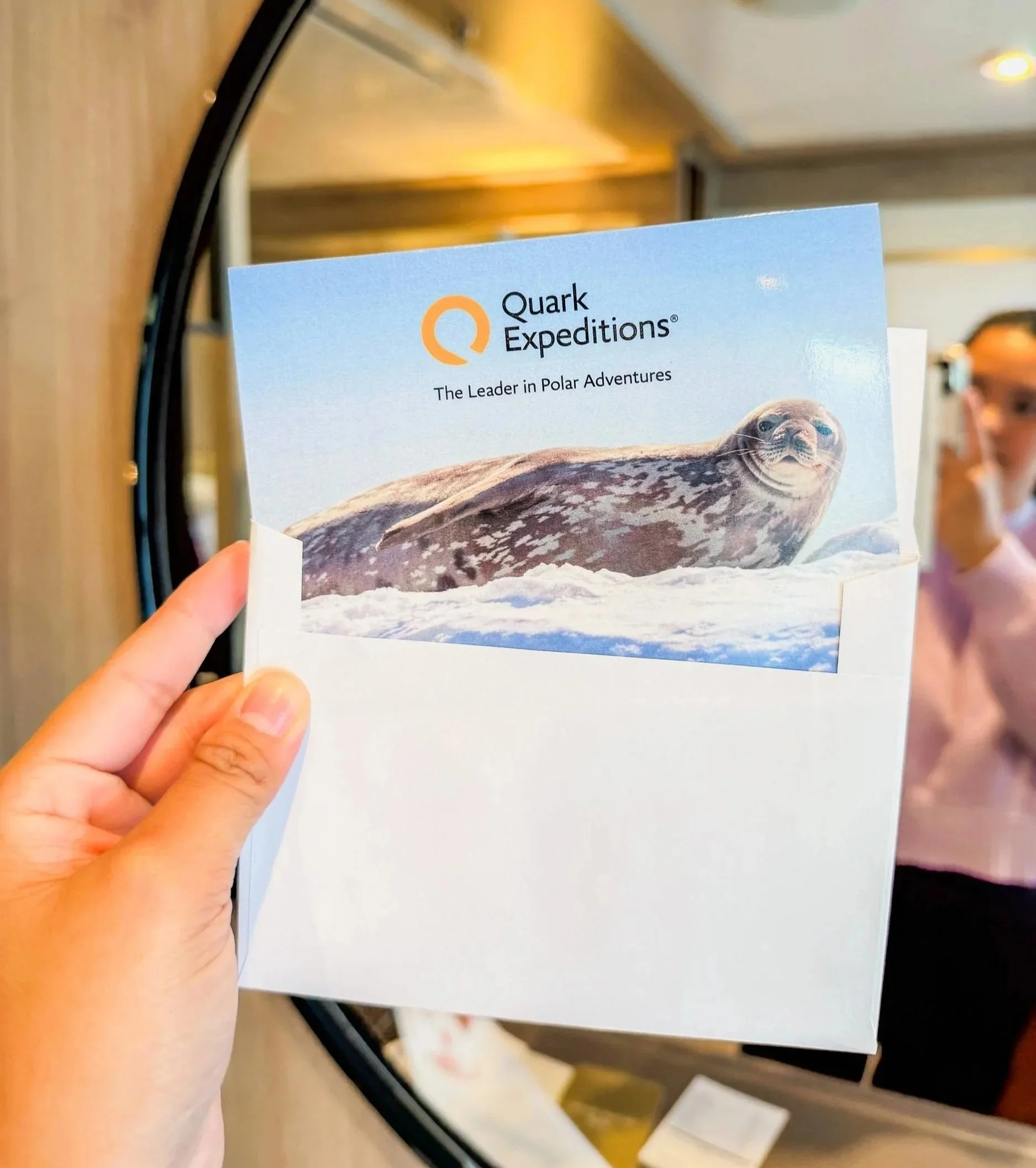
Welcome packet
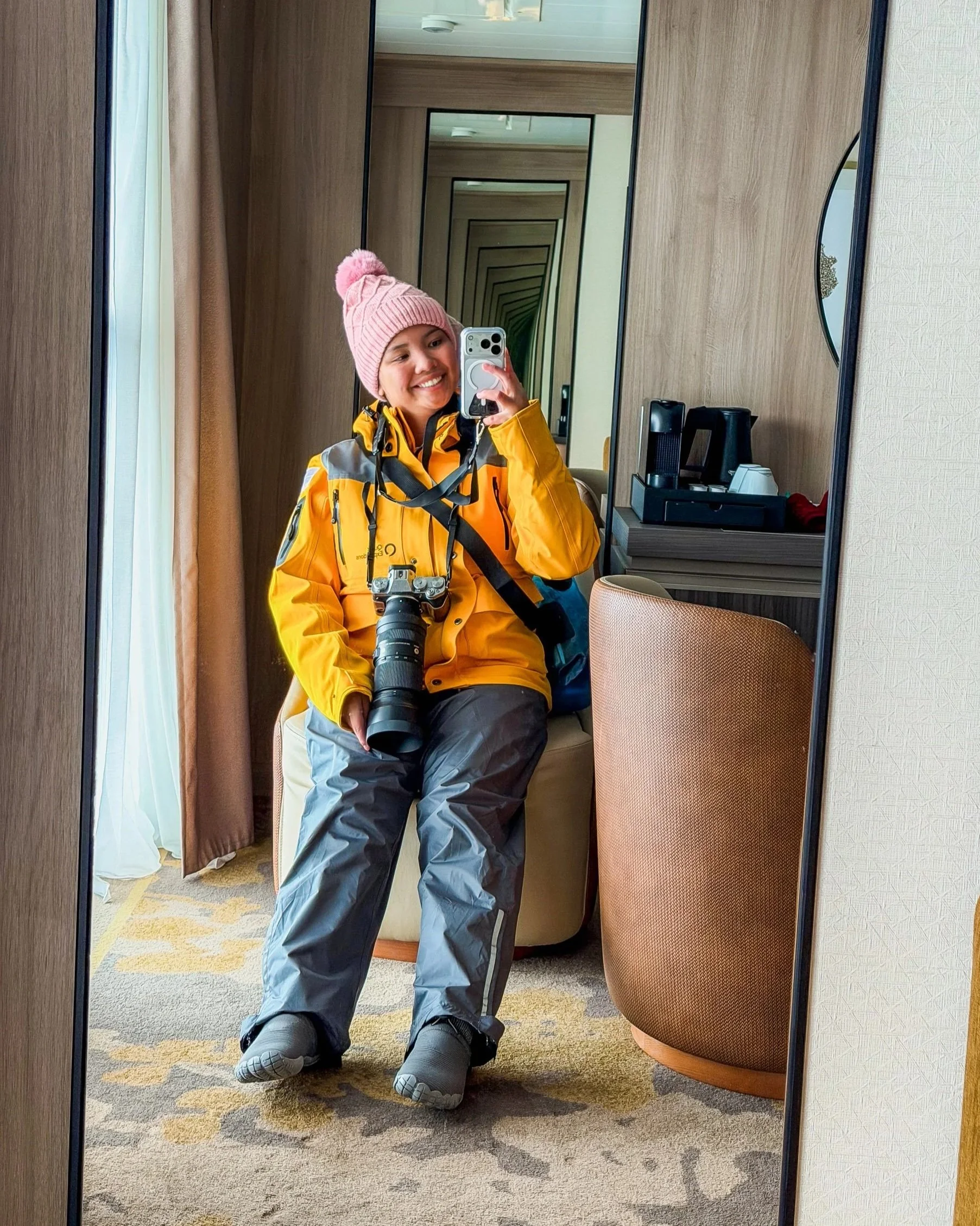
Tried out my expedition fit!
After a safety briefing, we decided to tour the ship to familiarize ourselves with the layout and know where everything was. We could only go as far as Deck 3 because the engine room and the crew’s rooms were on Decks 1 & 2.
There was a captain’s welcome cocktail ceremony before dinner, where we met the captain and his staff. Afterward, around 7 pm, we finally set sail and bade farewell to Ushuaia.
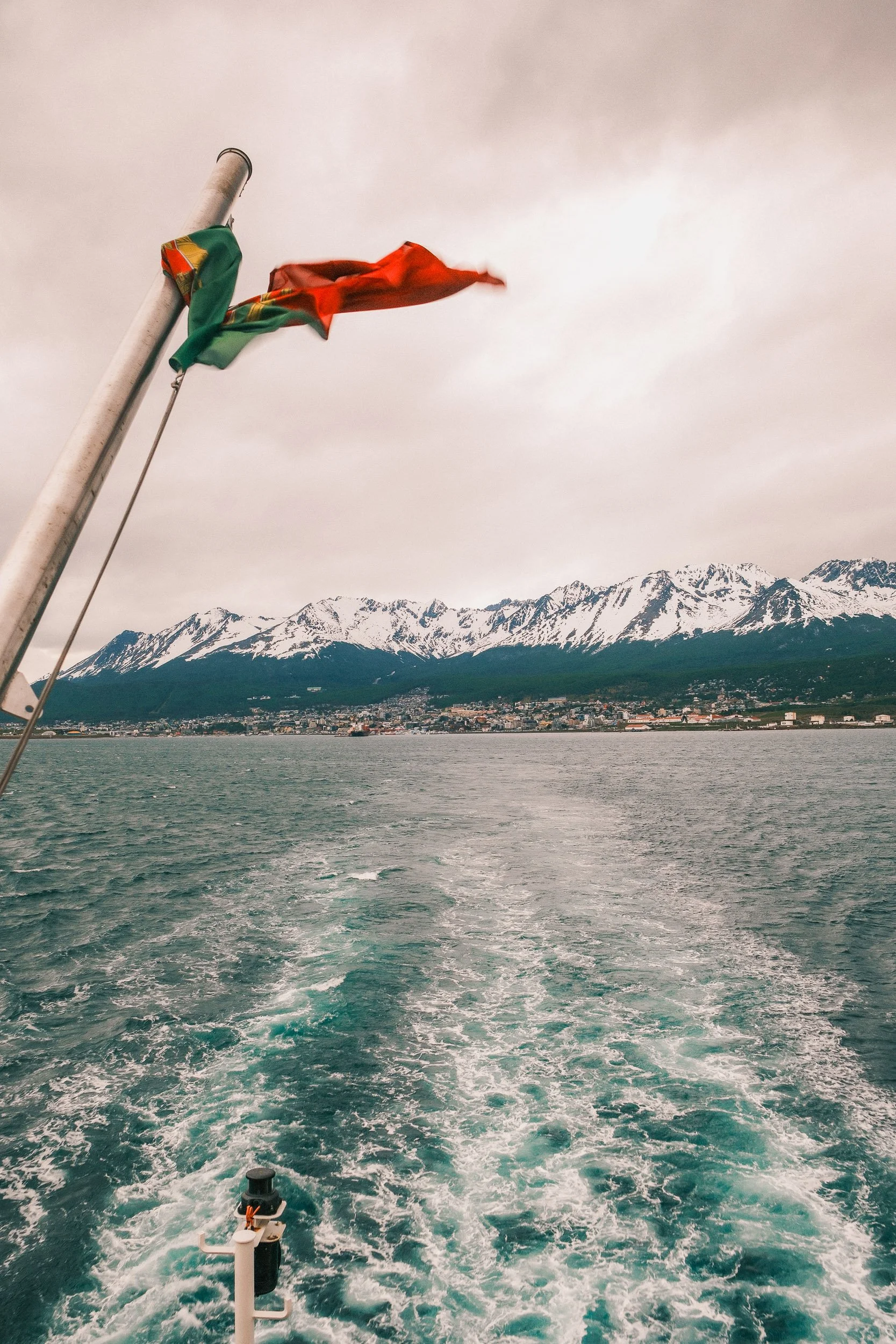
Hasta luego, Ushuaia!
Daily Life
Internet on the ship was costly. 1 GB costs around $40+. We had a free 5GB data allowance, and I accidentally used it all up in less than 2 days because I forgot to turn off my data while I slept. I spent the majority of the trip offline, only checking in on my family and friends occasionally to let them know I’m still alive. That translated to a more enriching and spiritual experience for me. There was no distraction, and I felt fully present throughout the journey.
There wasn’t a dull moment on the ship, even on Drake days. Every single day was filled with joyous anticipation. We got to meet amazing people from all over the world and learn from and listen to lectures by experts in their fields. We saw tons of wildlife and such ethereal landscapes. Breakfast and lunch were buffet-style, and dinner was à la carte. Sometimes during meals, expedition team members would sit with passengers and chat with us. It was pretty cool to hear their stories, and I’m high-key jealous of their jobs. Haha.
One of my favorite things about being Filipino is our instant camaraderie with fellow Filipinos wherever we meet them. That’s why we immediately connected with Ate Mae (receptionist) and Kuya Roel (bartender). We did meet a few other Filipino crew members, but they were the ones we could talk to the most. And they were awesome! We even asked if we could request Filipino food for a meal, and they said they’d pass it on to the Filipino sous chef. Needless to say, the head waiter personally brought us bowls of sinigang one time during dinner.
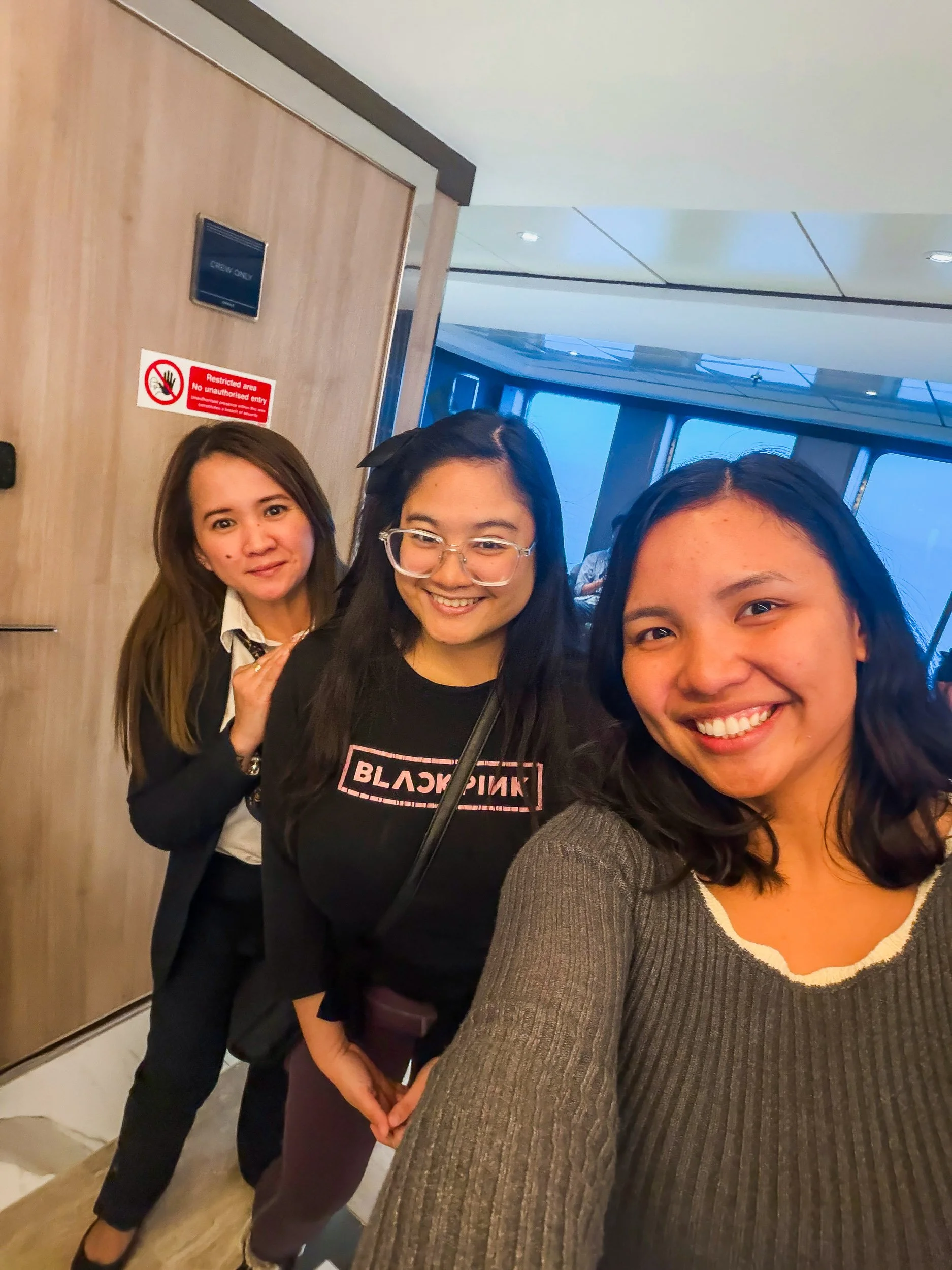
With Ate Mae!
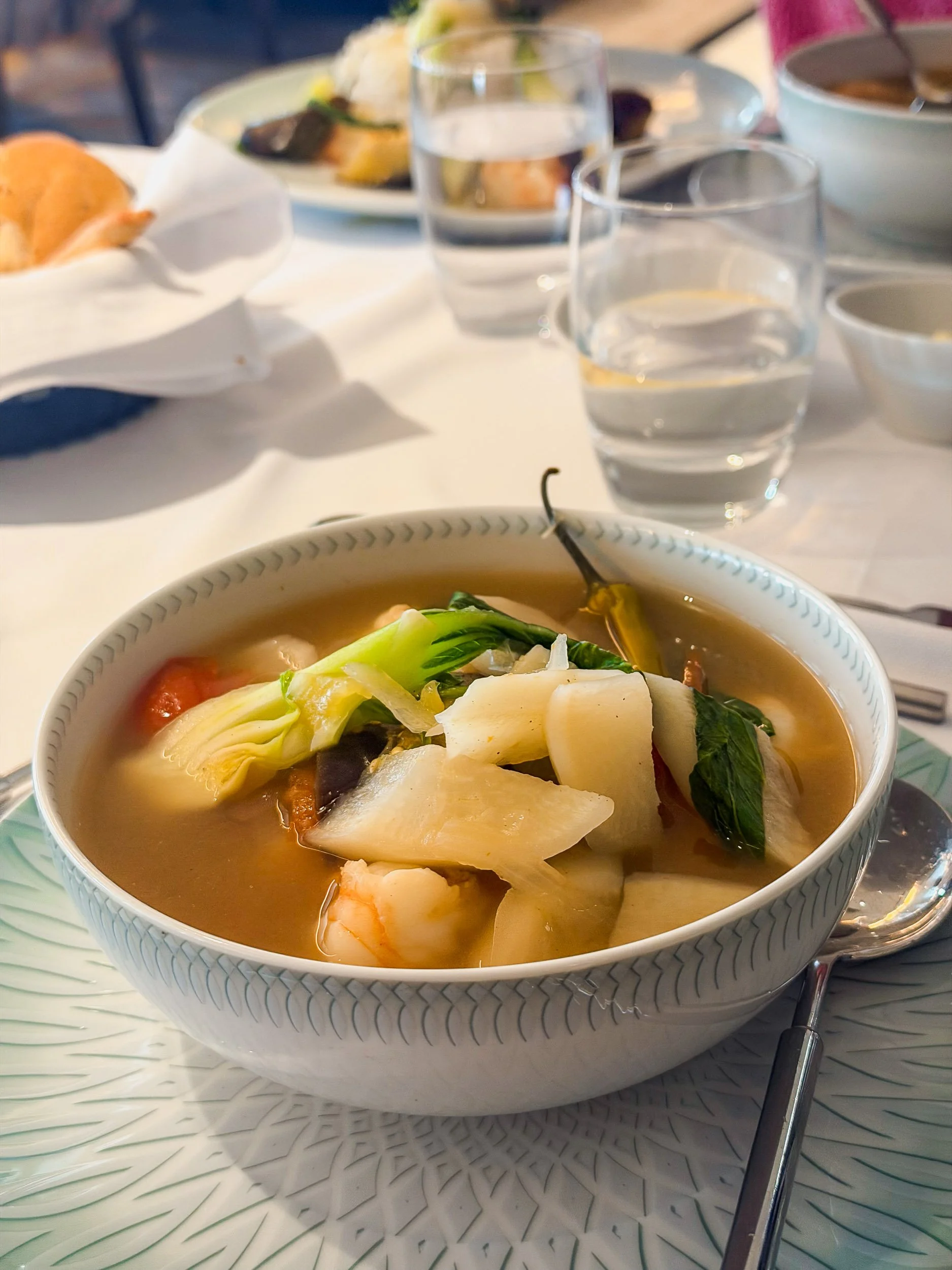
The sinigang def hit the spottt
Prior to our arrival in the peninsula, we had a biosecurity briefing. The staff also inspected our pants, gloves, socks, and other items we were bringing on zodiac excursions to ensure there were no seeds, insect eggs, soil, or other foreign substances that could threaten the fragile ecosystems we would be visiting.
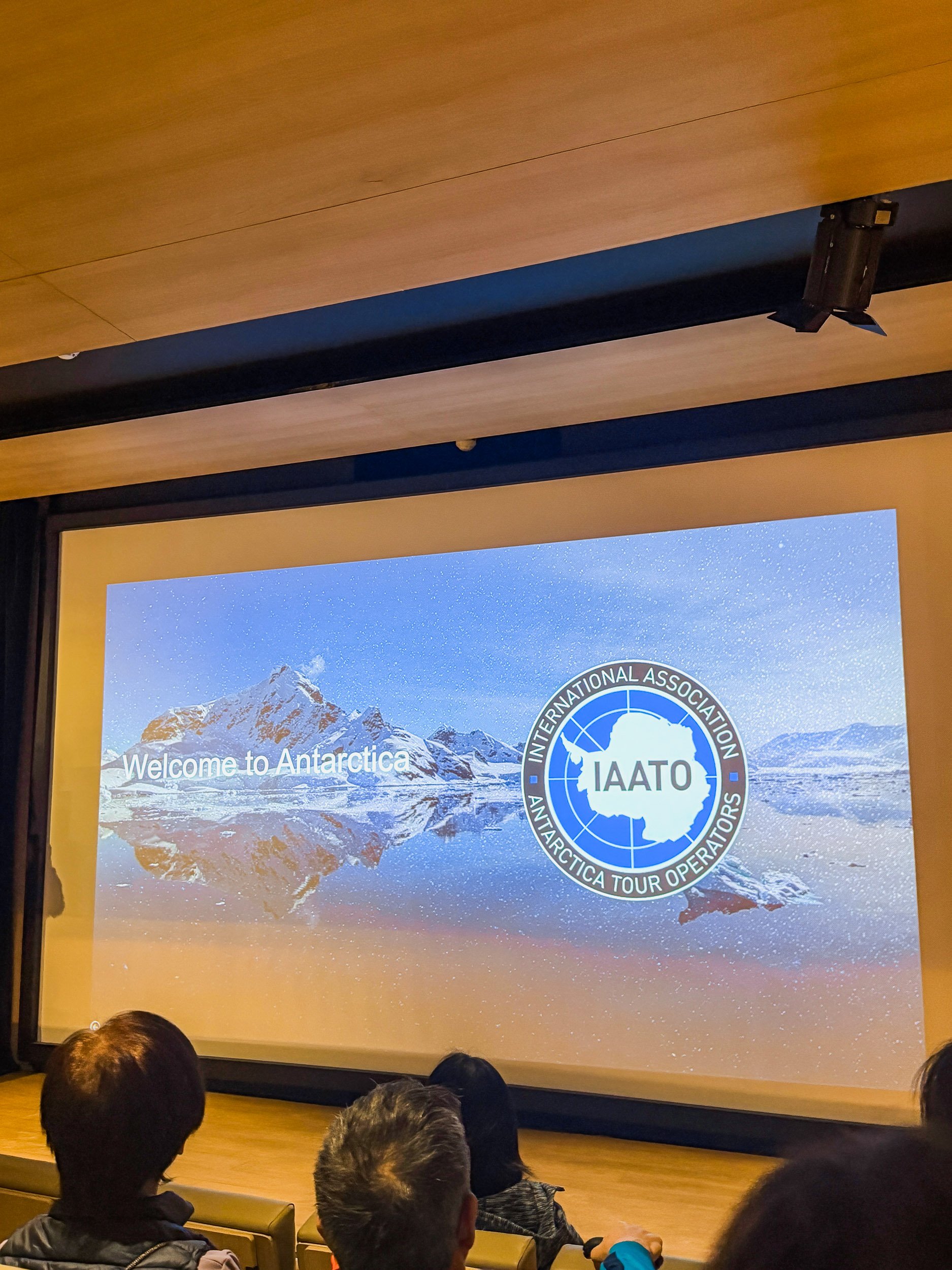
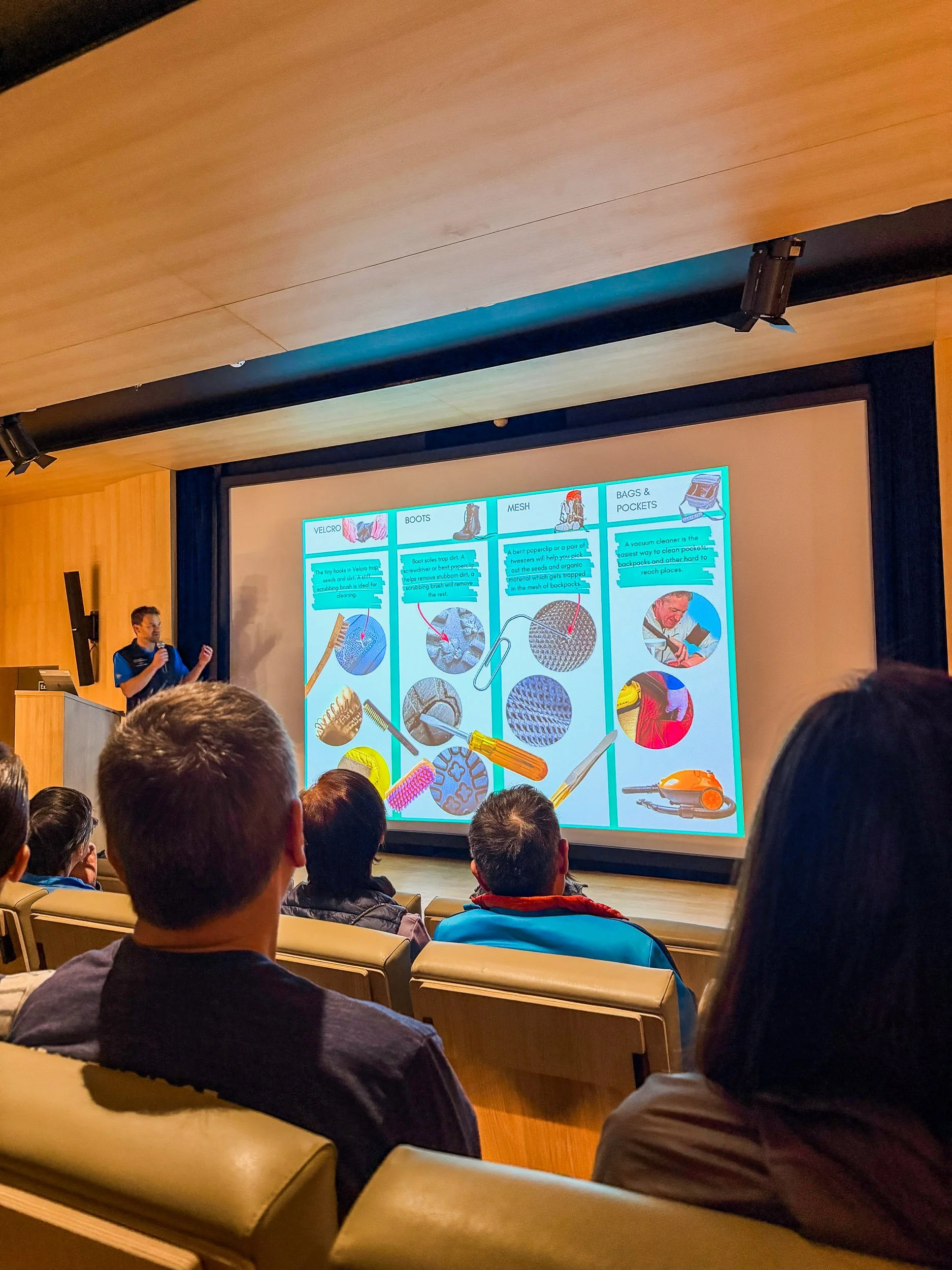
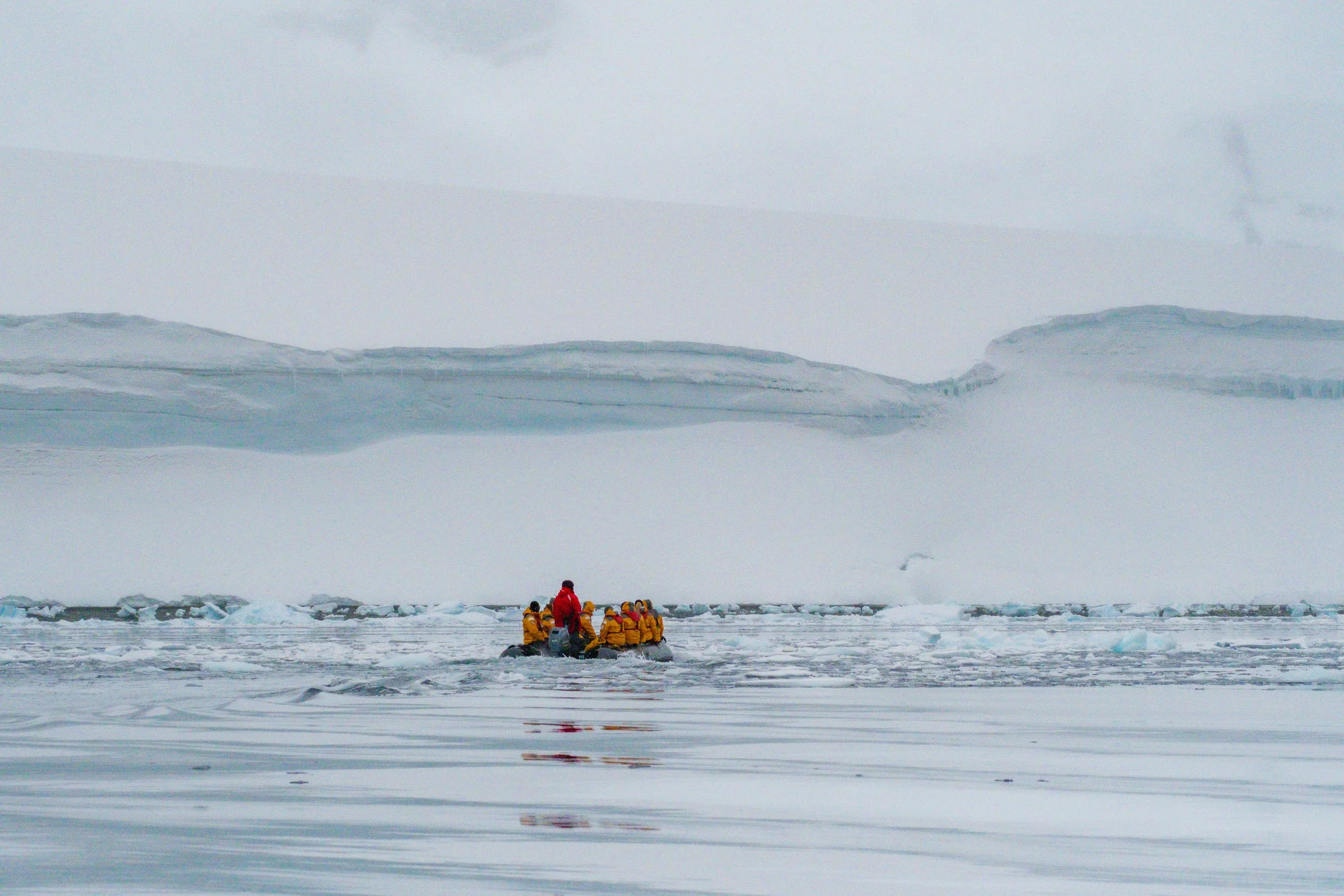
On the days we’ve been waiting for — zodiac days when we disembark the ship and explore — the excitement was amplified. Those days were undeniably busy, and they typically went like this: wake-up call - breakfast - morning zodiac excursion - lunch - afternoon zodiac excursion - daily recap - dinner - free time. Expedition and mountain guides would go out first to mark safe walking paths at the landing site and scout the area for potential hazards before the excursions began. Predetermined zodiac groups were split between those who land first and those who take the cruise first. Each activity usually lasts an hour or so, and then we switch.
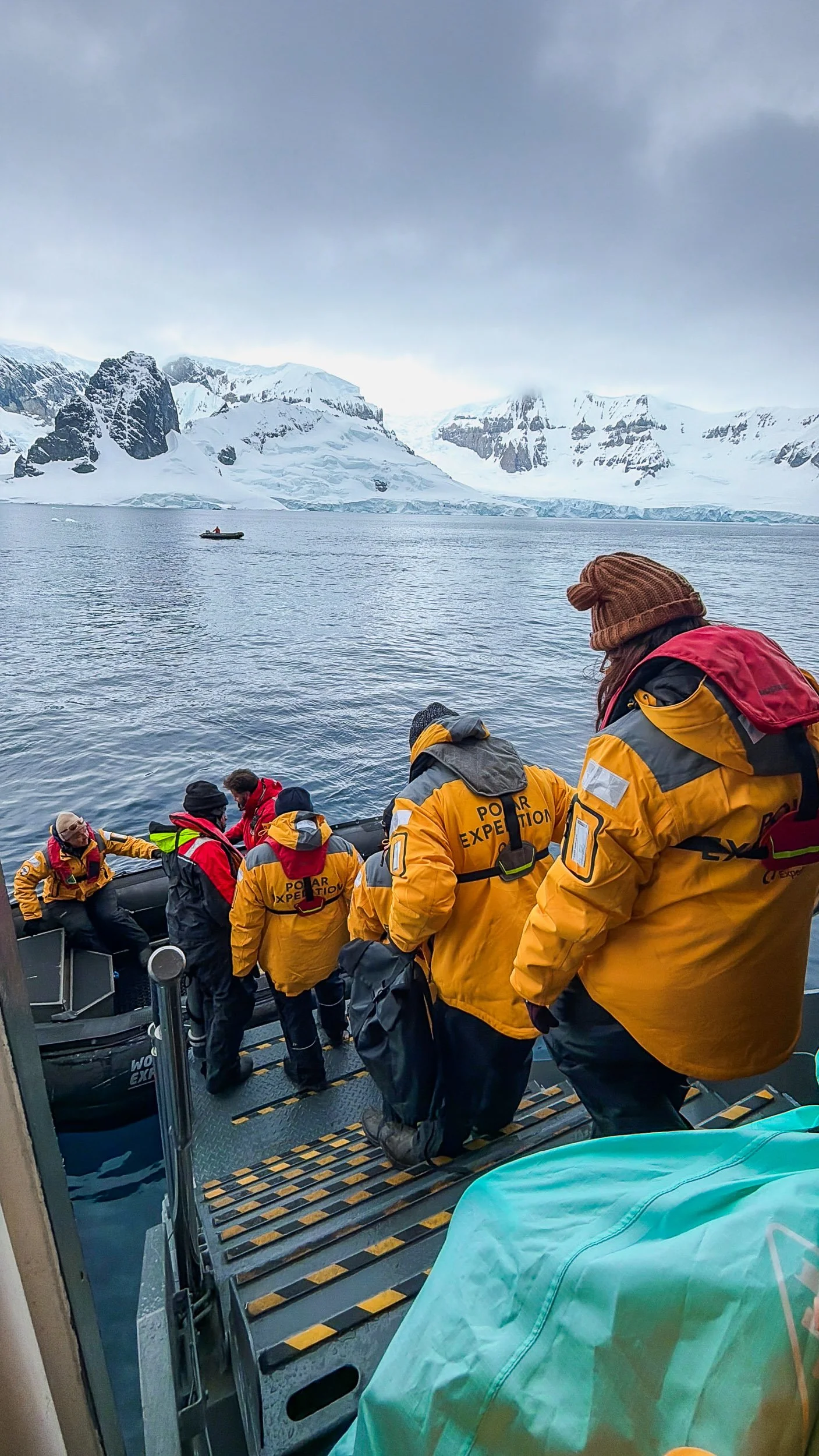
Boarding the zodiac
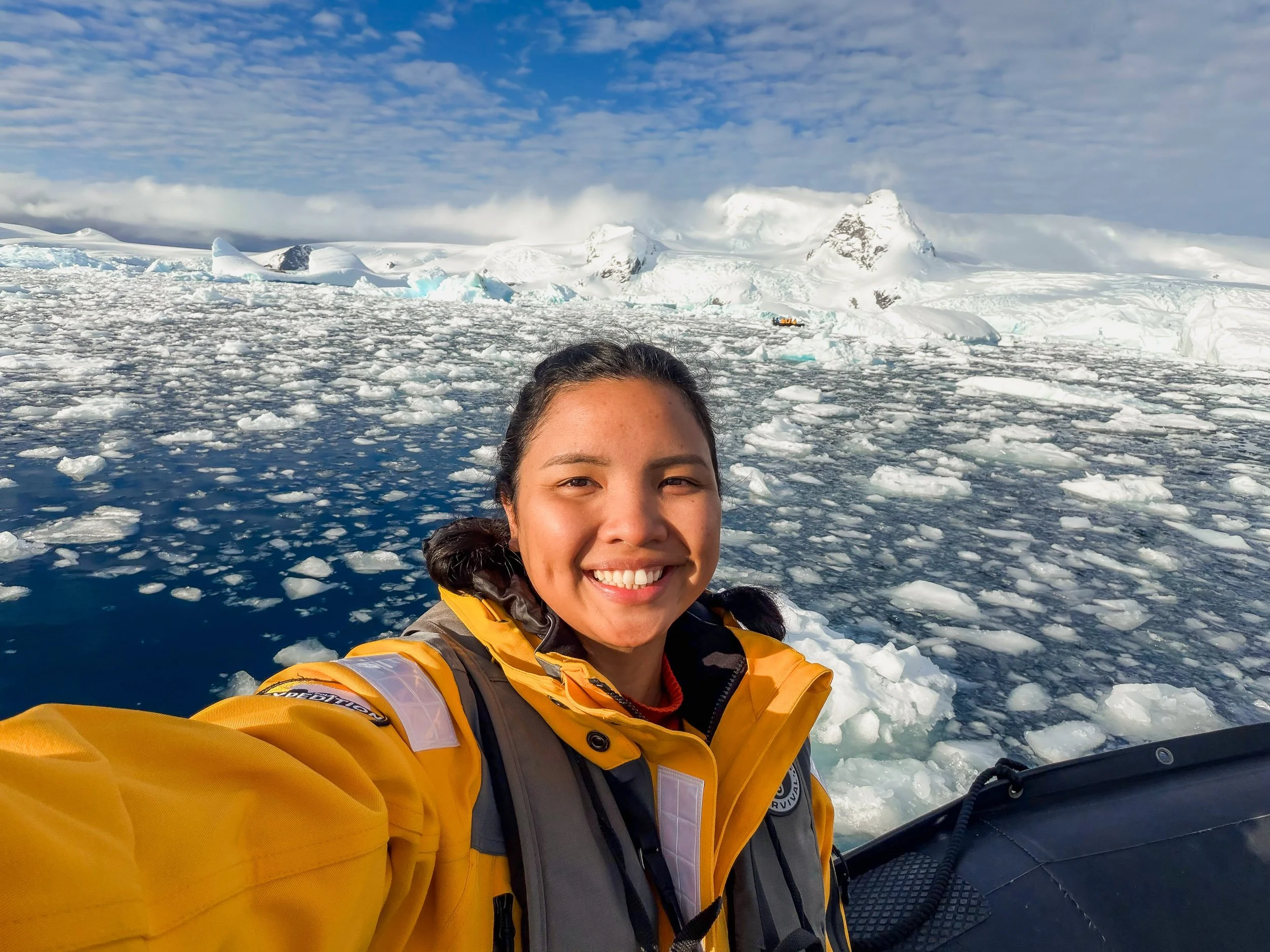
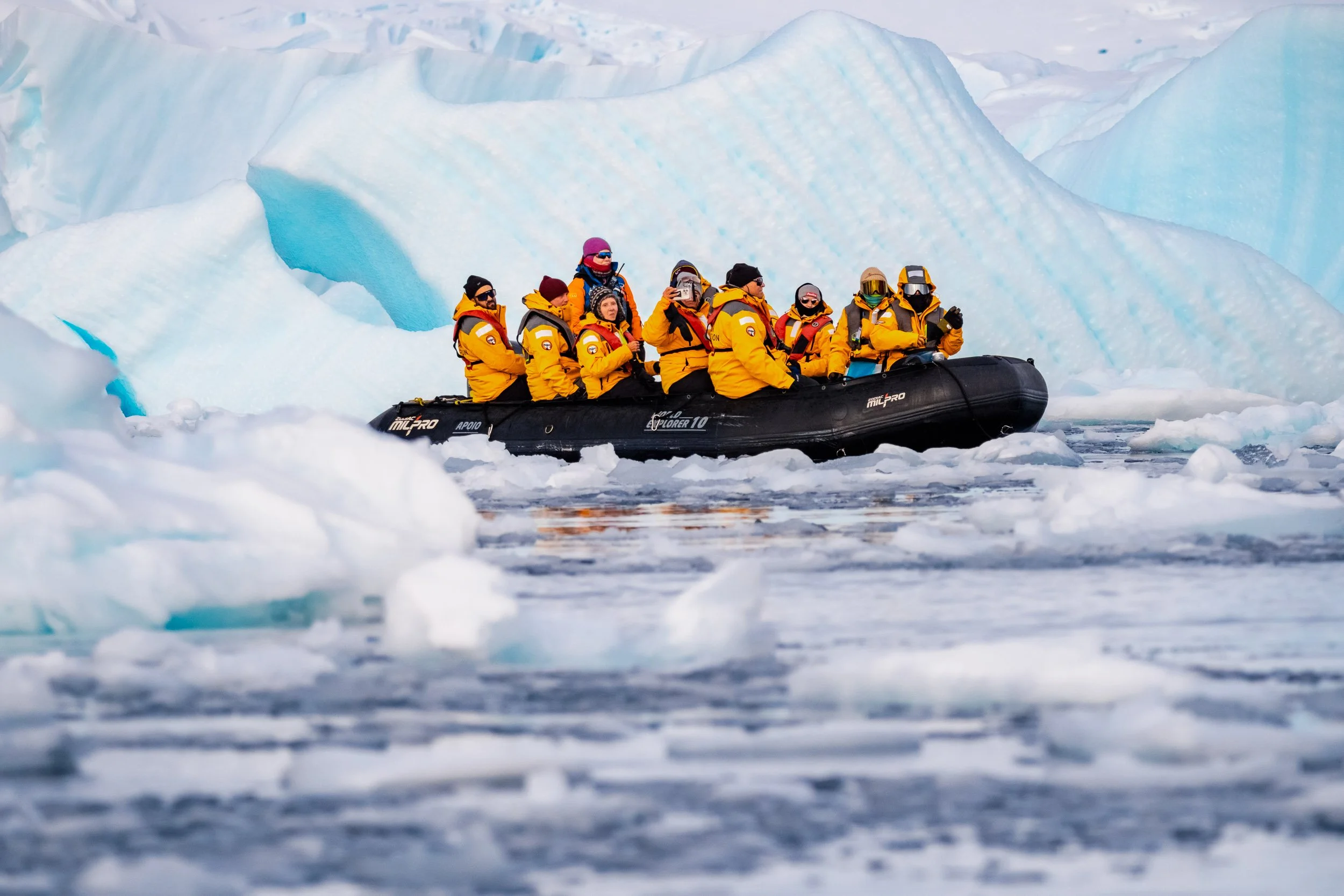
Aside from the usual zodiac excursions, there were other special activities we could join (for an additional cost, of course) to make our Antarctic experience more memorable. Those activities included kayaking, stand-up paddleboarding, and camping. Quark’s other ship, the Ultramarine, even has a helicopter for flightseeing! I initially wanted to join the camping, but I wasn’t able to secure a slot. I was glad about that later on, because I realized I might not be able to handle sleeping out in the cold. I’m sure it was a lovely experience, and the campers seemed to have a lot of fun upon returning to the ship. I was happier to wake up in my warm, soft bed, though.
Sometimes there were bar talks/games scheduled after dinner. We spent our free time sleeping, watching a movie, chatting with the crew and fellow passengers, chilling in the lounge or library, exploring the ship, or checking out the gift shop (bruh, just take my money!). I was also writing postcards to my friends.
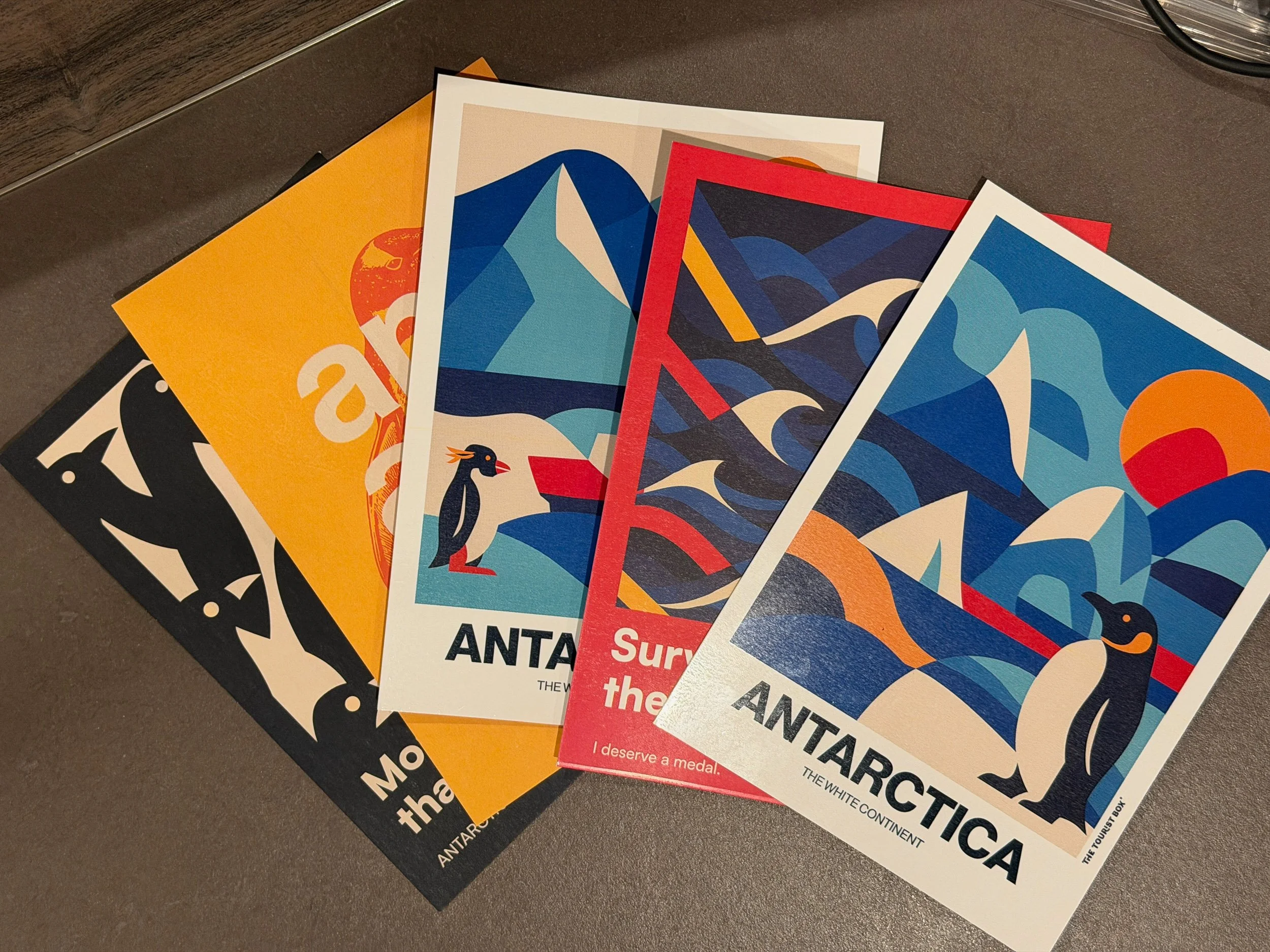
Wrote postcards to my friends
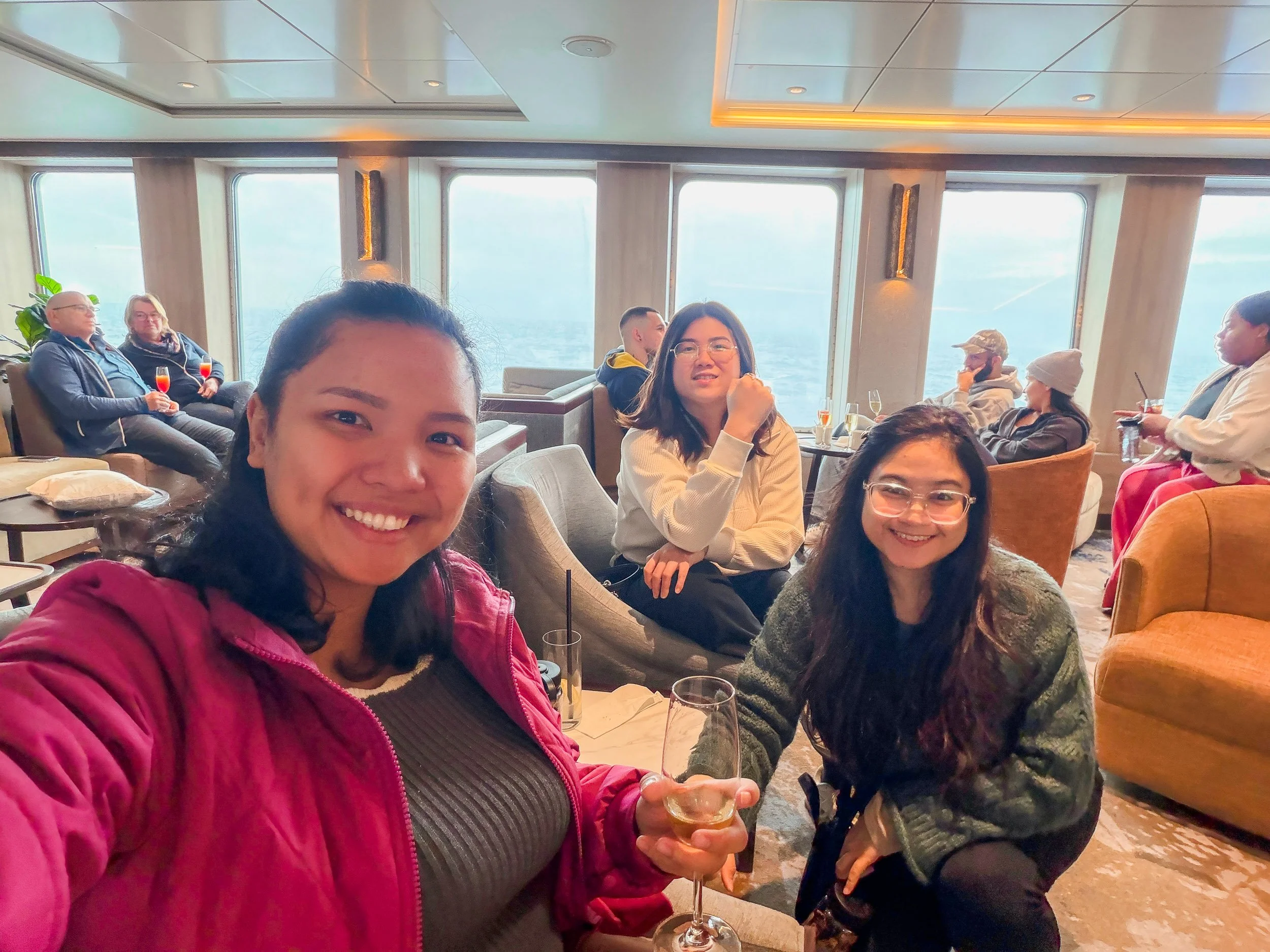
Lounging and drinking
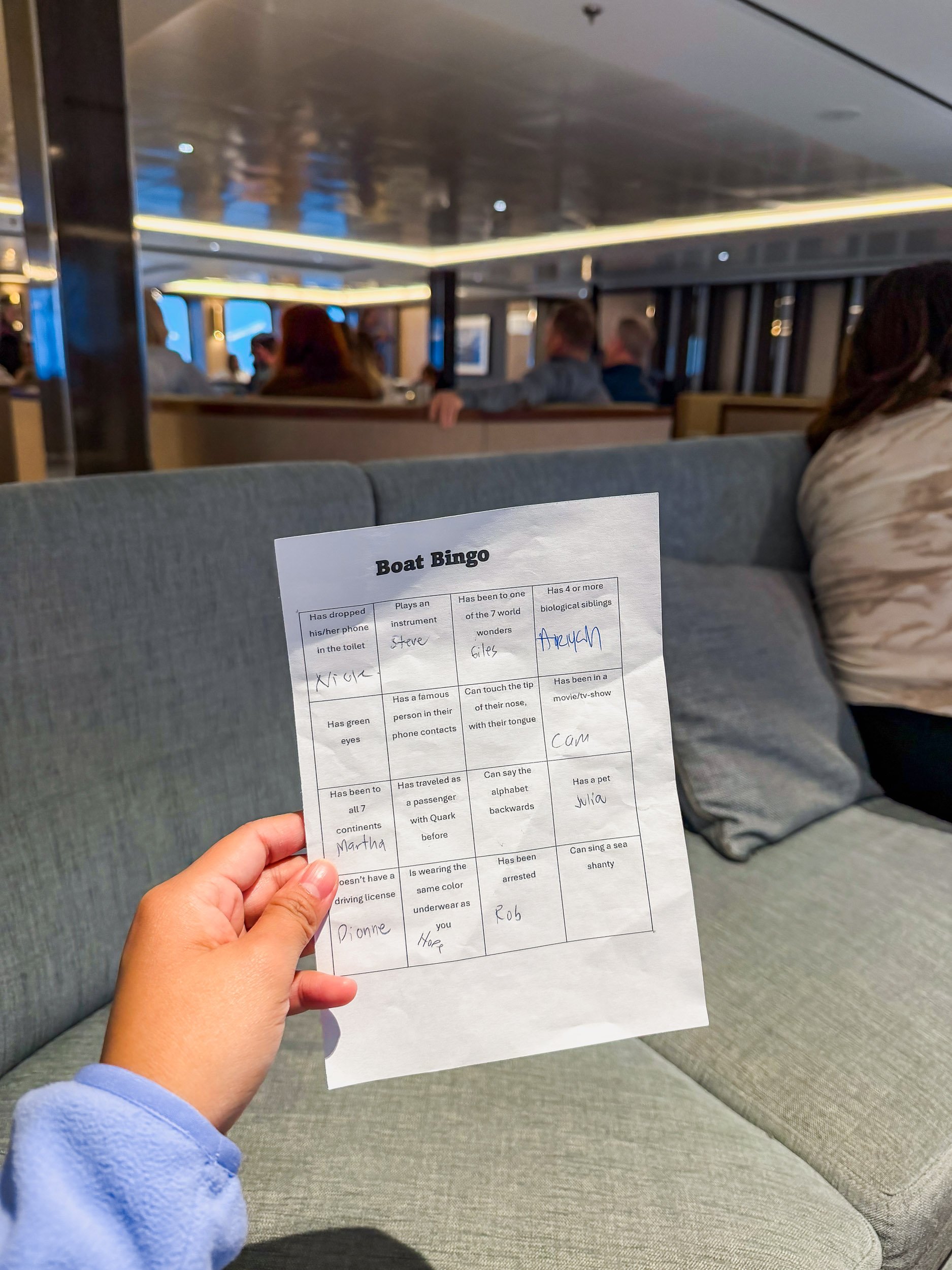
After-dinner games
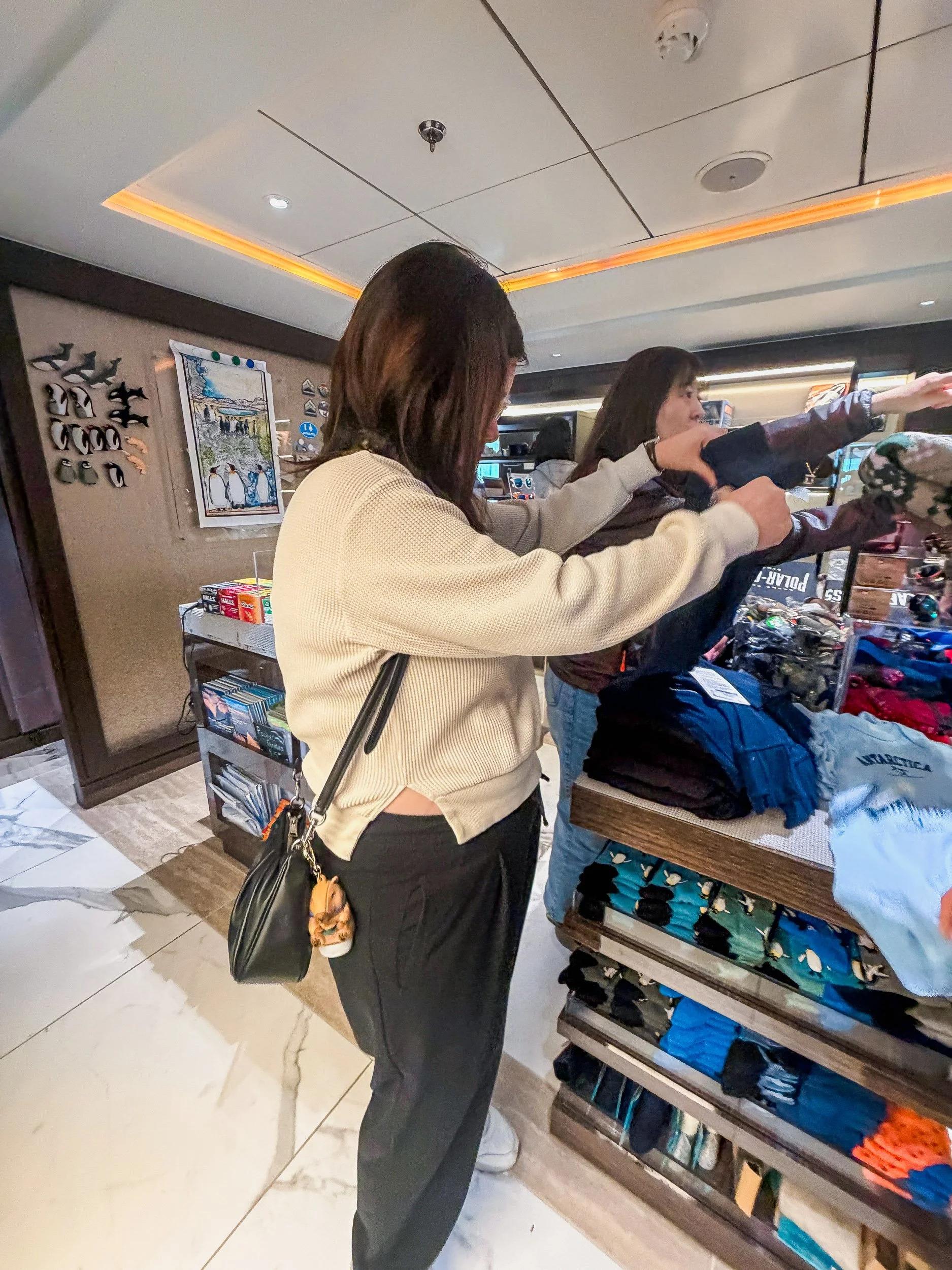
We spent an ungodly amount on souvenirs lol
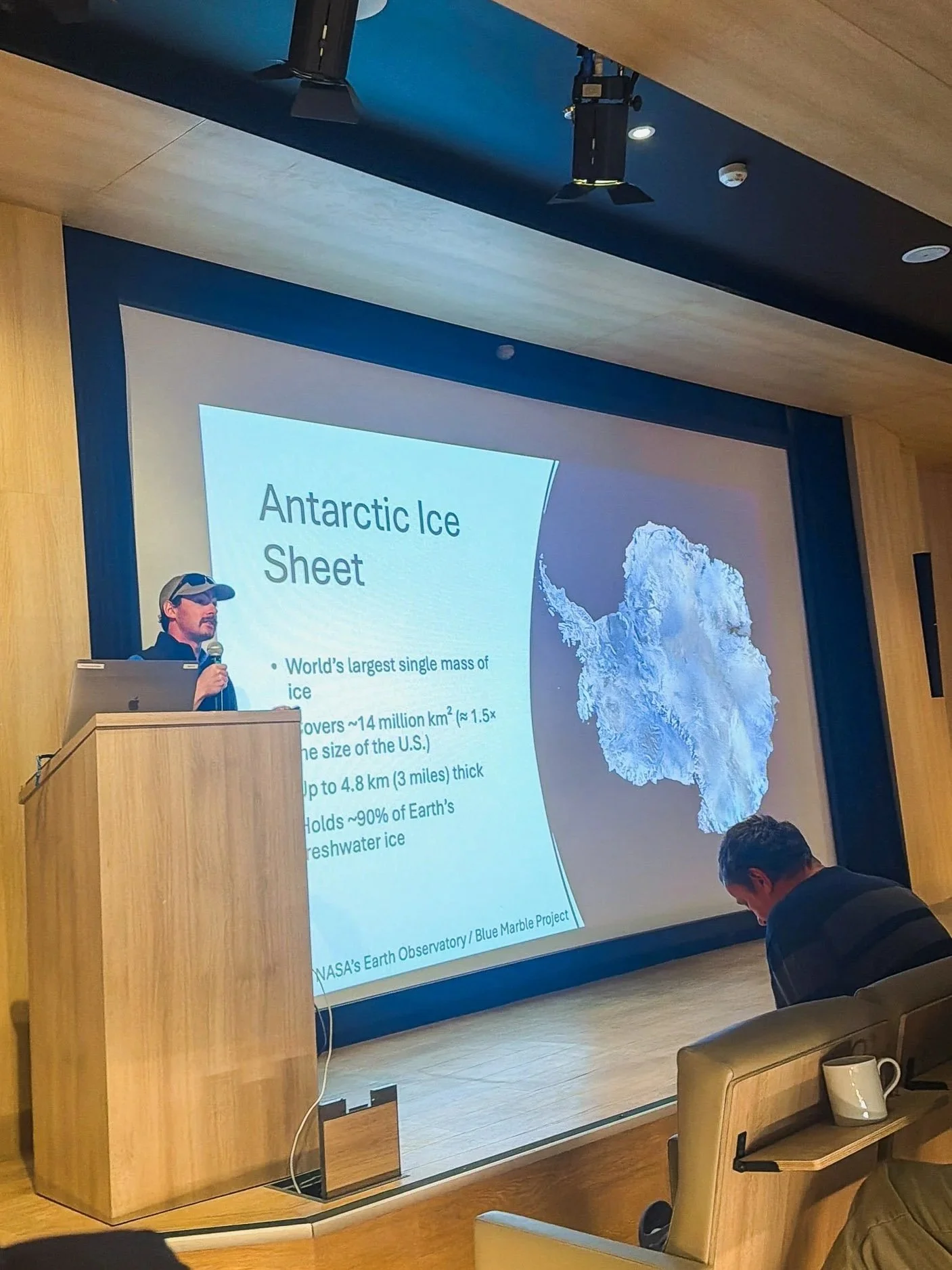
Listened to lectures
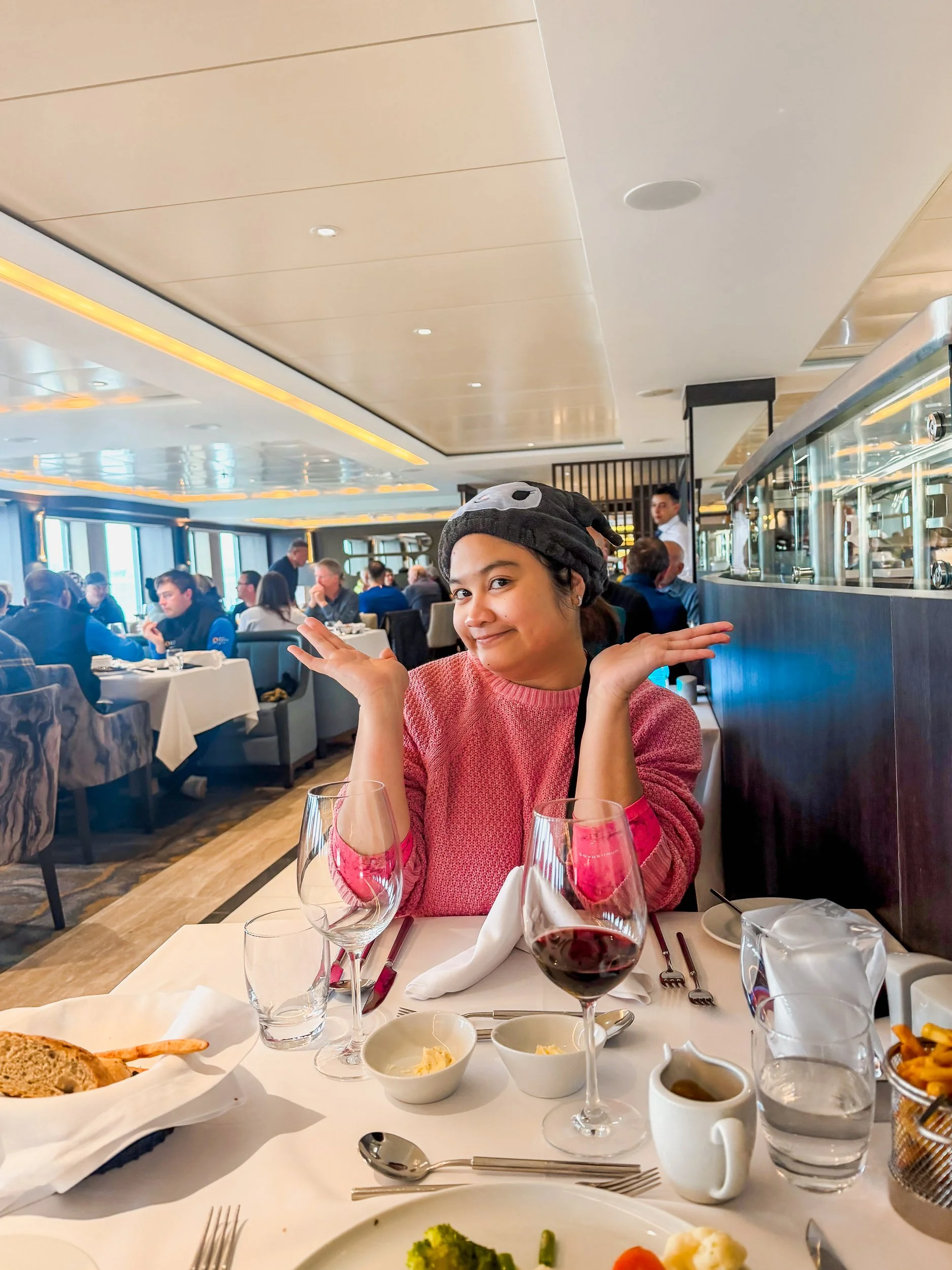
Our fave past time: eating
Towards the end of the voyage, there was even a photography contest about icebergs…and I actually won! The prize was a cute little Antarctic pin. Ngl, I kind of expected more lol, but I was still grateful as it gave me an afternoon’s worth of fame among the passengers hahaha.
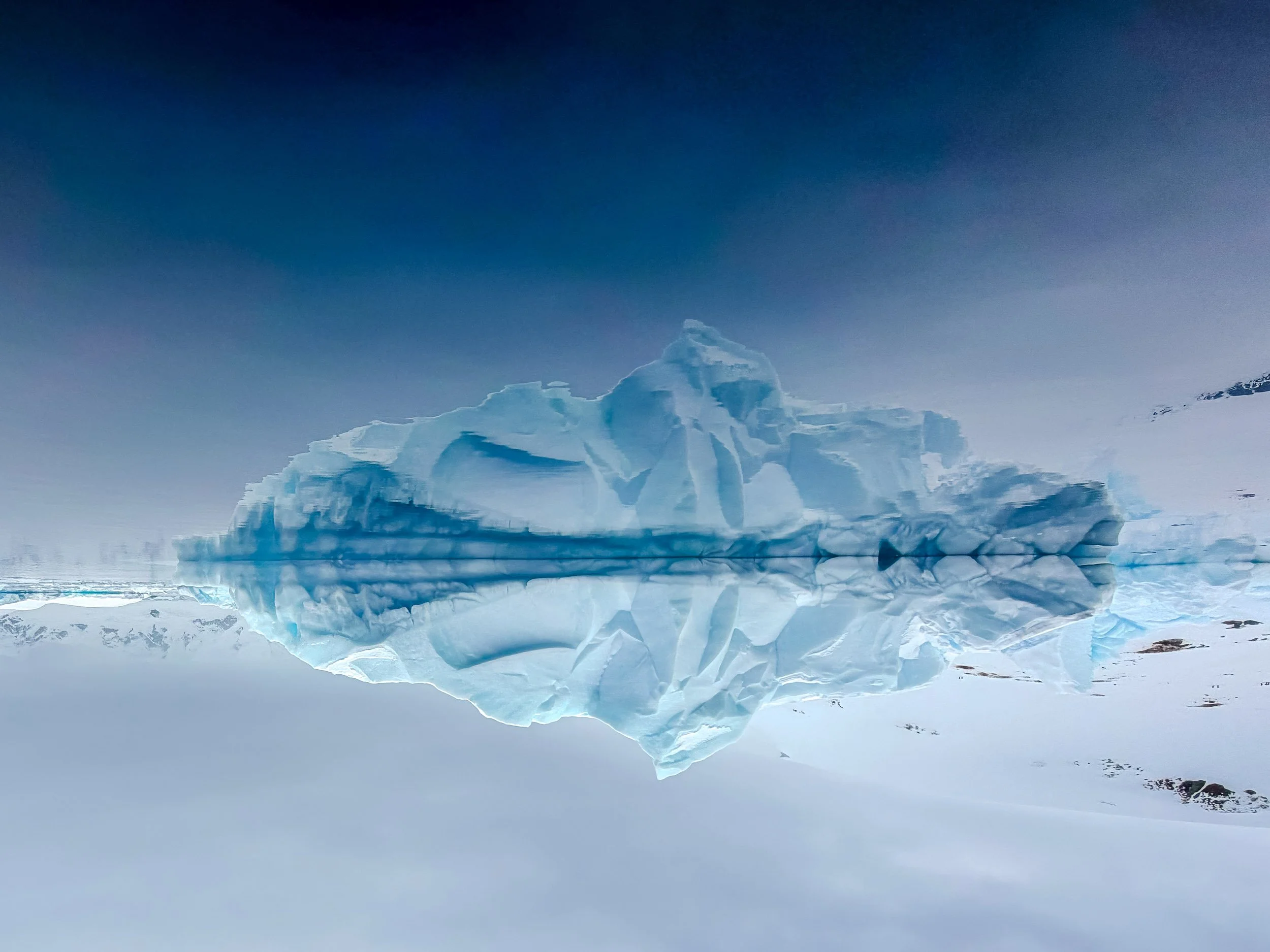
My “winning piece” haha
We even got to tour the bridge and see the ship’s brain on the way back to Ushuaia and had the most amazing dance party on our last night on deck! Of course, Lex and I were the instigators, buying everyone drinks at the bar (ok just the free ones HAHA).
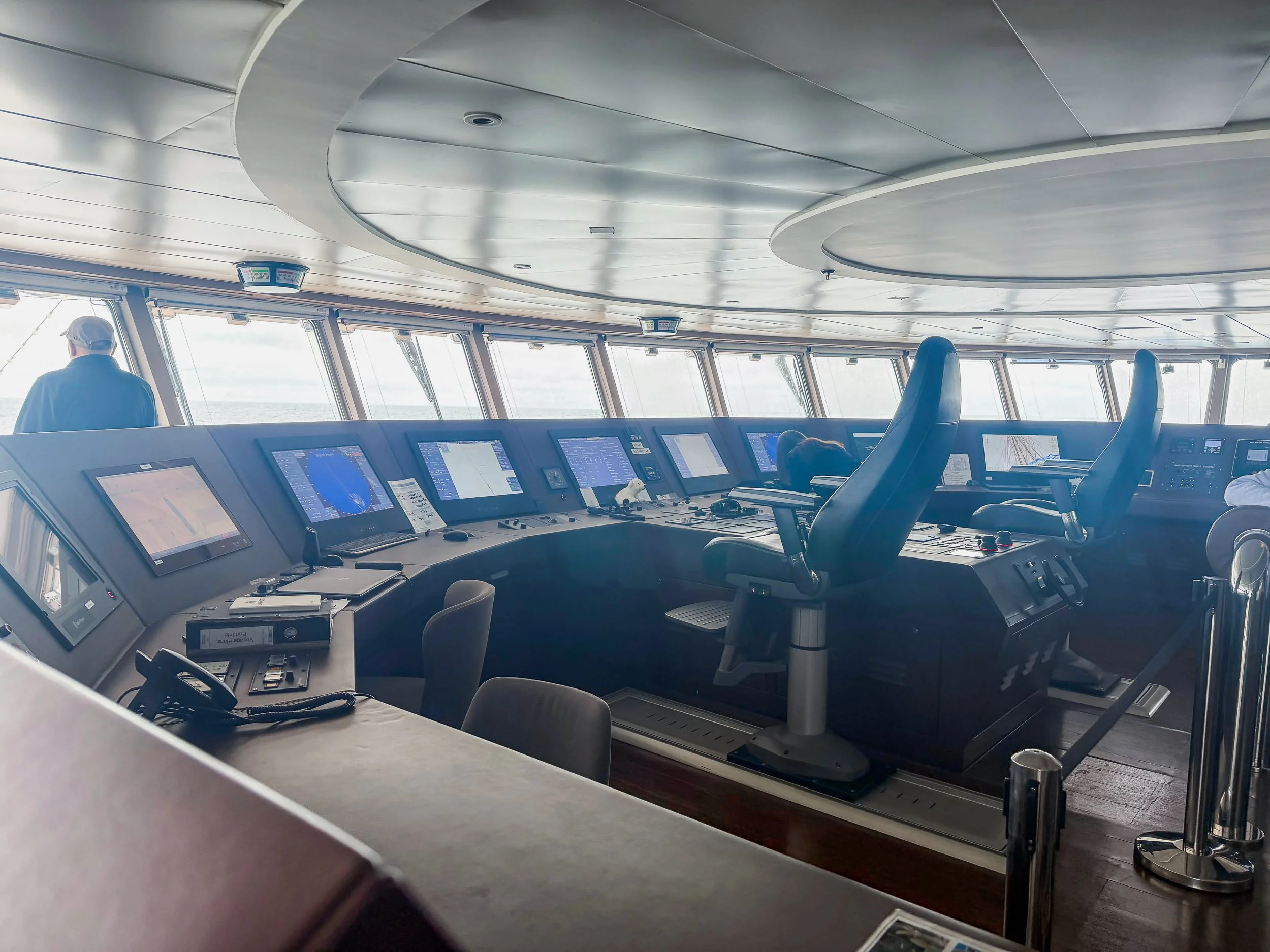
The ship’s bridge
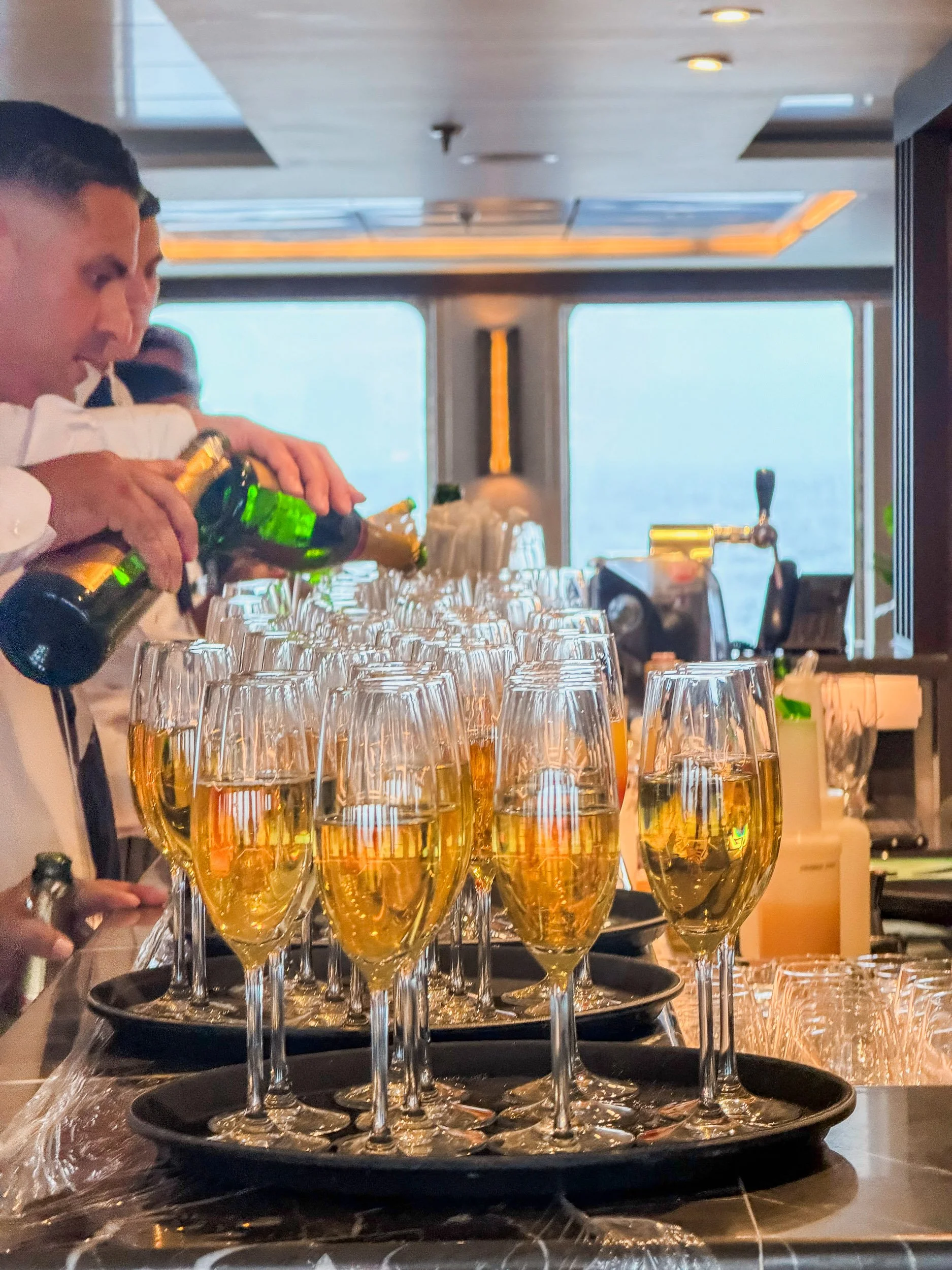
Farewell cocktails + party afterrr
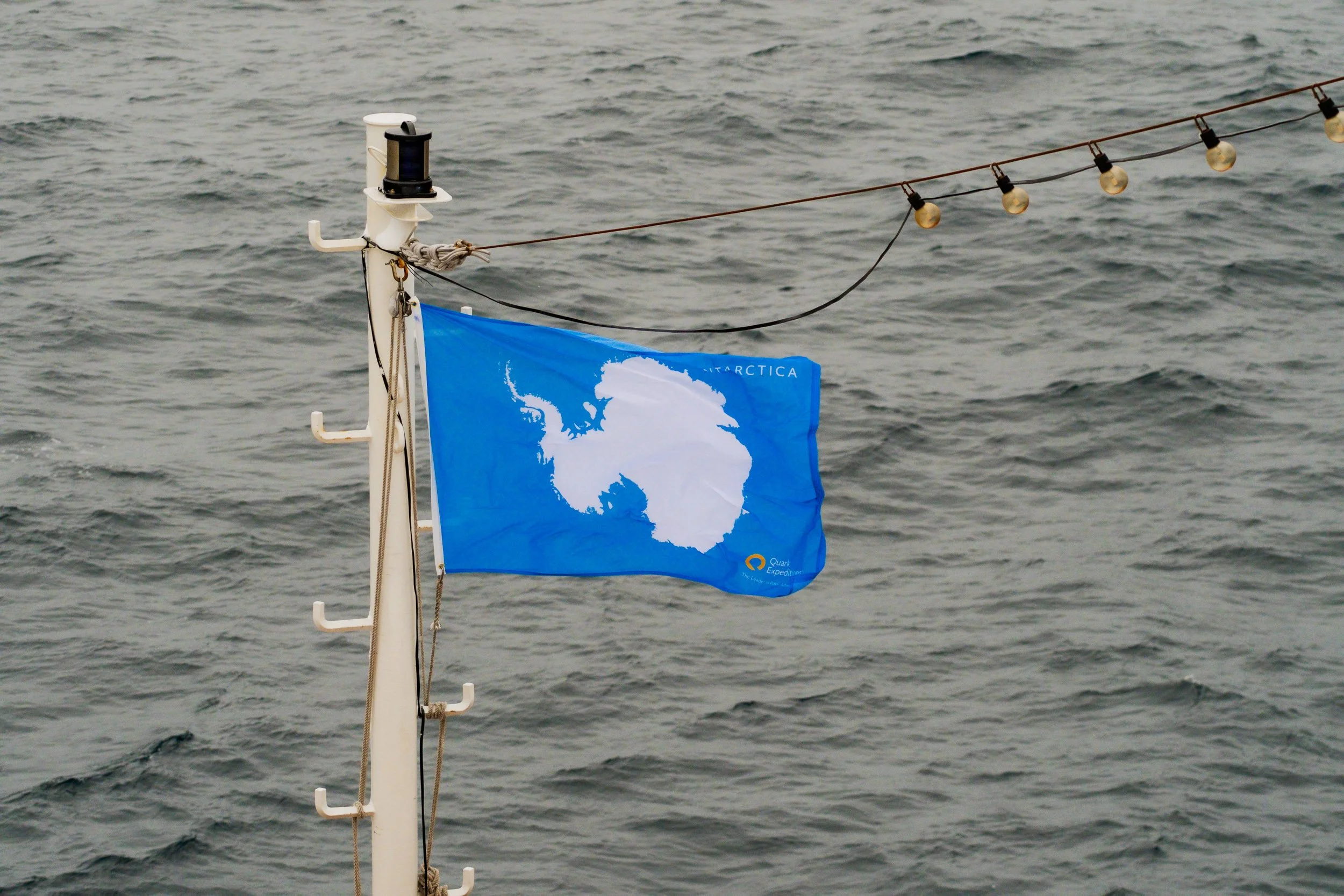
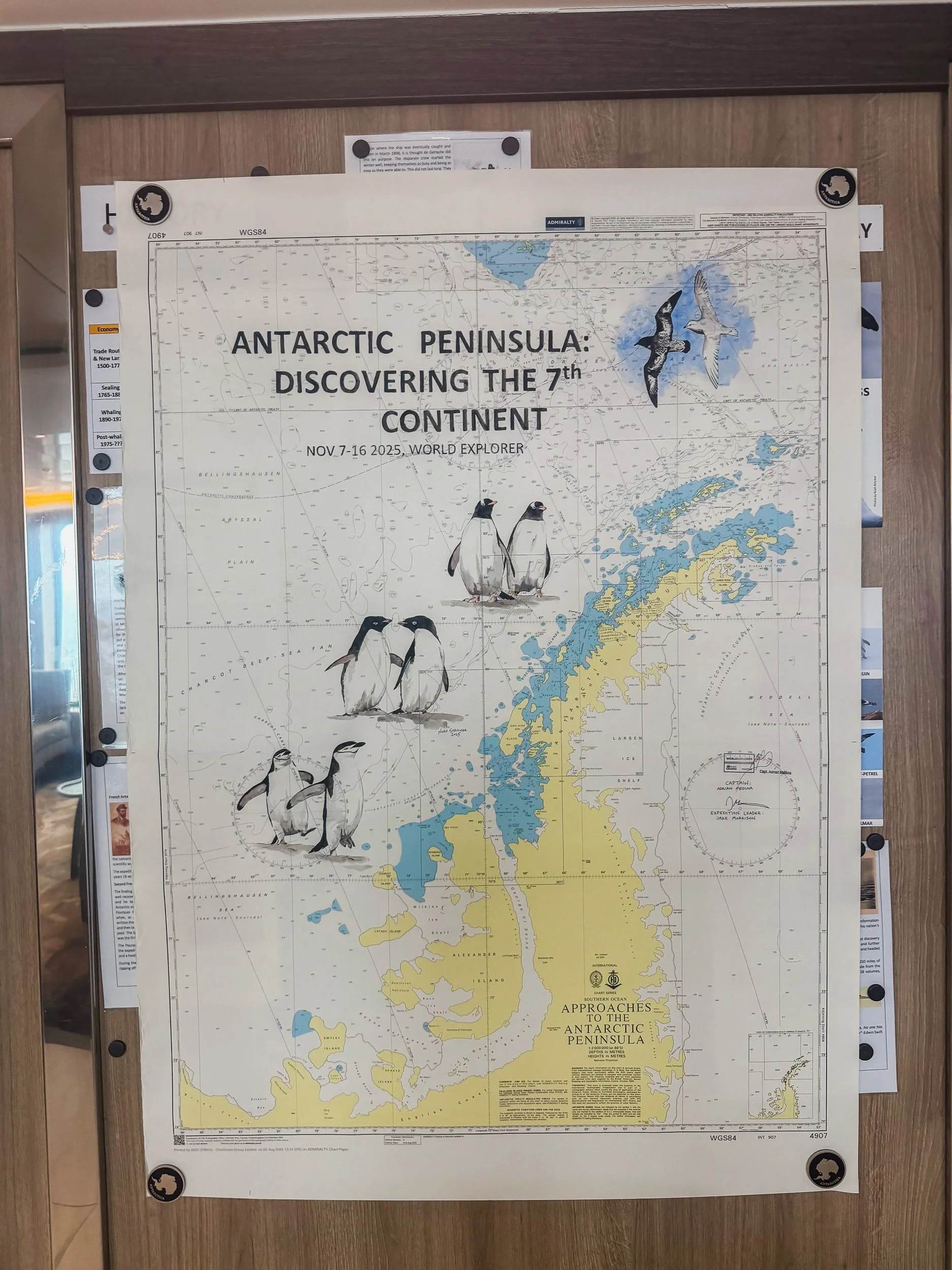
There was an auction on the last day, and this was the grand item. The birds were hand-drawn by Noah Stryker.
Drake Passage
I’ll be honest, I was terrified as hell of the Drake Passage. I’ve seen the videos of it, and it was one of the things that frightened me about this trip. I’ve always loved the ocean, living close to it all my life, but I also know how merciless it can be.
The Drake Passage is the point where the waters of the Pacific, Atlantic, and Southern Oceans converge. Add unpredictable wind conditions and the fact that there’s no land for hundreds of miles, and you create the perfect formula for the “Drake Shake” — dangerous, colossal waves that could soar as high as 12 meters (40 ft). But of course, it’s not always like that. If we were lucky, we could get the “Drake Lake”, with swells only reaching 2.5 meters at most. There was a 50-50 chance we would experience either, so I prepared for the worst. And by that, I mean the Titanic-kind-of-worst.
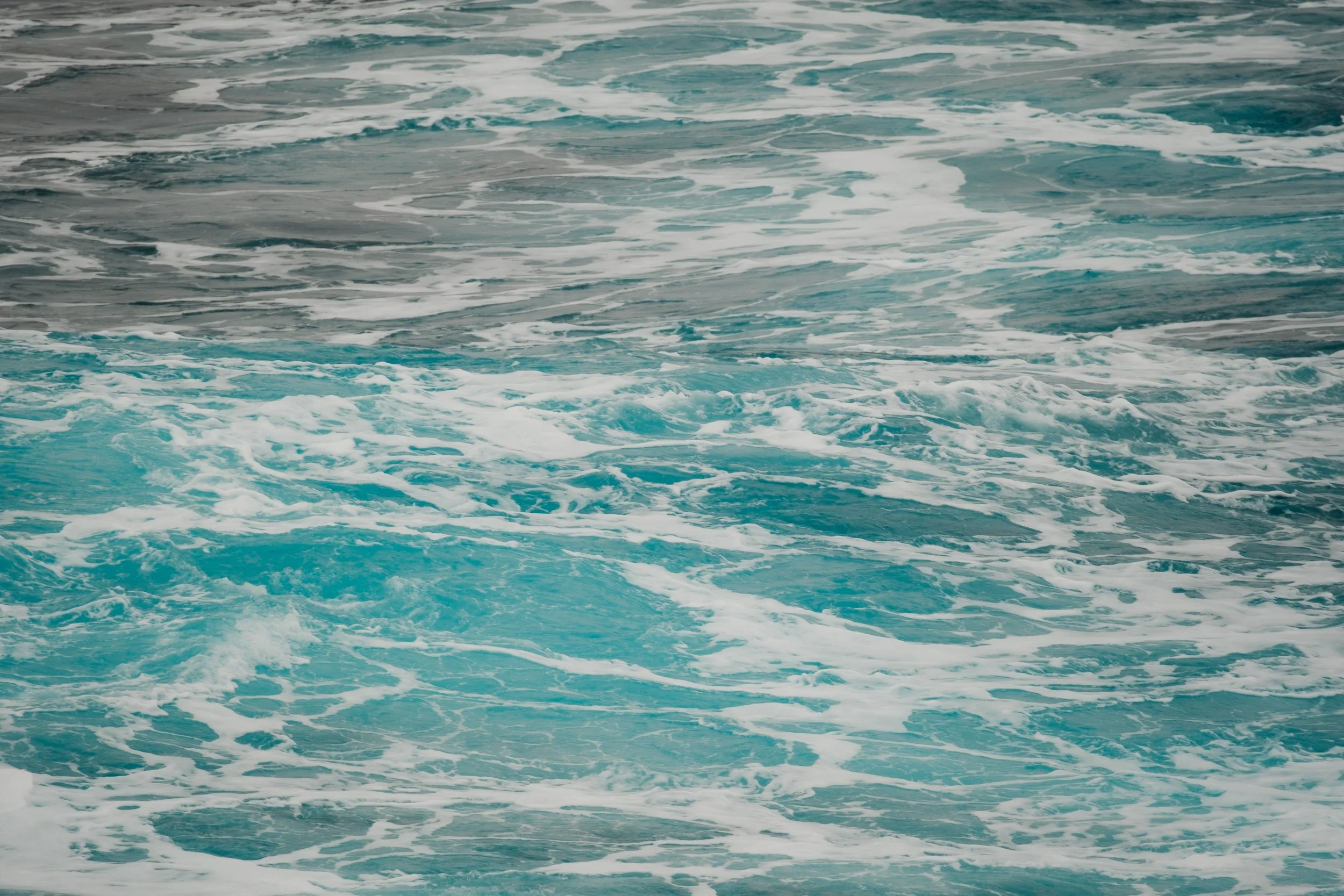
The rough waters of the Drake Passage
Before going to bed that first night, I Drake-proofed our room by securing everything that could fall or break, and myself by applying a scopolamine patch.
Around 1 or 2 am, I woke to the sound of our cabinet door opening and closing and felt the boat tilt, so I immediately knew we were traversing the Drake. I tried my hardest to fall back asleep, but I was further bothered by my dry throat, a major side effect of the patch.
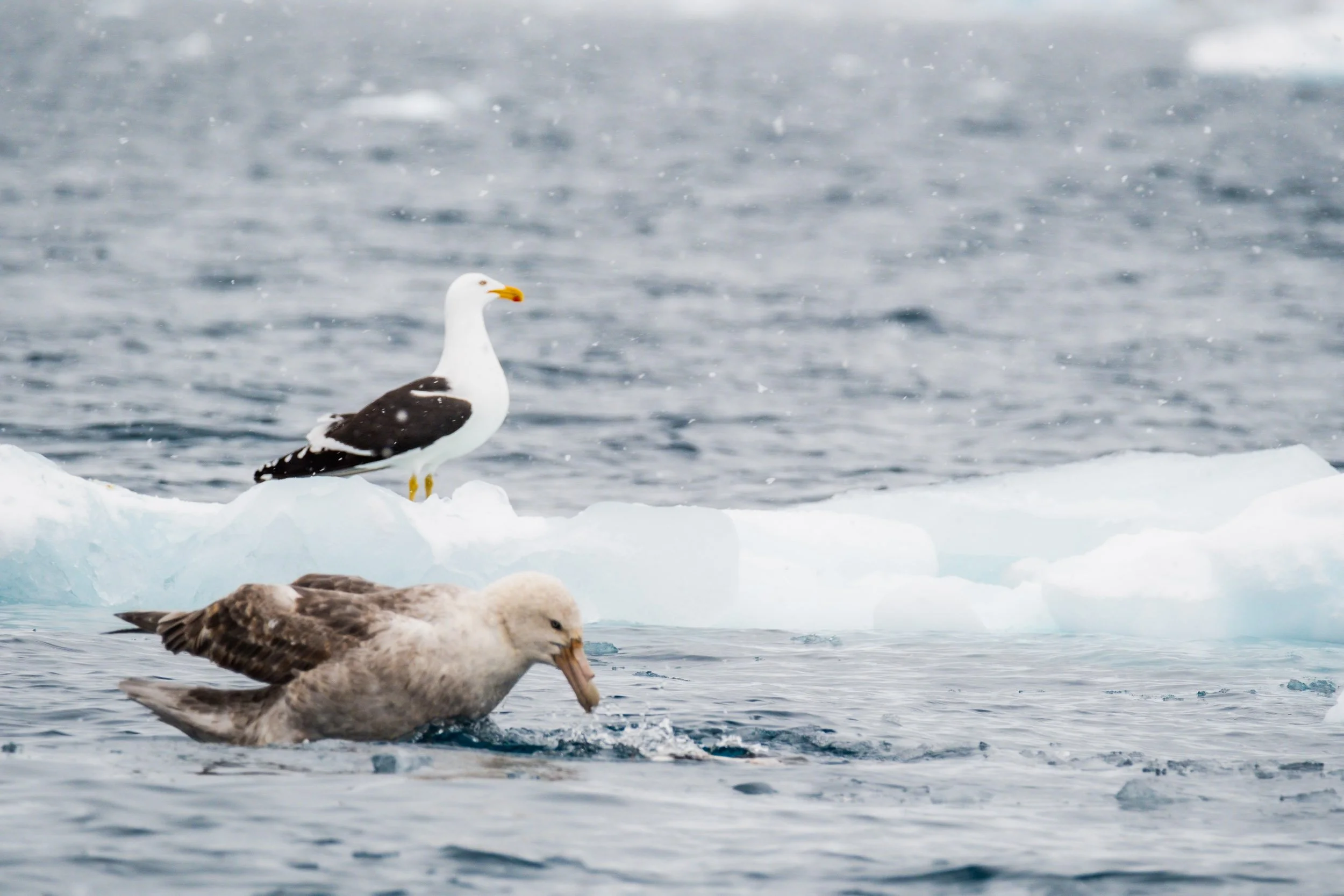
Our first day cruising the Drake was pretty brutal for most of us. I mean, it wasn’t as bad as I expected it was going to be, but a lot of people were afflicted with motion sickness. In my case, I slept for most of the day. I didn’t suffer too much thanks to the patch, so I was able to eat, but Lex had it worse. Dionne was tough; she didn’t take any medications. She also mostly slept. The doors to the viewing decks and the elevators were closed for safety reasons. When it calmed down and they opened them, I got to step out for a second to observe the albatrosses and petrels flying around.
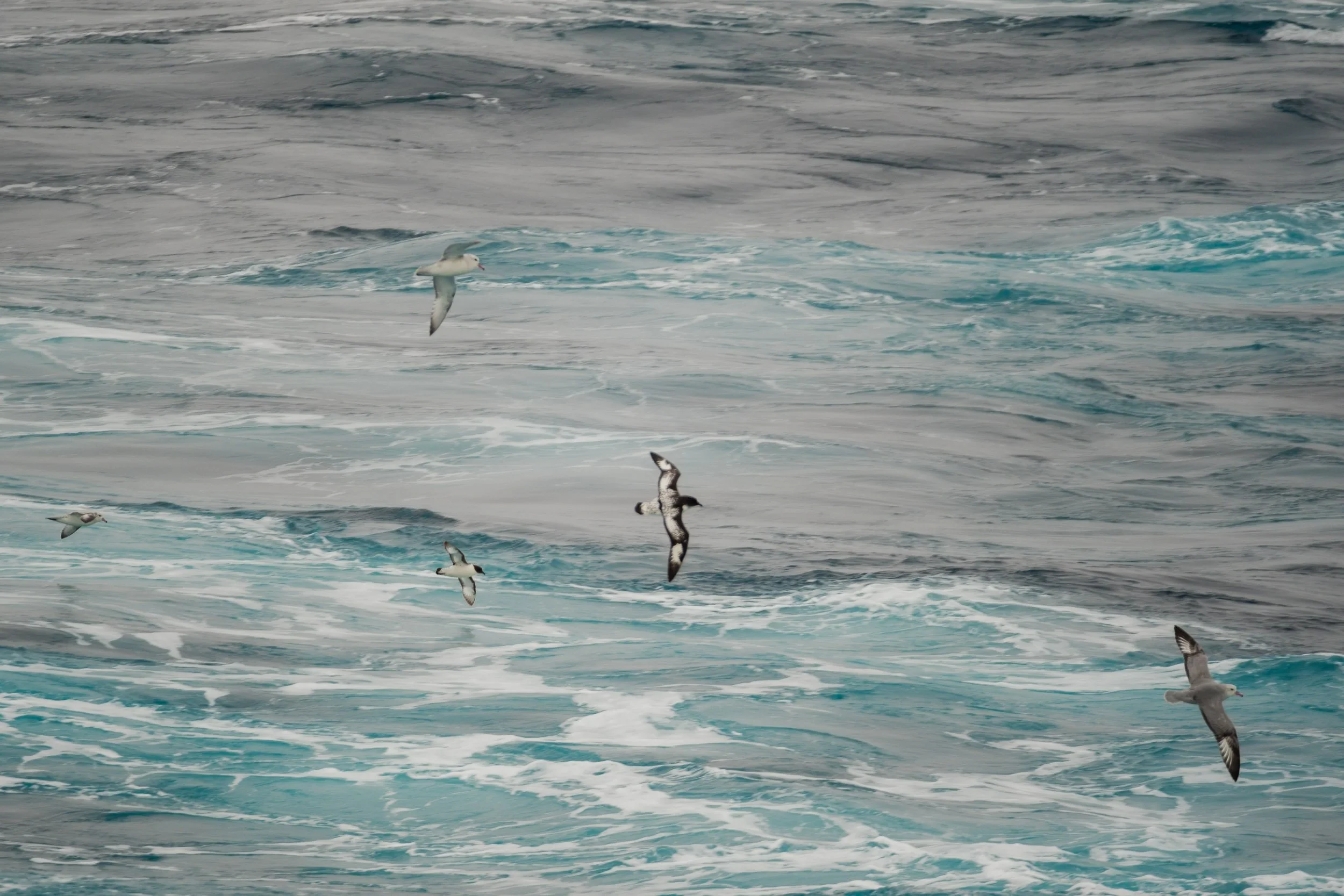
I was so excited to be able to capture multiple bird species in one photo!
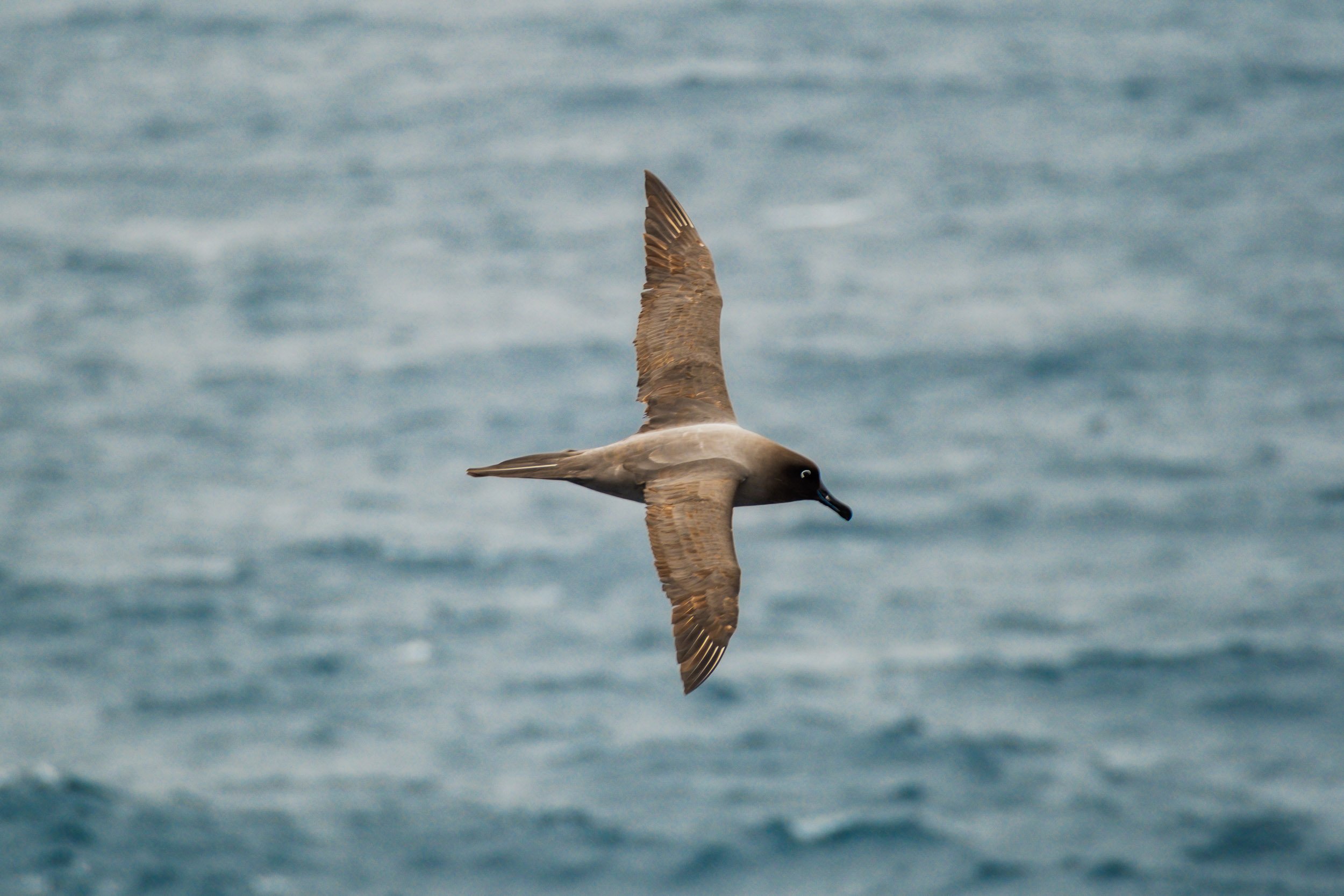
Light mantled albatross
The return to Ushuaia was a different story, however. We definitely got the Drake Shake. As I looked out our window in our room on Deck 6, I could see mighty waves crashing violently against our ship below. I didn’t want to be too idle despite being motion sick, so I fought my way through two or three lectures in the auditorium without vomiting. The auditorium on deck 4 and the library on deck 7 were the worst places to be during this entire ordeal. Both were located on the bow side.
Nevertheless, we survived the Drake Passage. This is one of those trips where it was about the destination and the journey.
The Antarctic Peninsula
One of the things we were told up front was the need to be flexible. While we have a certain route we’re following, we do not have a set itinerary. Because of various factors (primarily the weather), plans and destinations can change abruptly. Definitely not an issue for me. And it didn’t matter where we went, anyway. The fact that we’re blessed to see and be in Antarctica is already enough. Nevertheless, each landing and zodiac cruise we took was just as special and momentous as the last. Each stop we made offered something different, from wildlife encounters to wonderful views to historical sites.
It takes approximately 2 days each way to cross the Drake Passage. On the afternoon of our second day, Jake, the expedition team leader, made the announcement we’d all been waiting for: we were finally about to lay eyes on Antarctic land! Nearly everyone went out to the observatory decks as we approached the South Shetland Islands.
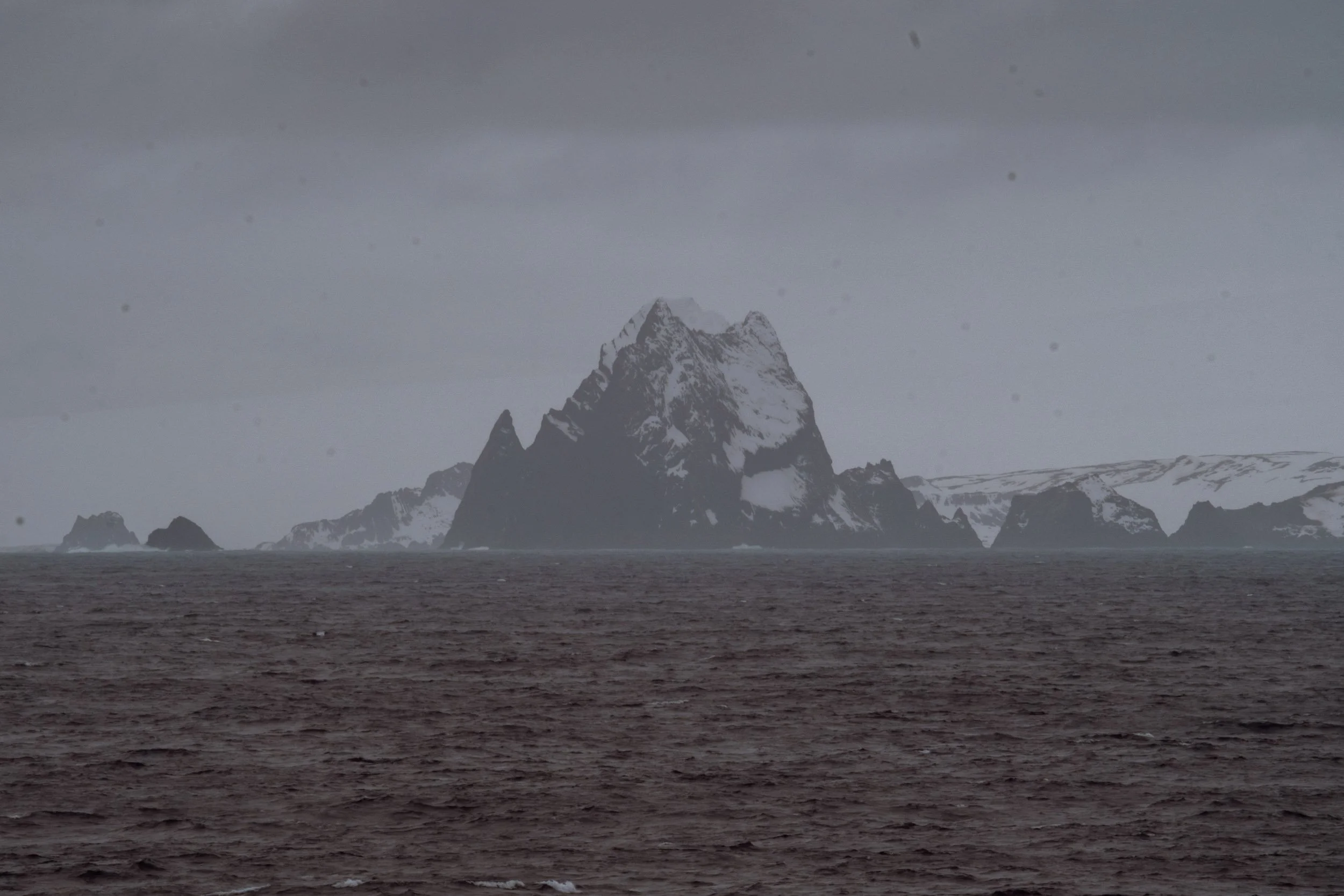
First glimpse of Antarctic land
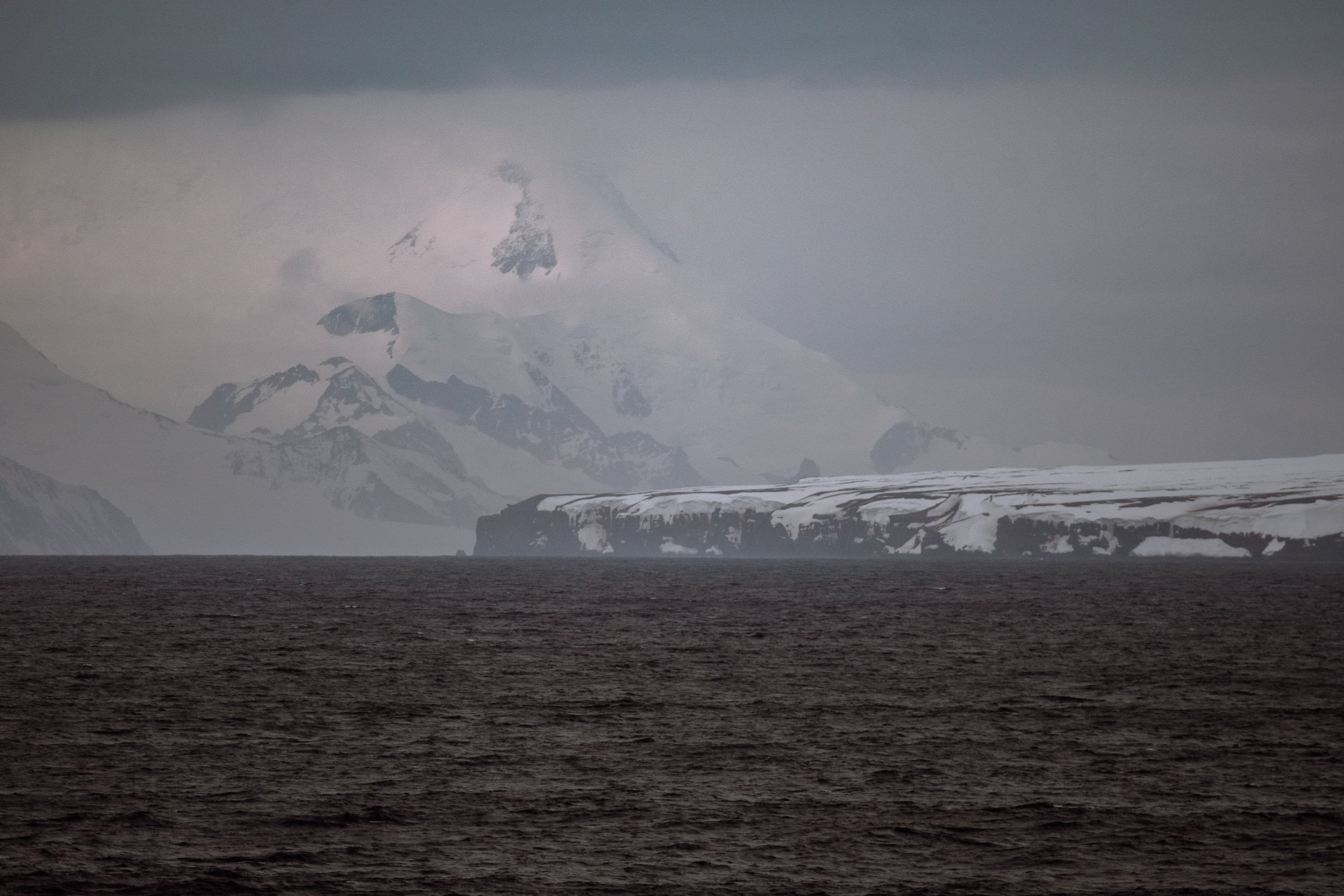
Mountain coming into view as we pass through the South Shetland Islands
The air was chilly, but it was filled with so much awe and thrill. After about an hour of cruising, we arrived at Deception Island.
Deception Island
Deception Island is a ring-shaped island that is actually part of an active volcano. The origin of its name was simple: a sailor in the 1800s, Nathaniel Palmer, thought it was just an ordinary island. But as he drew closer, he saw a narrow break among the rock formations (now called Neptune’s Bellows), went through it, and discovered it concealed a flooded caldera full of geothermal activity. This formed a natural harbor, considered one of Antarctica’s safest.
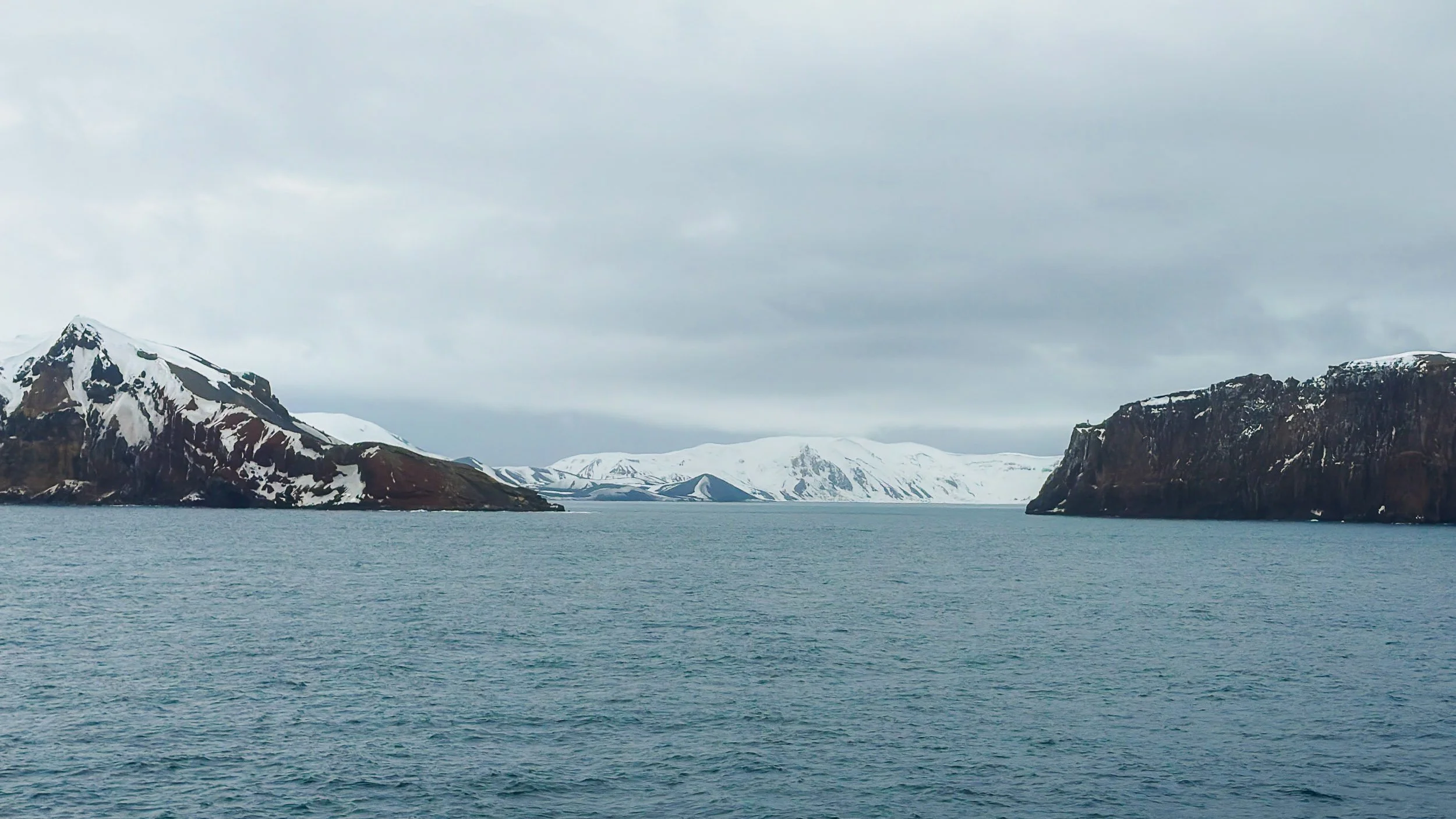
The narrow passageway called Neptune’s Bellows
As we entered Neptune’s Bellows, the remnants of old whaling and scientific stations slowly came into view.
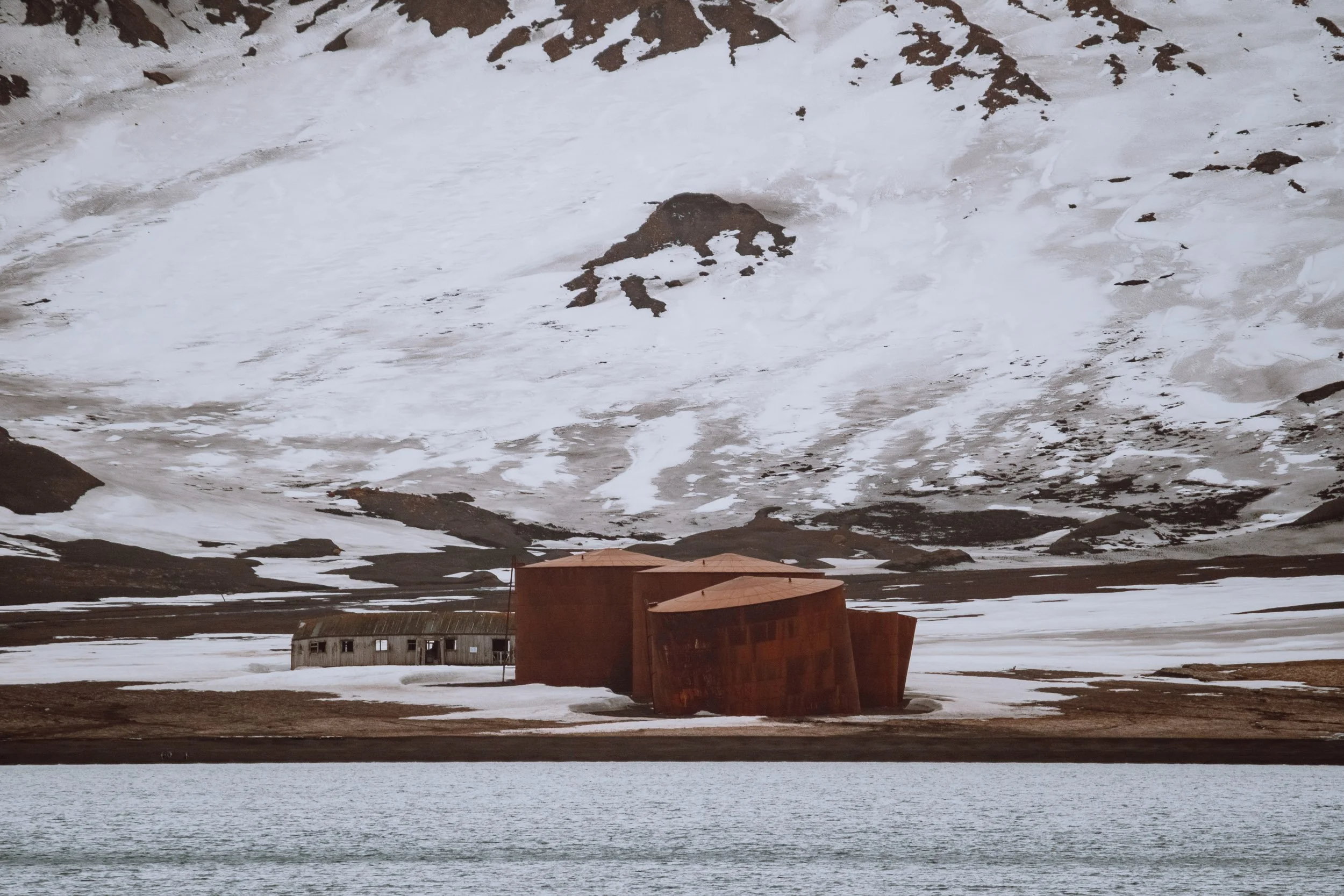
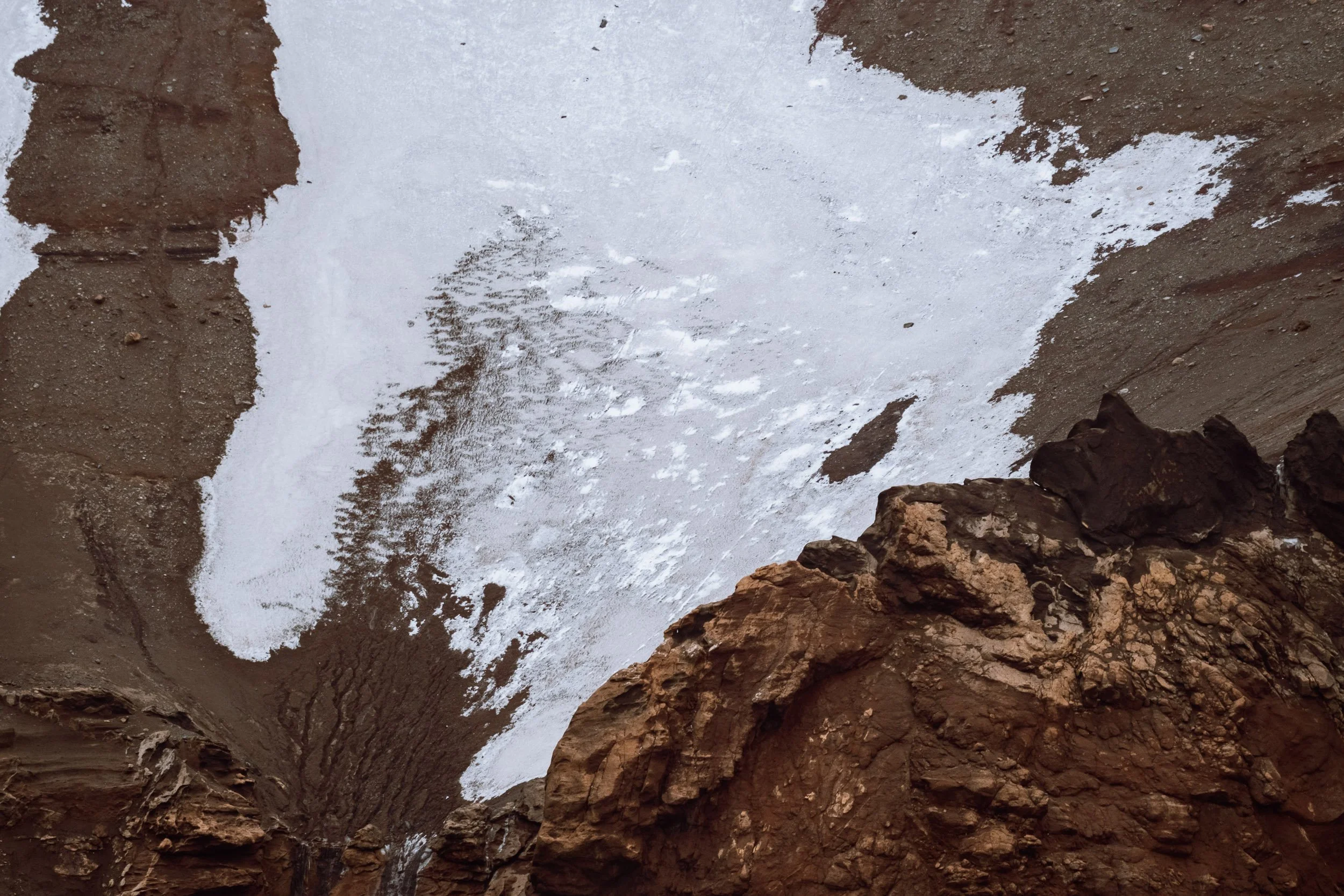
Soil at Deception Island
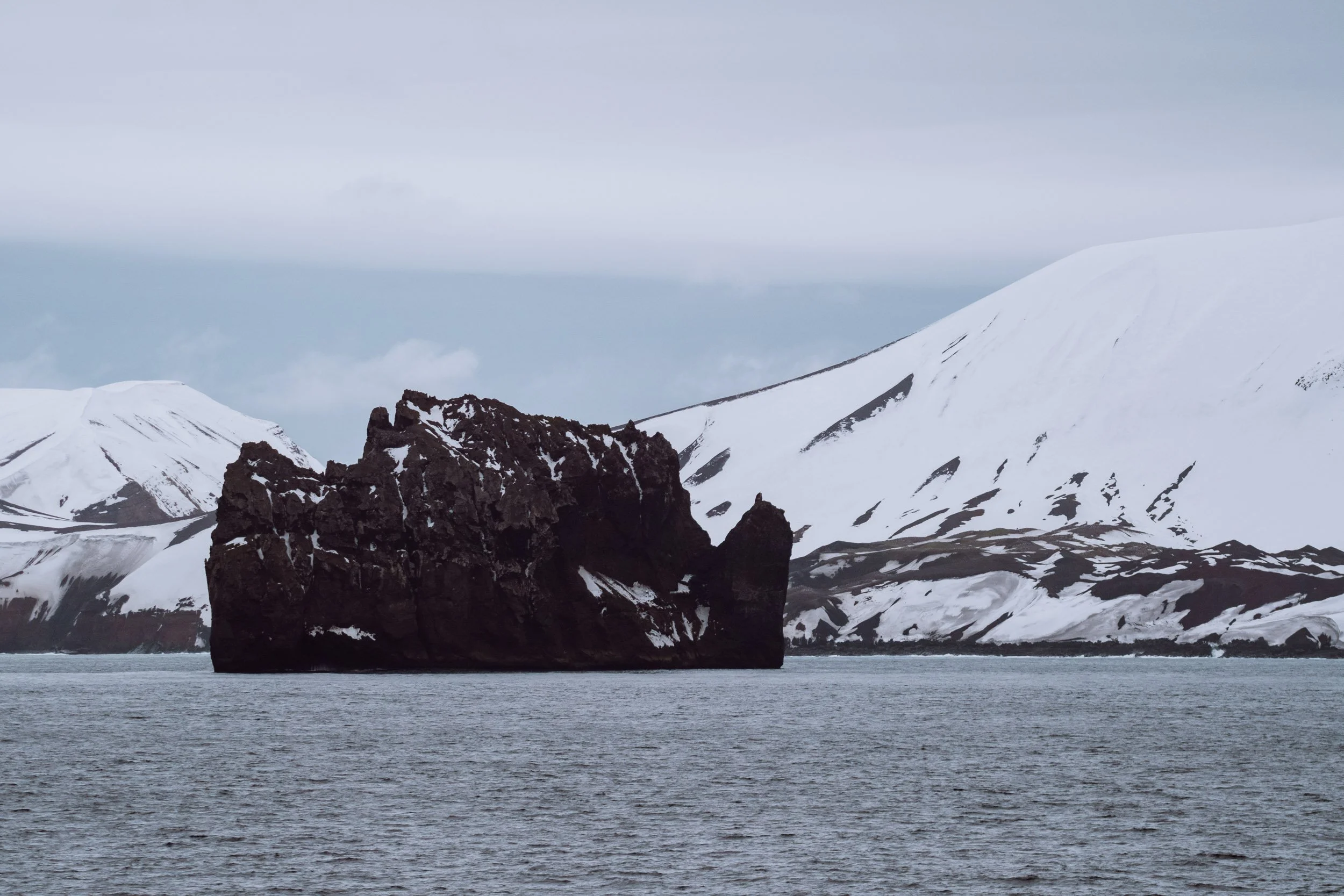
We saw our first penguins going about their business on the black sand beaches.
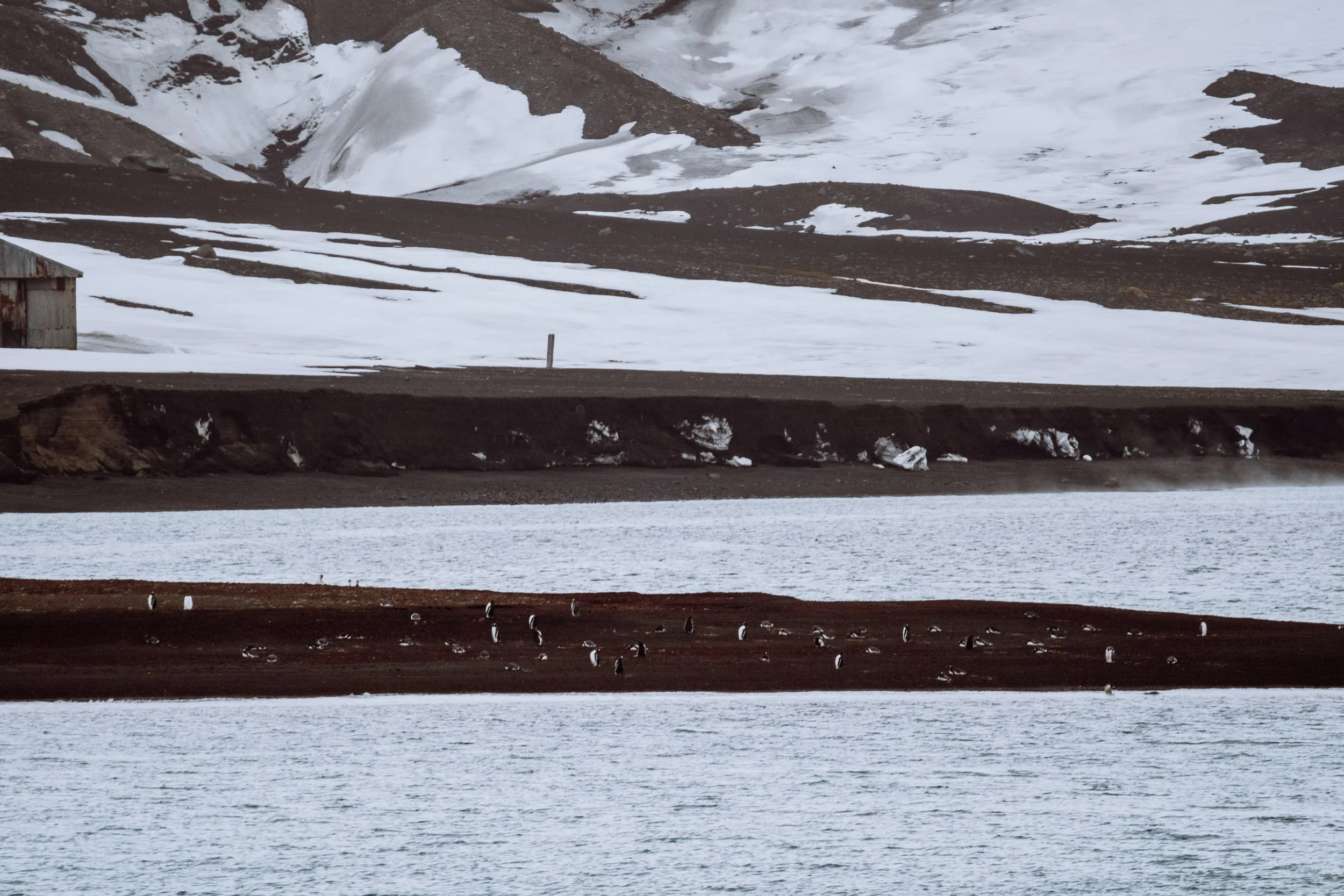
It was foggy, which added to the mystical vibe. Eventually, it started to snow, and the crowd on the viewing deck began to thin.
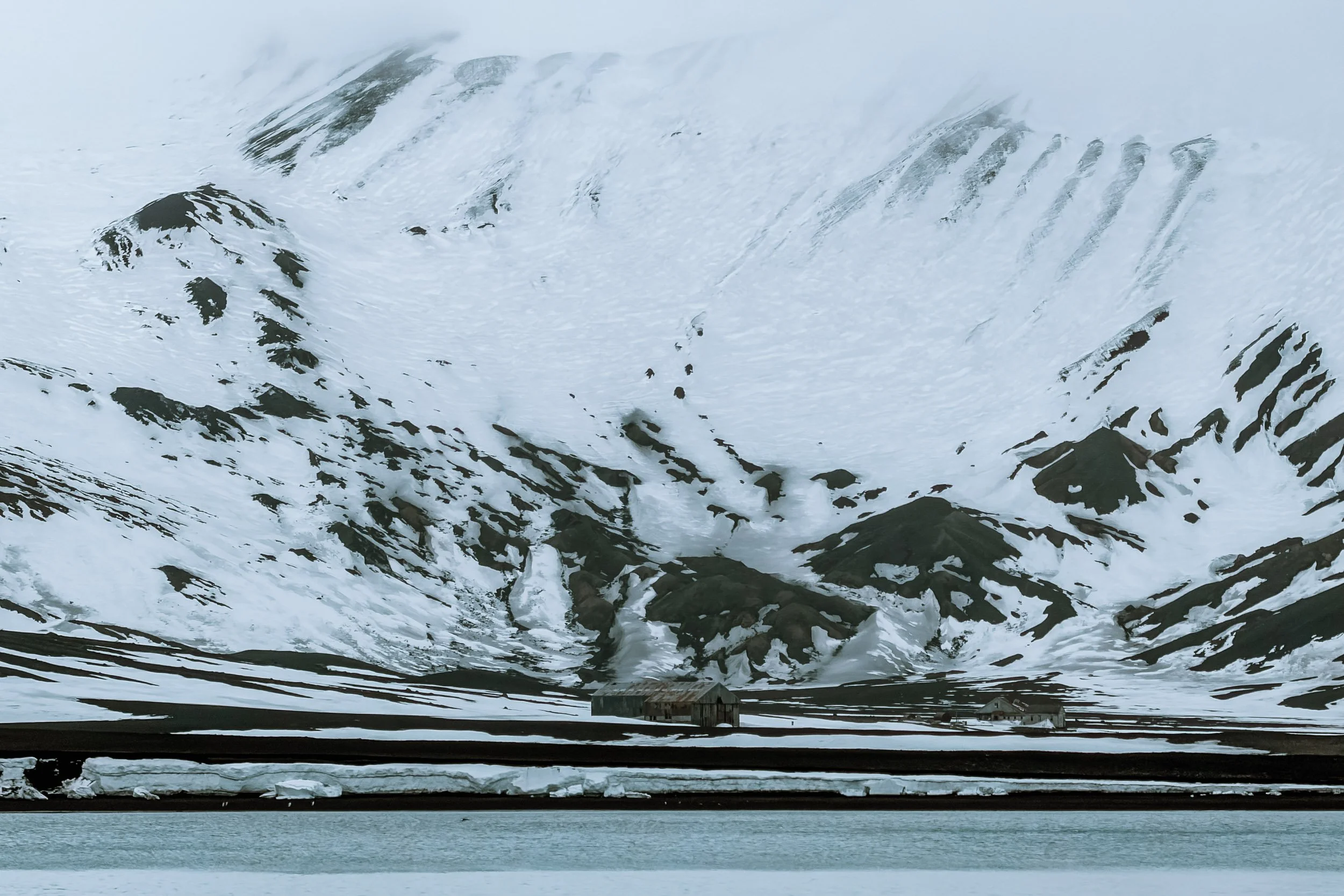
The fog created a natural black and white filter!
This signaled the end of our precarious days on the Drake and the perfect beginning of our journey through Antarctica.
Cuverville Island
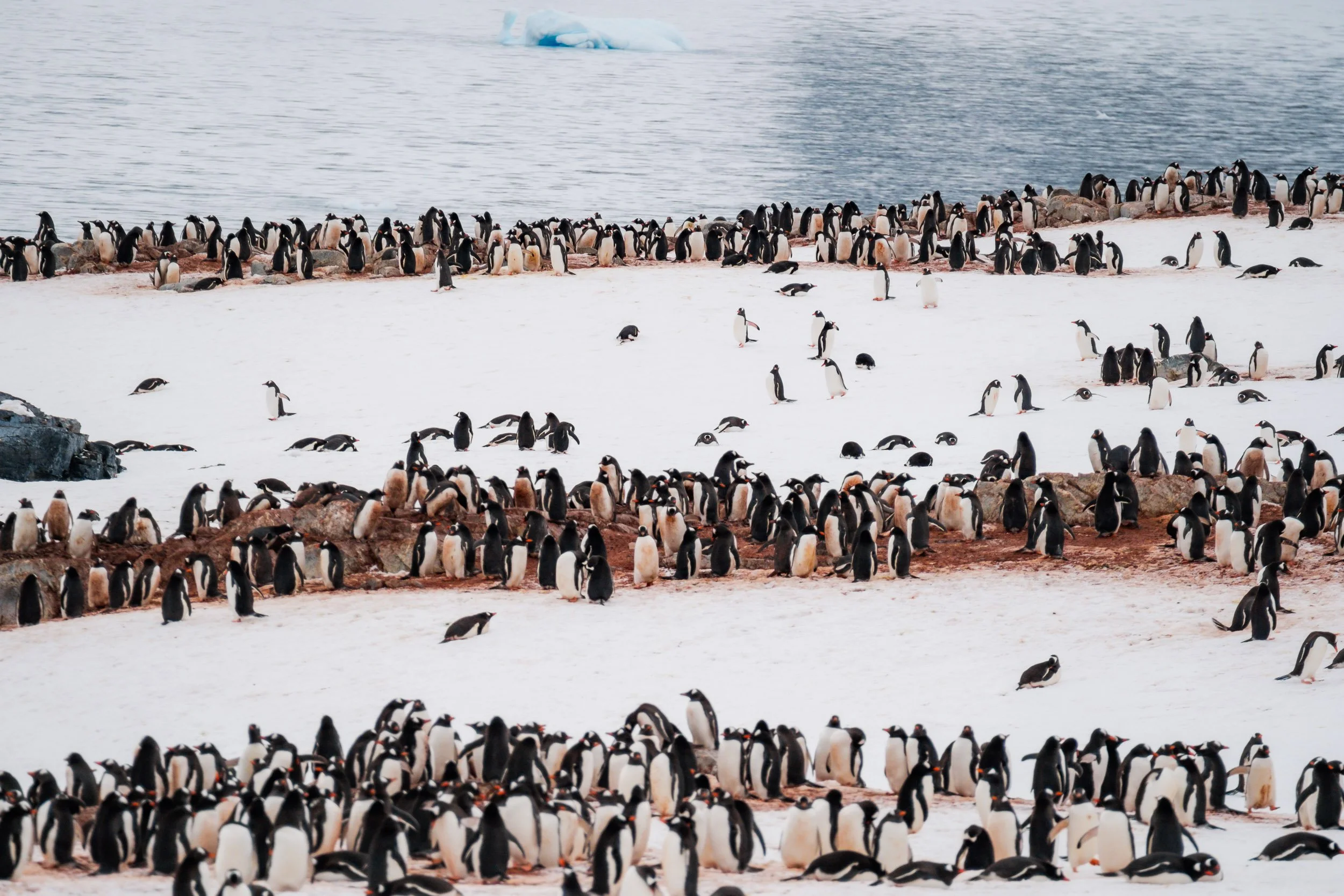
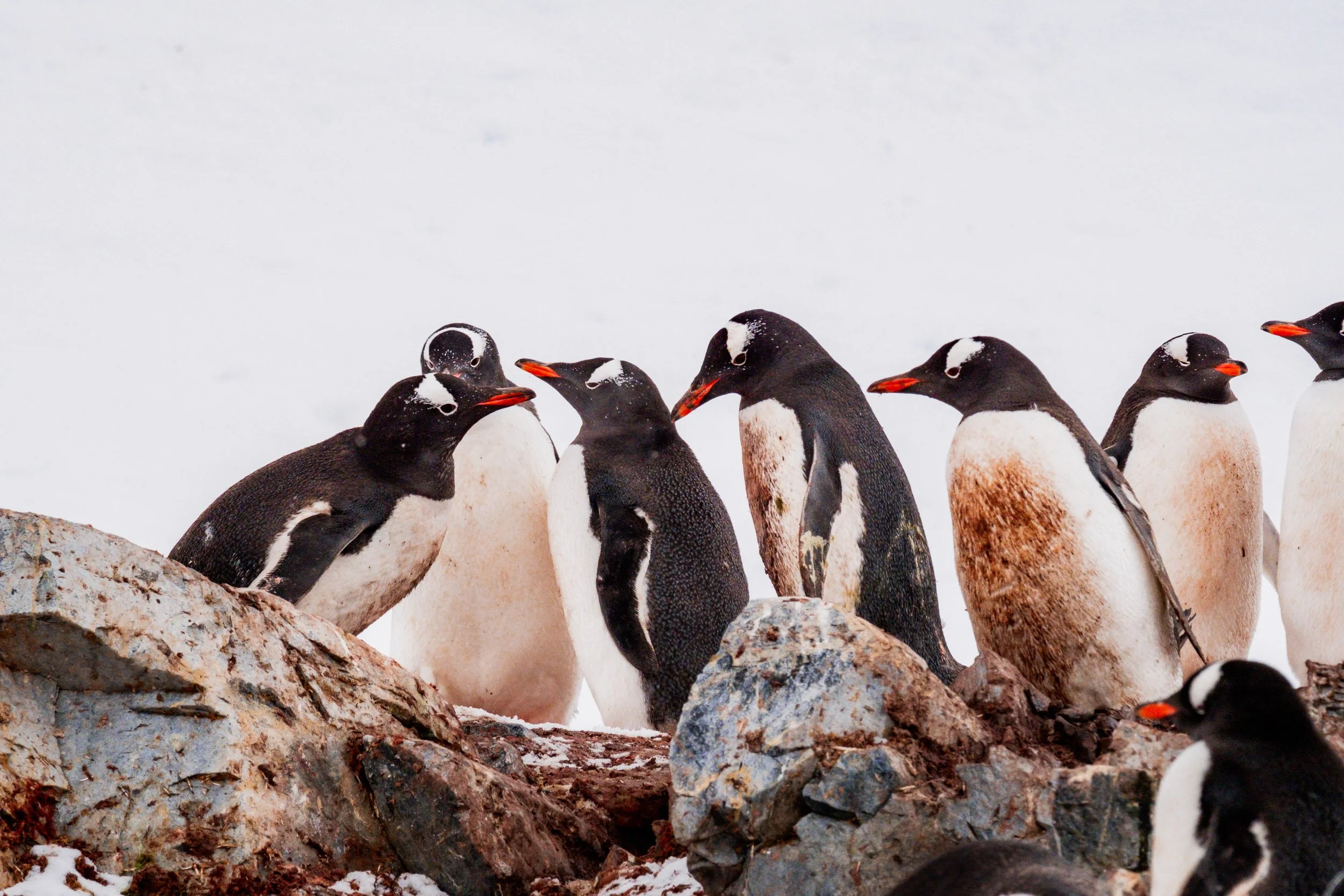
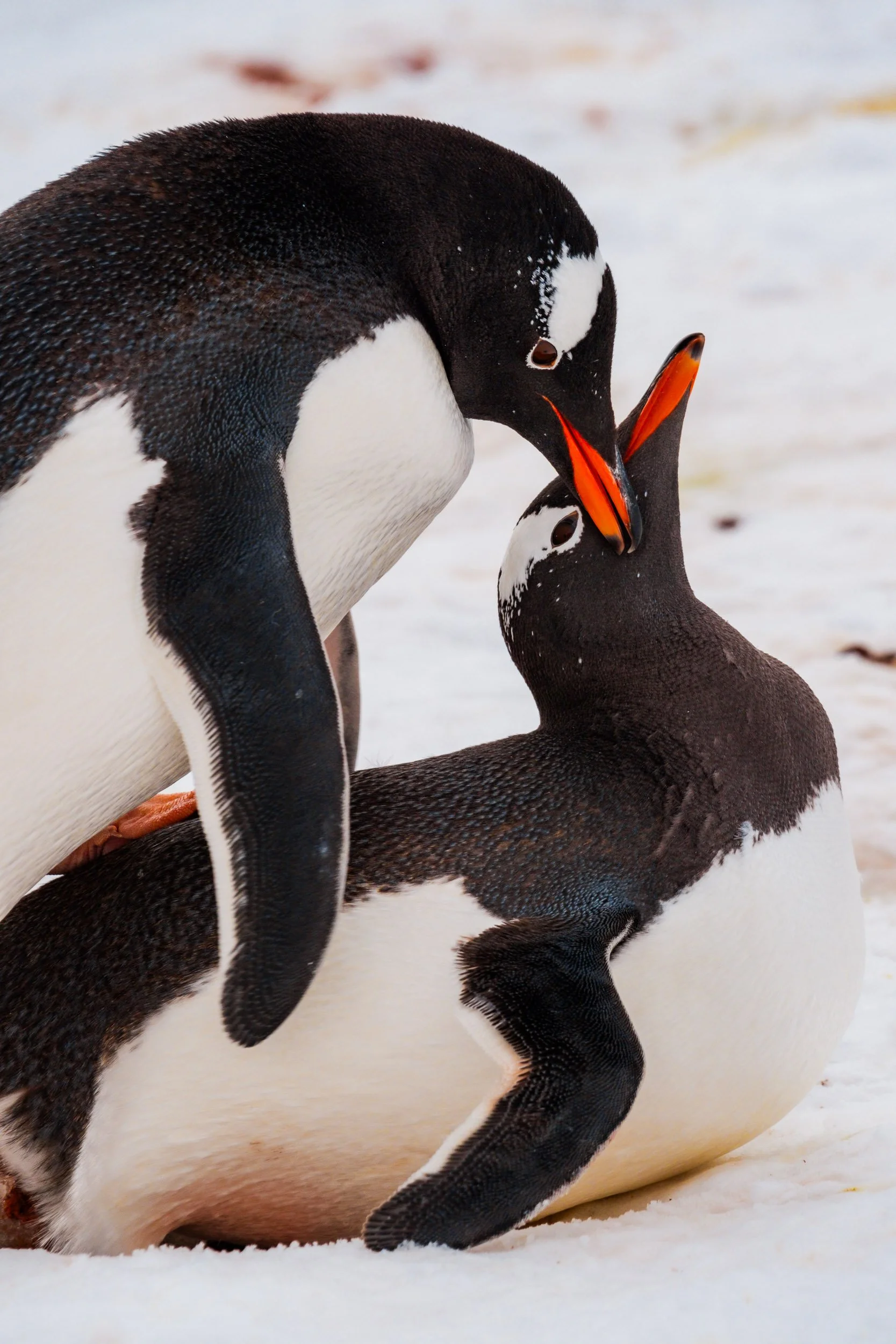
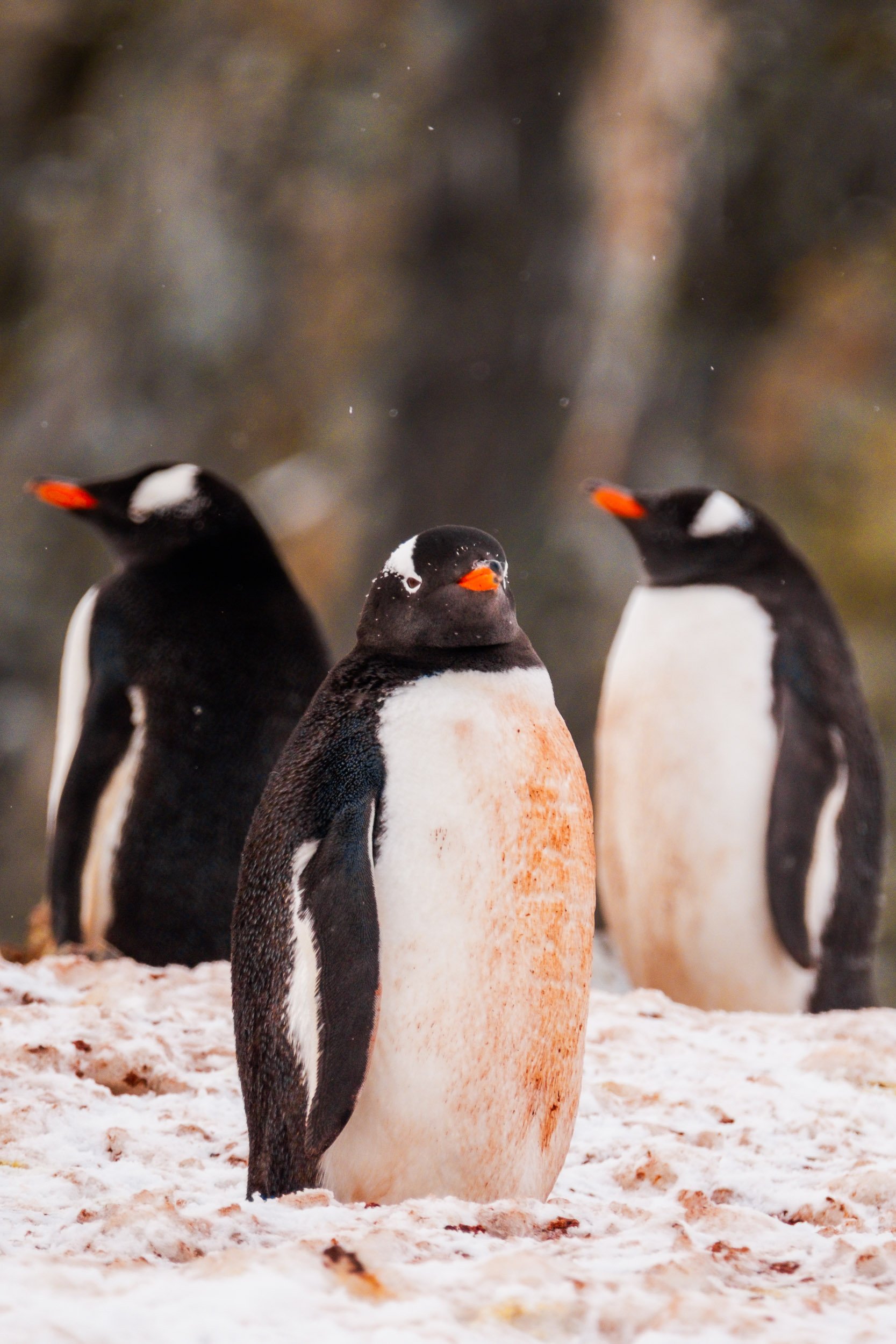
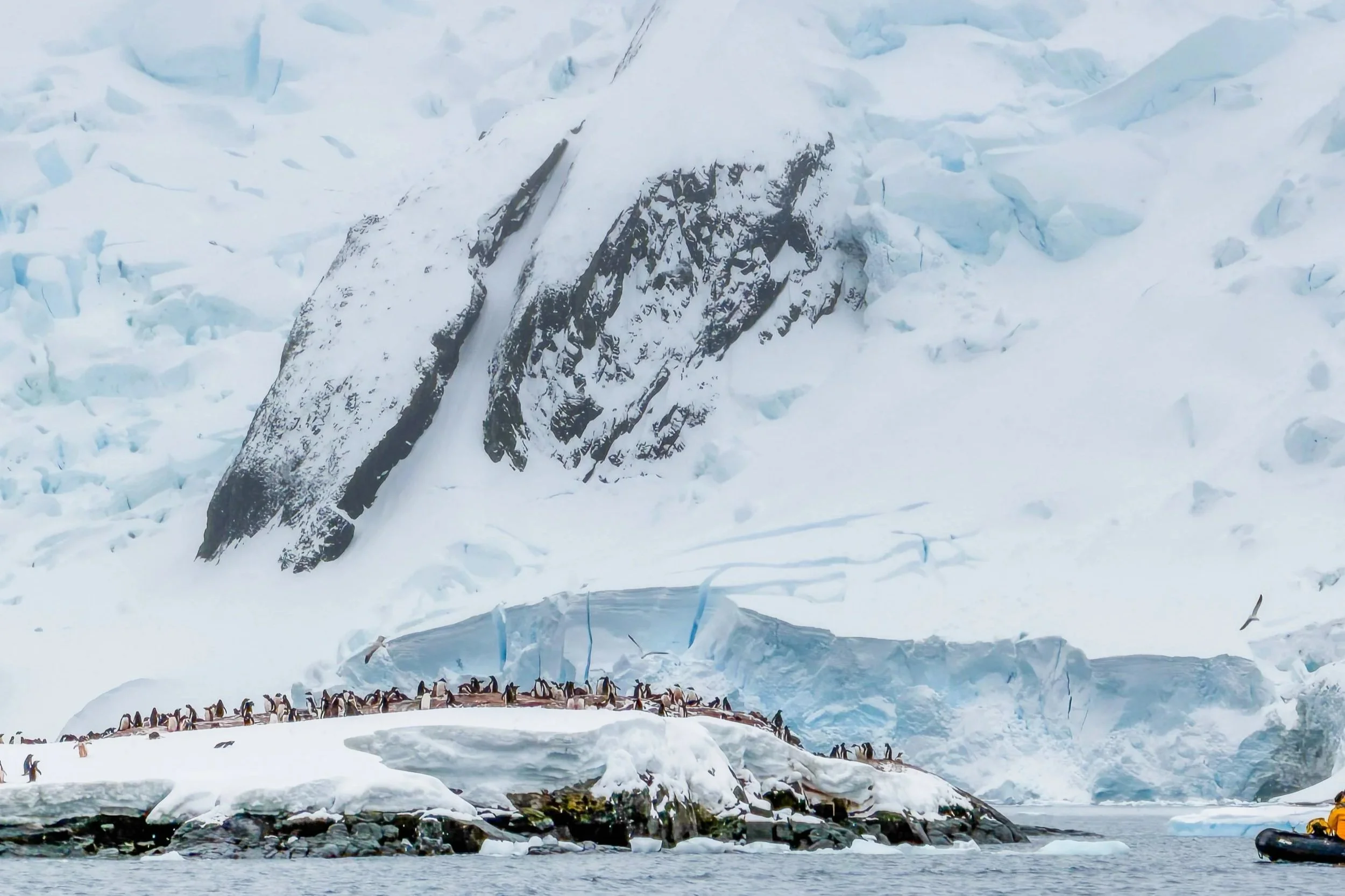
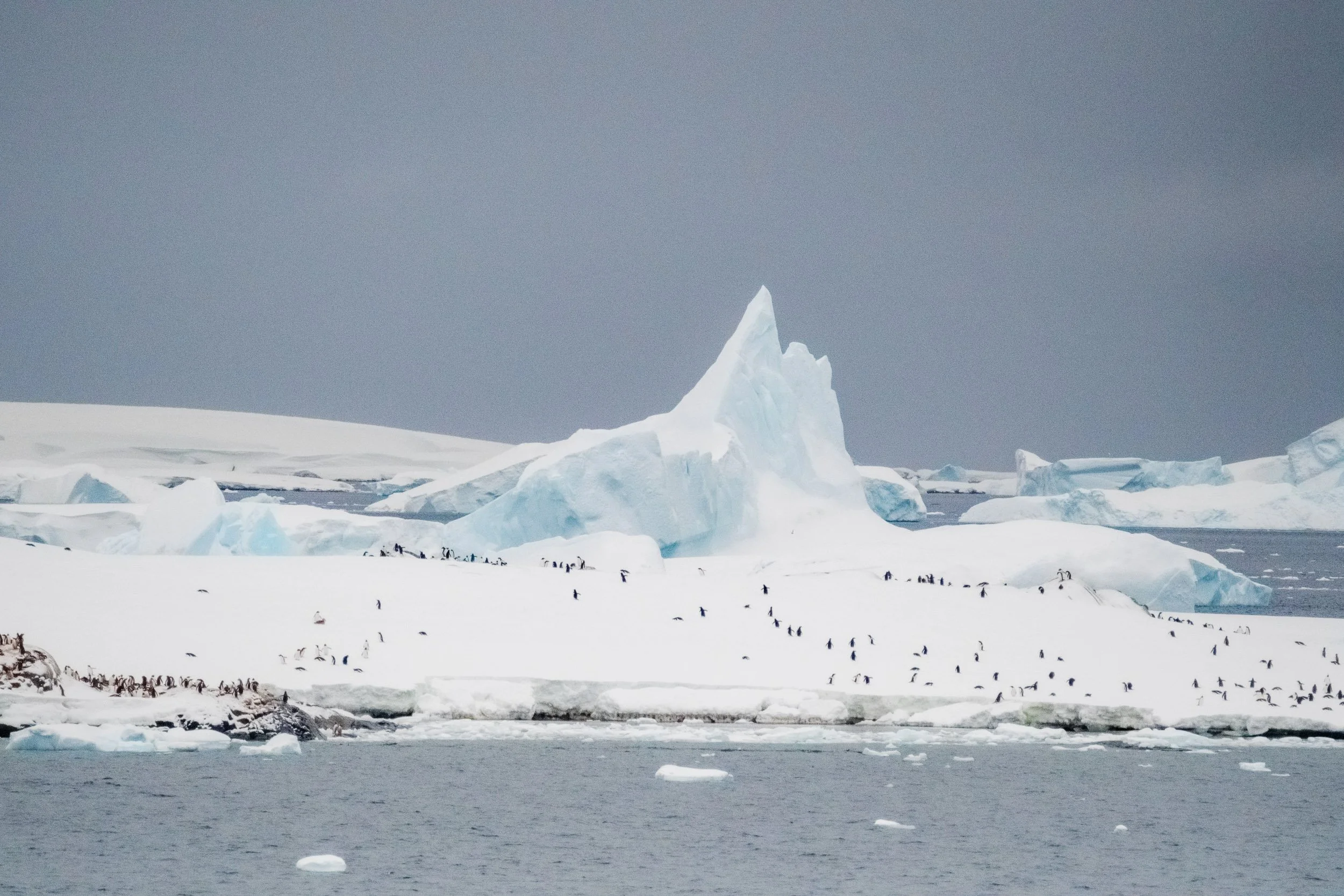
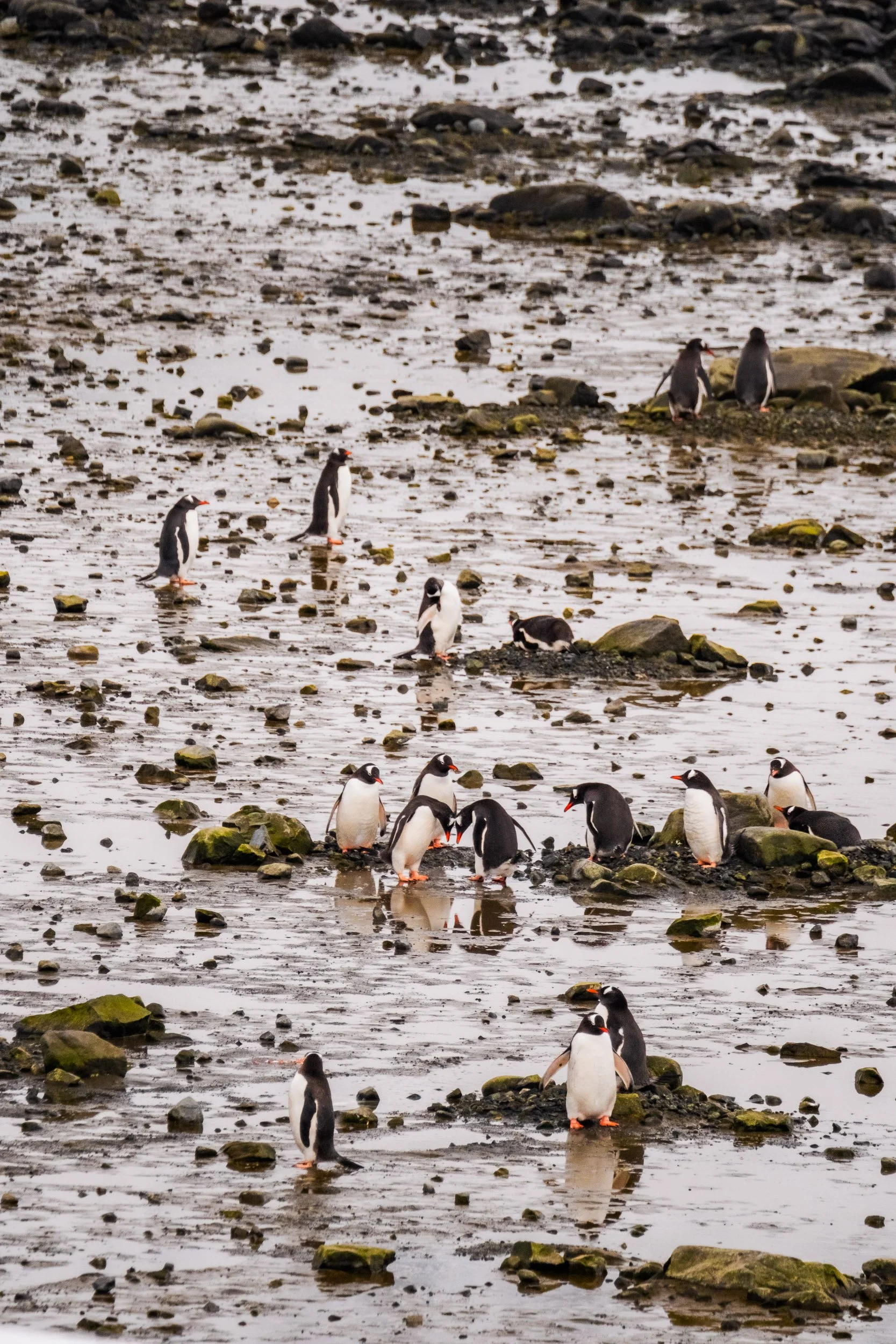
The following day, we woke up to a view of thousands of penguins (which came with a not-so-nice fishy odor, obviously). It was gloomy, but it did not dampen our mood as we enjoyed watching penguins swimming and jumping out of the water near our ship. It seemed as if they were showing off and inviting us to see them.
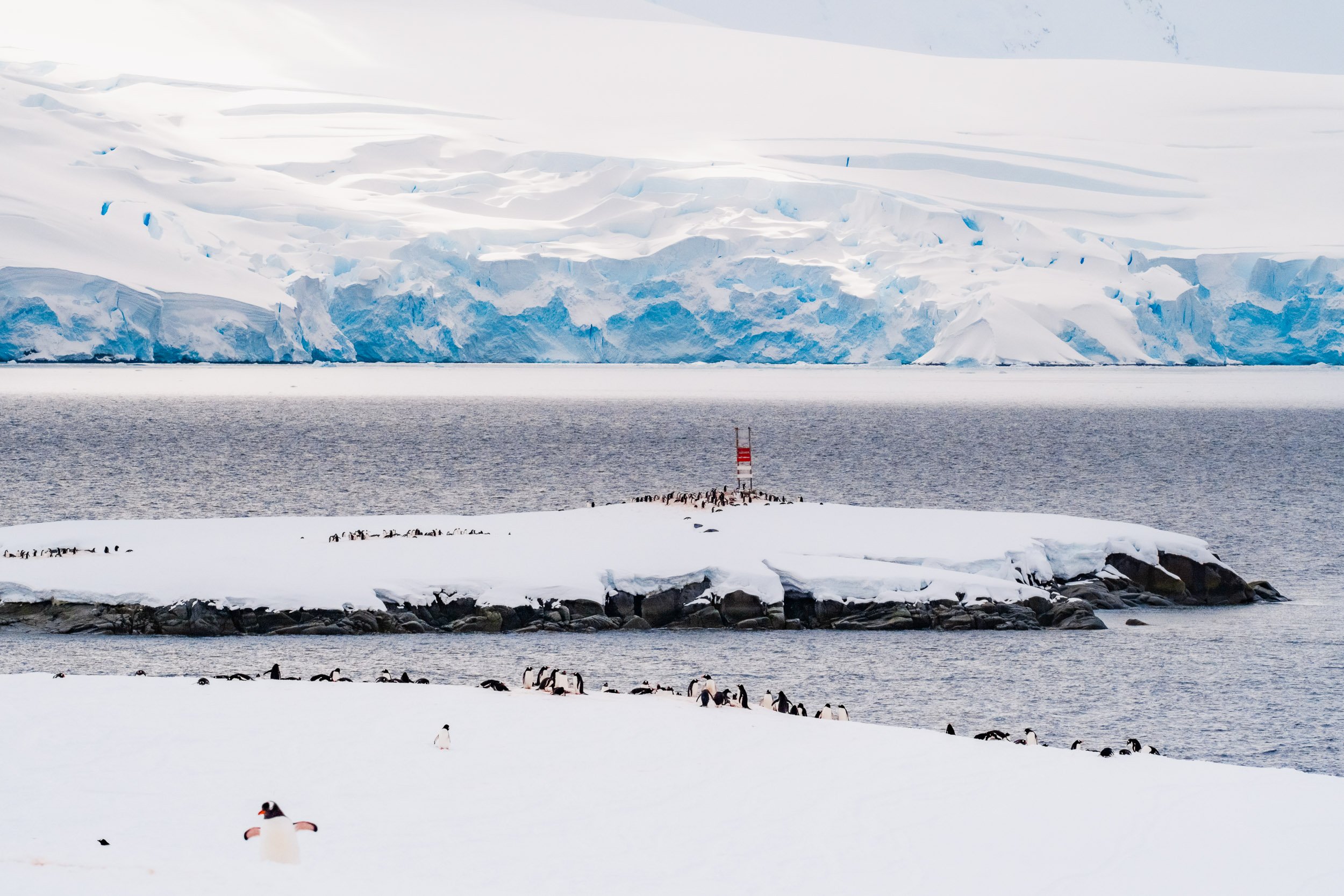
This piece of land was our first landing site: Cuverville Island. It is home to a massive colony of Gentoo penguins — the species known as the fastest-swimming birds in the world (they even hold a Guinness World Record for it!).
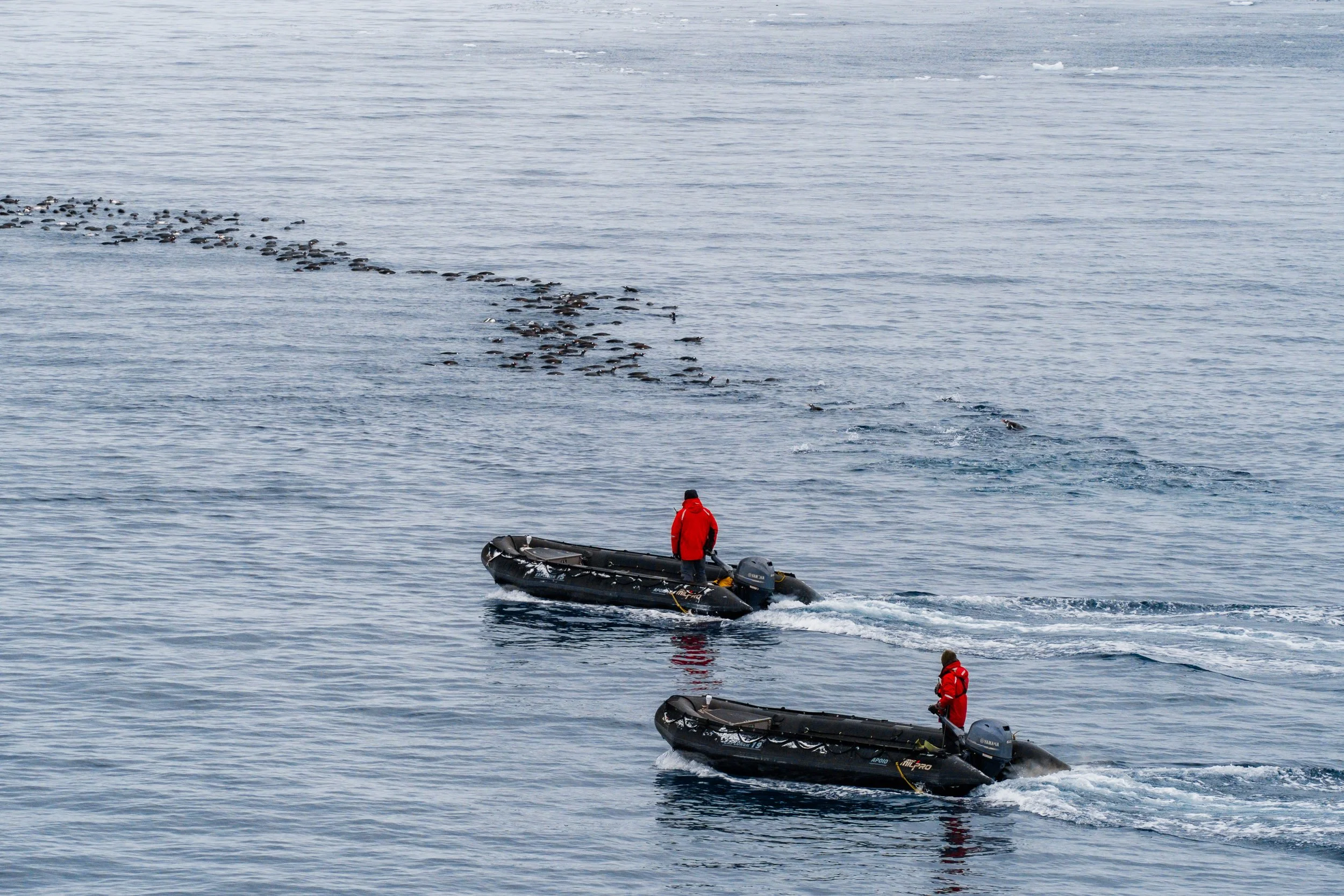
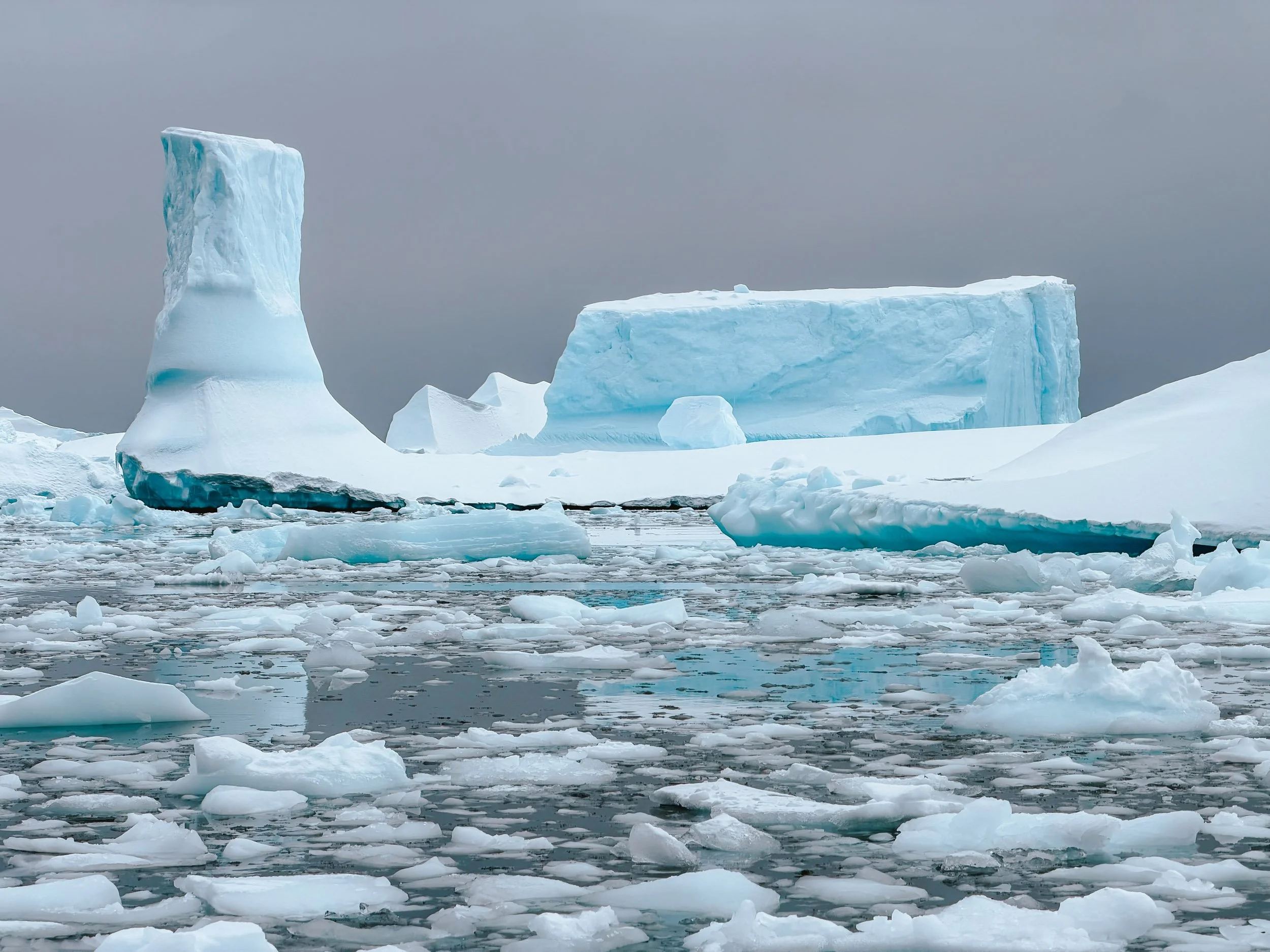
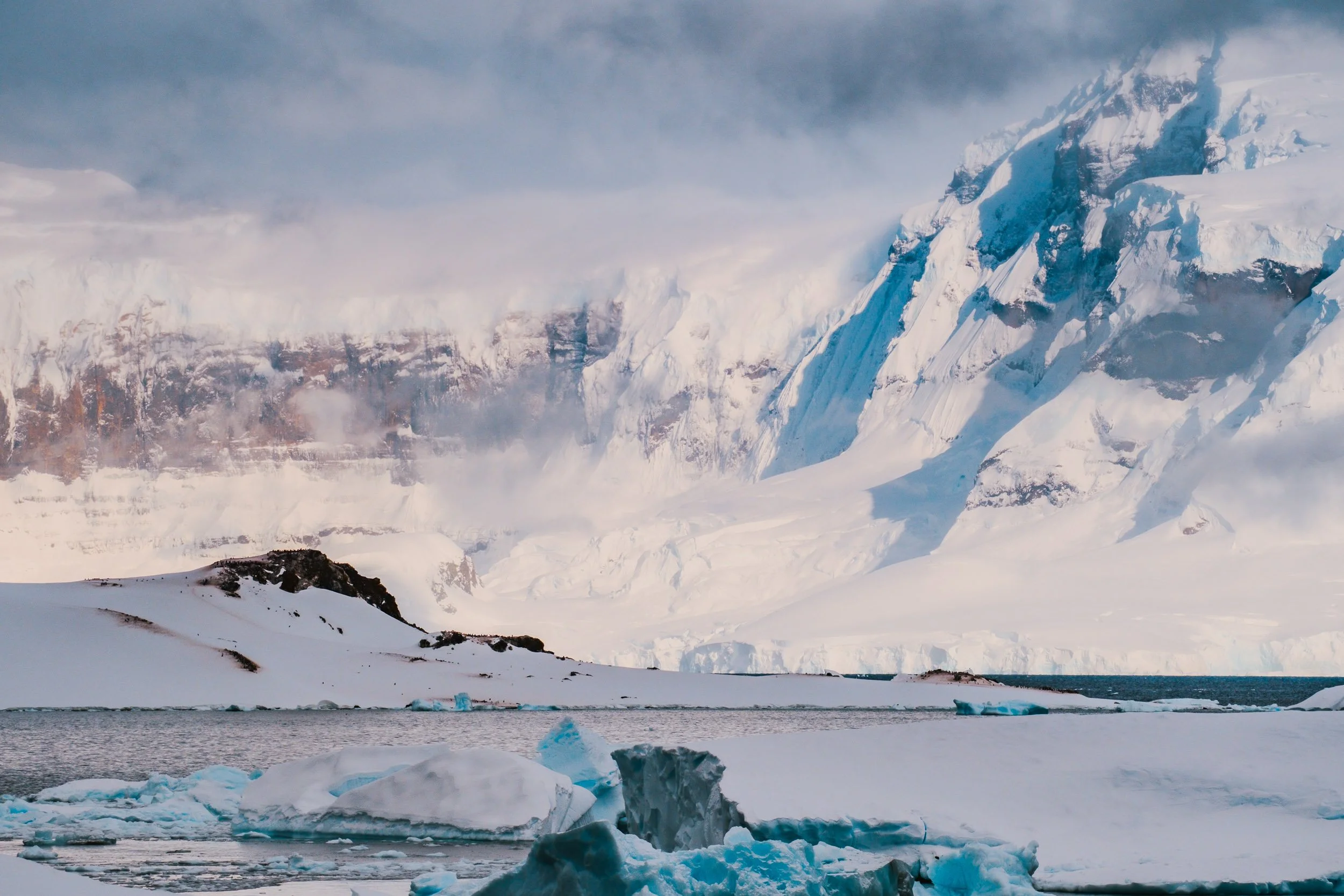
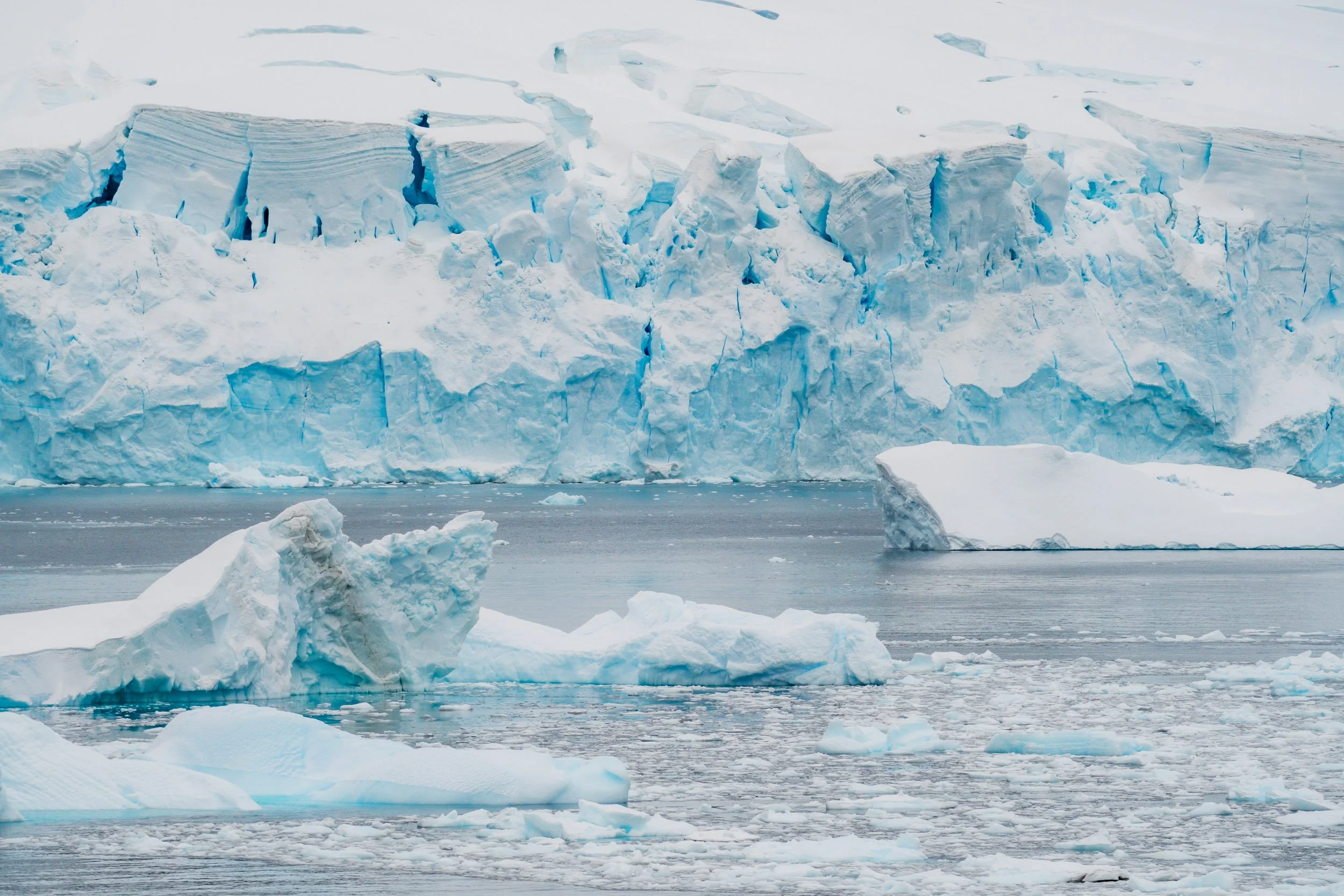
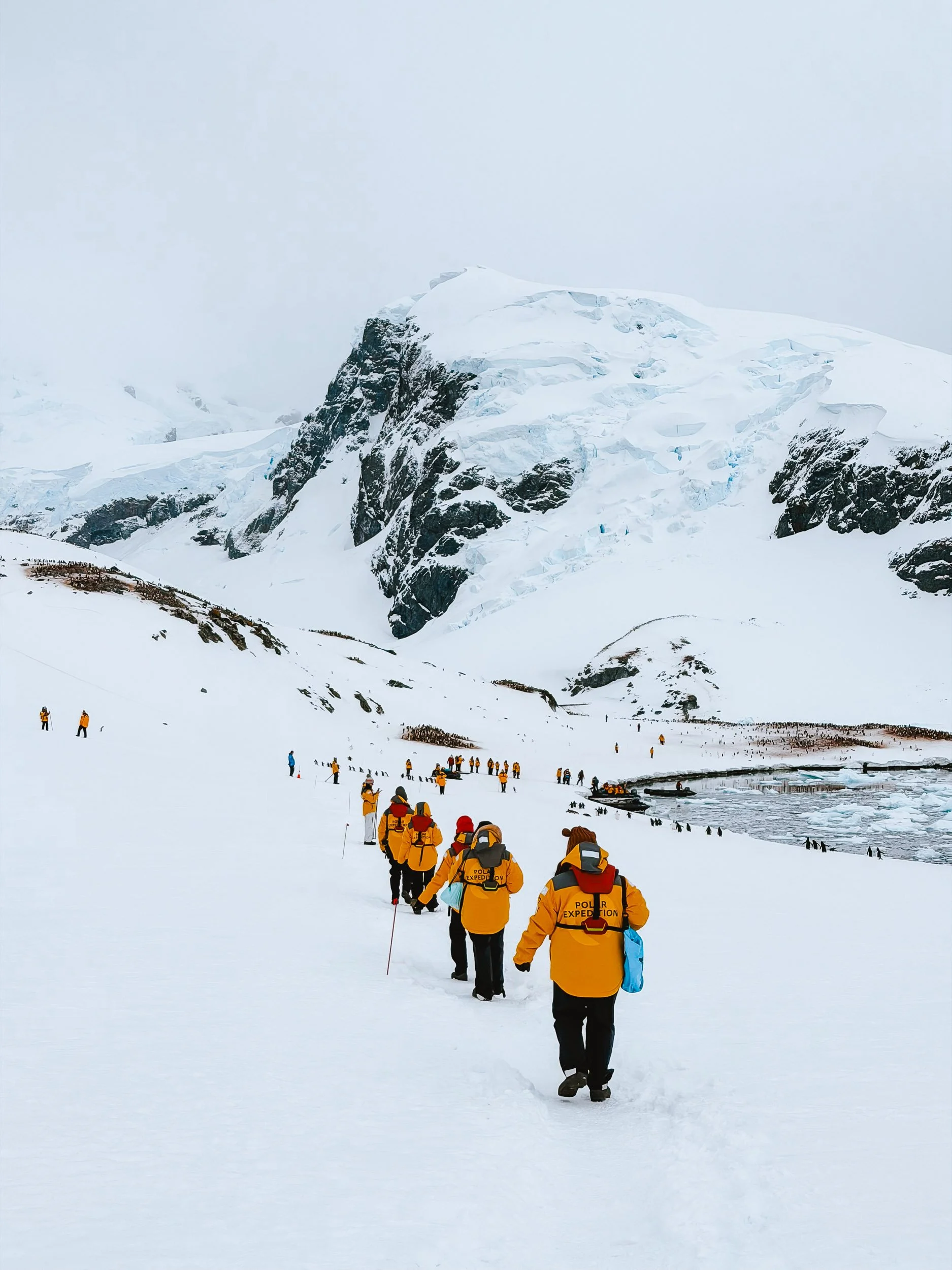
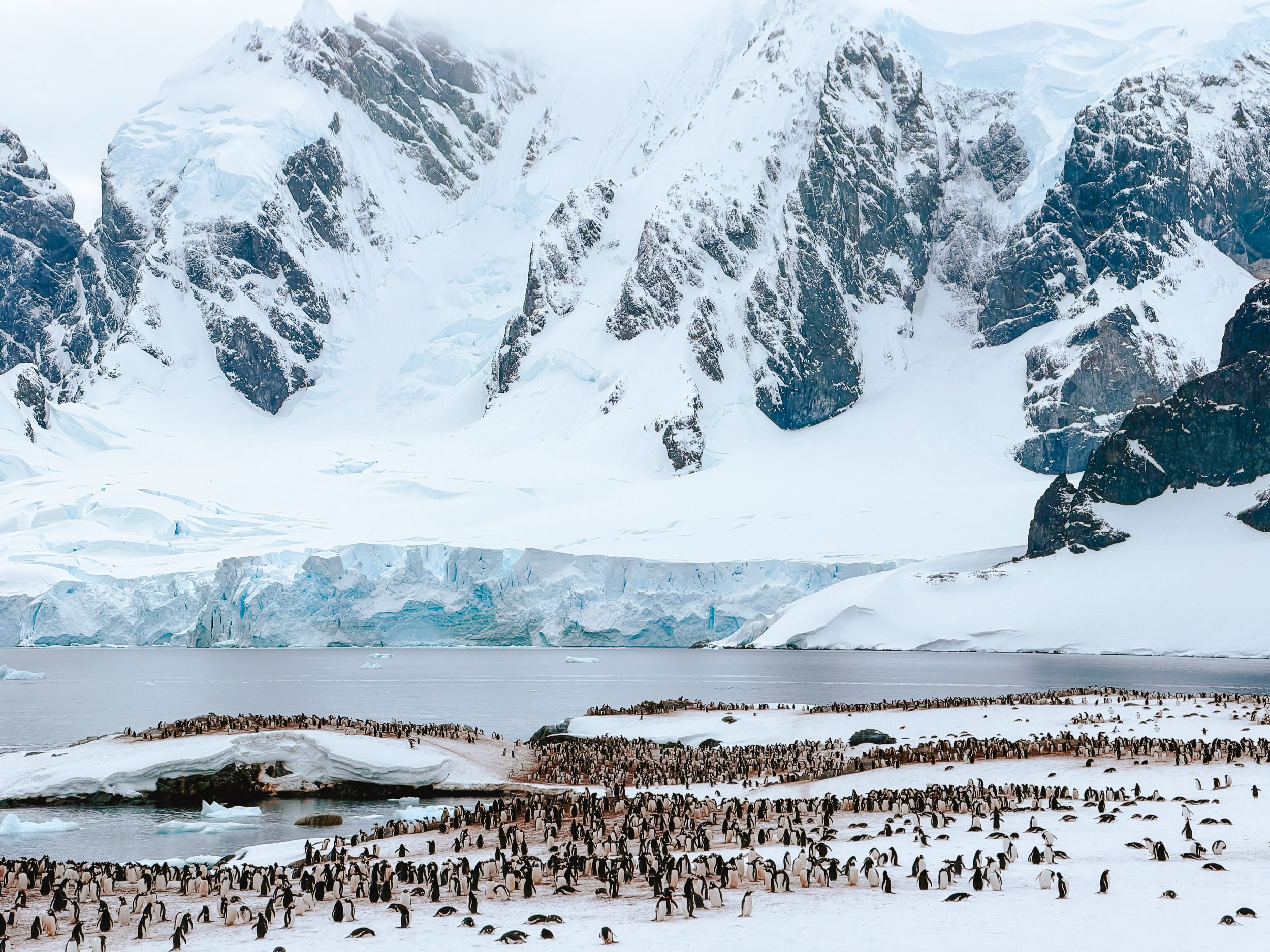
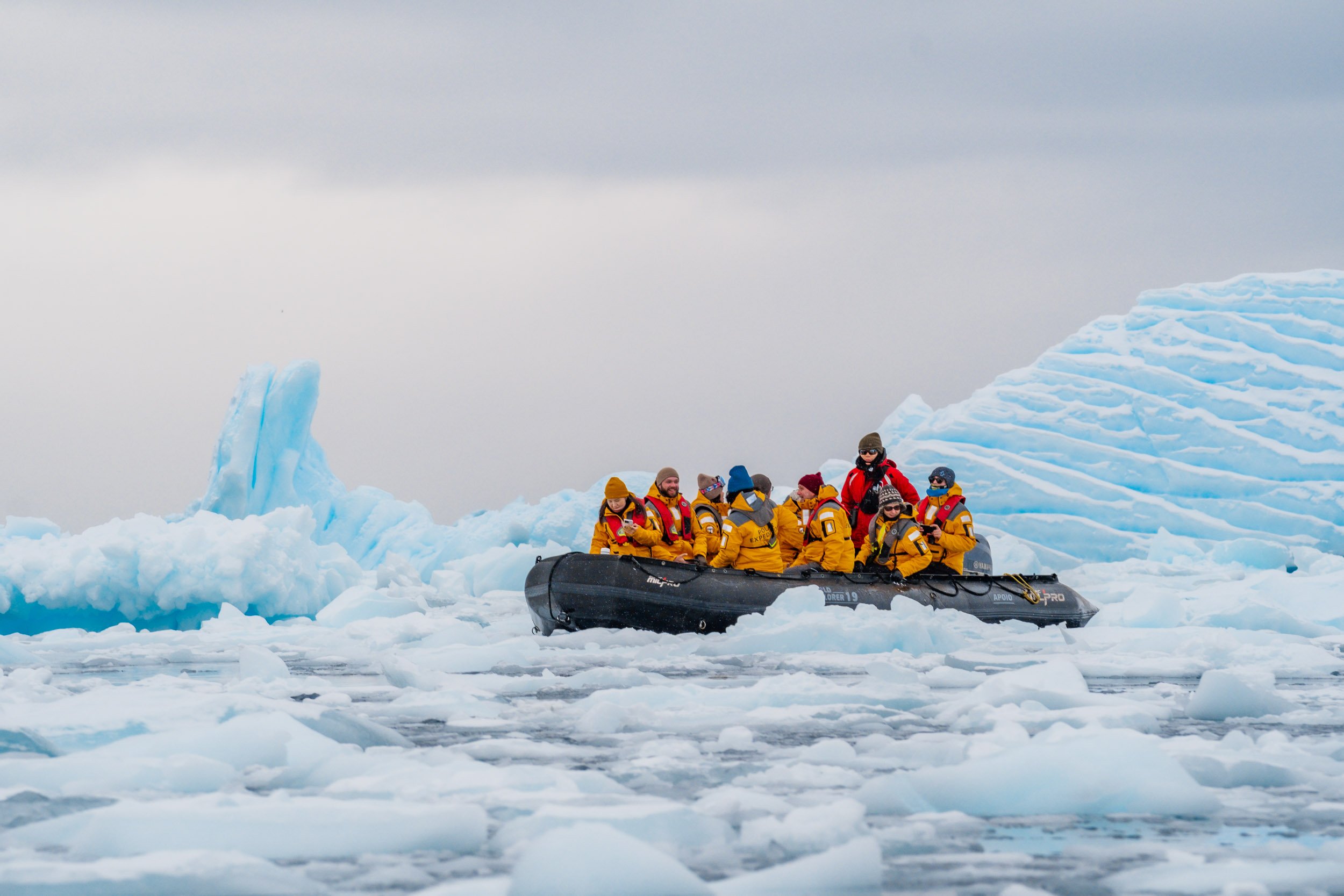
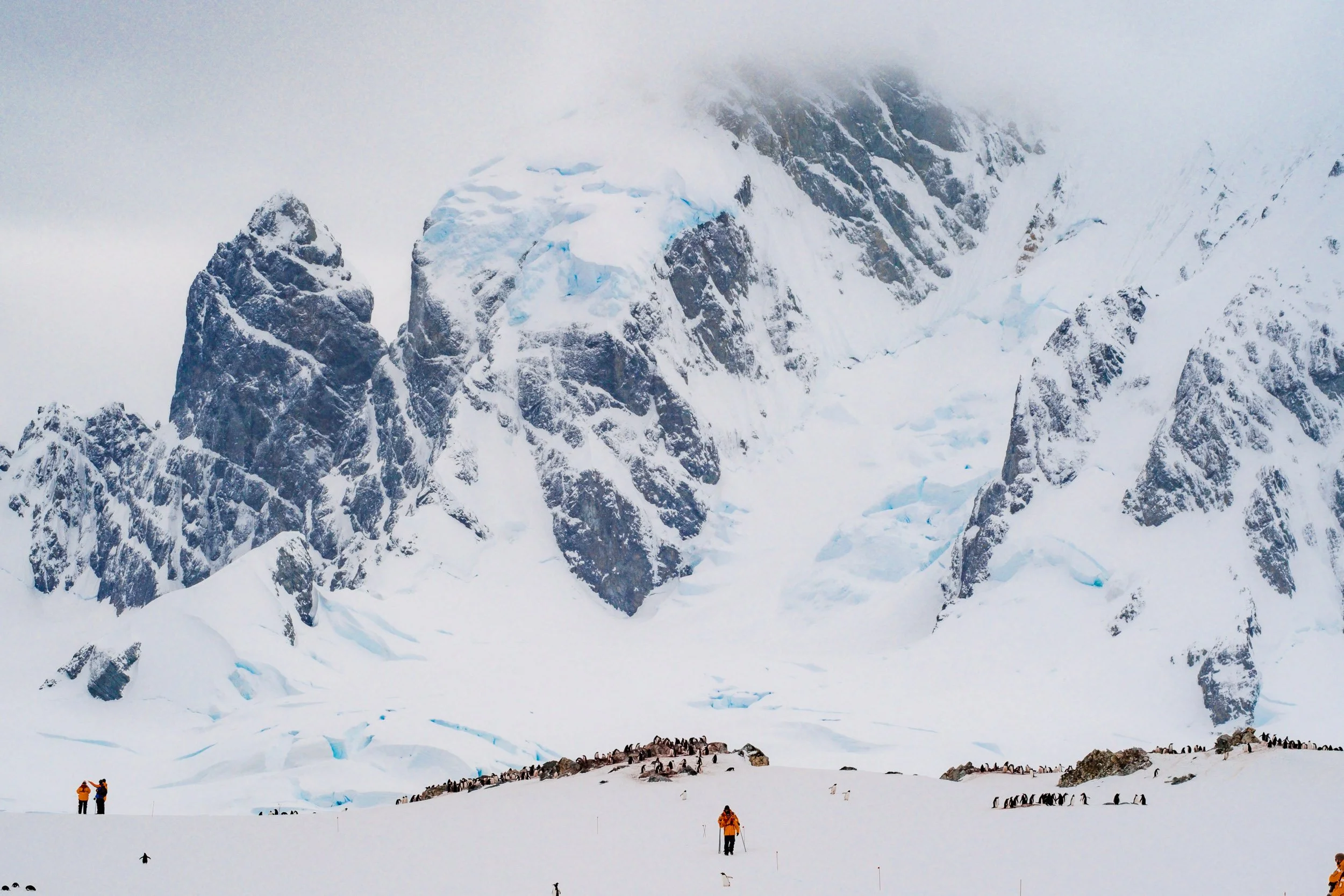
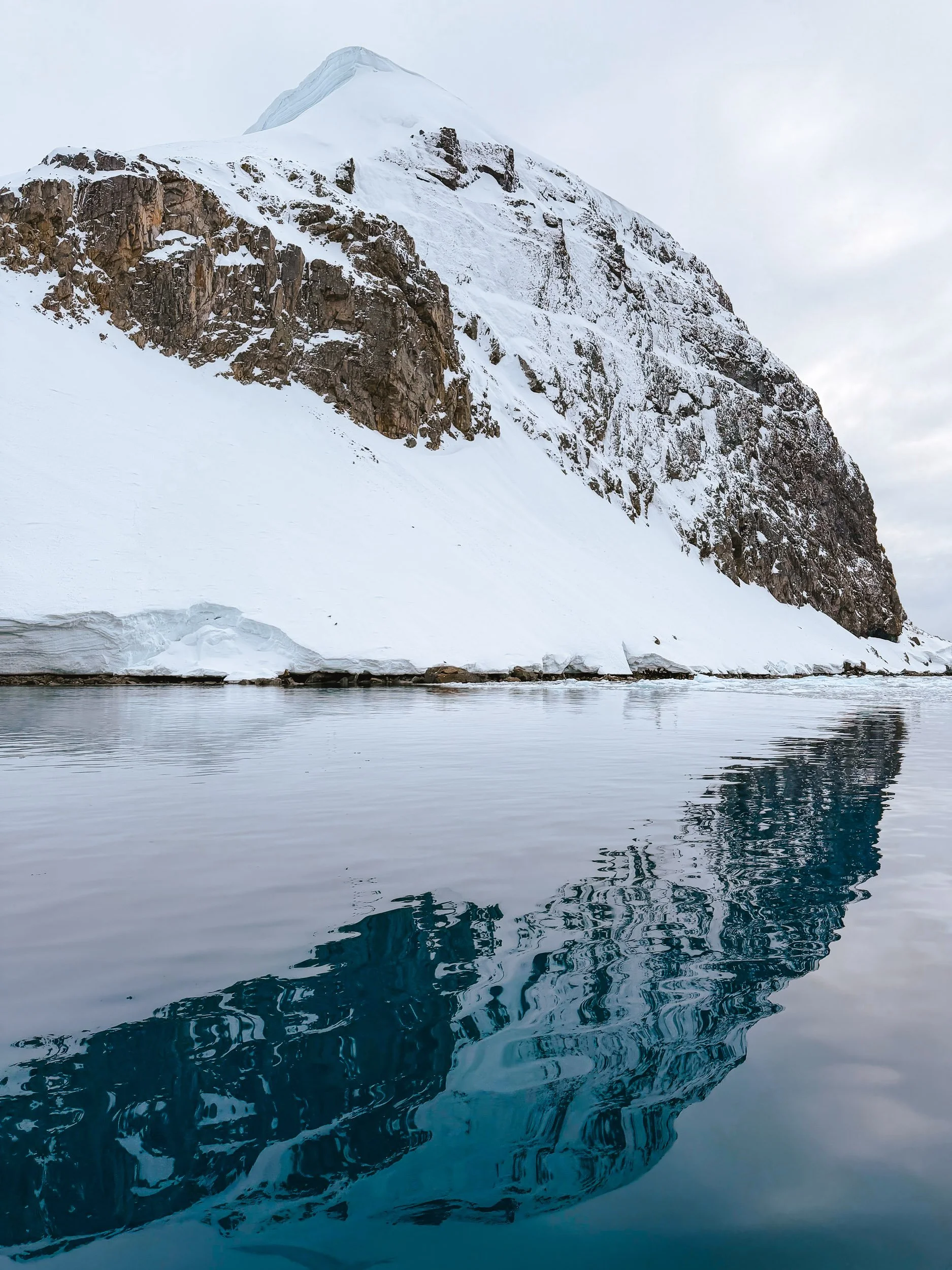
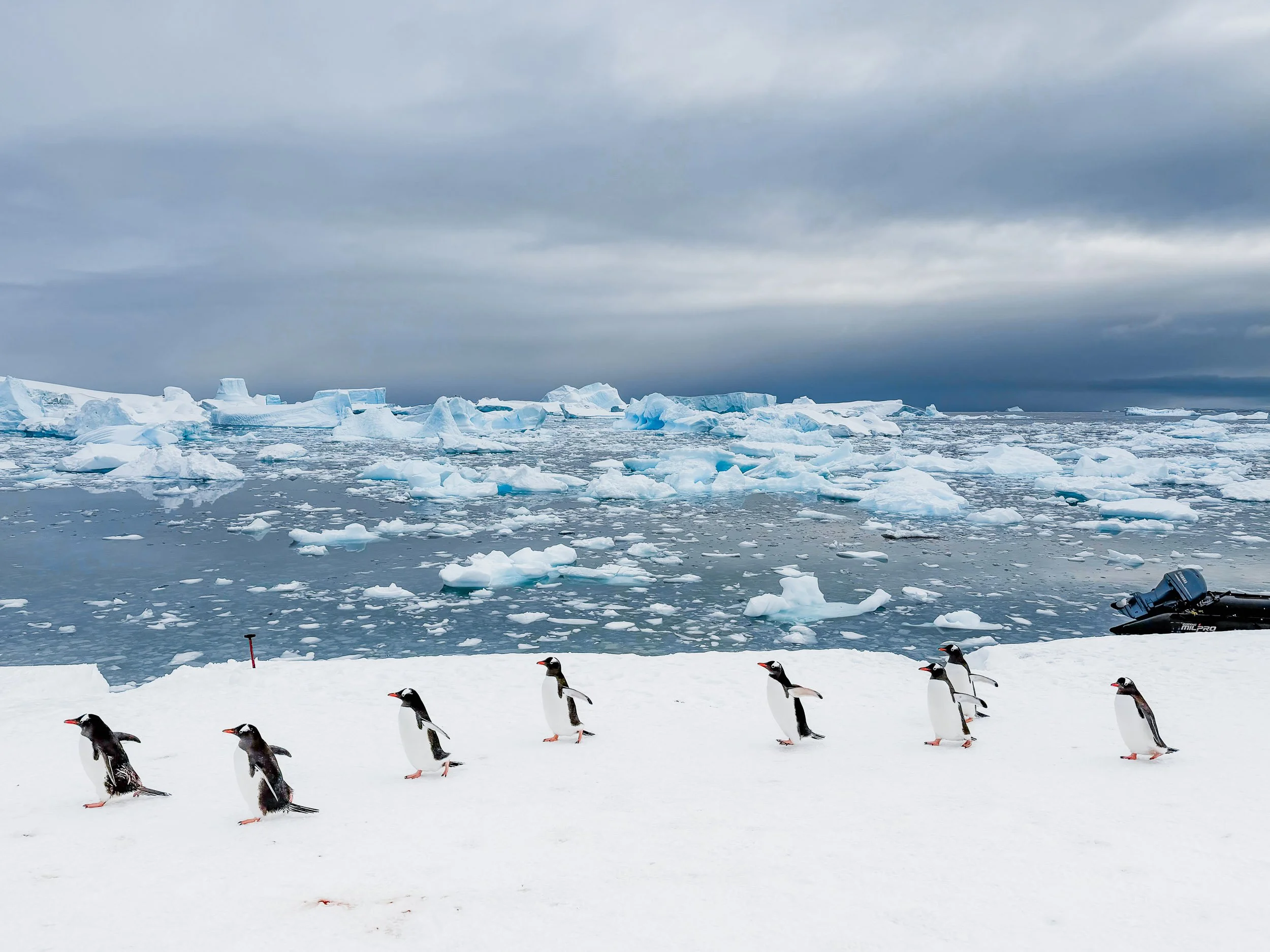
We were the first group to land, and as our zodiac was navigating the ice to reach the island, we suddenly spotted a seal swimming beneath our boat. It turned out to be a leopard seal, one of the most notorious predators on the continent. They don’t normally harm humans because their main prey is penguins. We got to shore safely and were welcomed by the island's most adorable locals!
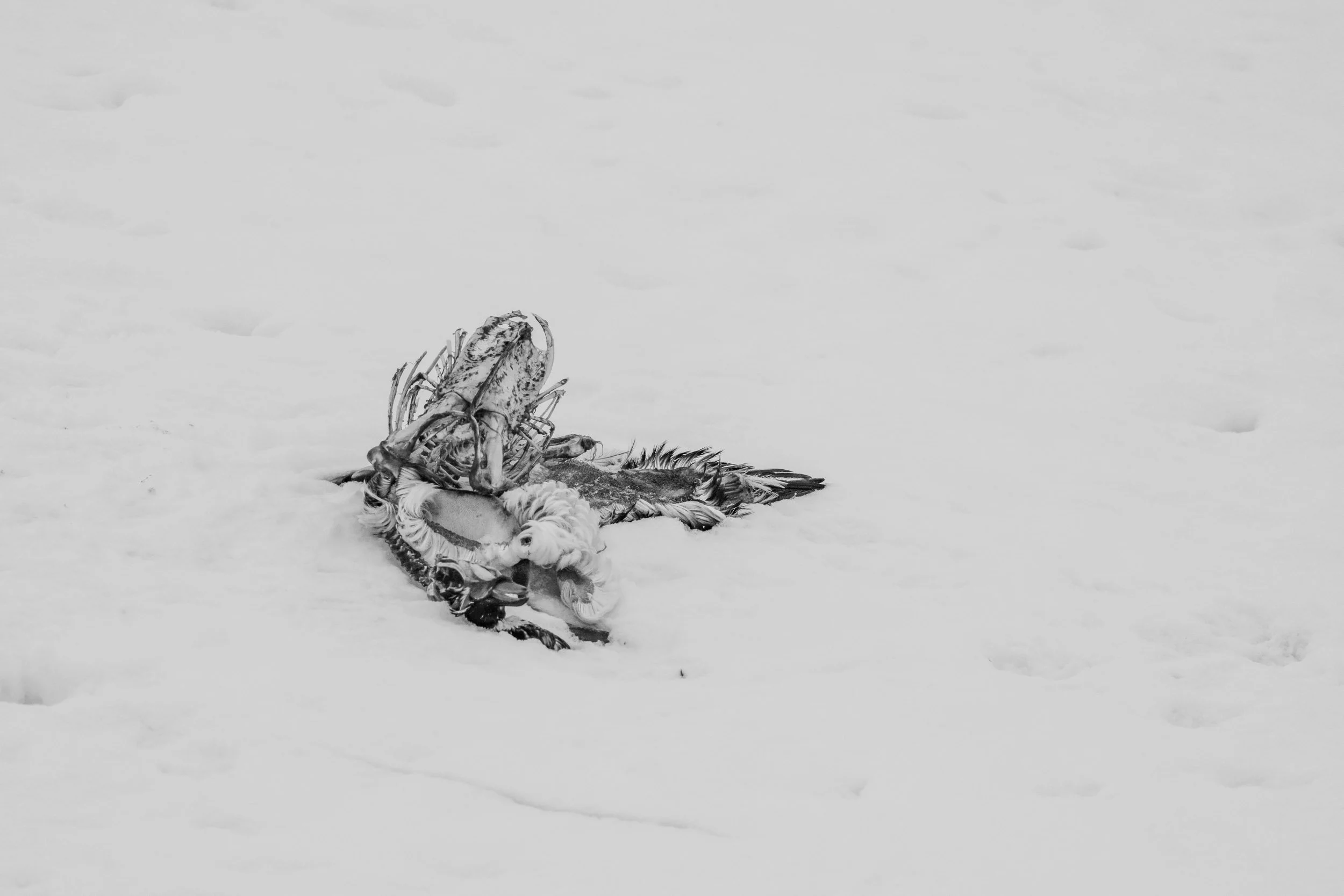
The circle of life. A penguin’s carcass
Danco Island
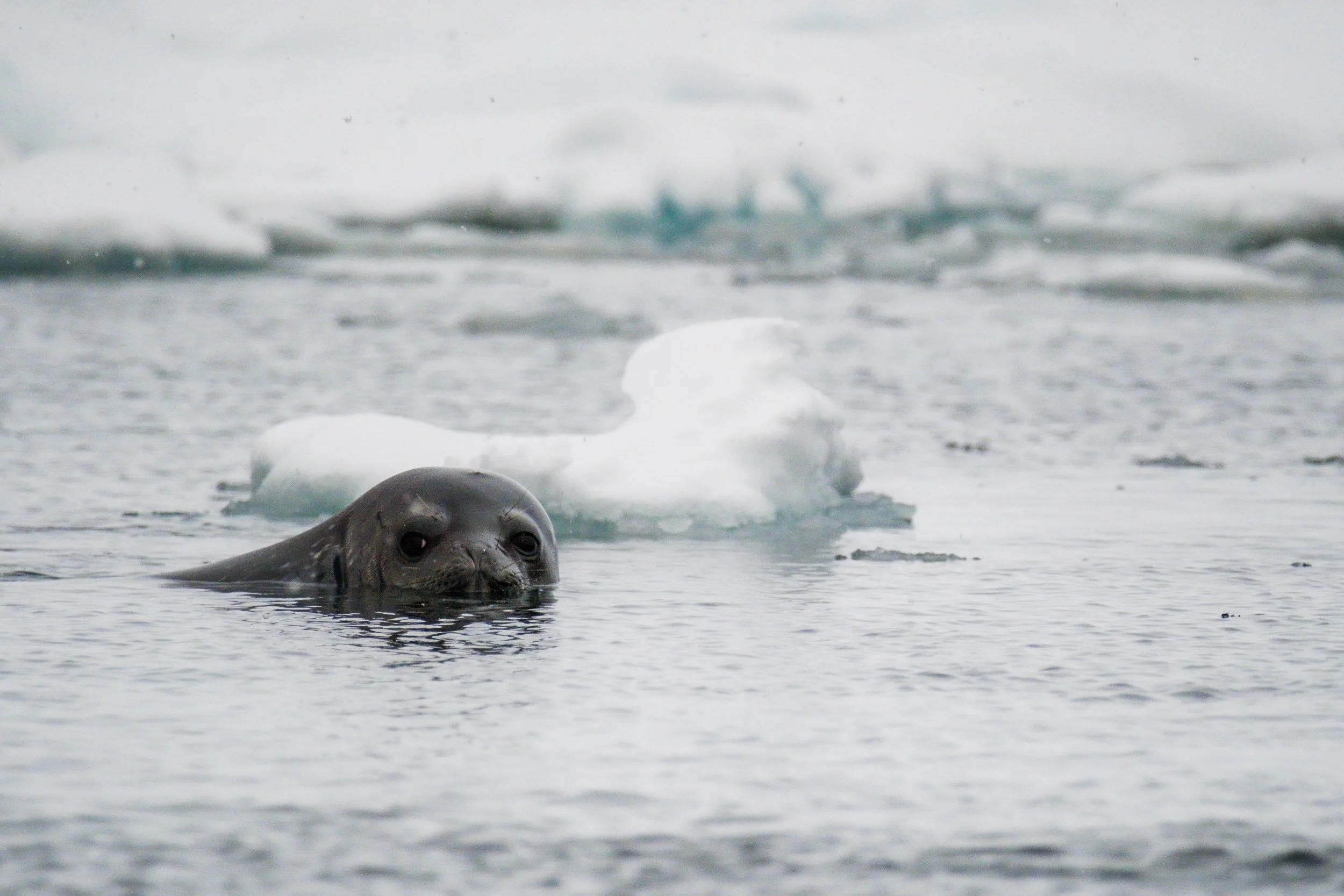
The afternoon excursion was reserved for exploring Neko Harbor and Danco Island, a mile-long island at the southern tip of the scenic Errera Channel. Our group started with the zodiac cruise, and we got as close as we could get to a sleeping Weddell seal!
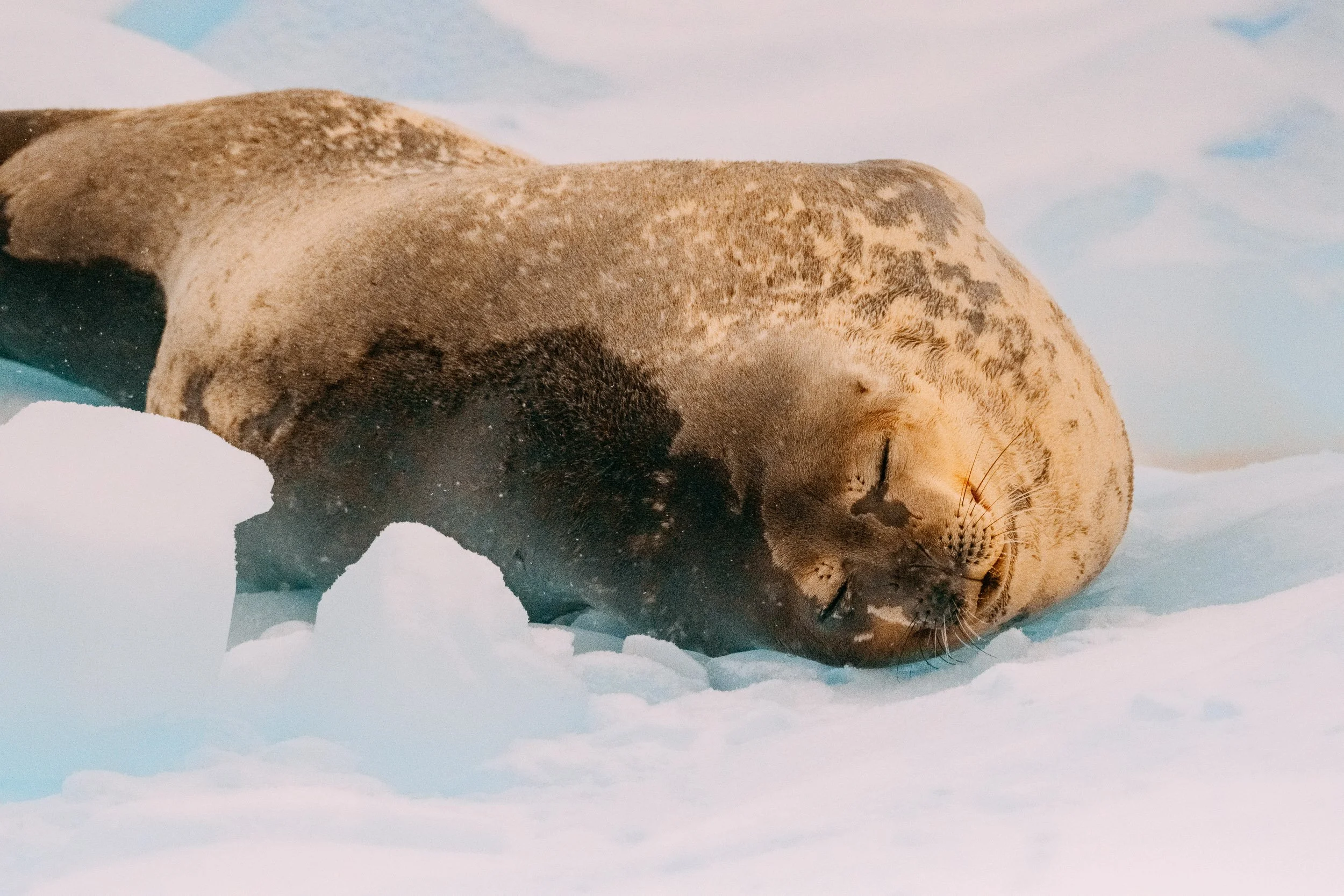
A sleeping Weddell seal
We were also able to spot some orcas from a distance, though we only saw their tails. When we finally landed on Danco Island, we climbed a small hill to get a better perspective of the surrounding landscape. Thankfully, there were available walking sticks to borrow to make the climb easier, but it was still pretty steep.
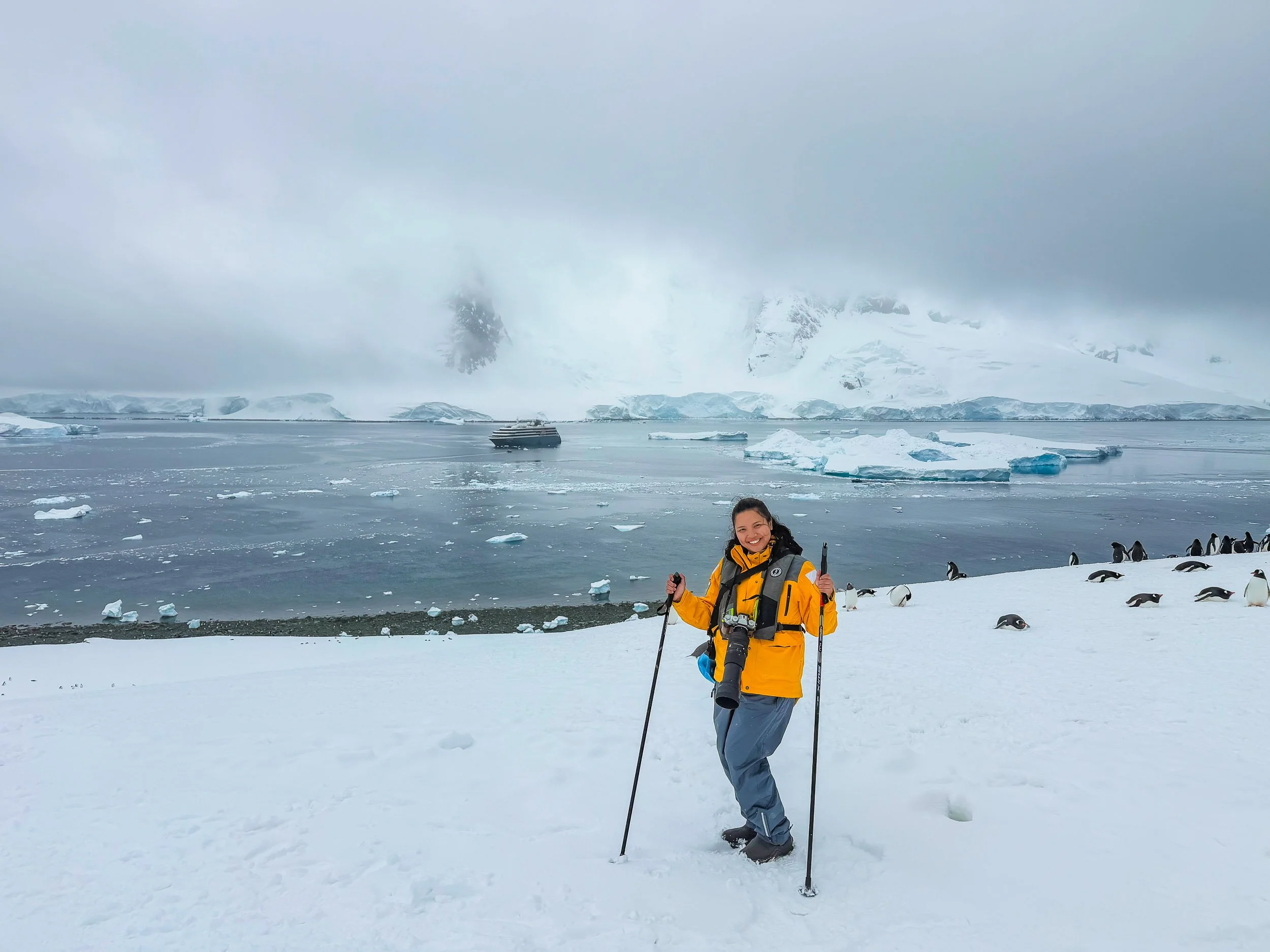
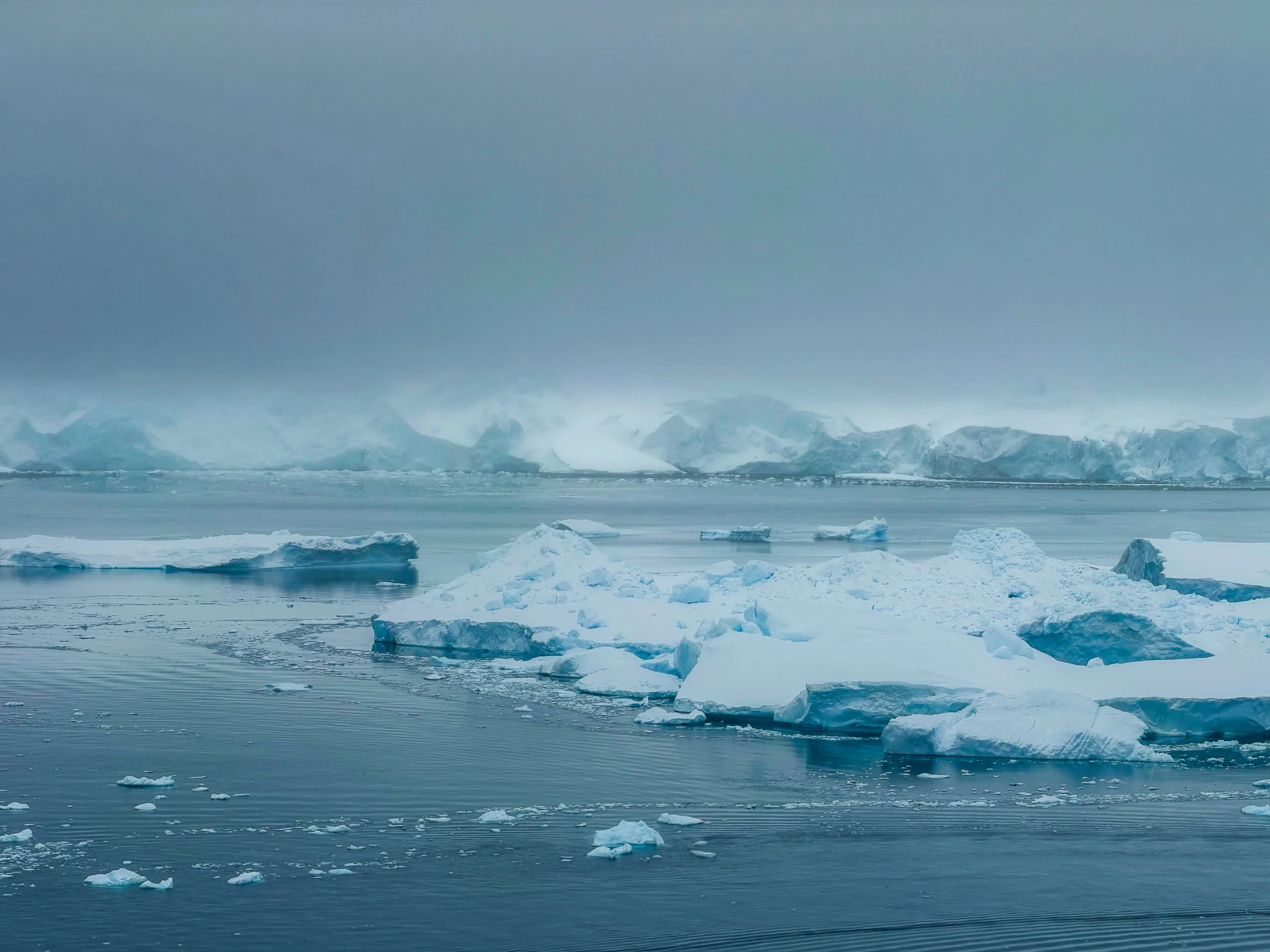
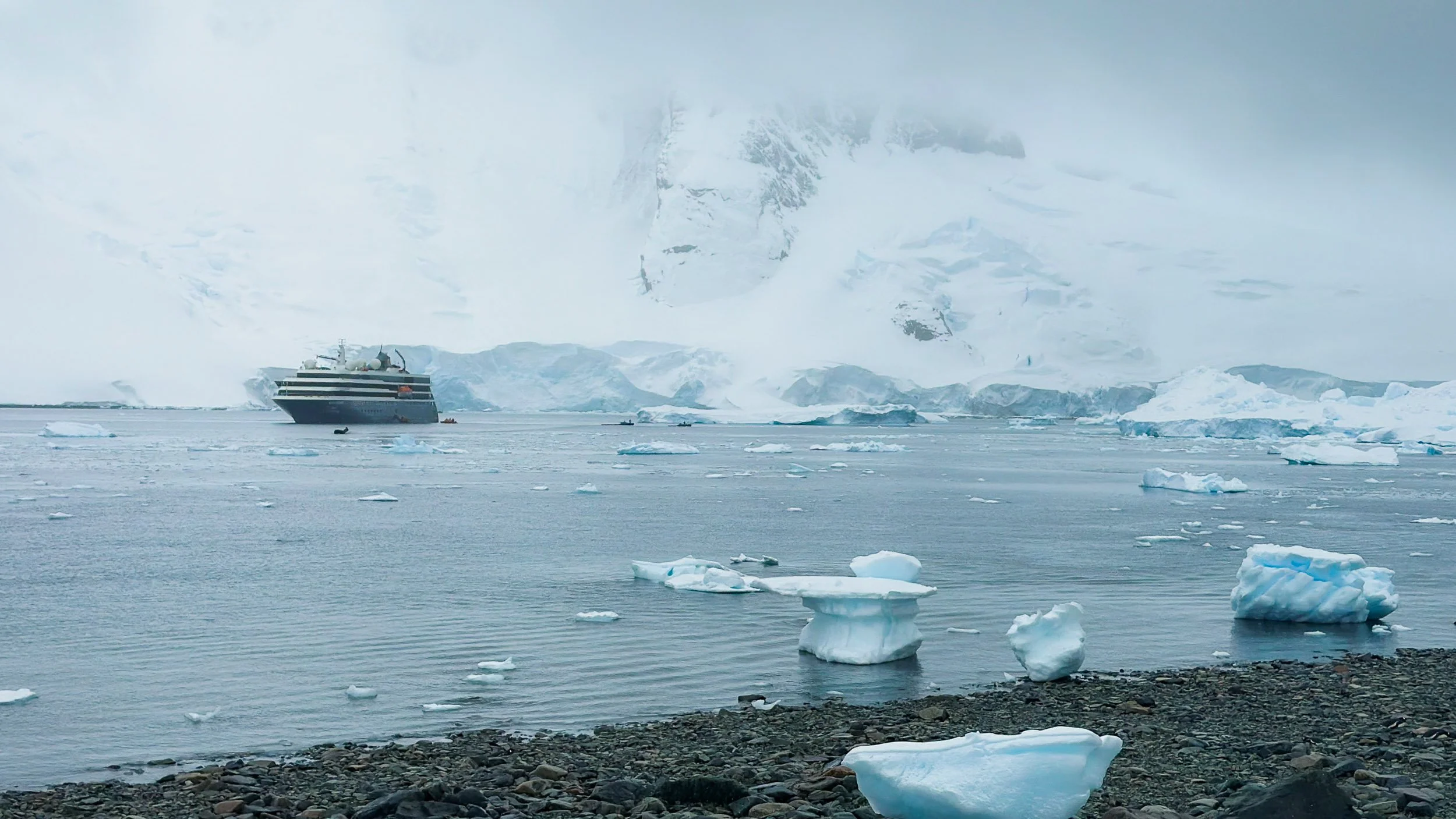
There were many Gentoo penguins here as well, and the picture of our ship in the middle of the harbor made a beautiful backdrop.
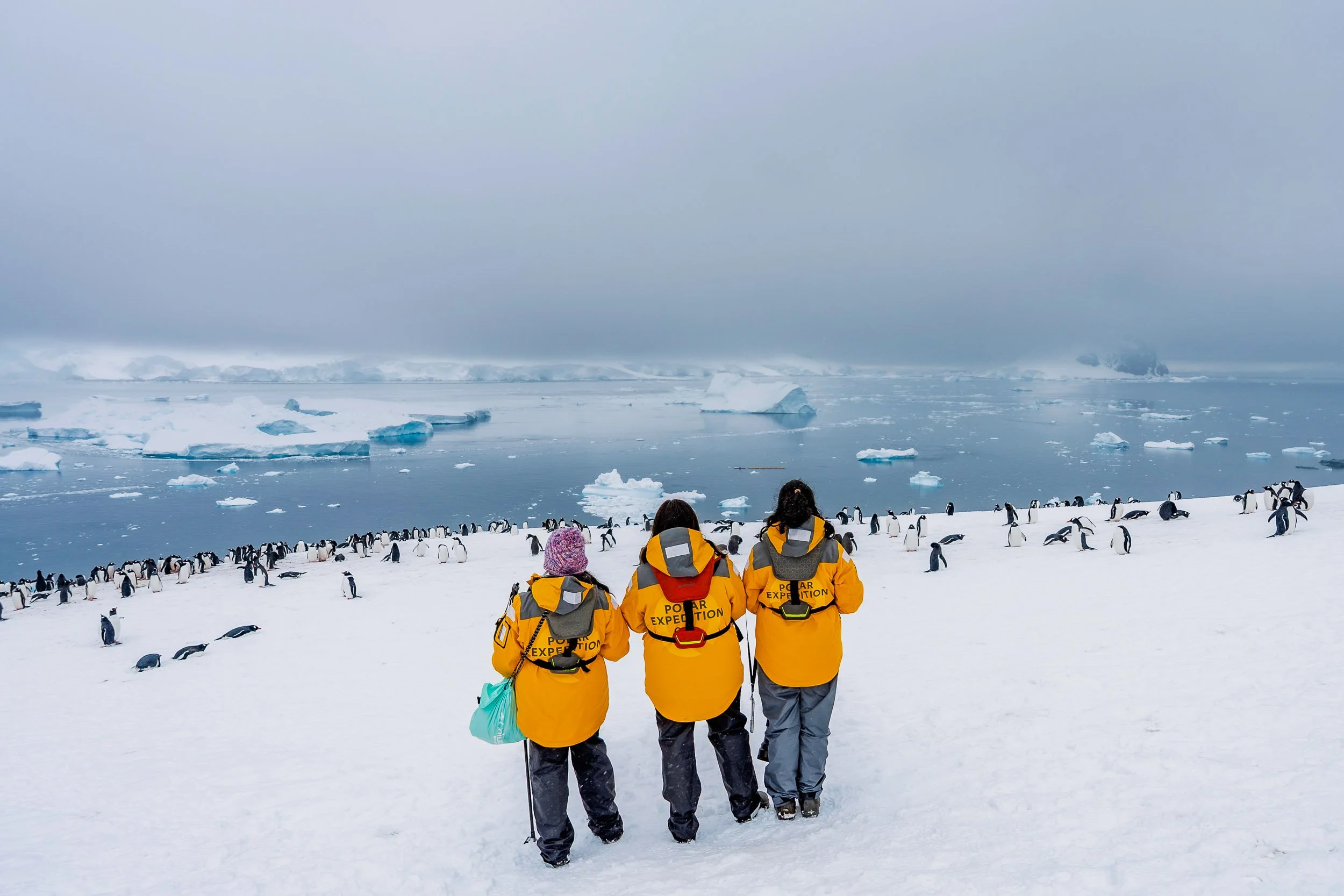
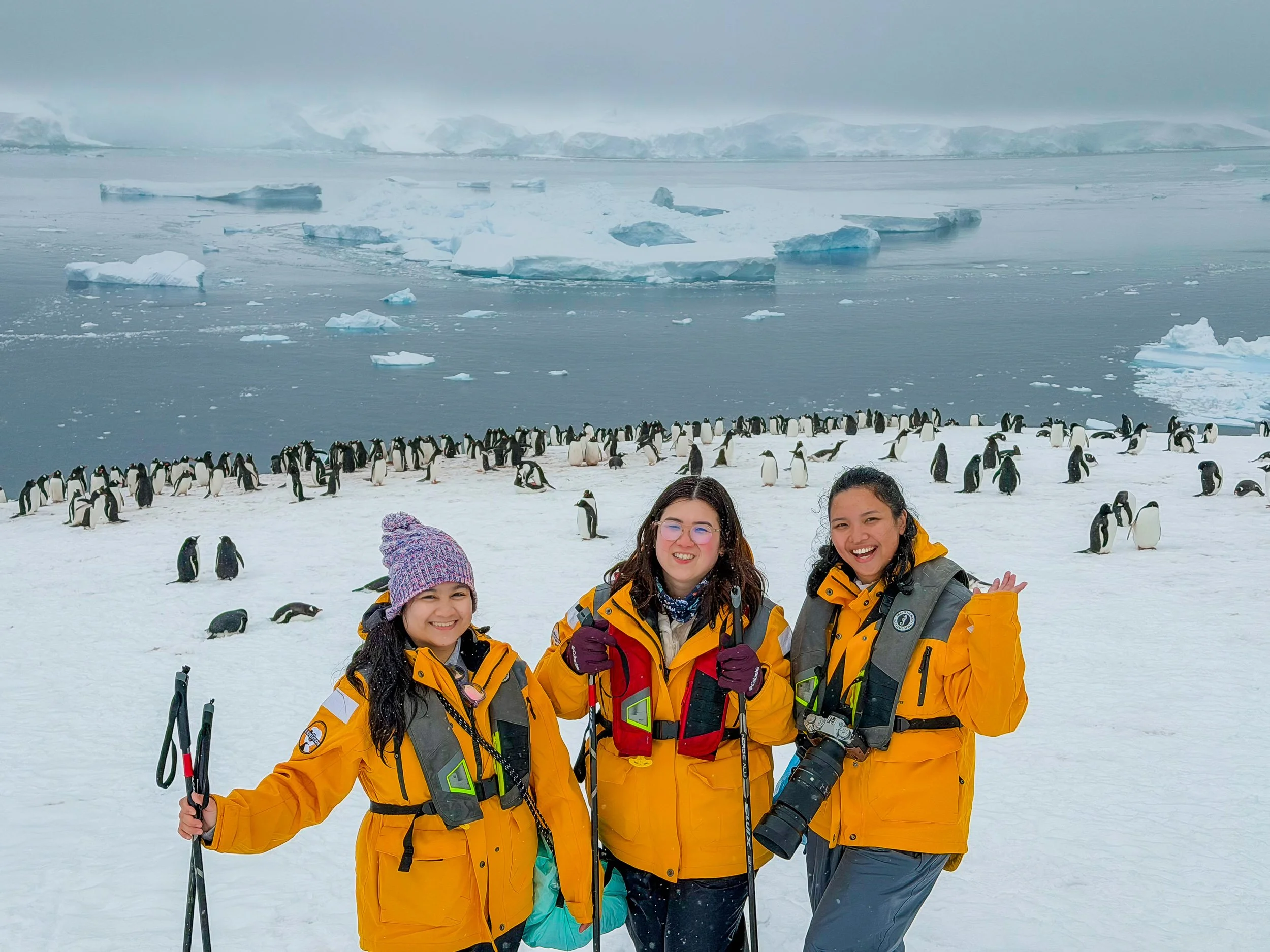
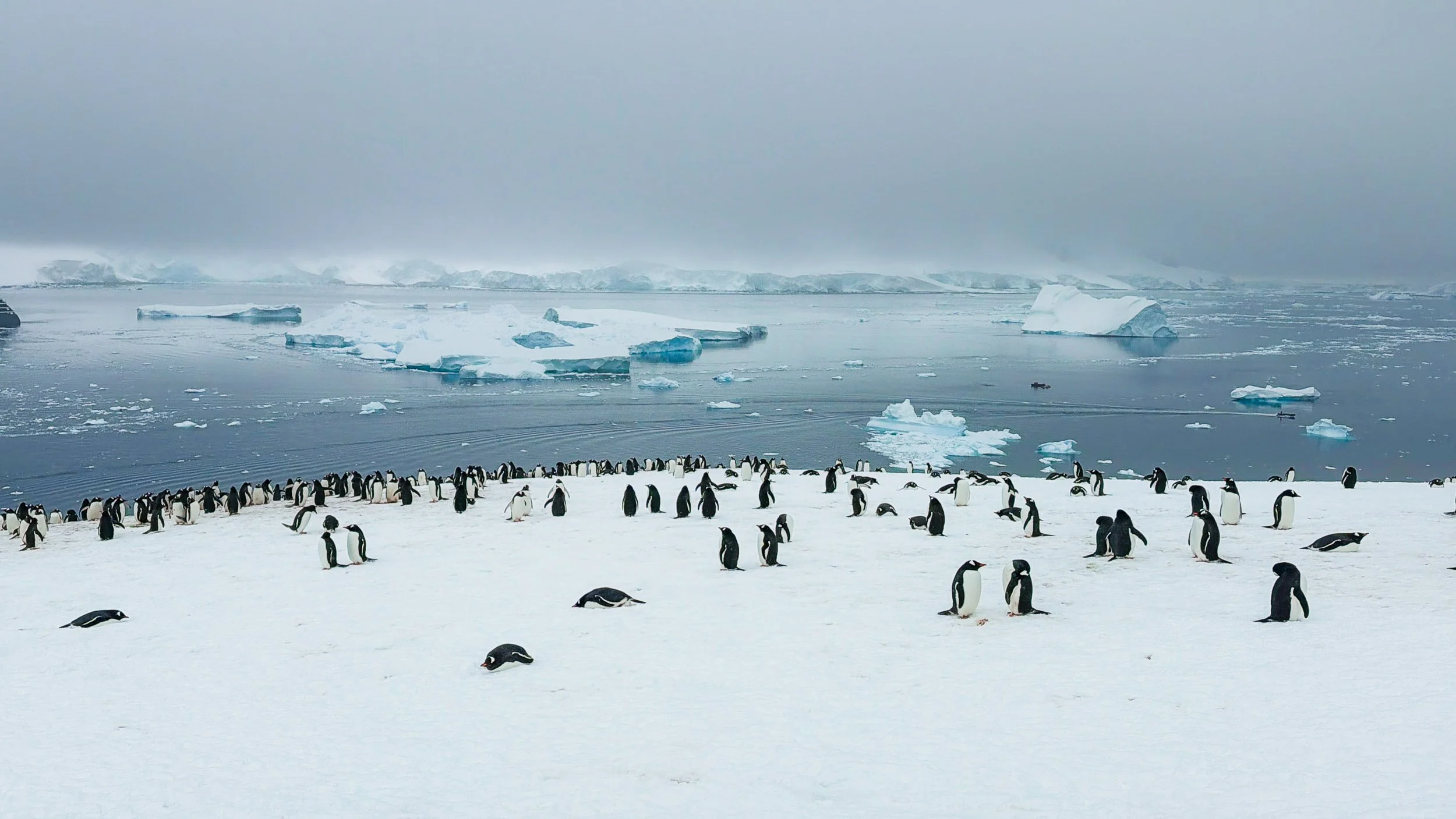
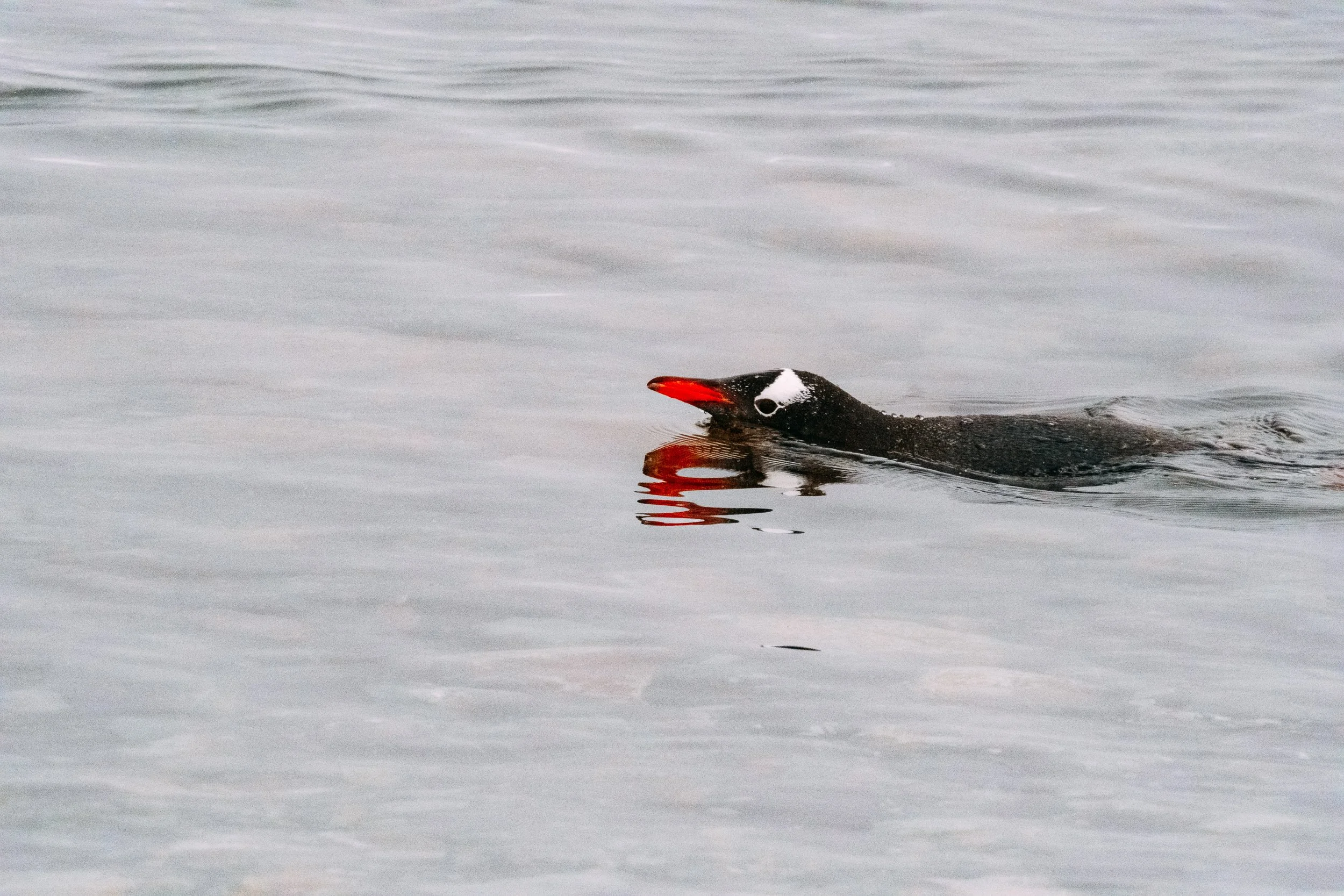
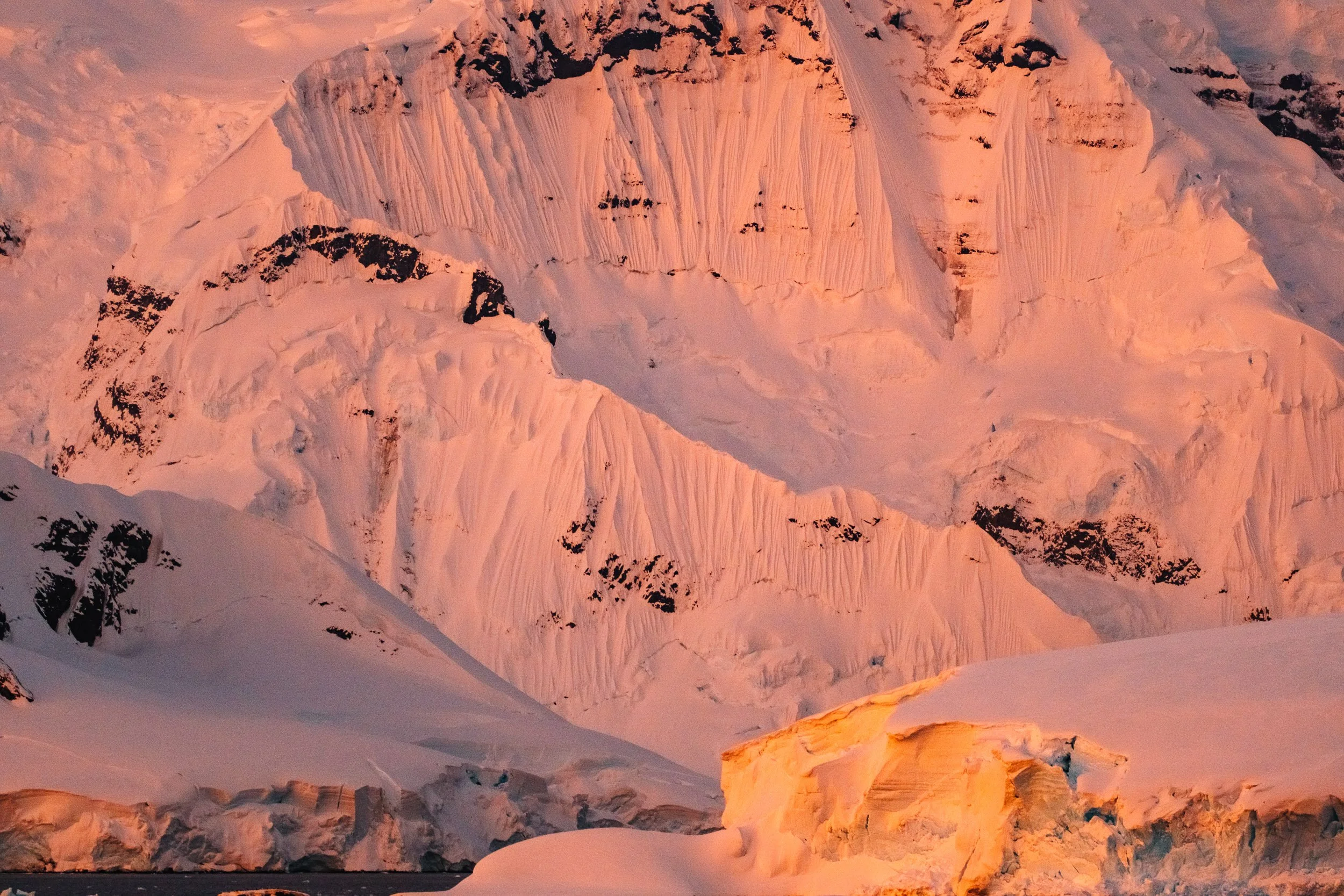
Upon returning to the ship, we went to the viewing deck to watch the sunset. Seeing the warm glow hitting the Antarctic peaks on our first day on the continent made me tear up. It painted such a stunning picture. I was convinced this was what heaven looks like.
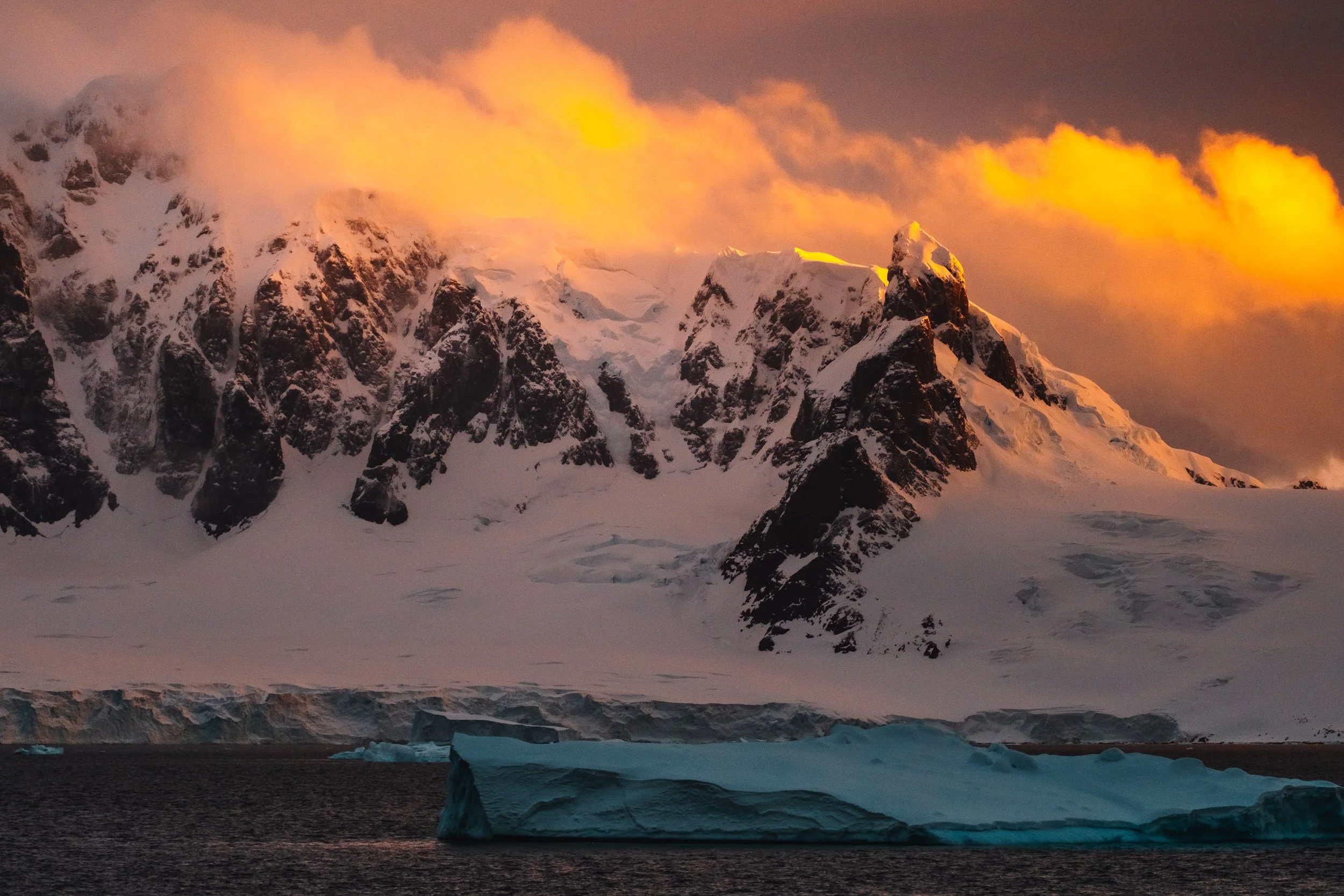
I have no words.
Lemaire Channel
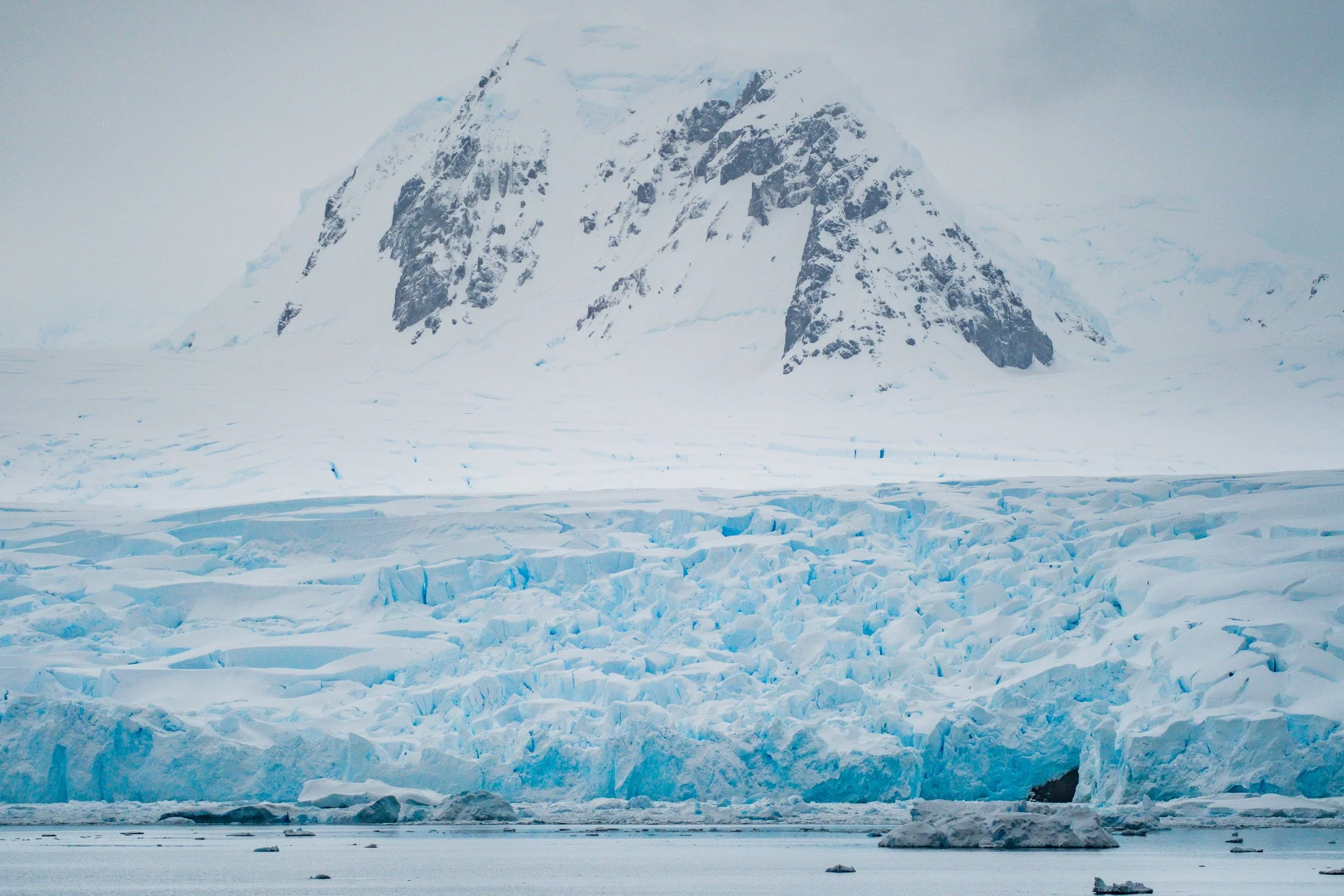
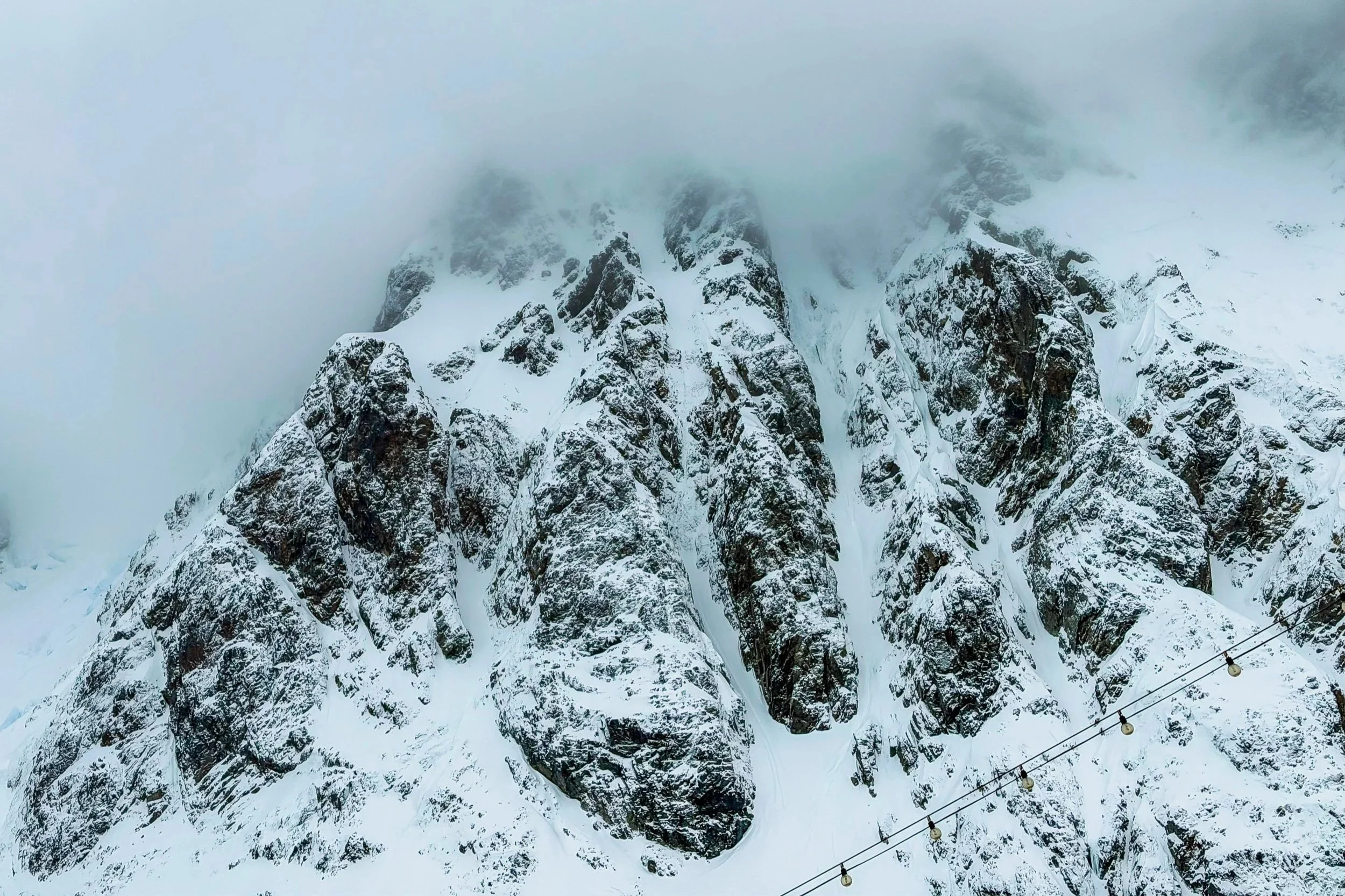
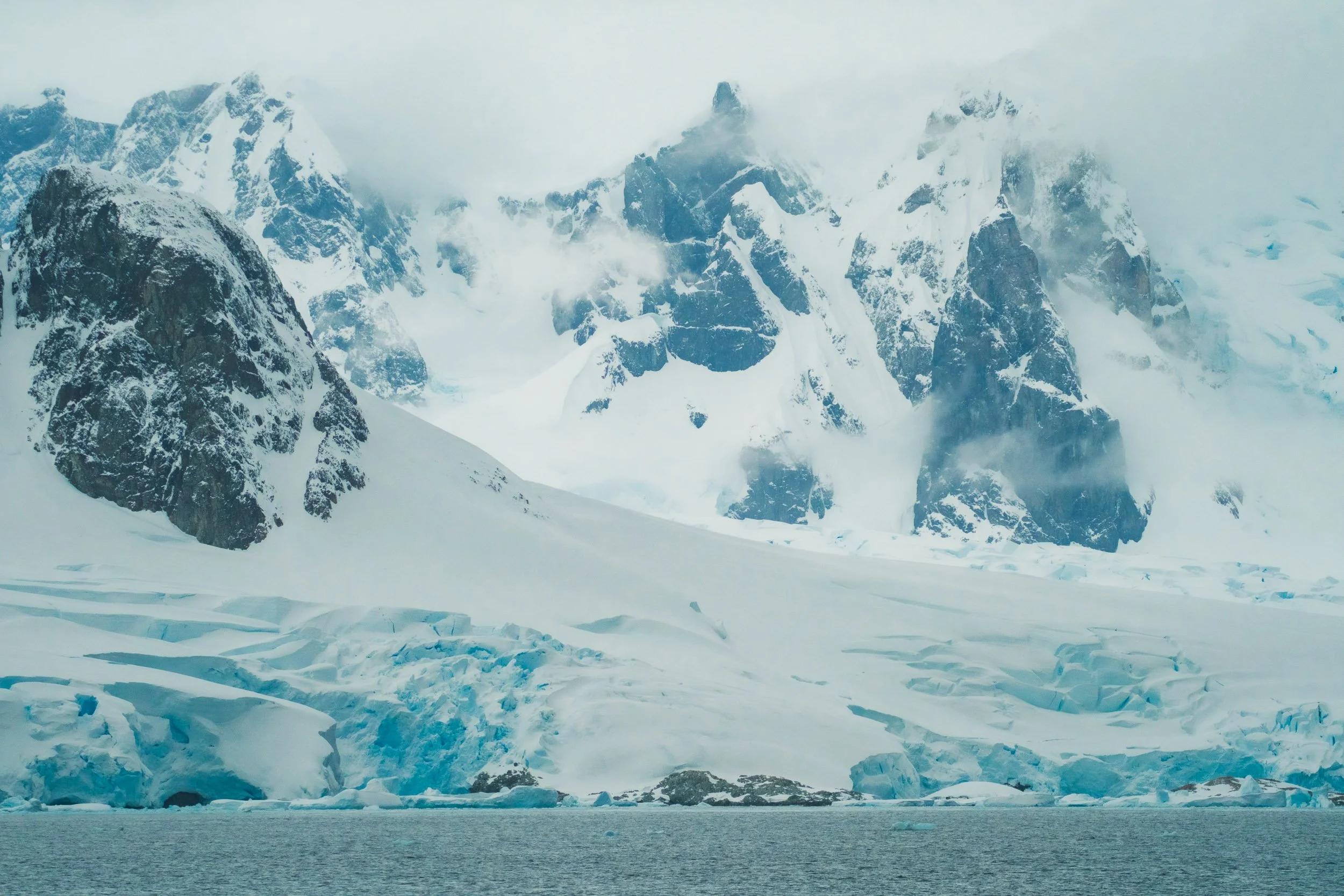
Lemaire Channel, a 7-mile strait flowing between the Kyiv Peninsula and Booth Island, was absolutely my favorite passage in Antarctica. Our time here was brief, but it was nothing short of enchanting.
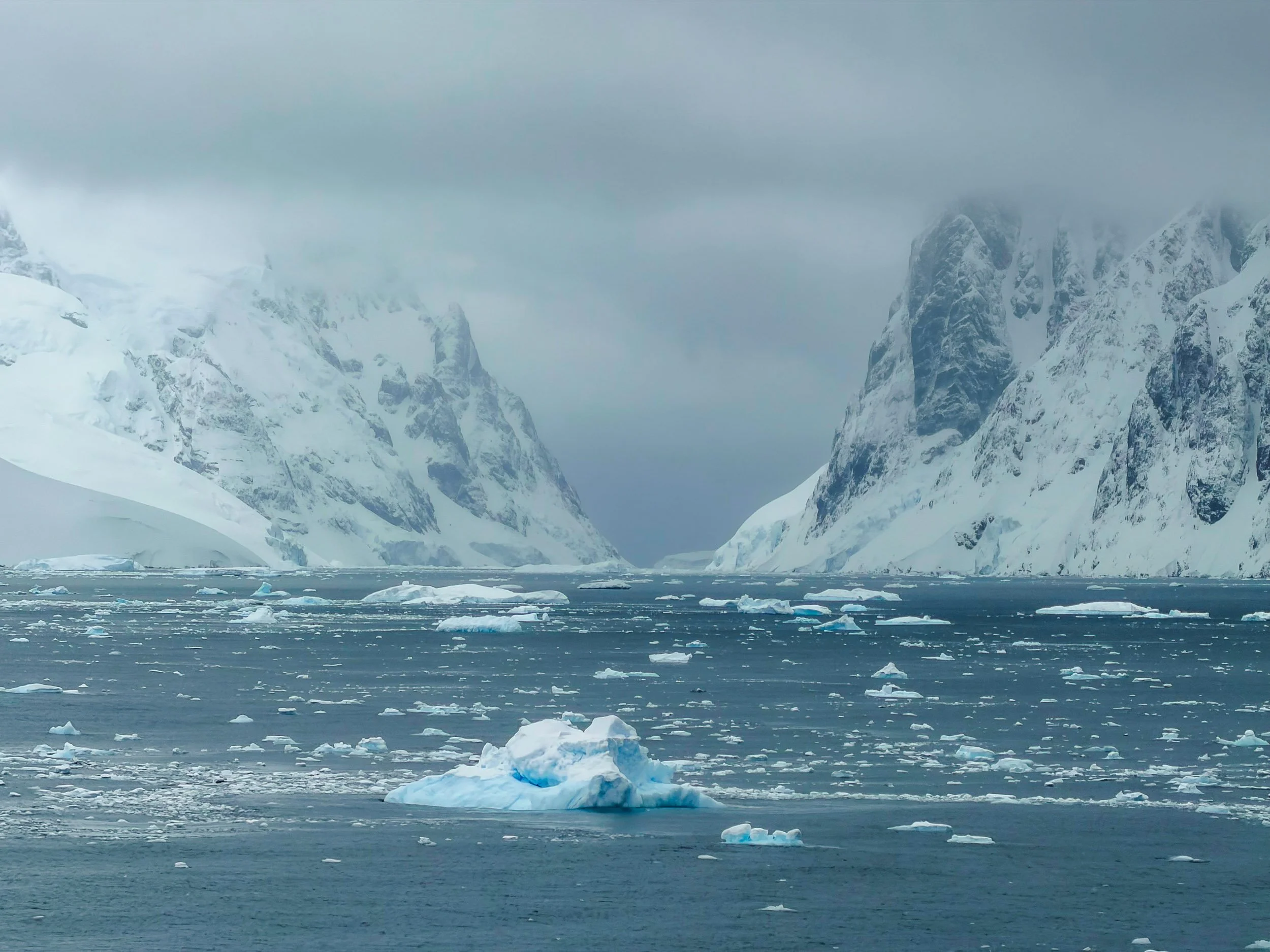
The Lemaire Channel
On the morning of our second day of excursions, Jake announced we were currently traveling across the channel. We went to the viewing deck, and as the cold, sharp wind struck my face, my heart leaped. Dramatic snow-capped cliffs soared on both sides of the ship with serene, mirror-like waters reflecting them. The scenery just left me speechless and out of breath.
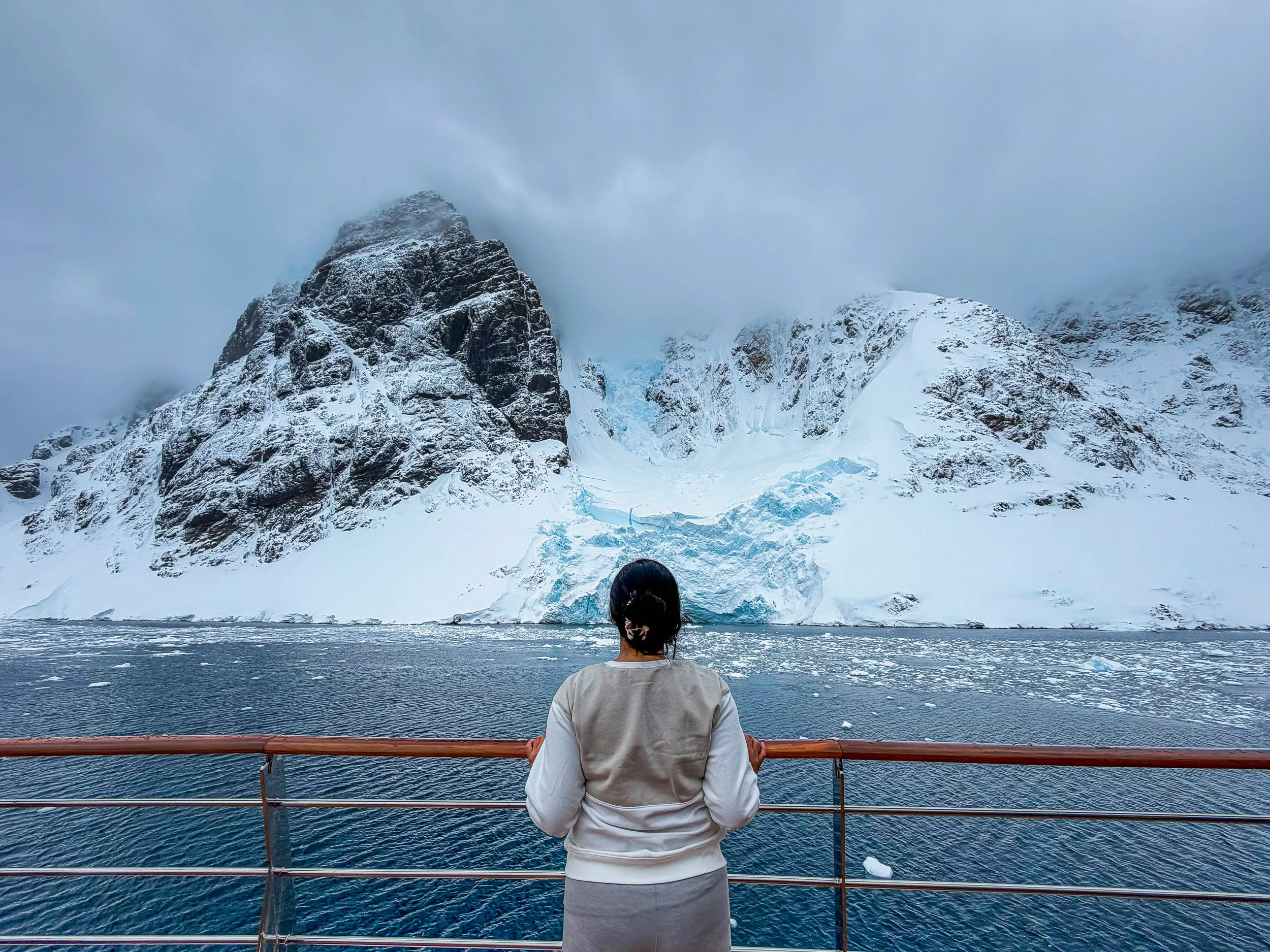
It wasn’t nicknamed “Kodak Alley” for nothing! I know what you’re thinking: I must be sick of seeing icebergs and glaciers at that point. But actually, I wasn’t. Antarctica keeps surprising me with how much more it can stun and impress me.
We called this “cookies and cream”
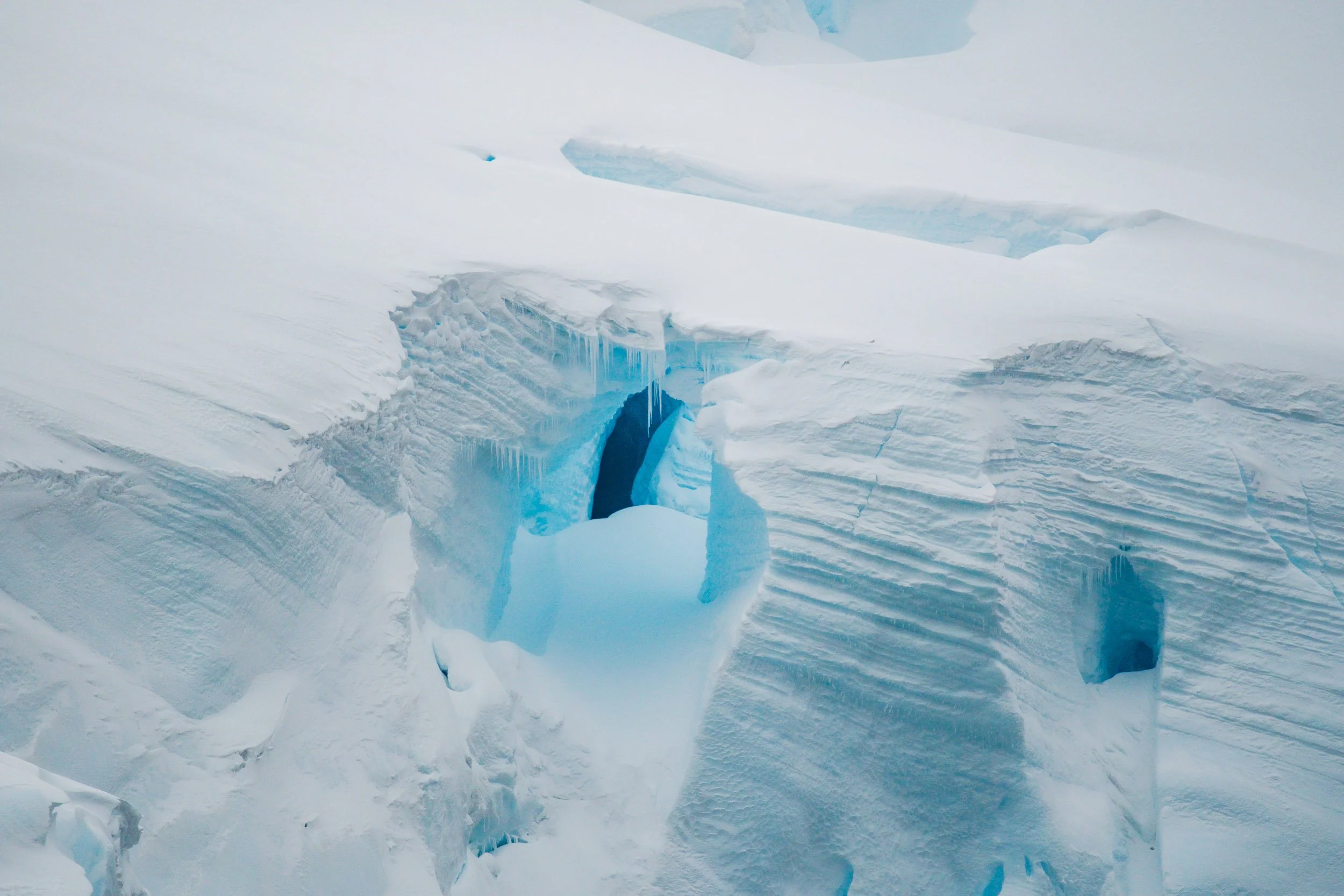
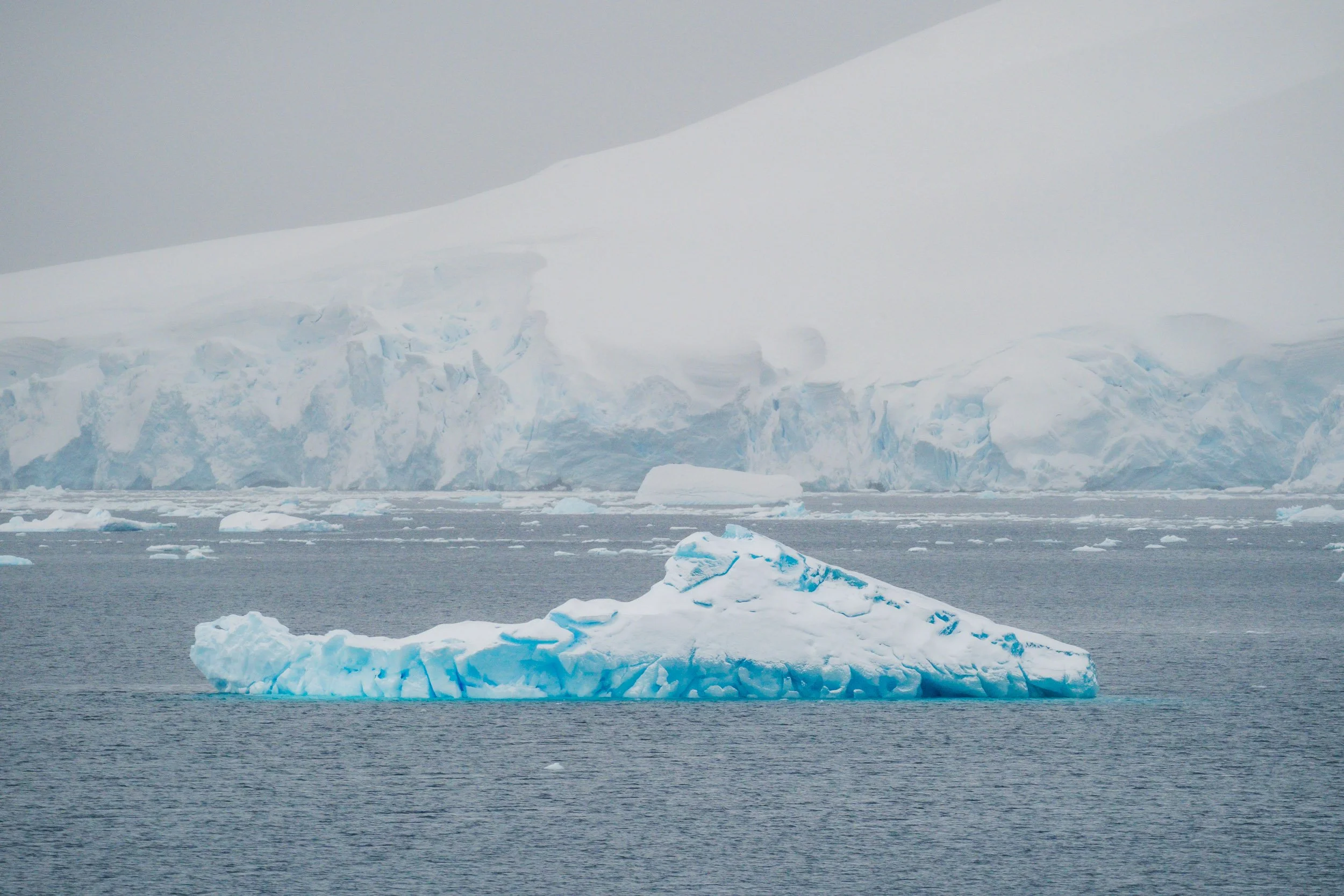
A shoe-shaped iceberg
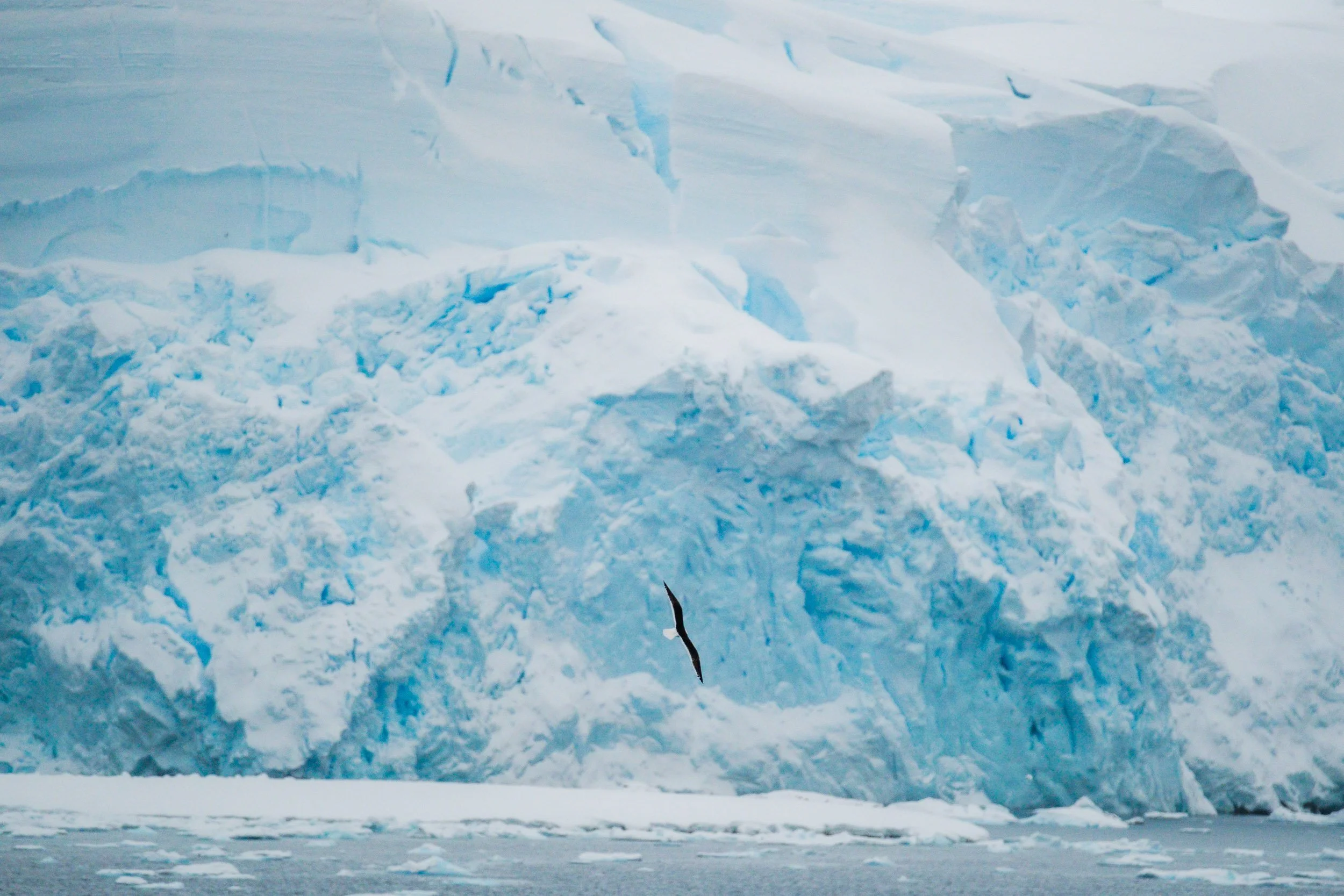
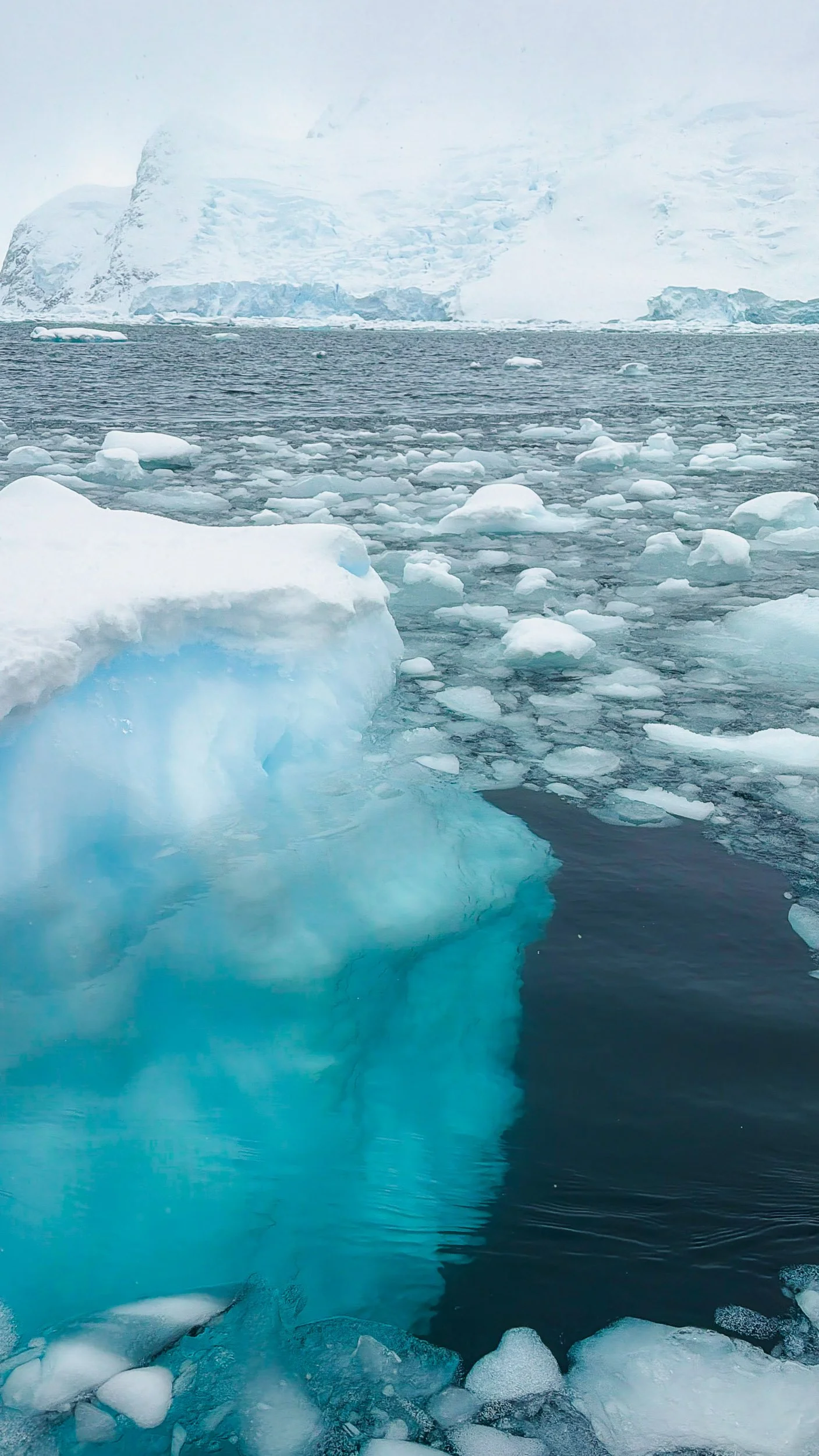
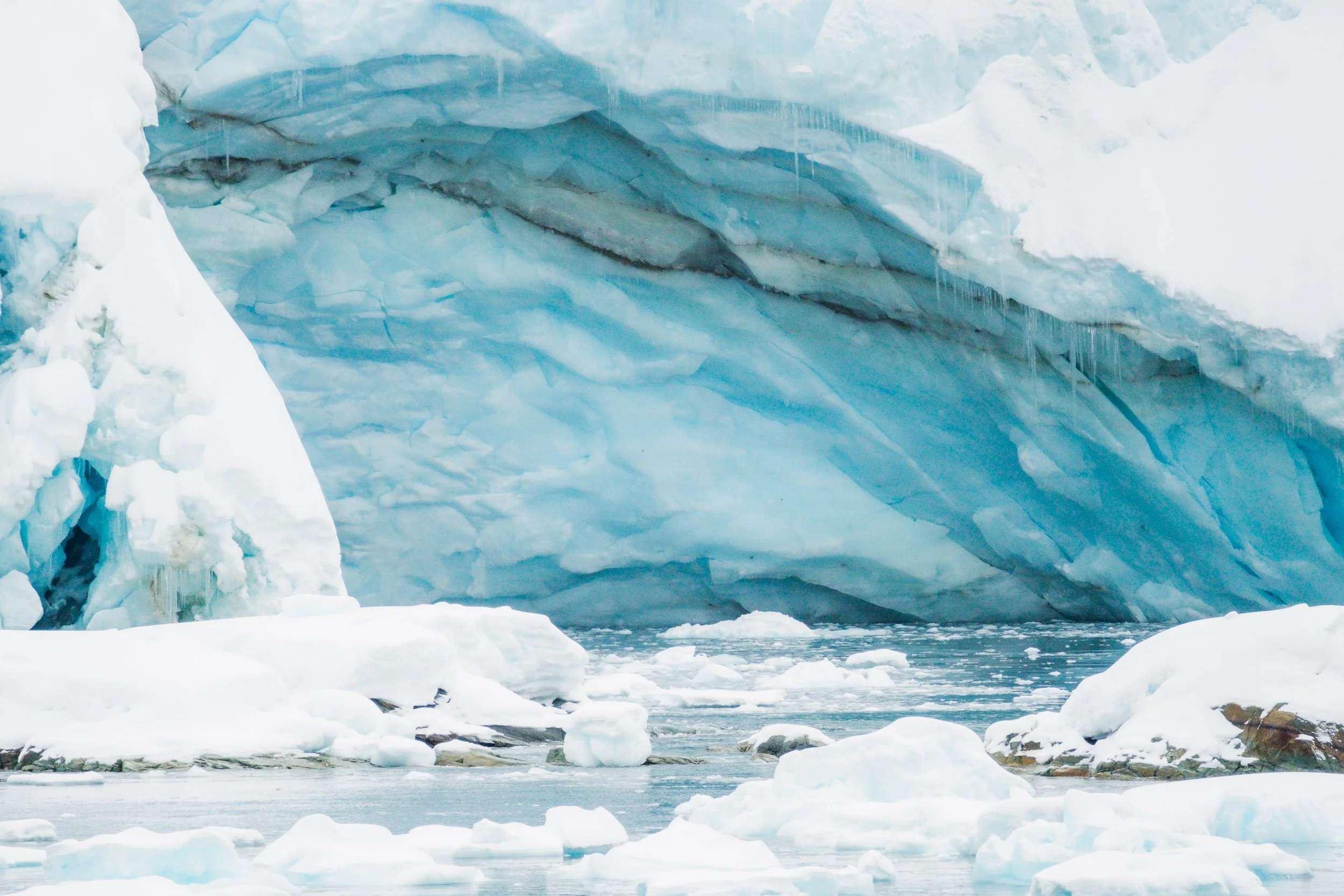
You can clearly see the bottom of an iceberg. Such a gorgeous shade of blue!
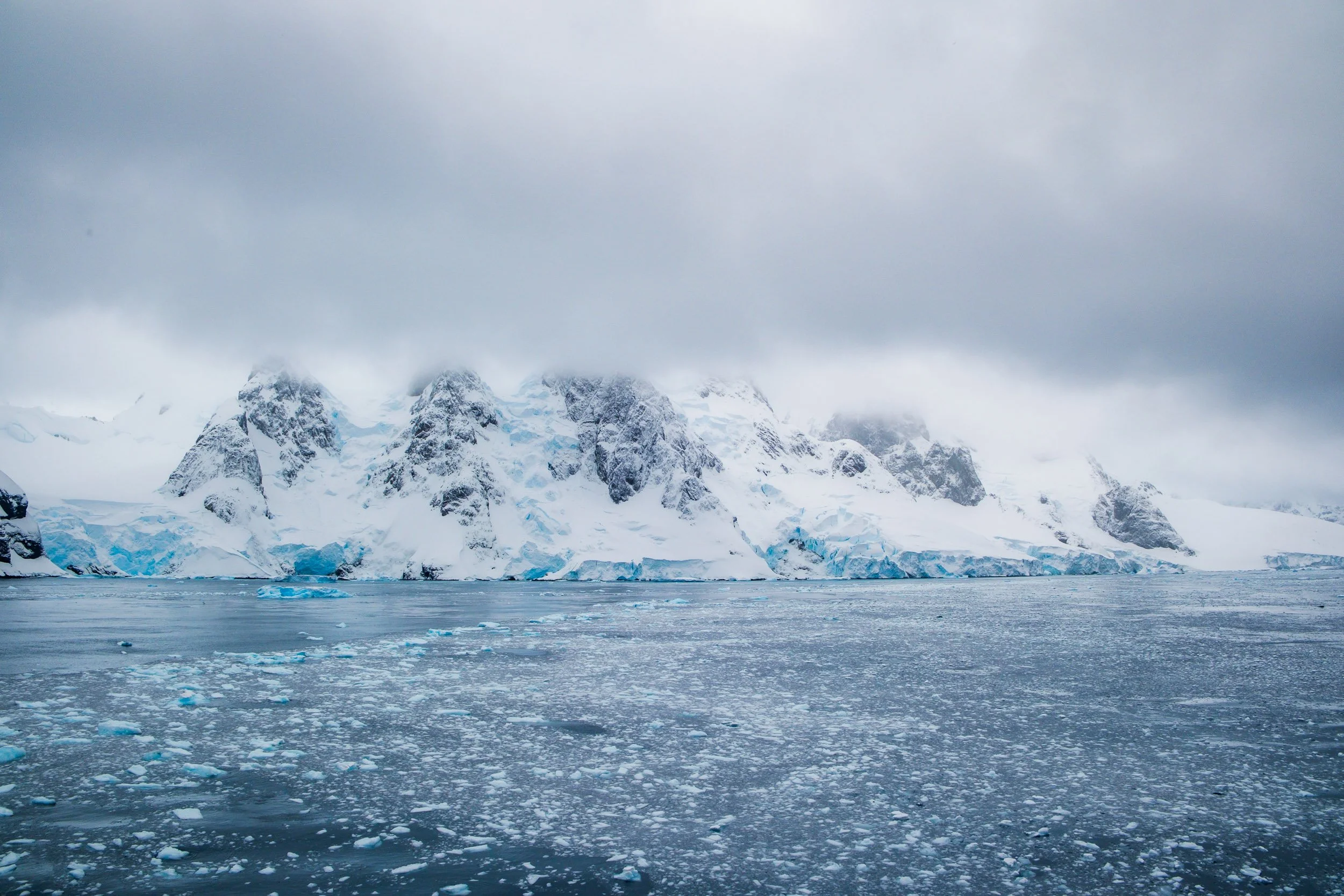
Unfortunately for us, right when we were getting ready for our zodiac excursion on the Lemaire Channel, it started snowing, which rapidly escalated into blizzard-like conditions. The captain decided not to push through. It was disappointing, but completely understandable. Instead, the ship was moved south, where the weather was fairer, so we could still go out that morning.
Pleneau Island & Bay
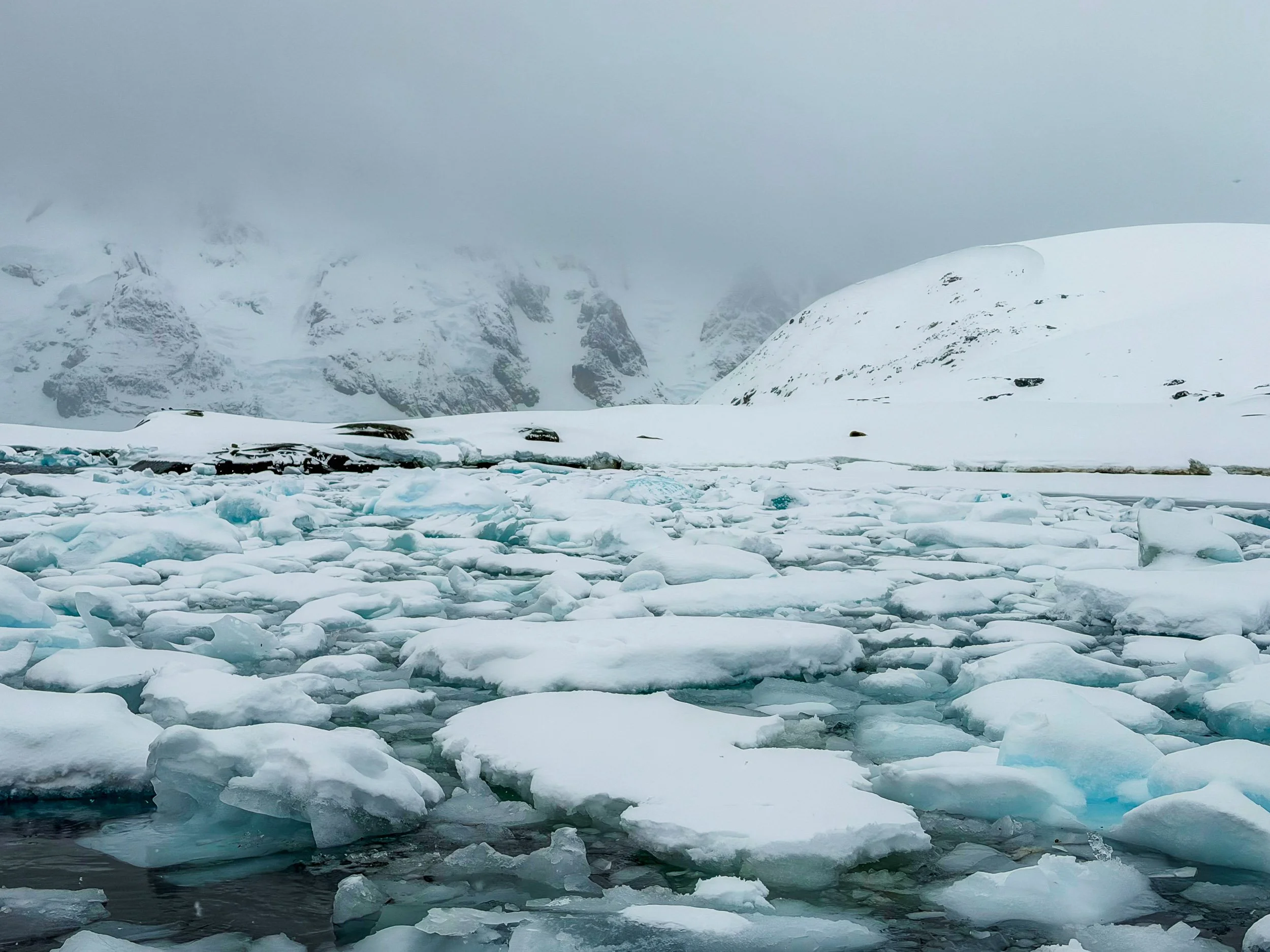
Once we were positioned in a better-suited area, the expedition team prepared for the excursion. Our destination was changed to Pleneau Island, which sits at the southern entrance to the Lemaire Channel, west of Booth Island.
We didn’t do any landings, only a cruise. We still saw tons of wildlife and magnificent views.
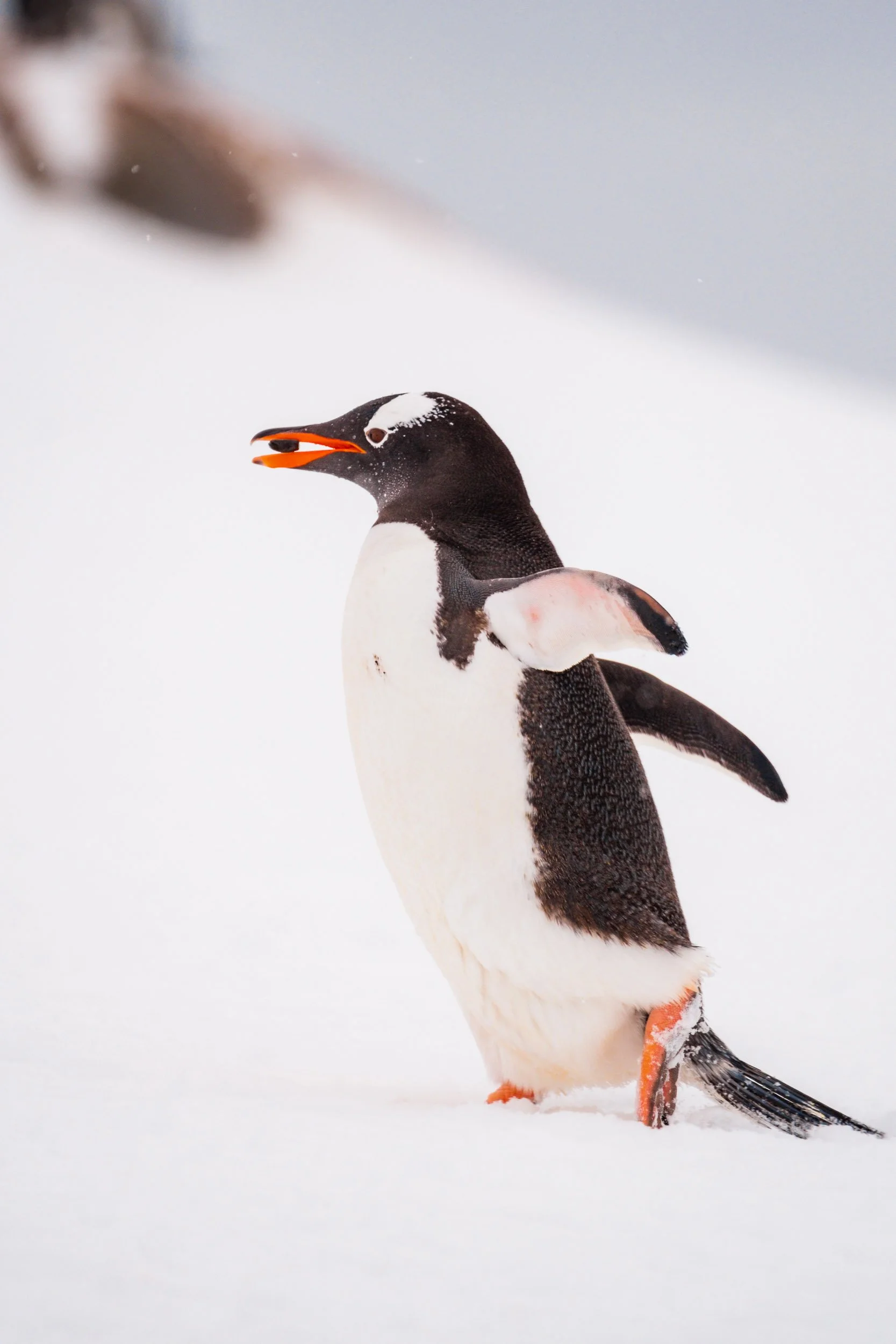
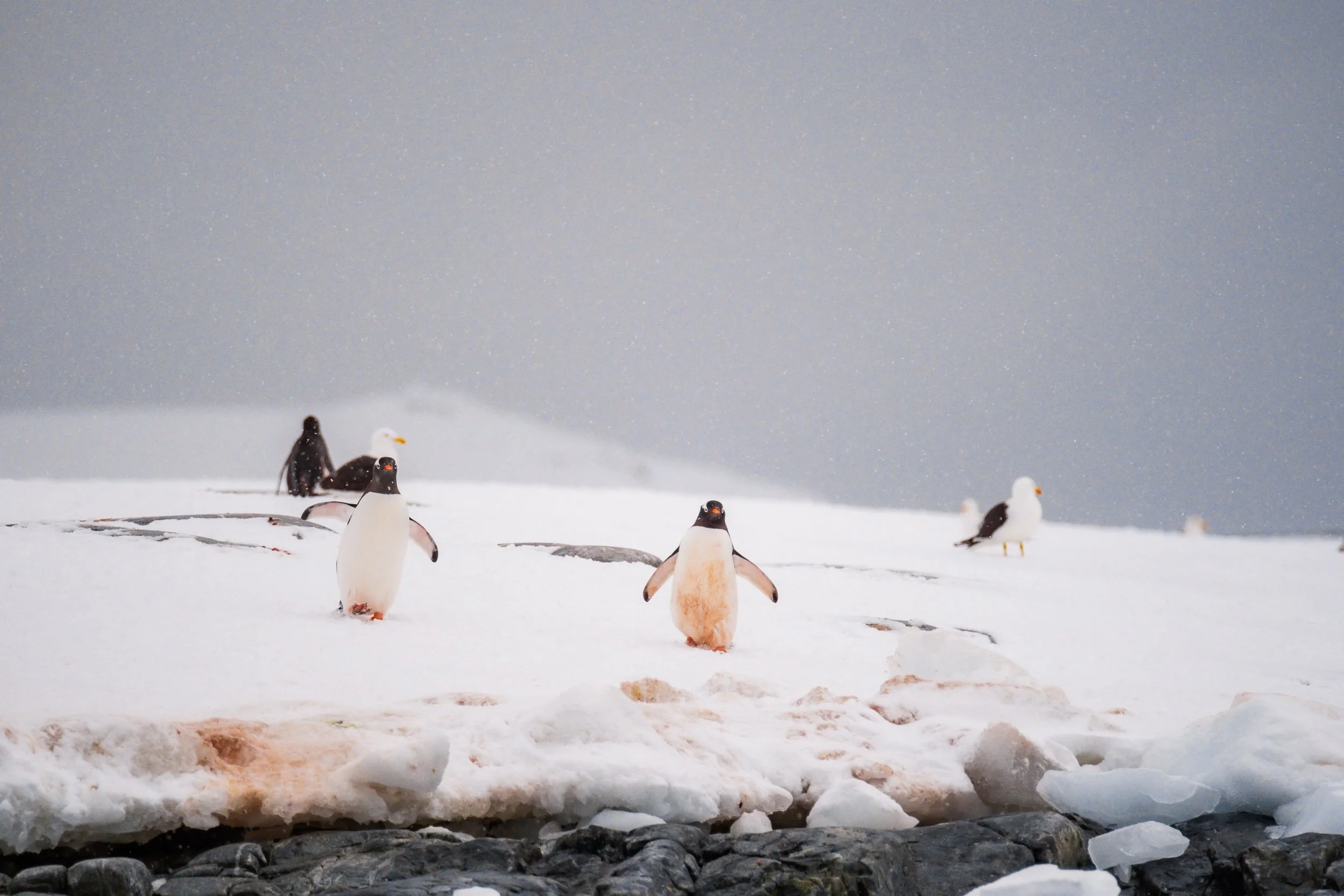
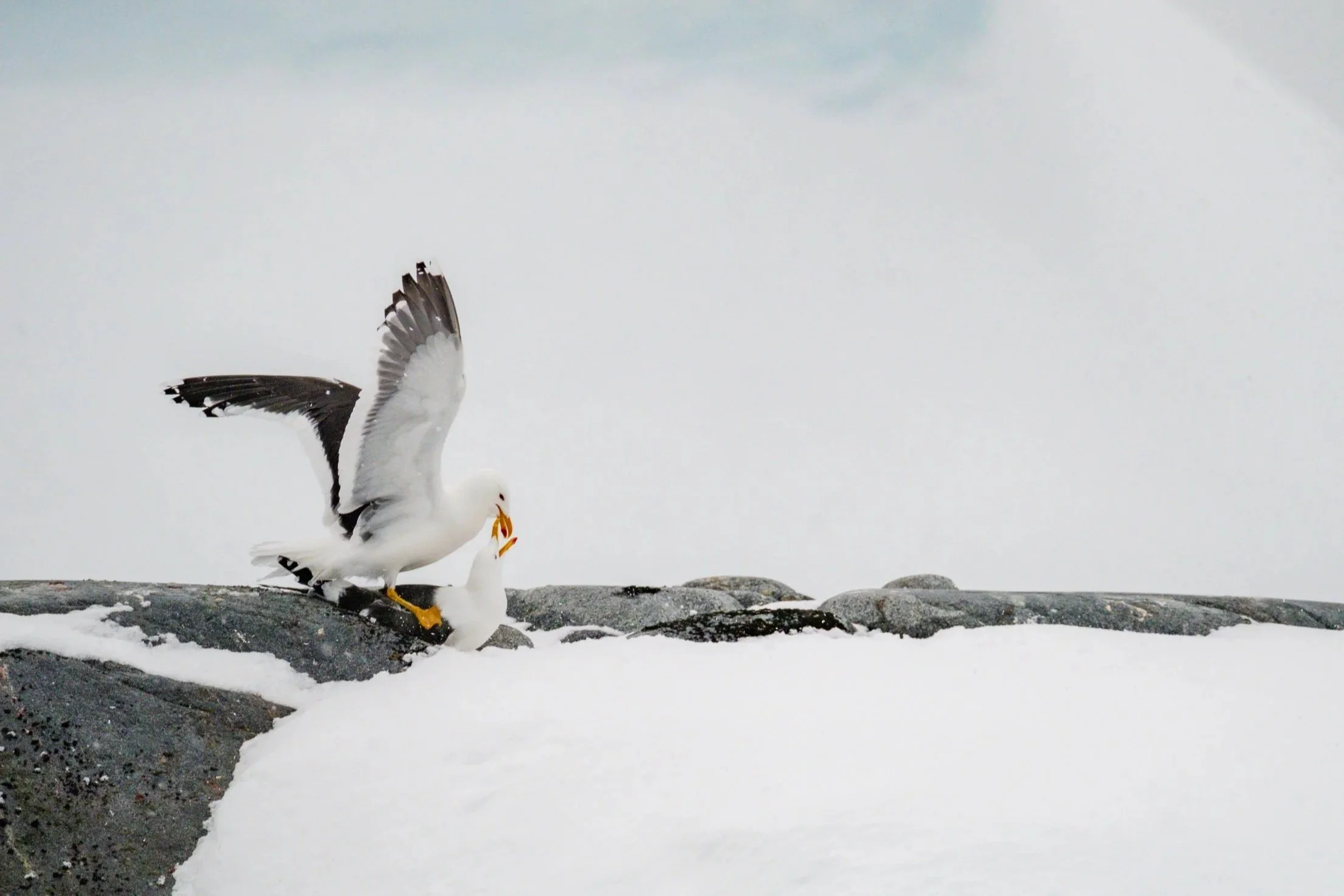
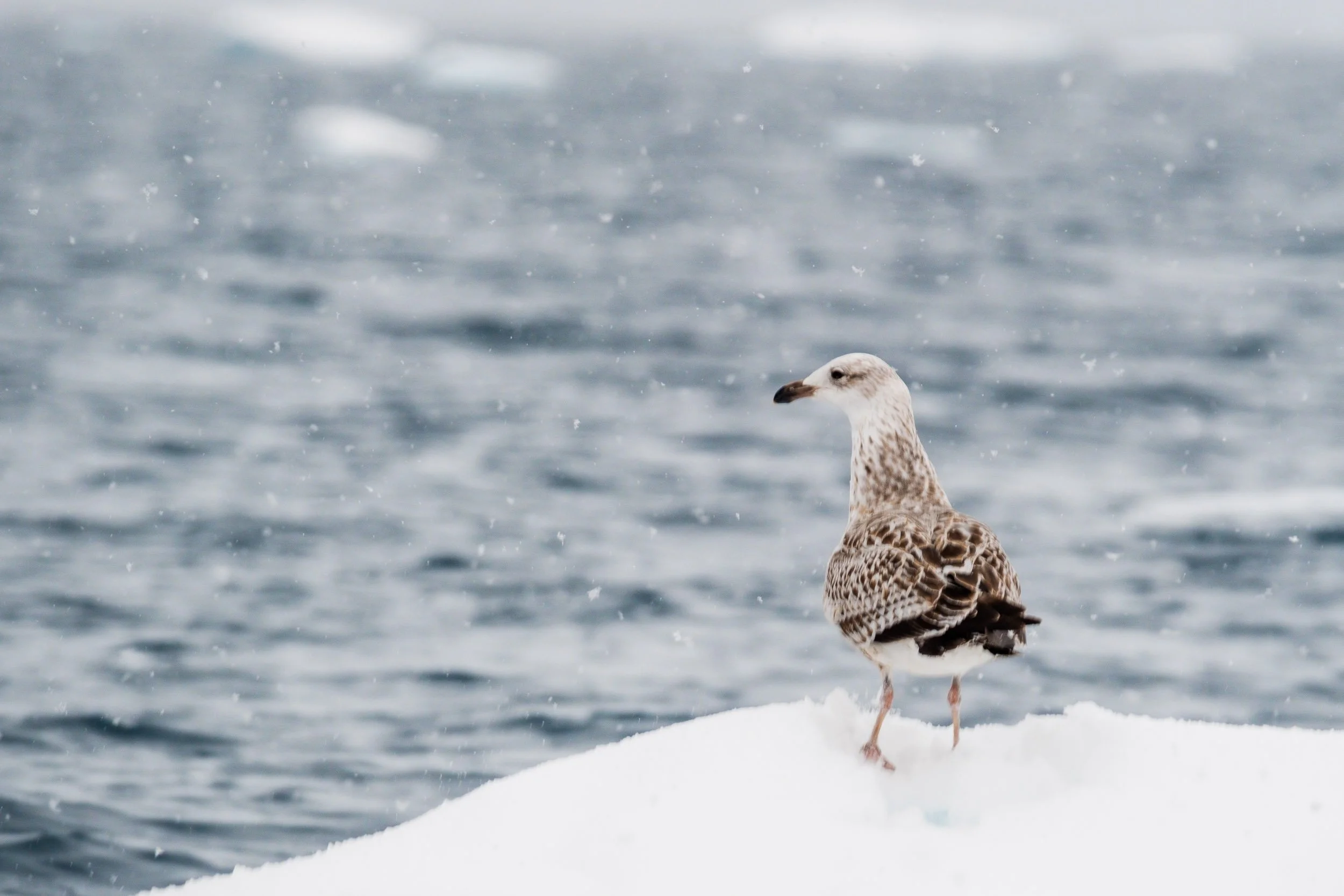
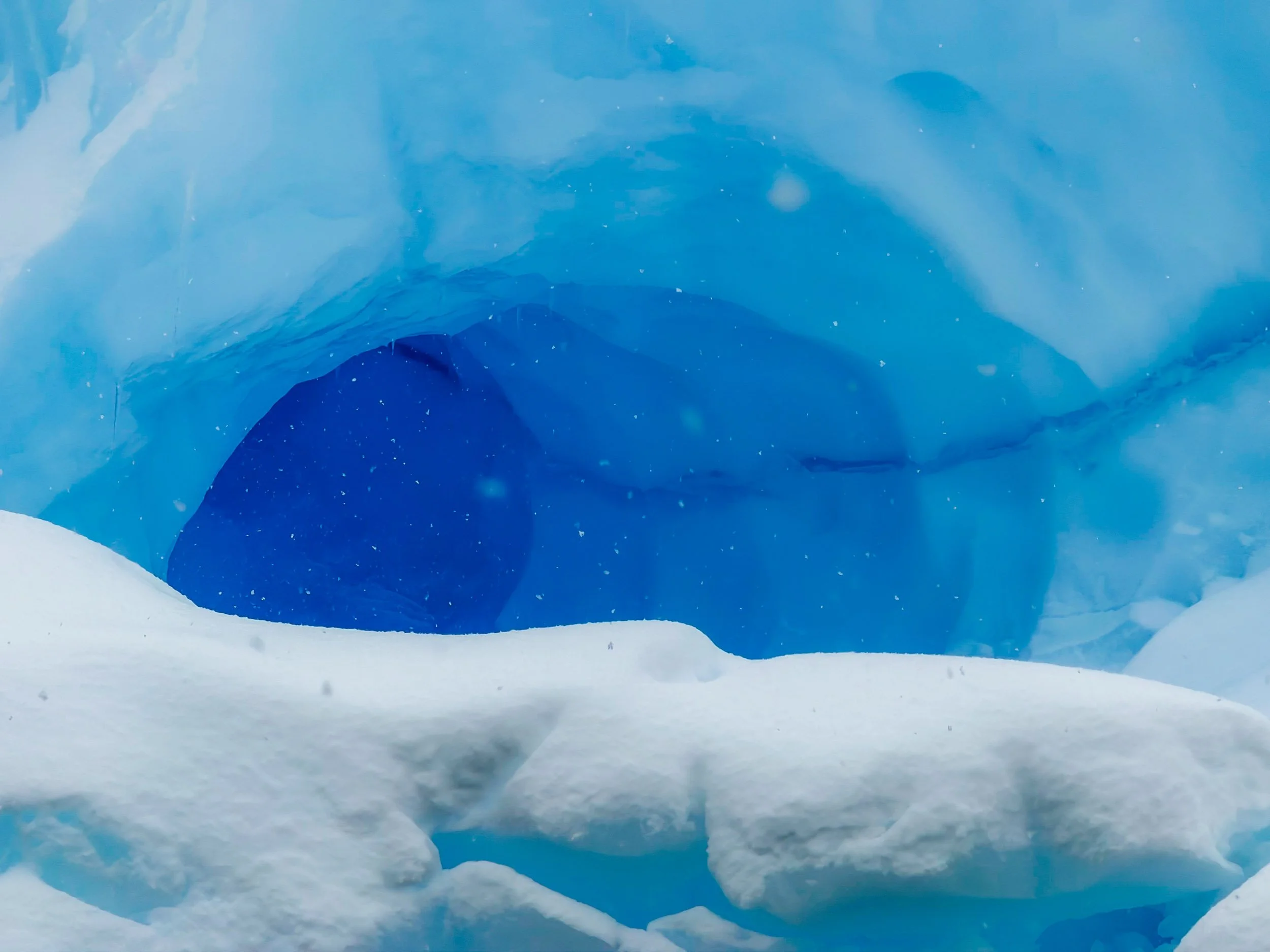
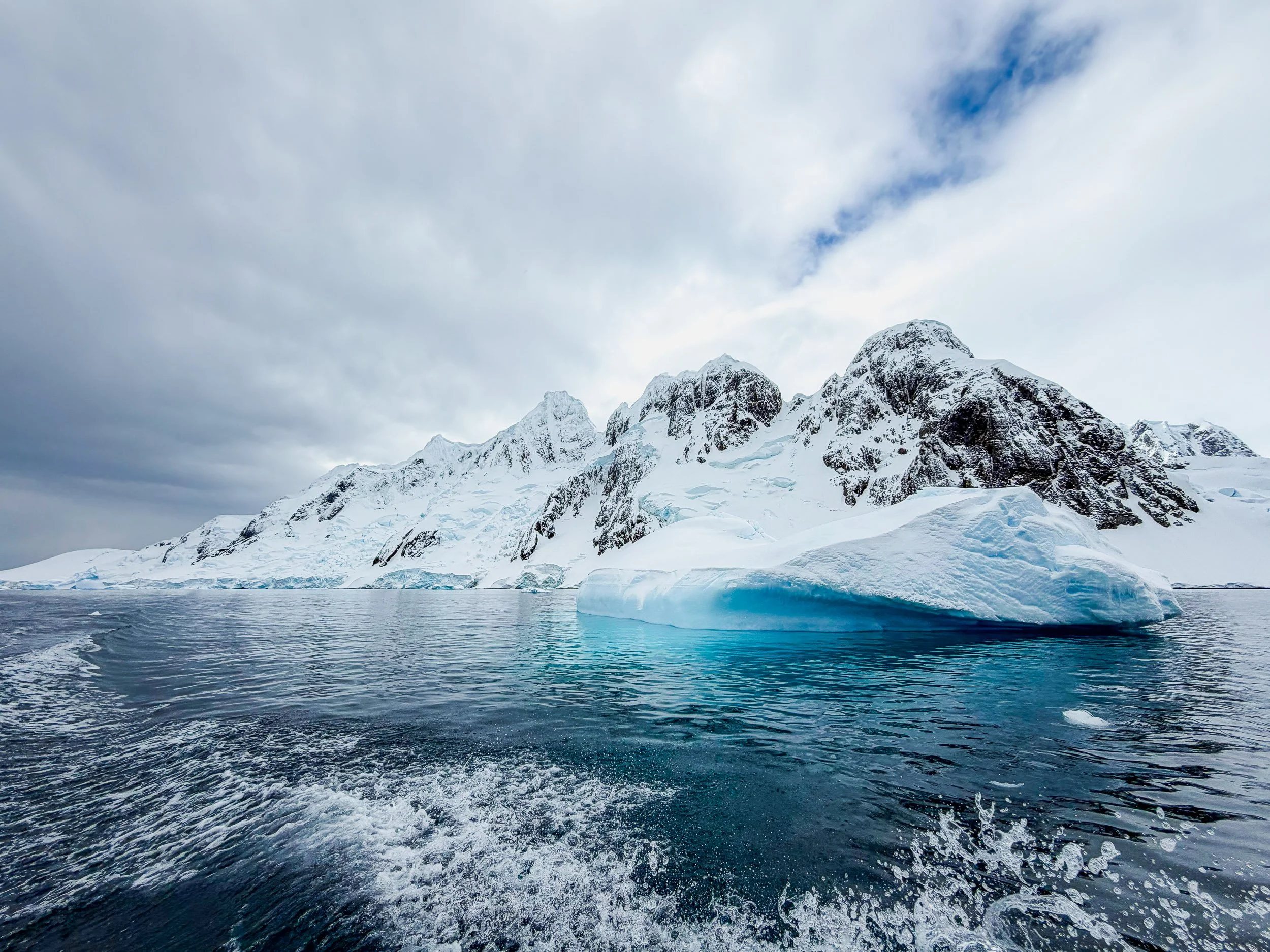
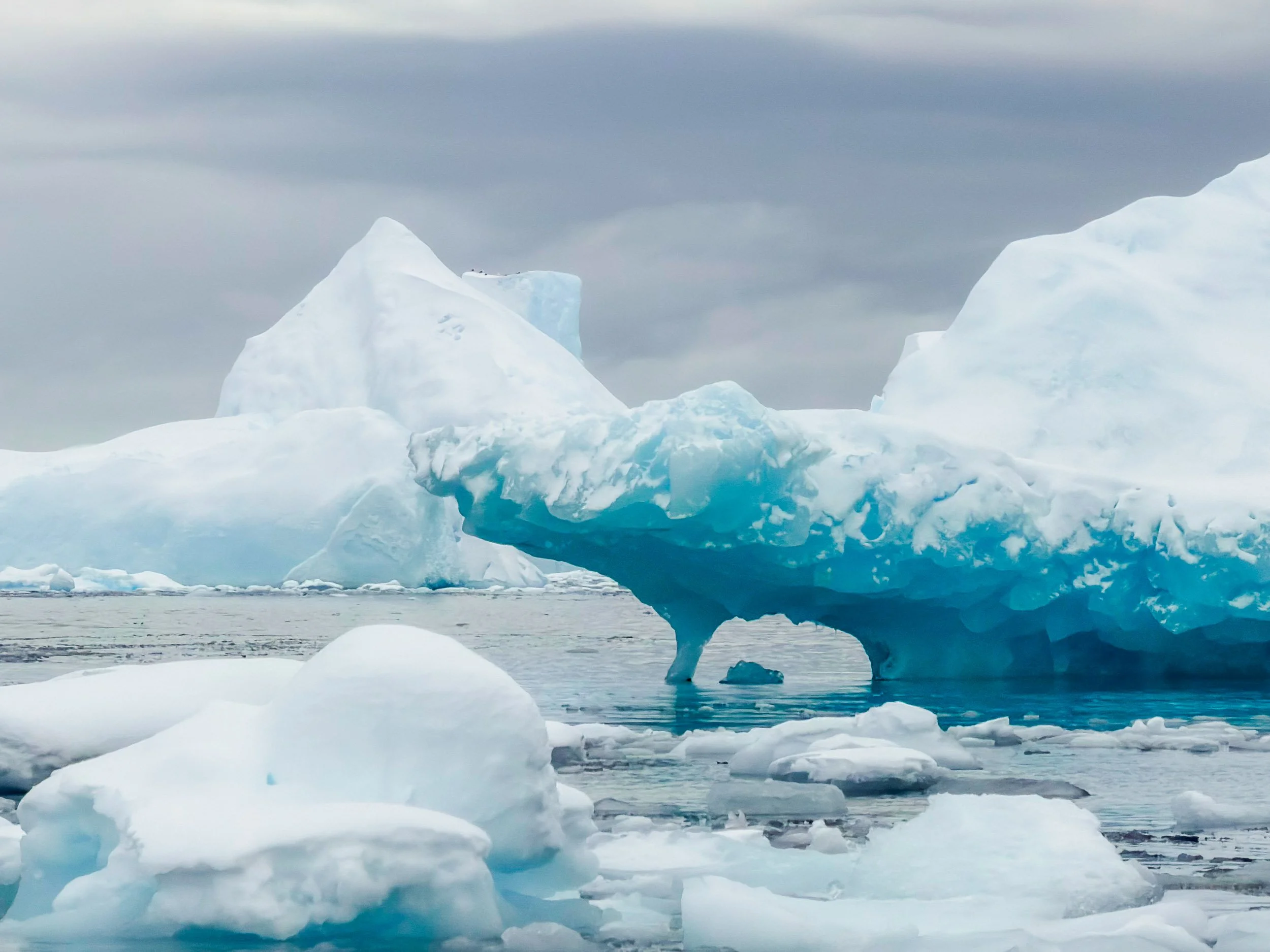
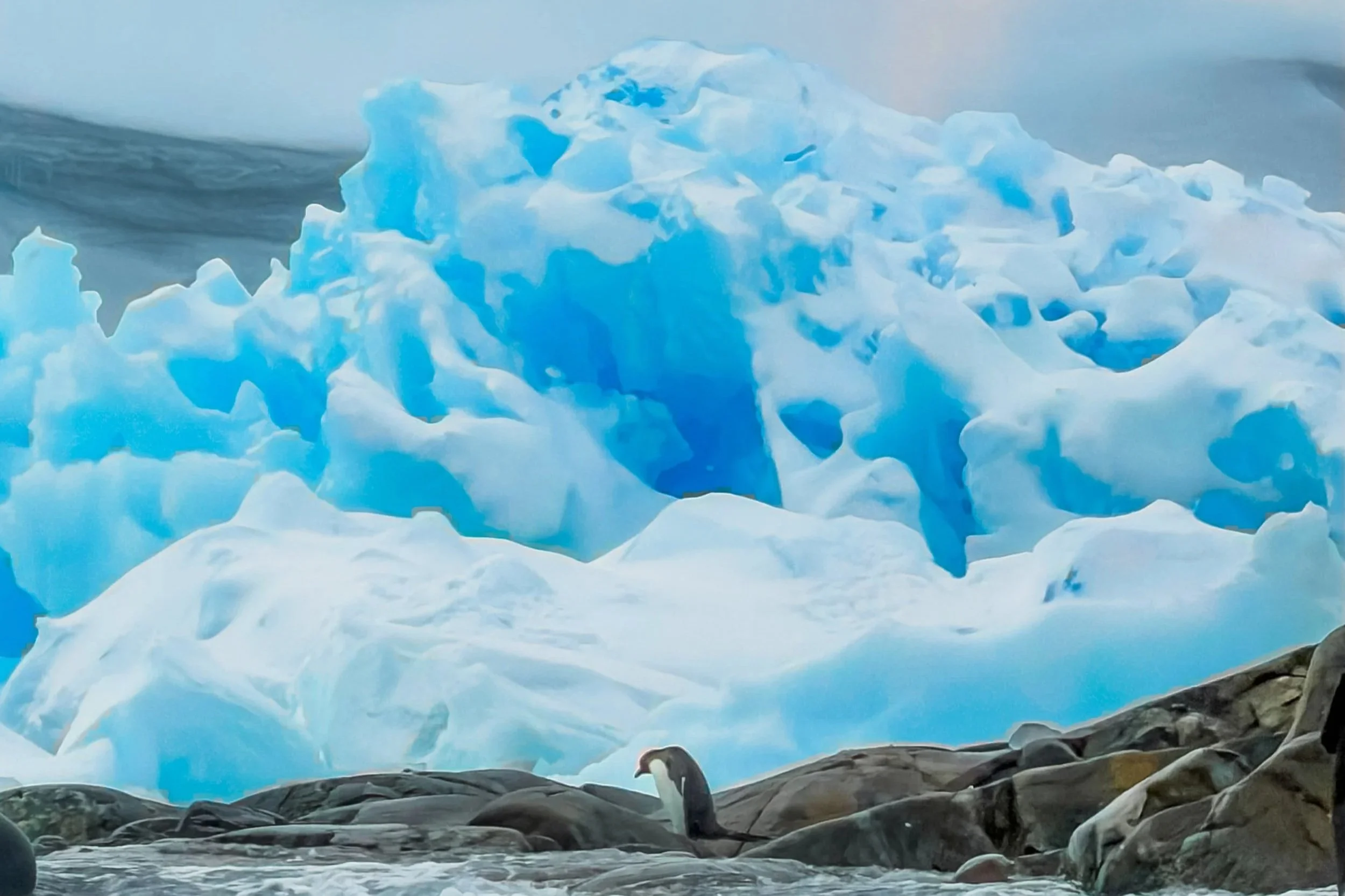
But the highlight was the Iceberg Graveyard, a shallow-water bay that confines and breaks up massive icebergs, creating an astonishing panorama. It’s basically a whole collection of icebergs of different shapes, sizes, and colors, gathered in one pool.
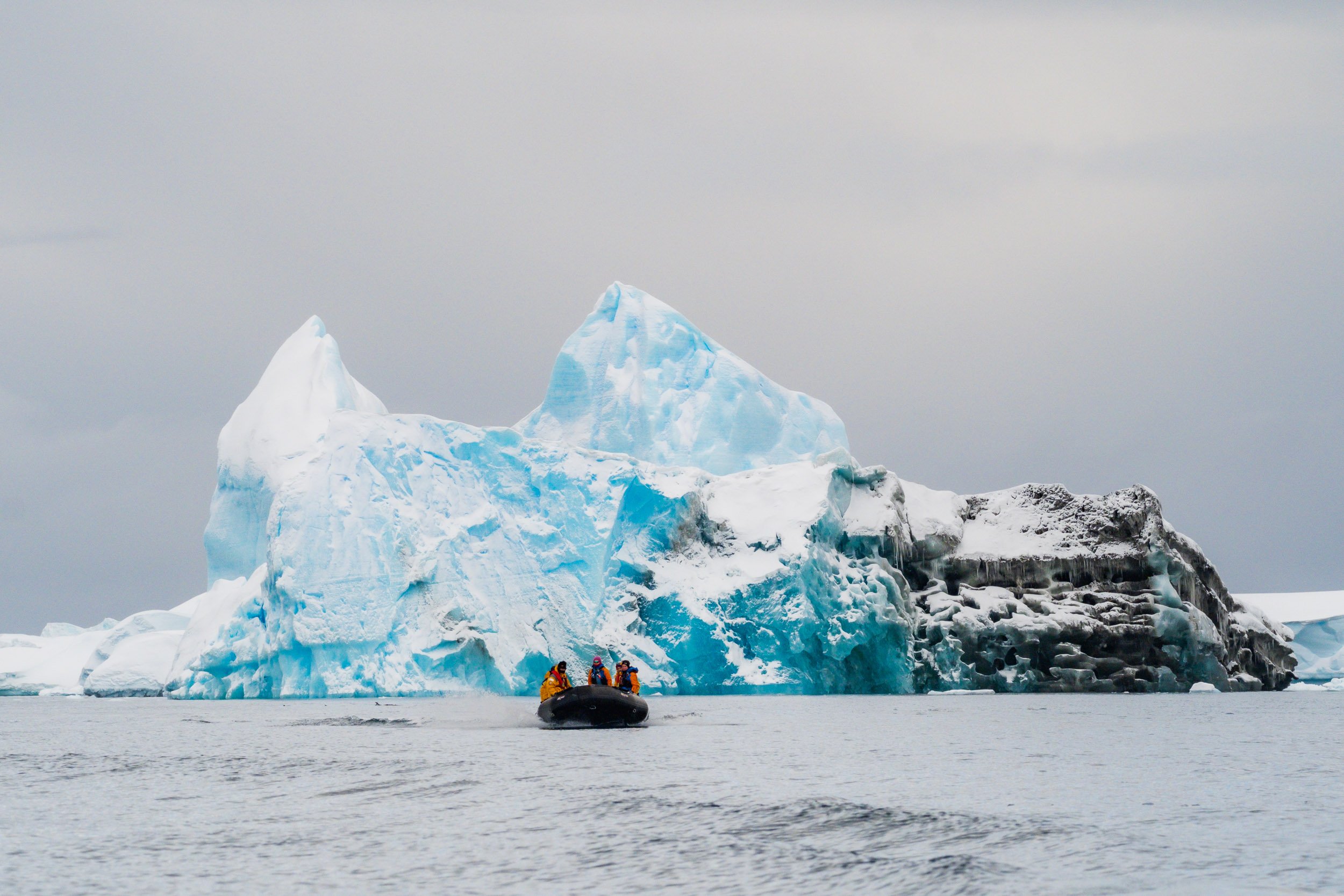
My favorite iceberg! The different colors are just amazing
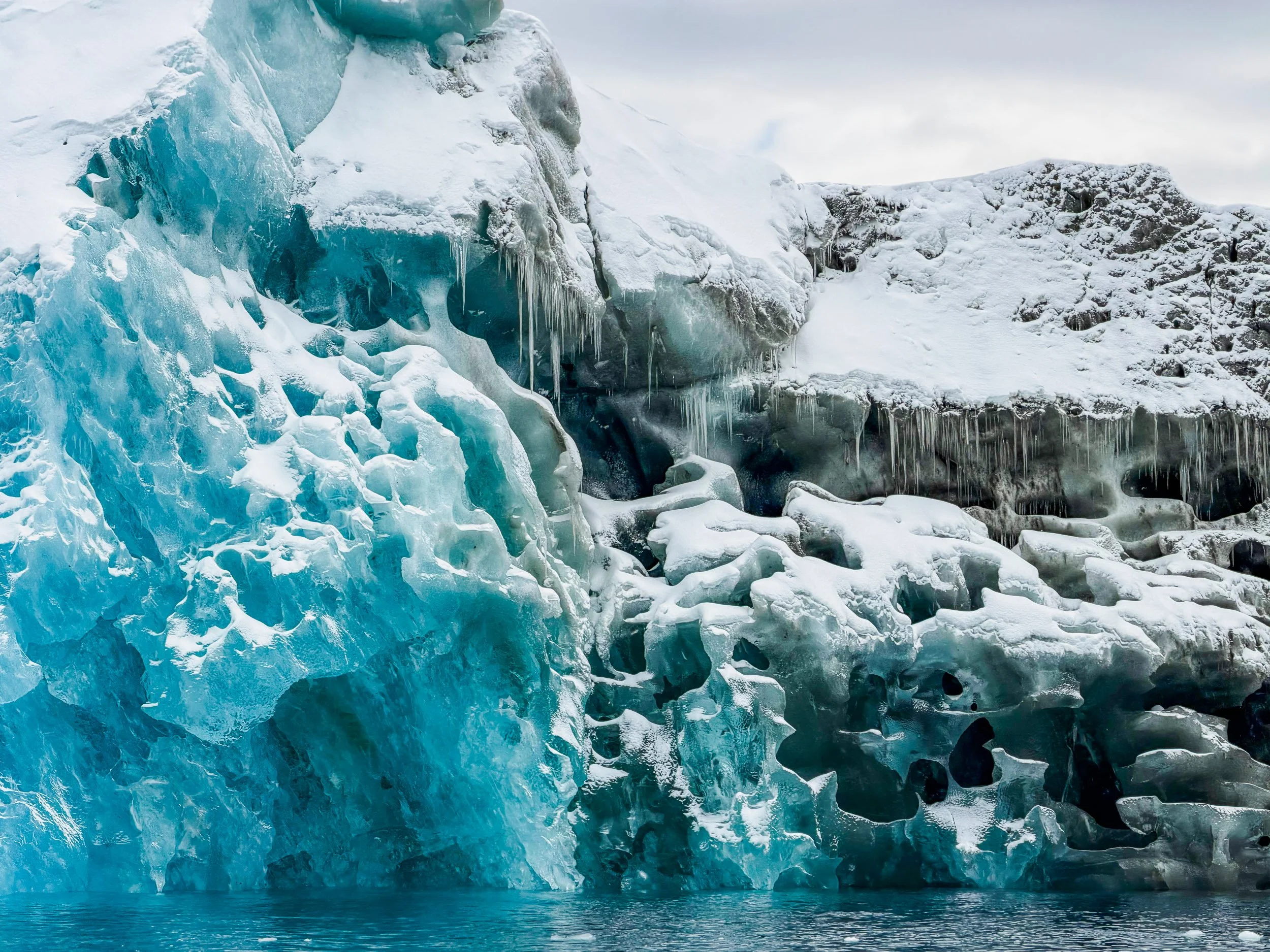
A close-up of the iceberg
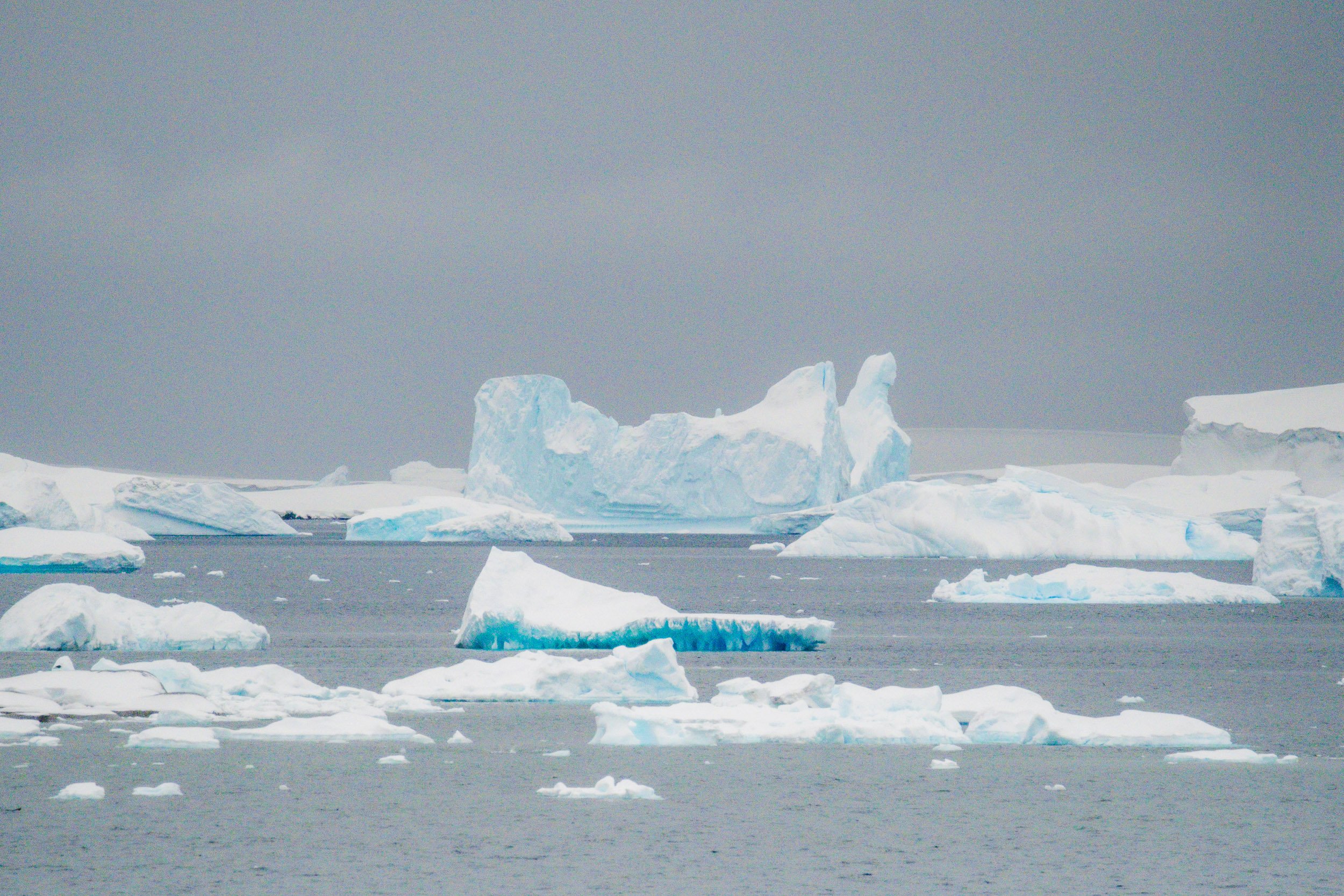
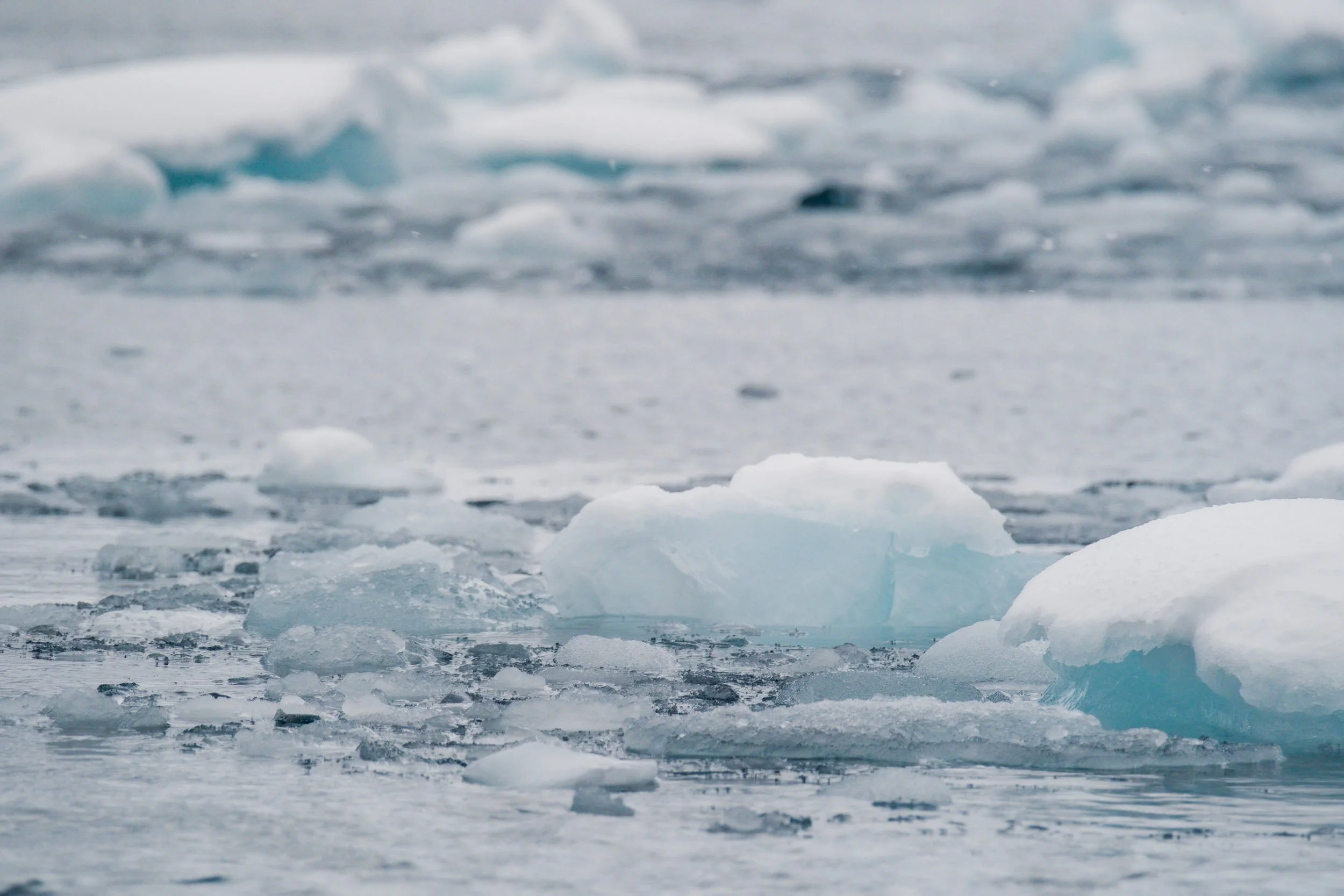
Petermann Island
After getting a hearty lunch and some rest, we proceeded to Petermann Island, the southernmost destination of this expedition.
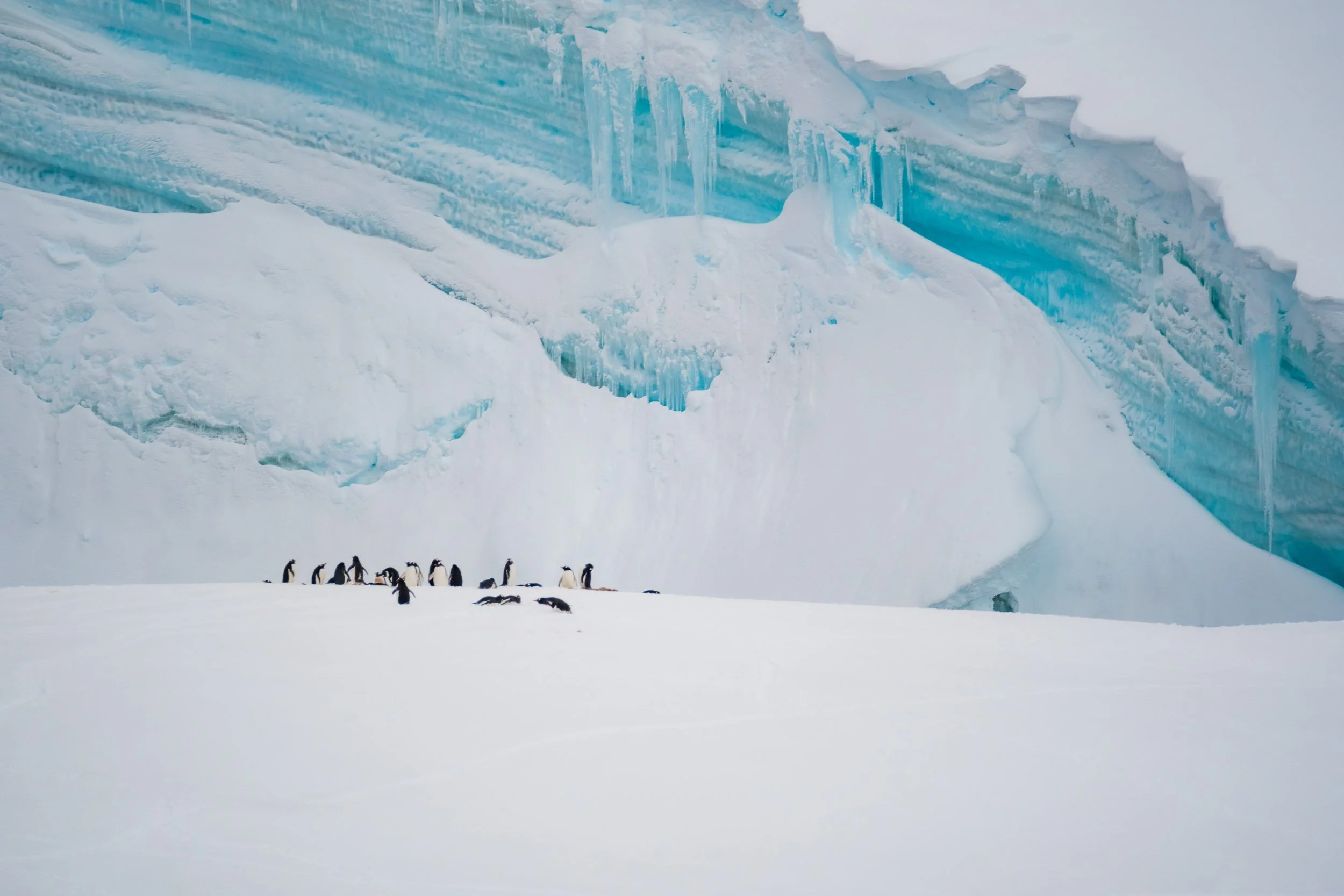
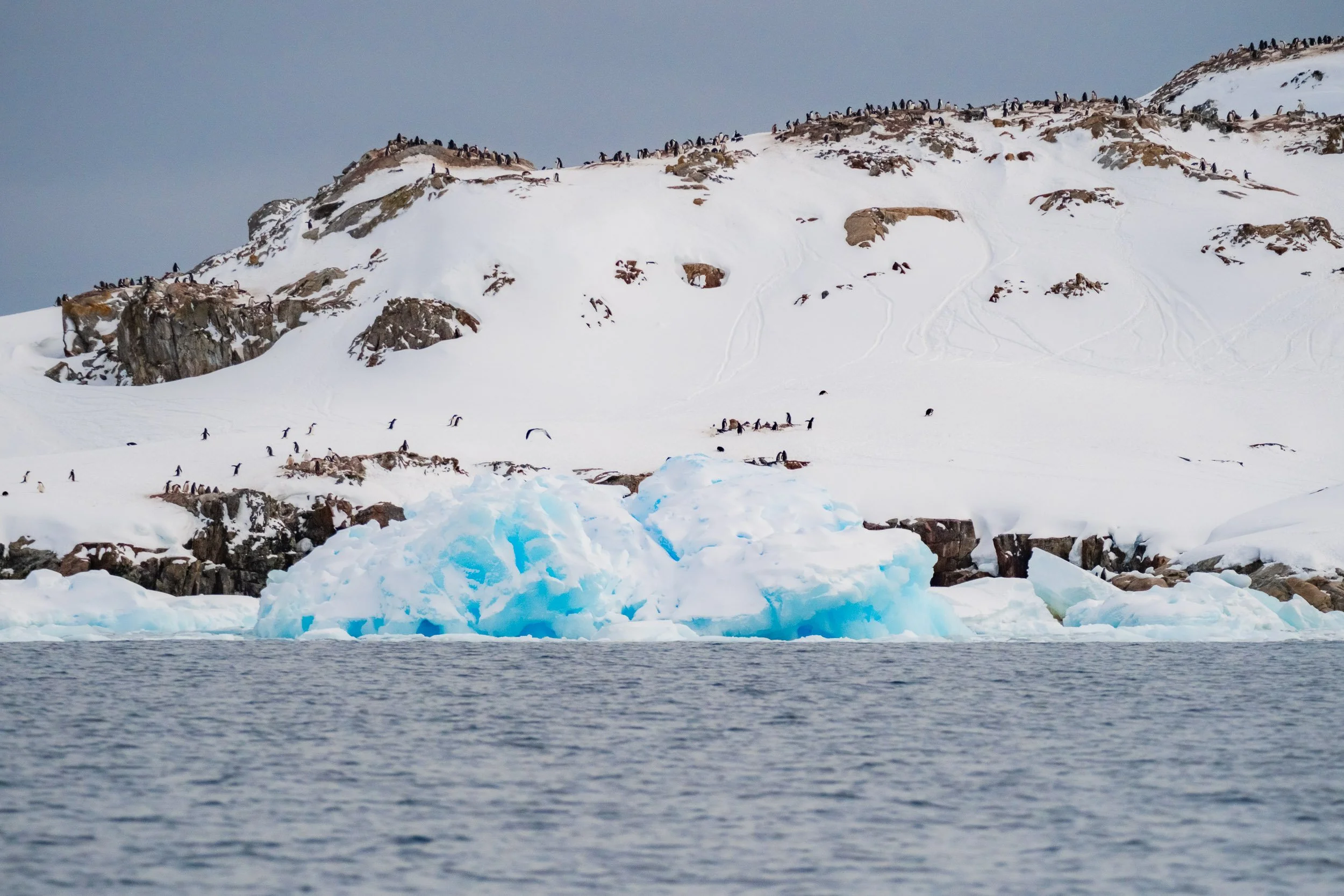
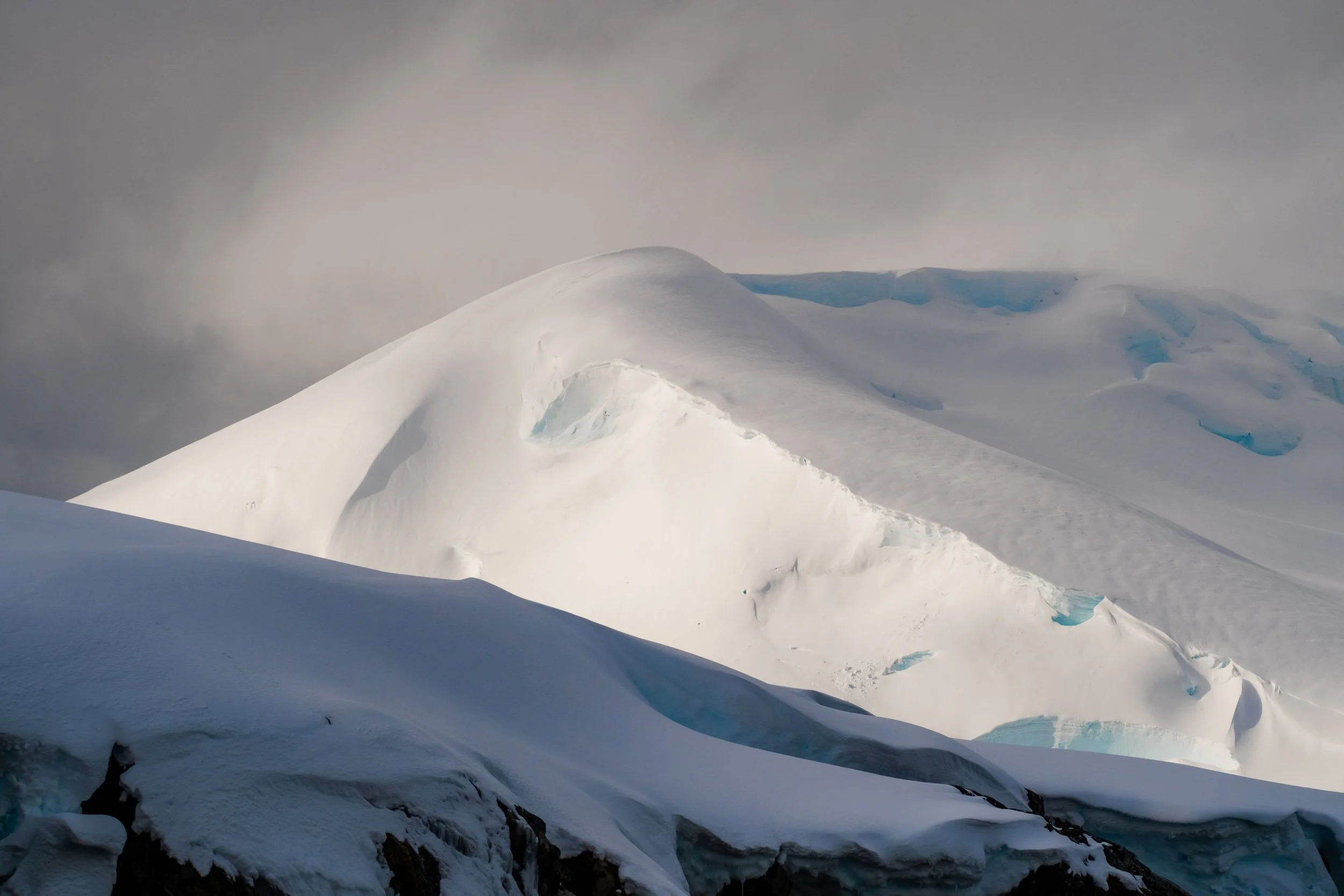
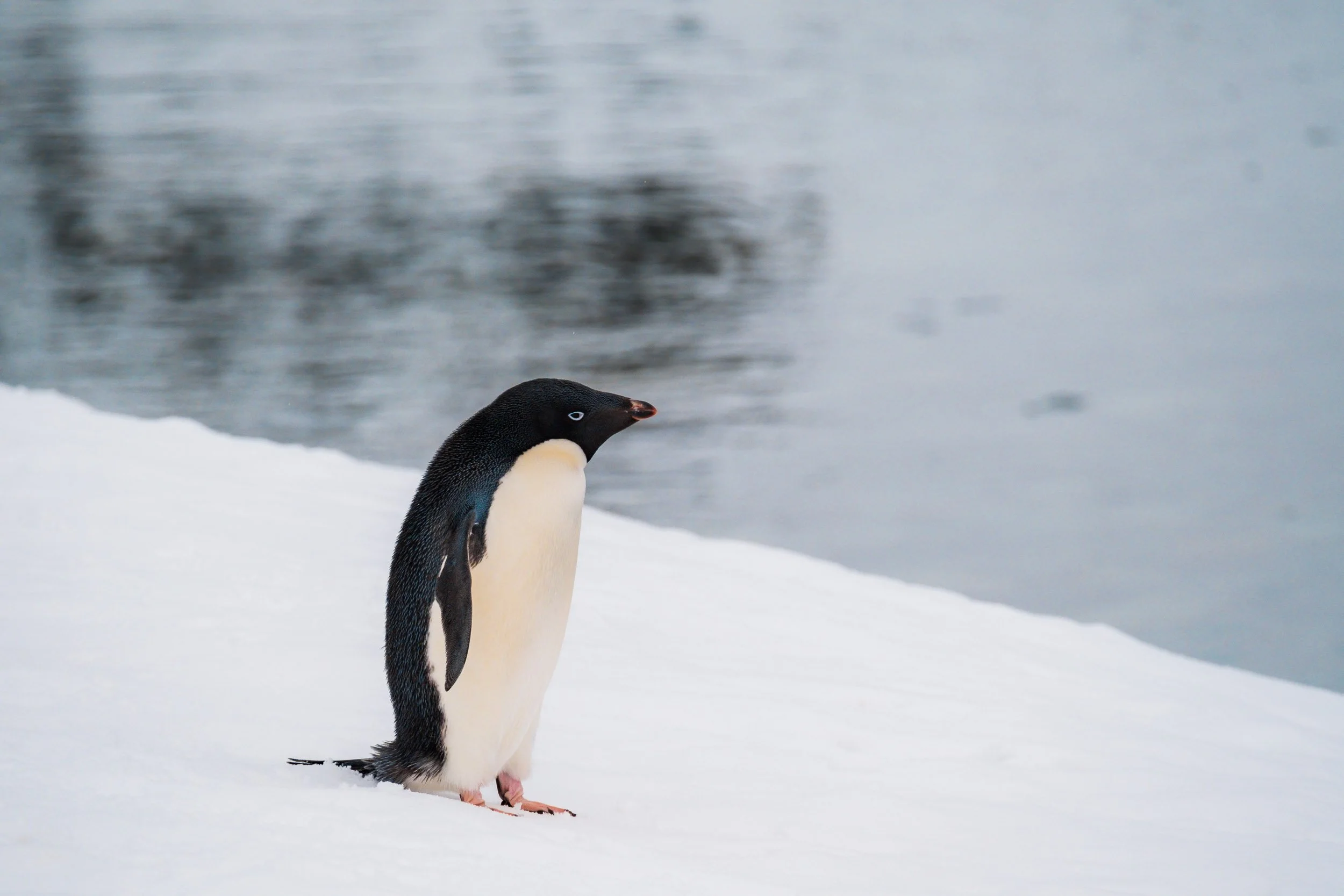
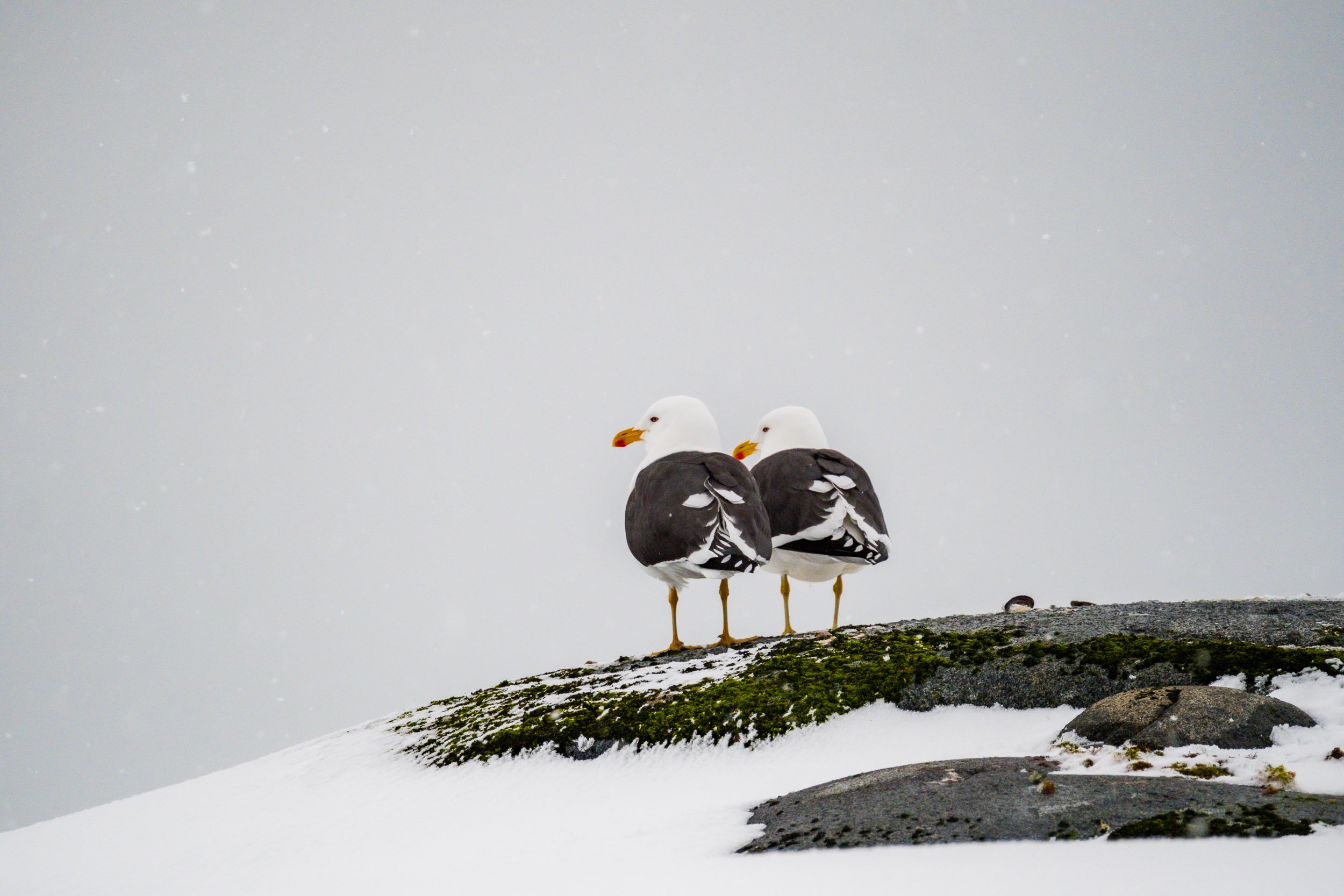
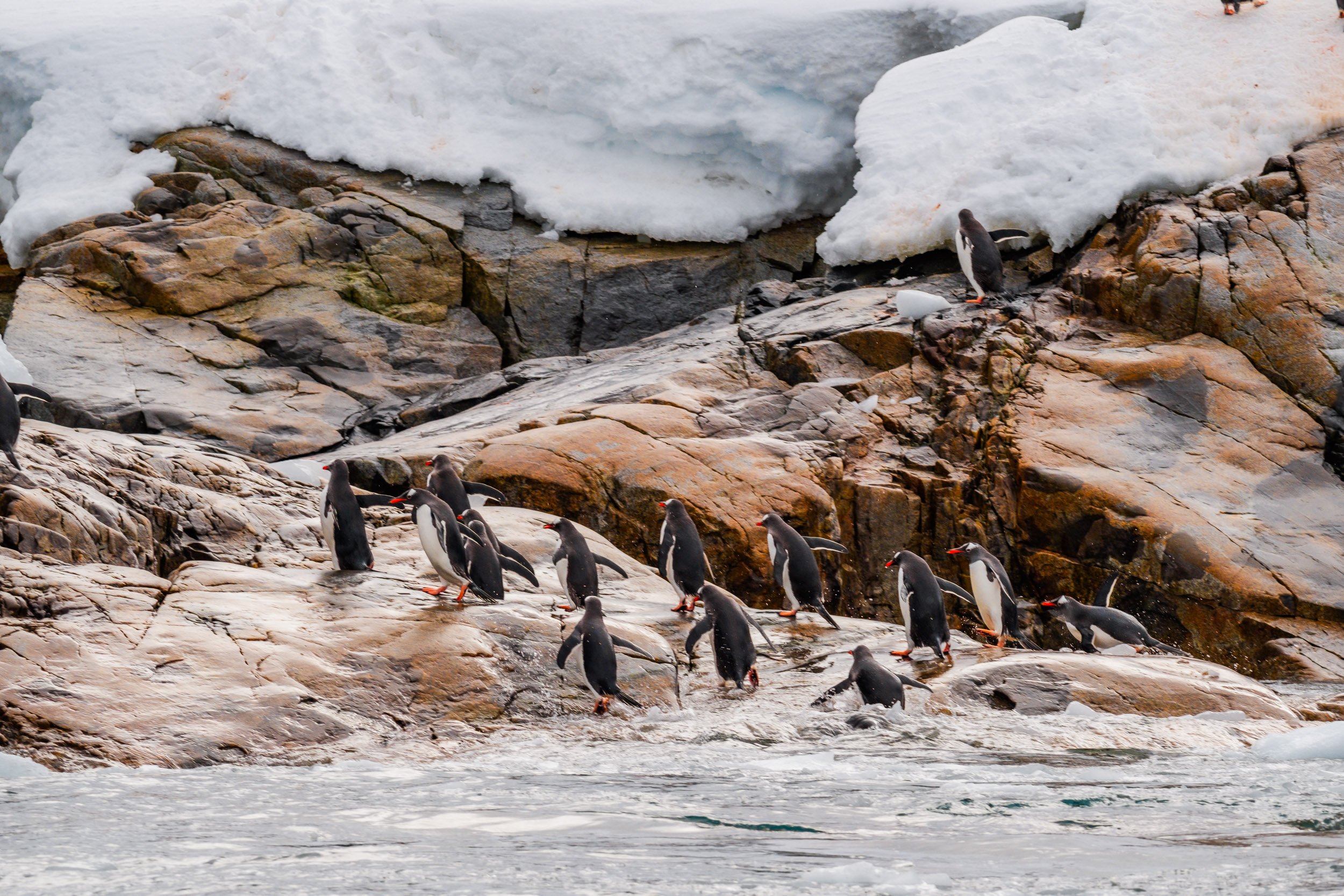
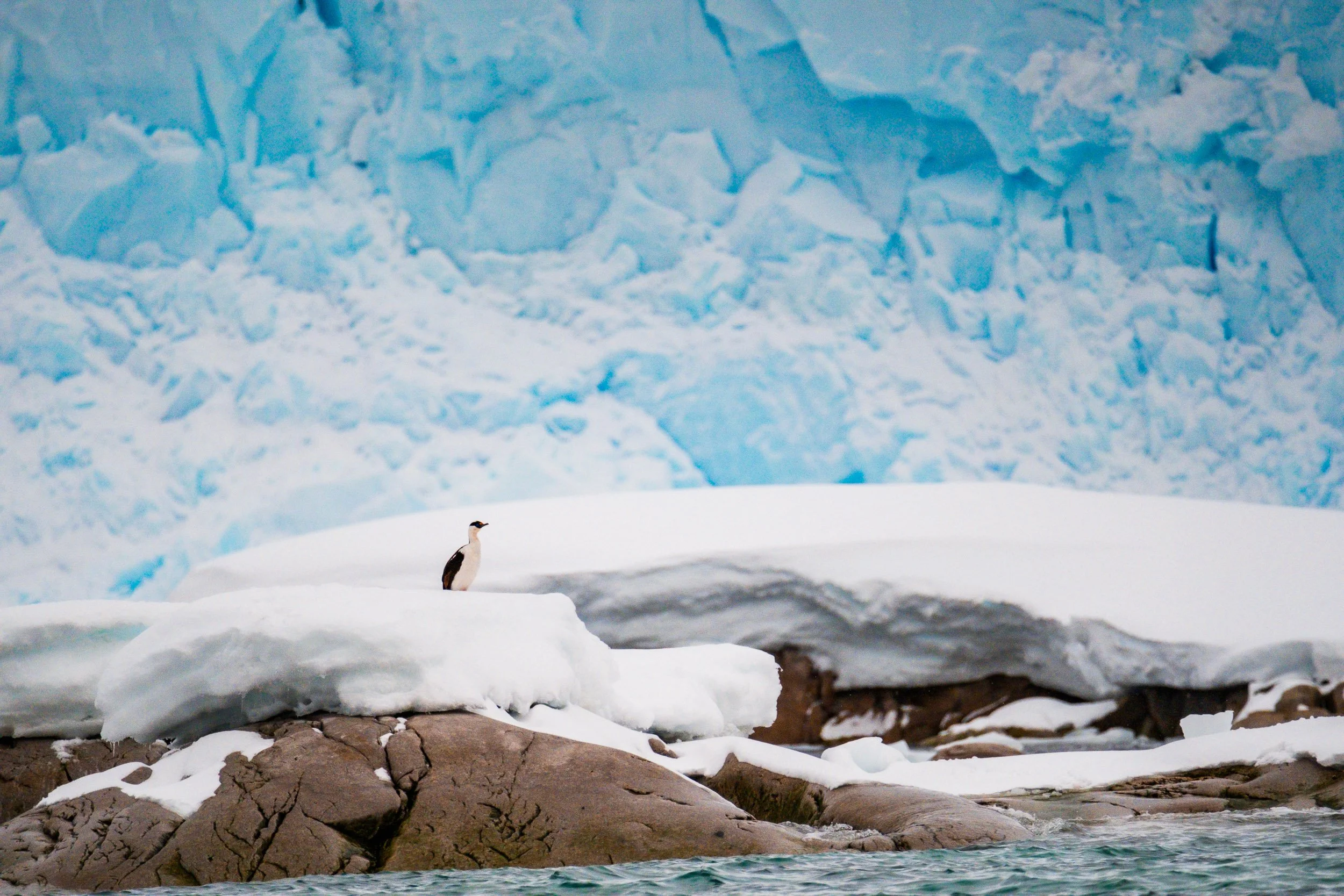
The island is a rocky volcanic outcrop, only 1.2 miles long. It is home to both Gentoo and Adelie penguin colonies, as well as Antarctic seabird species such as the blue-eyed shag.
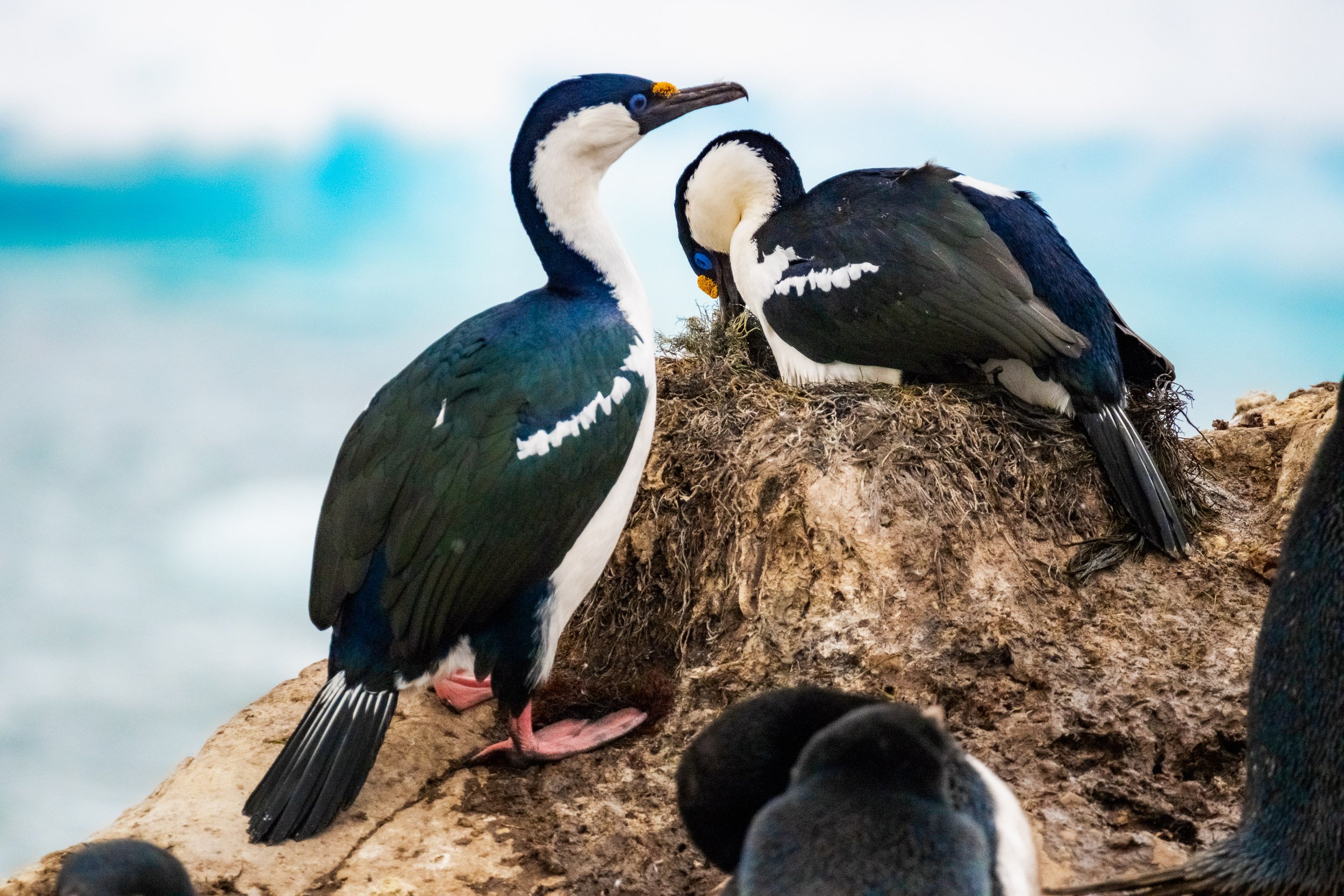
Blue-eyed shags
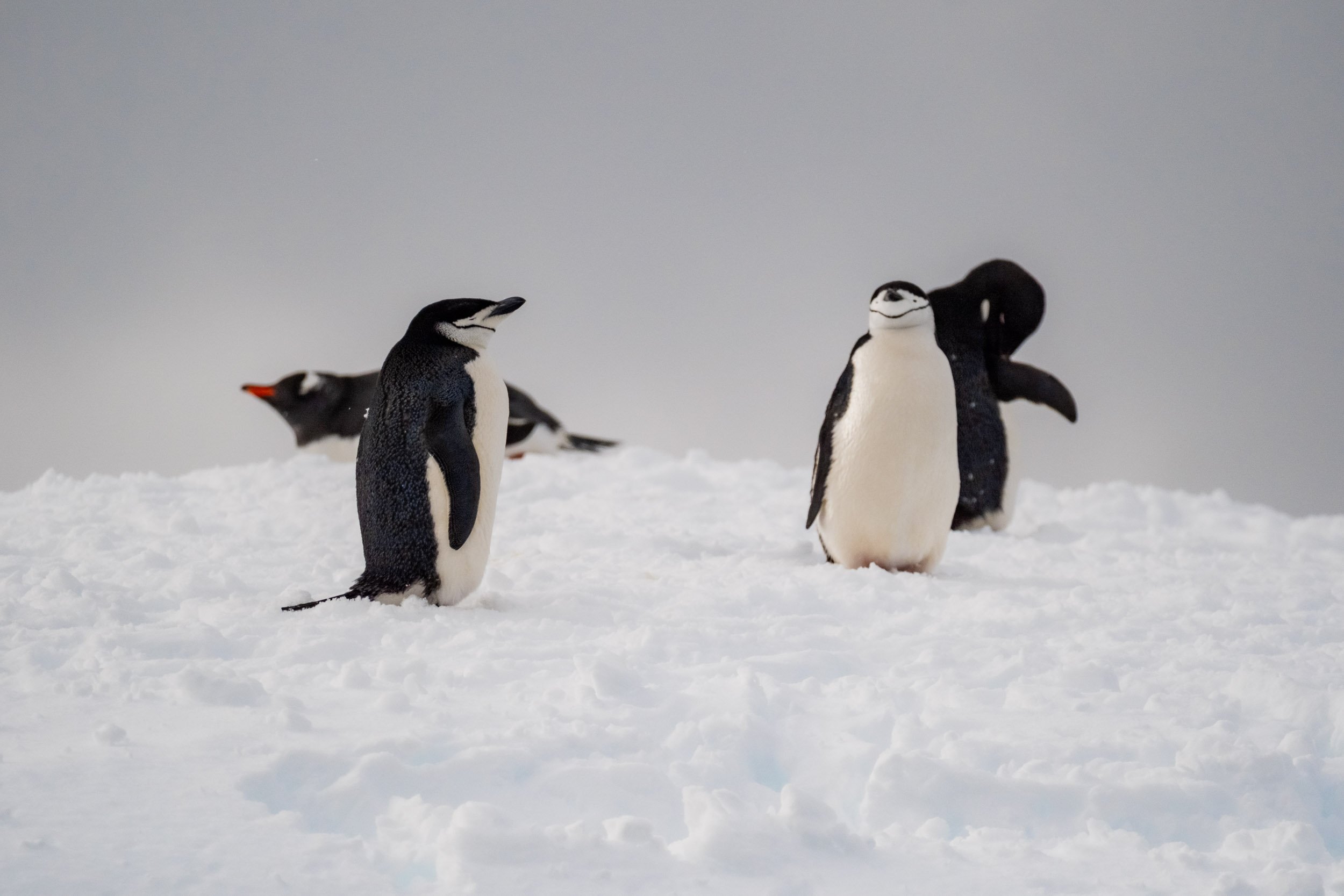
Saw the first chin-strap penguins of this voyage!
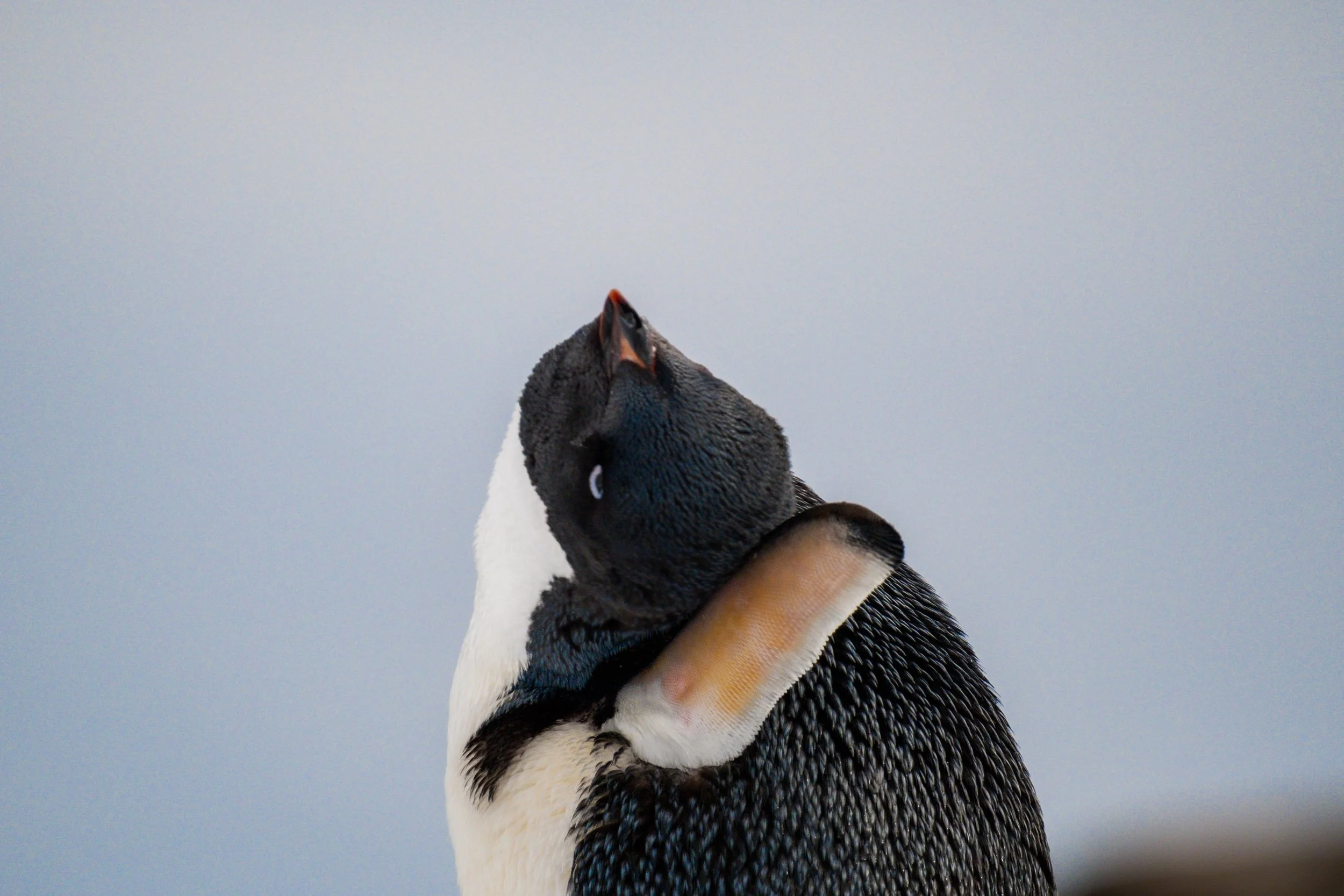
Adélie penguins are so dramatic and sassy
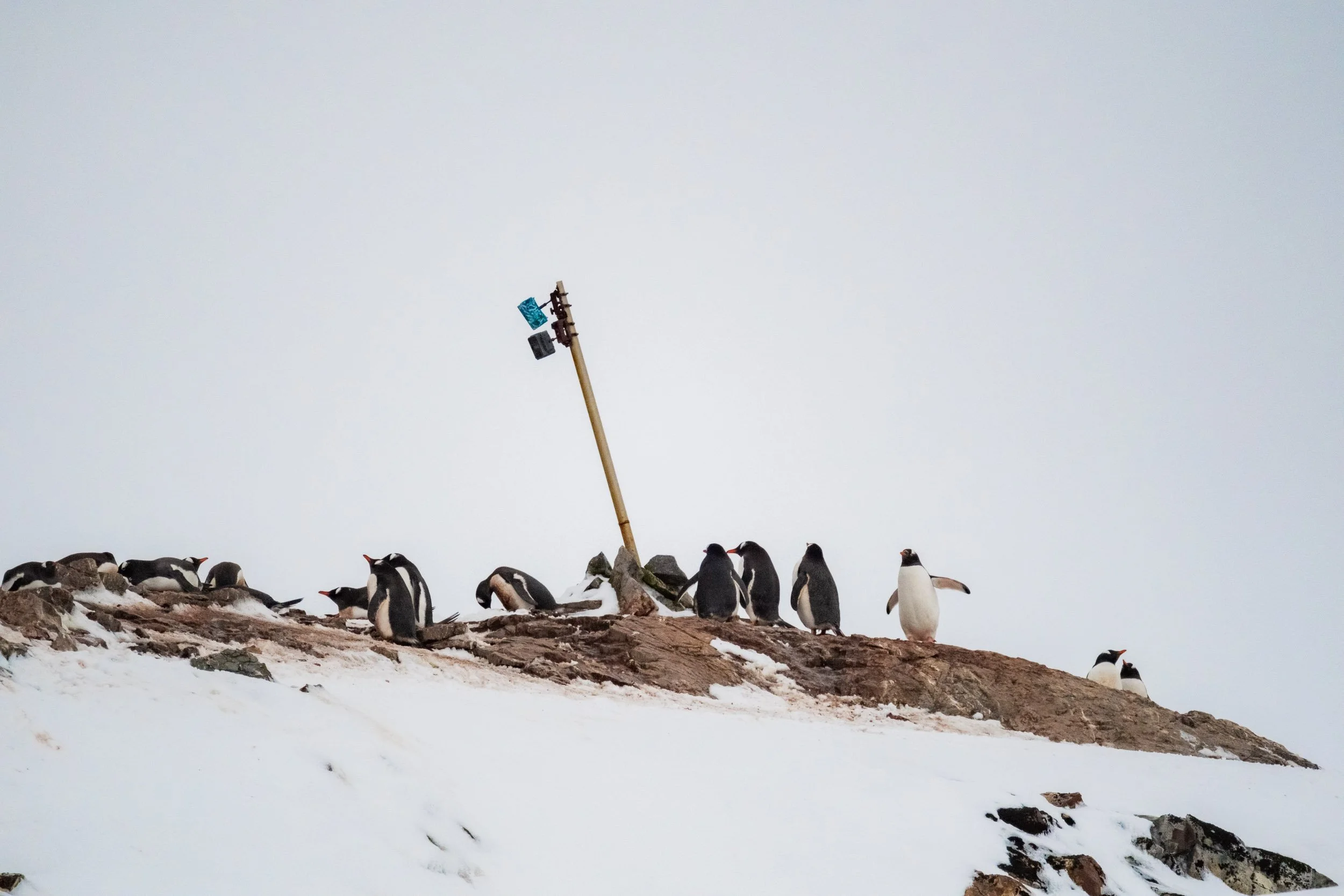
The camera installed on the island to monitor the penguins
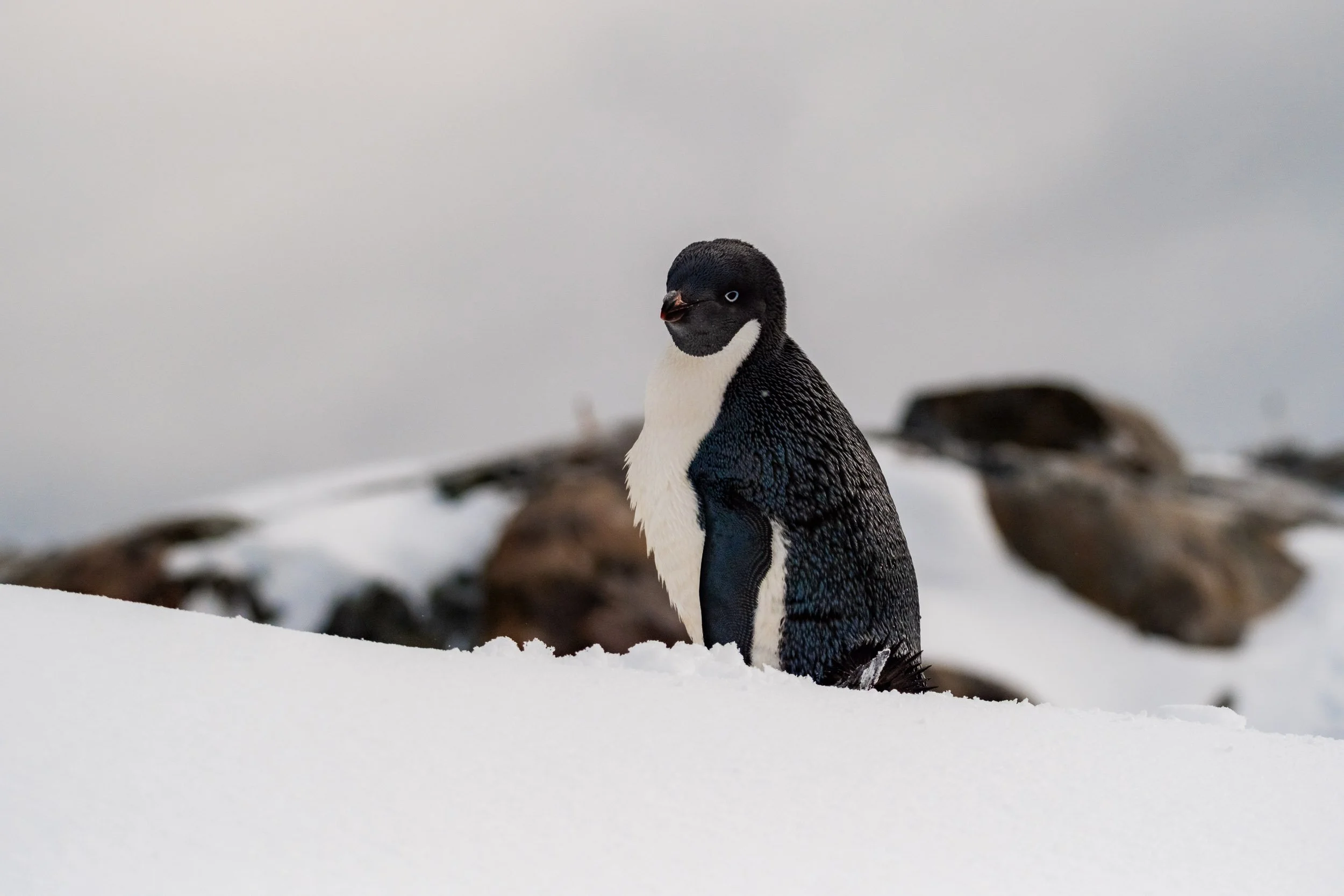
I mean..
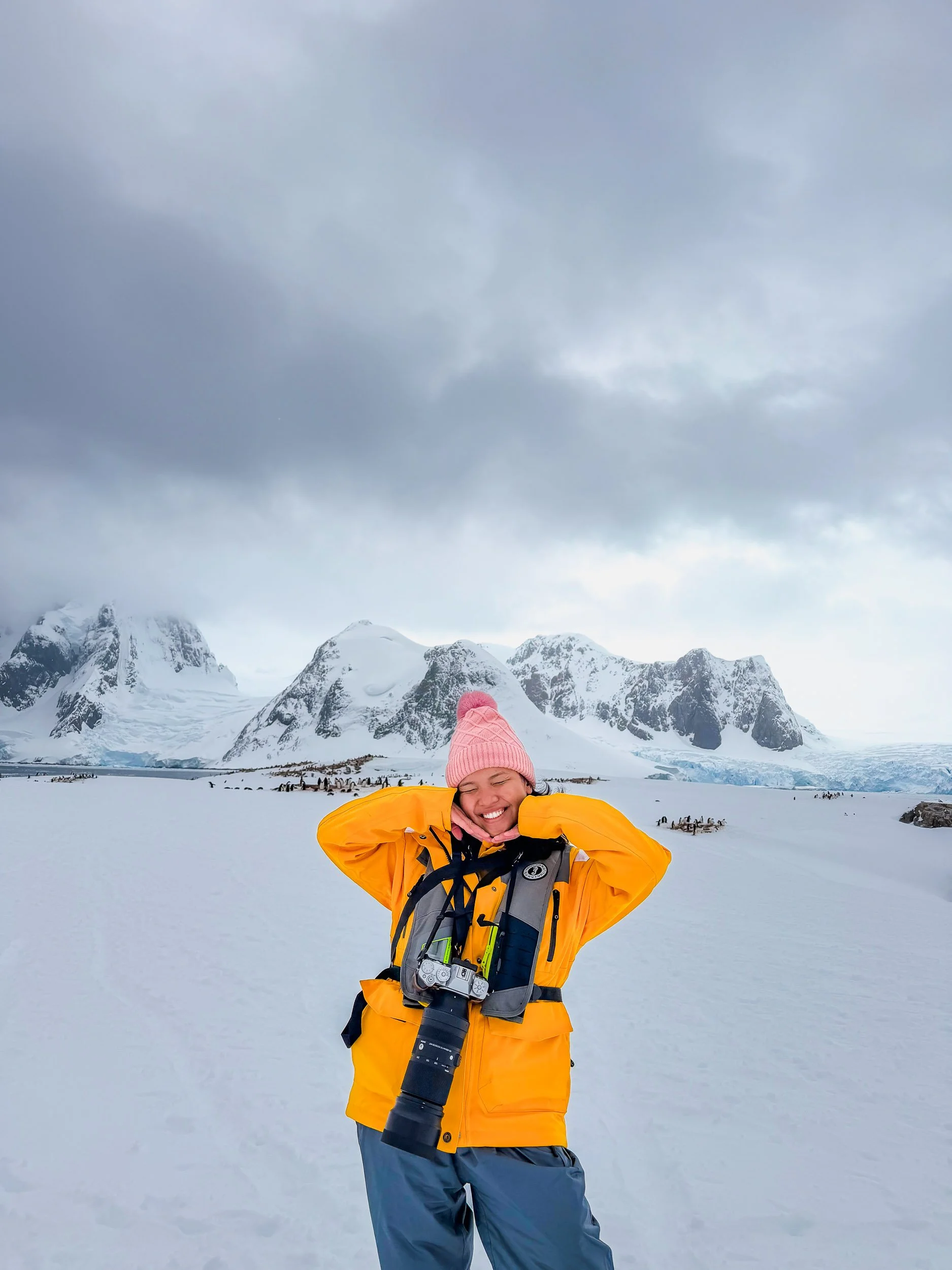
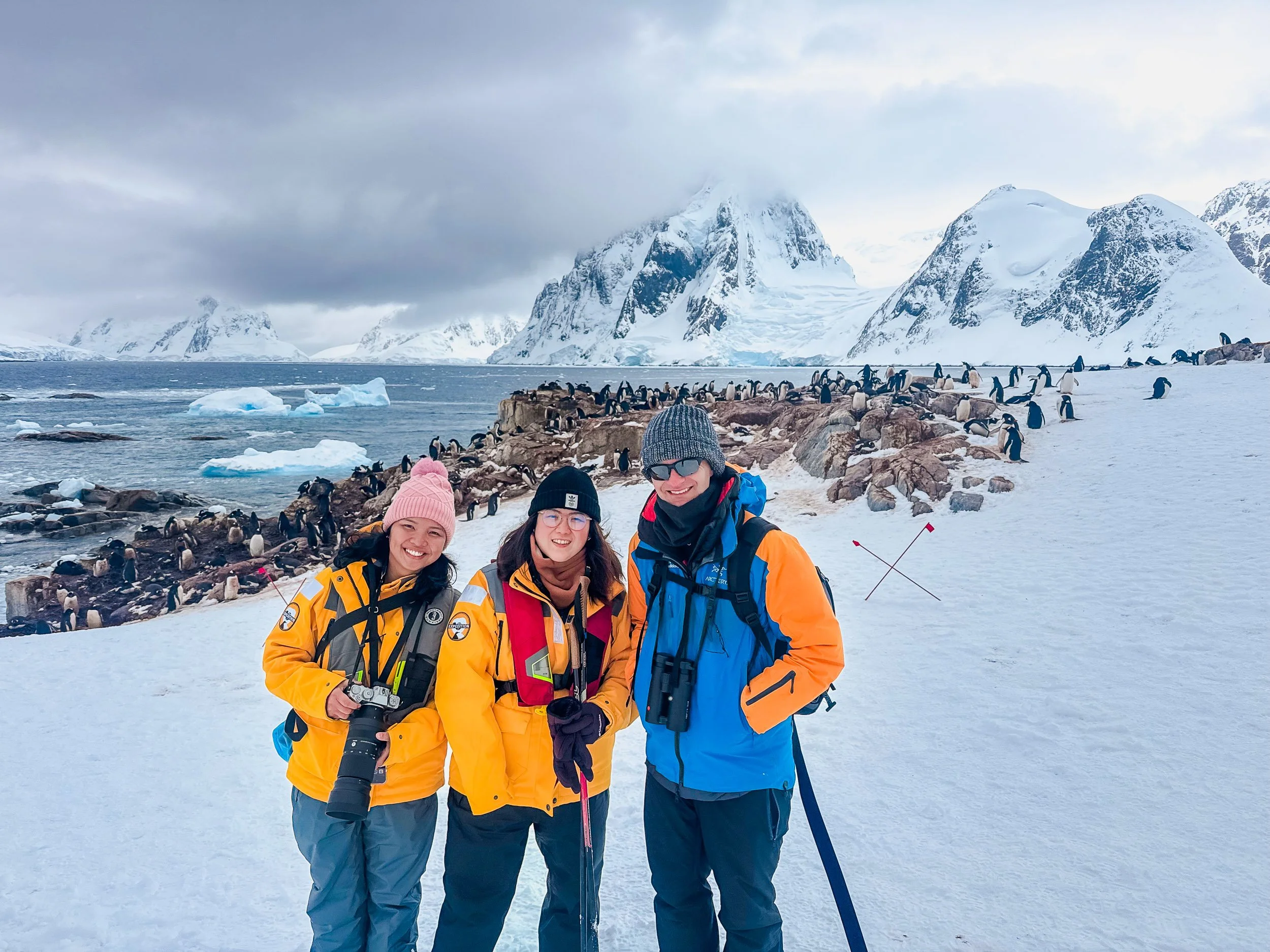
Of course we had to ask for a photo with our resident ornithologist, Noah Stryker, in the wild!
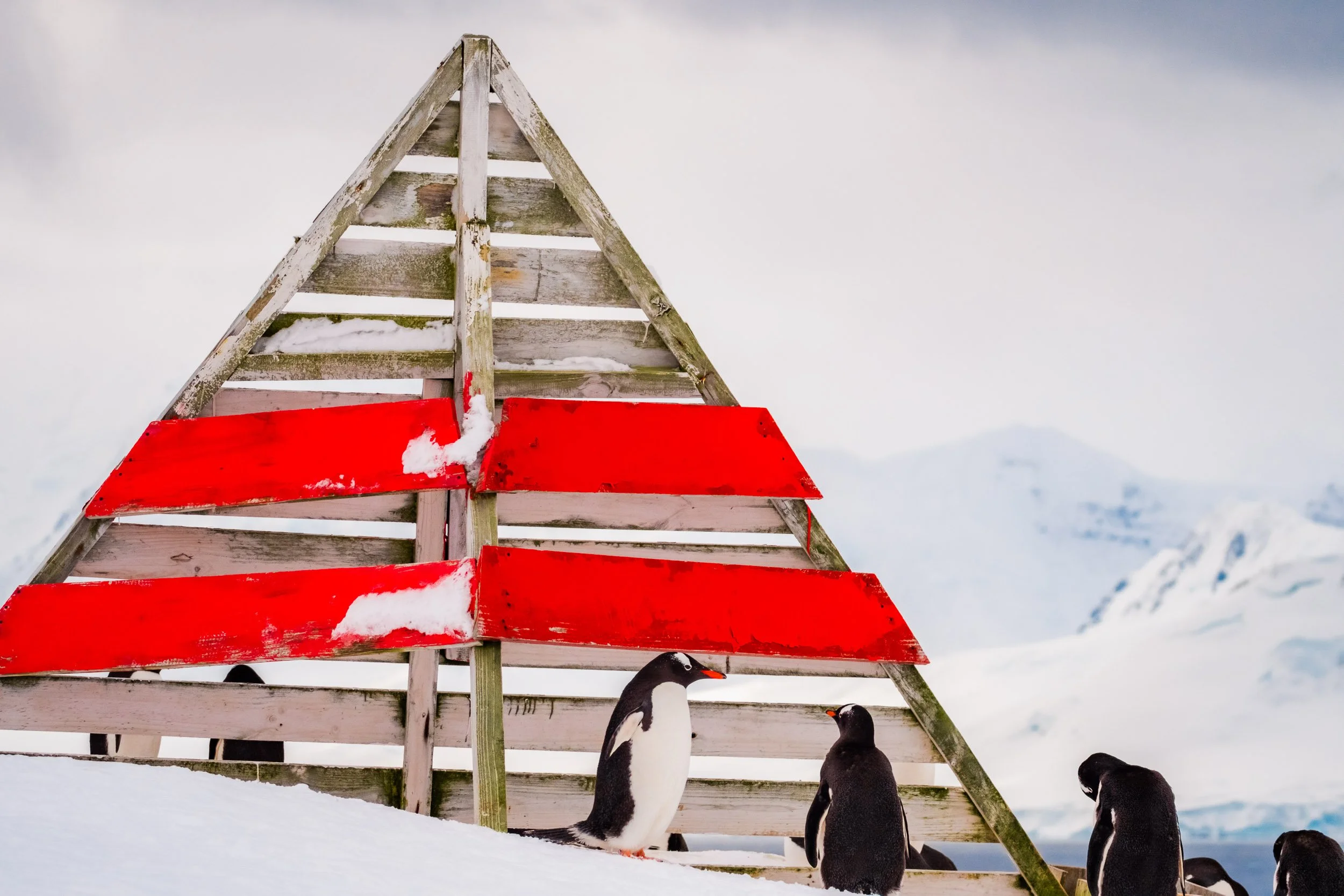
From afar, you’ll easily see a refuge hut built by an Argentinian expedition in 1955. The Argentinian flag is painted on its outer wall. Another notable thing on the island is a commemorative cross erected to honor the deaths of three members of the British Antarctic Survey who died in 1982 attempting to get back to their base after getting stranded for days on the island.
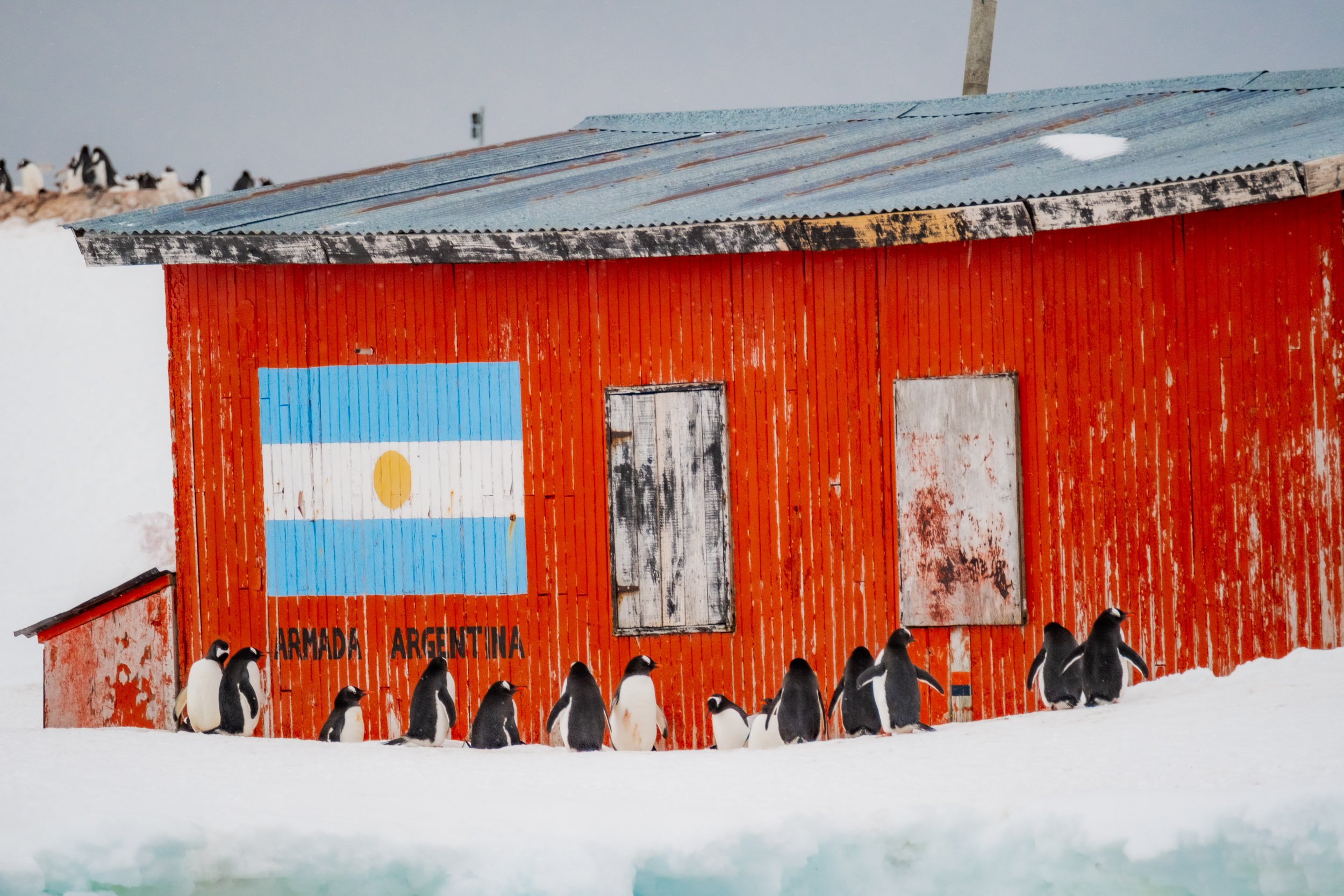
The Argentinian refuge hut, invaded by penguins
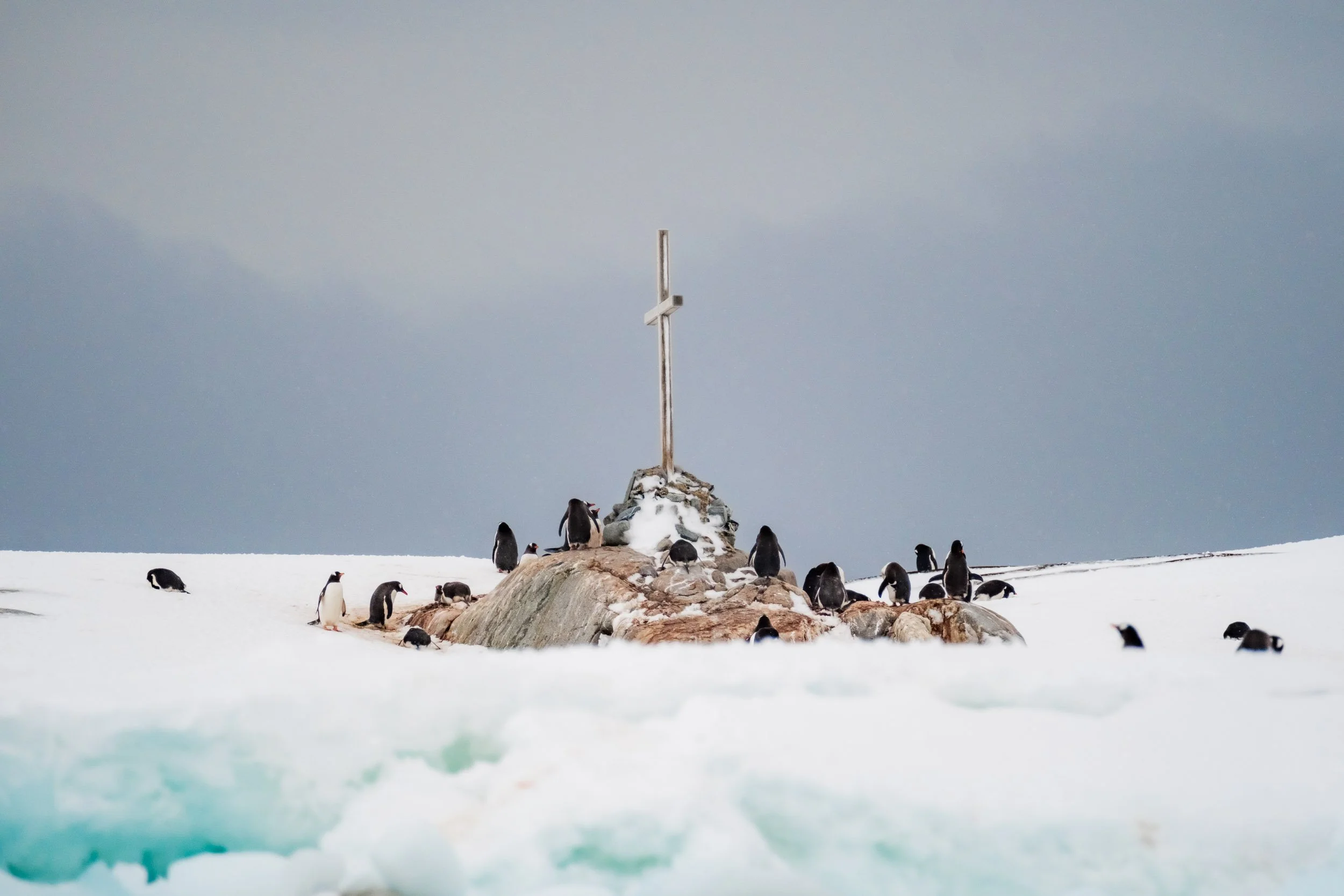
The commemorative cross
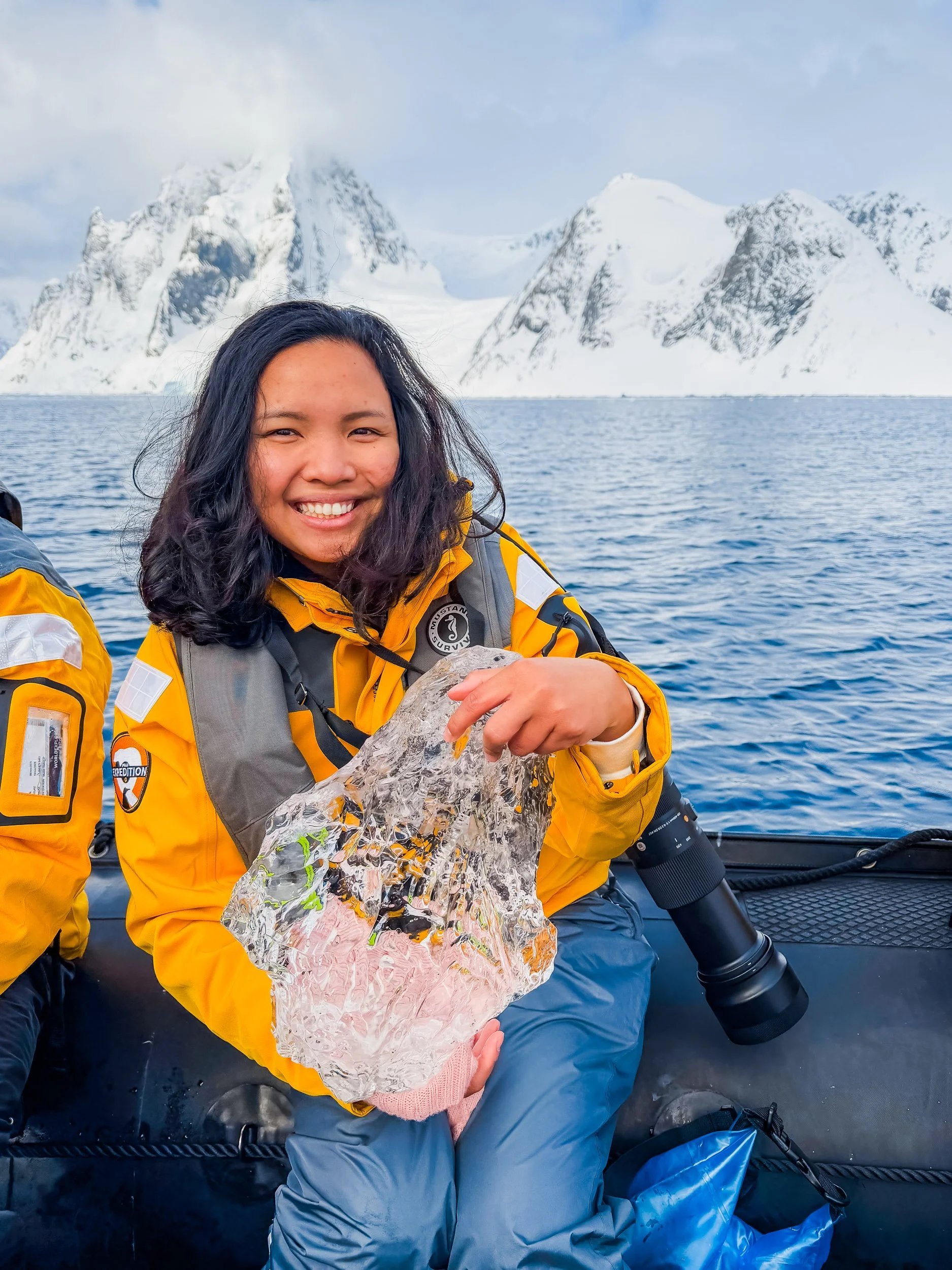
Our guide Sasha pulled a piece of glacial ice to our zodiac…
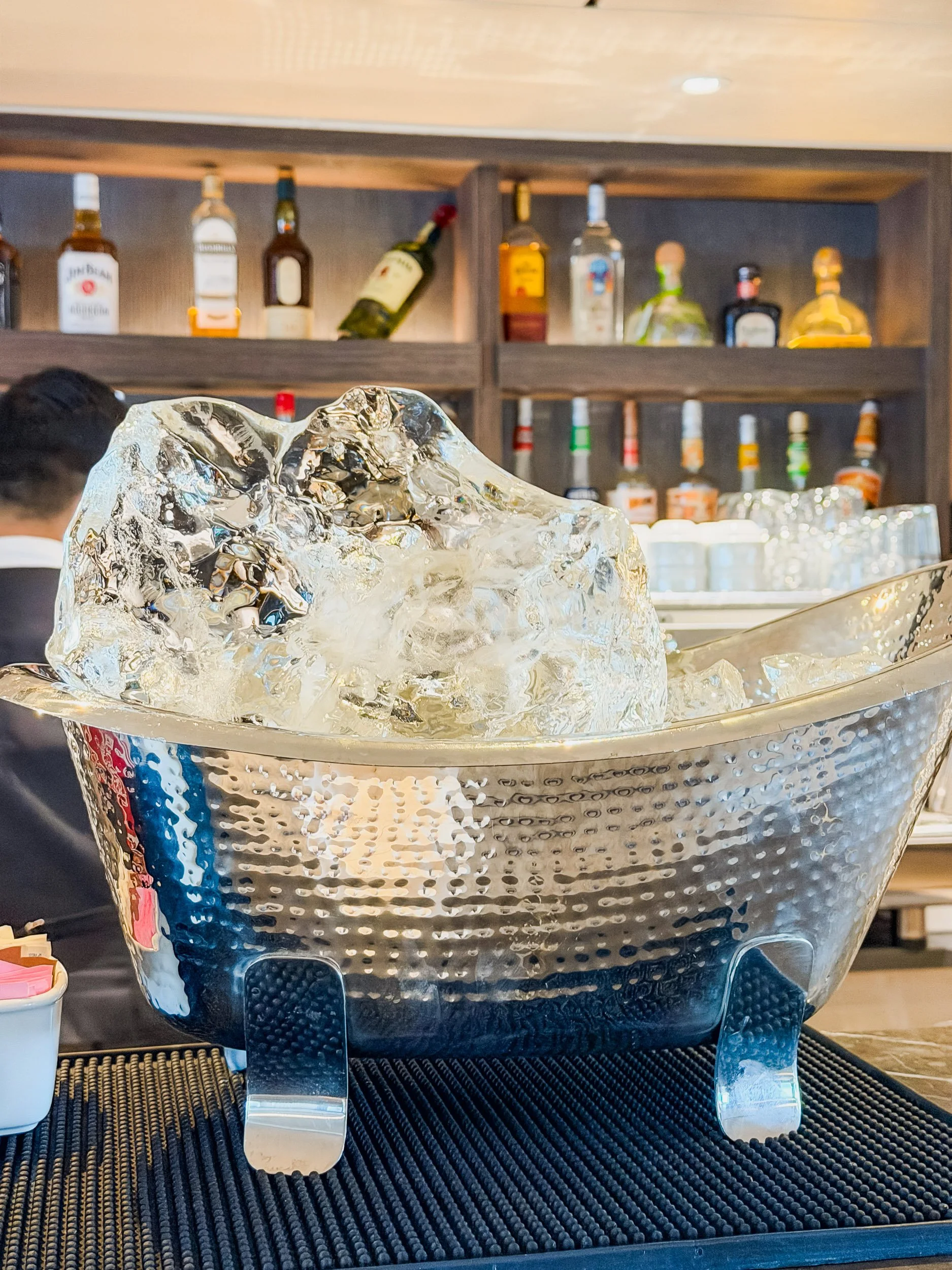
Brought it back to the ship…
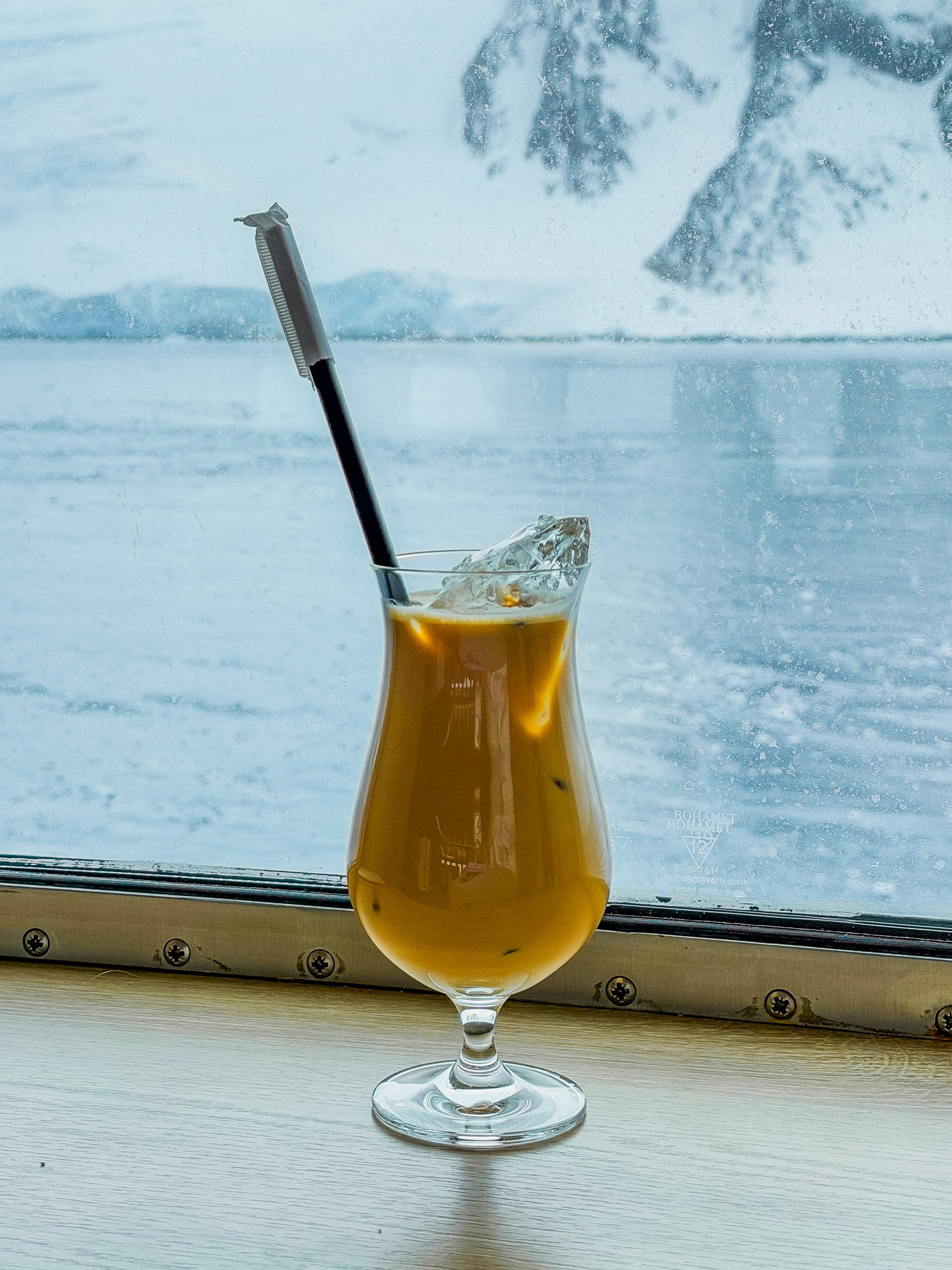
And we asked Kuya Roel to make iced coffee for us with it! It kinda tasted better? Lol
Jougla Point & Port Lockroy
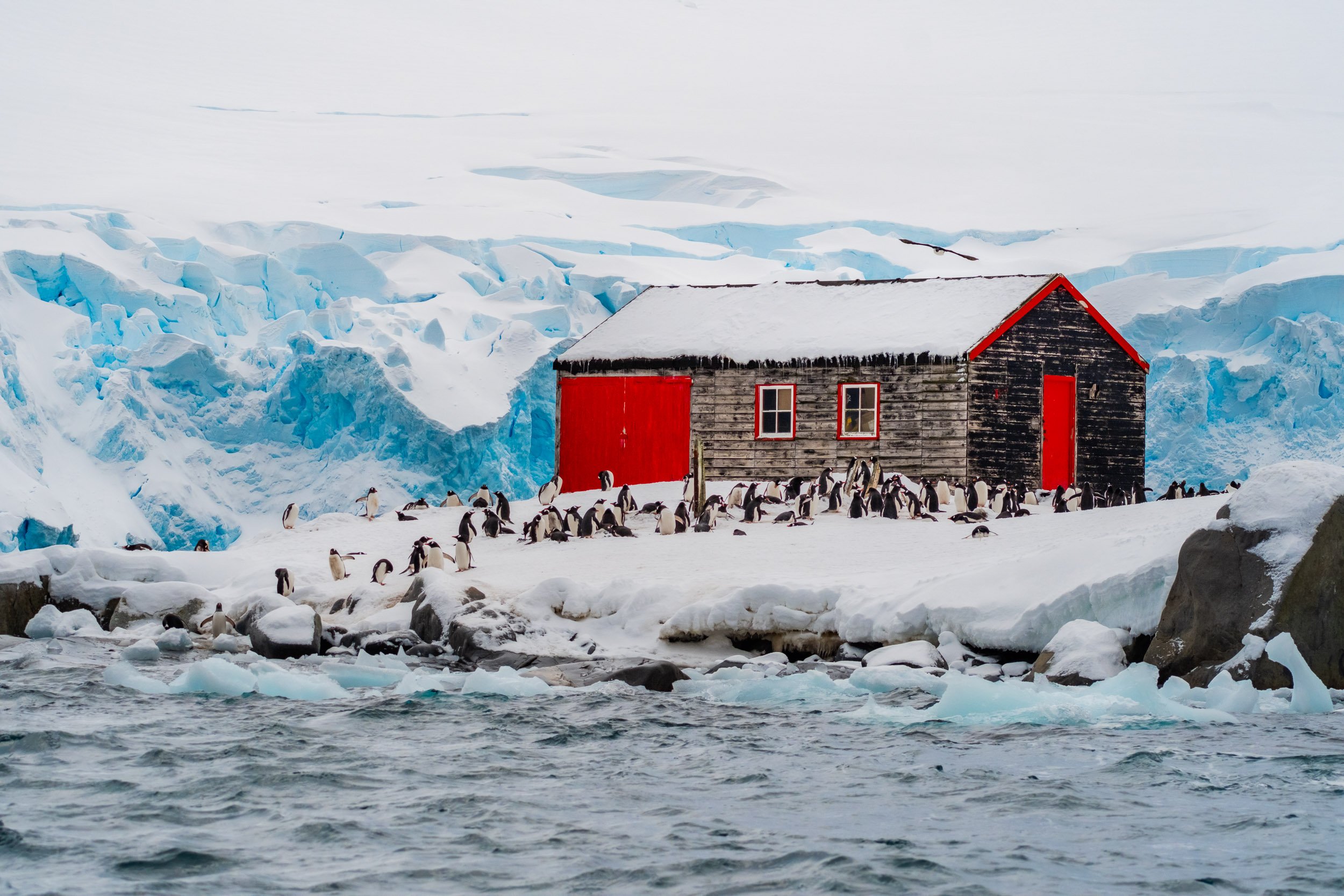
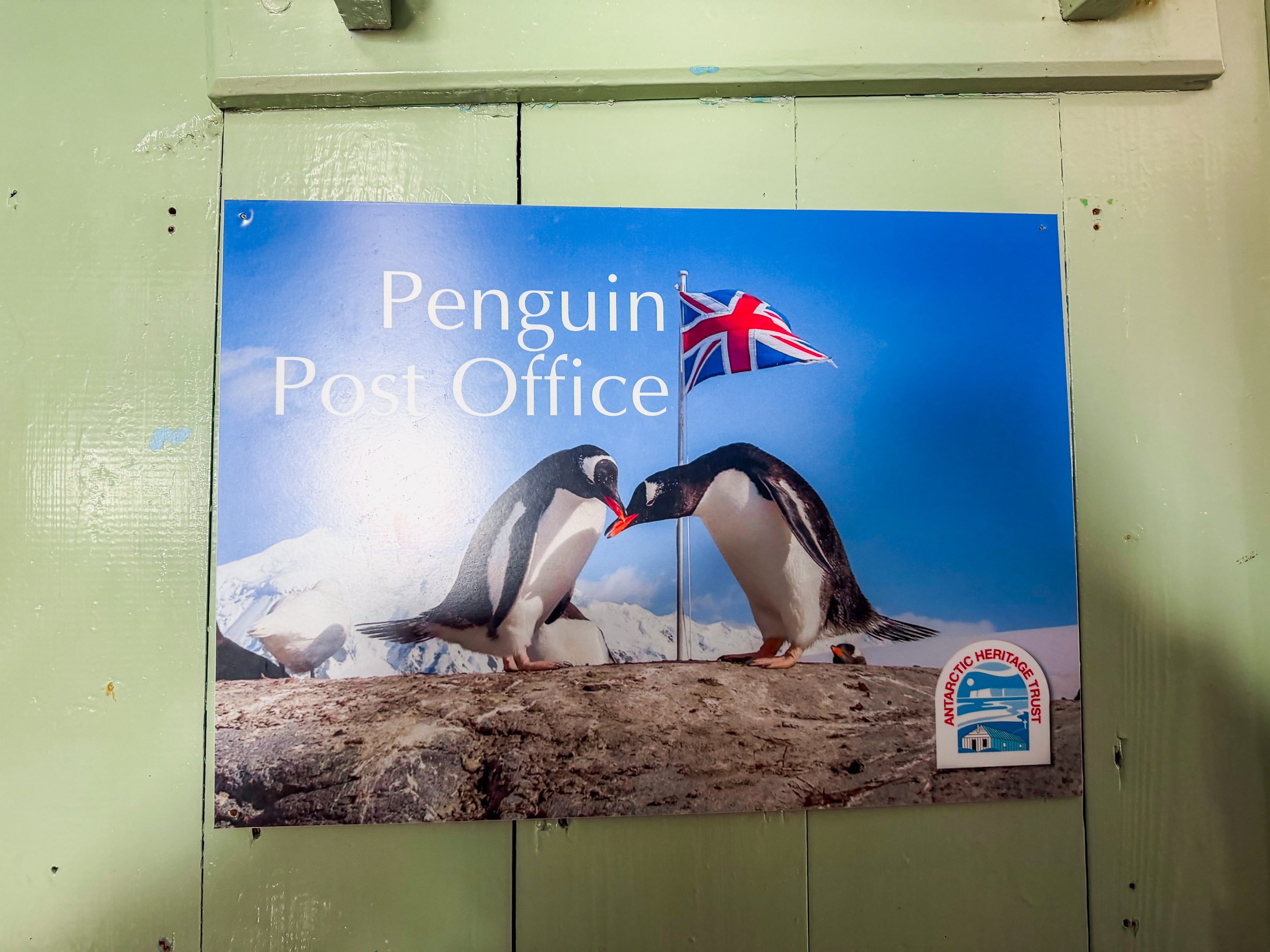
We started heading northward again on our third day on the peninsula. Our morning excursion brought us to Jougla Point and Goudier Island, where Port Lockroy (aka British Antarctic Base A) was located. Here, you will find the world’s southernmost operational post office (adorably called Penguin Post Office — and no, the postmaster is not a penguin).
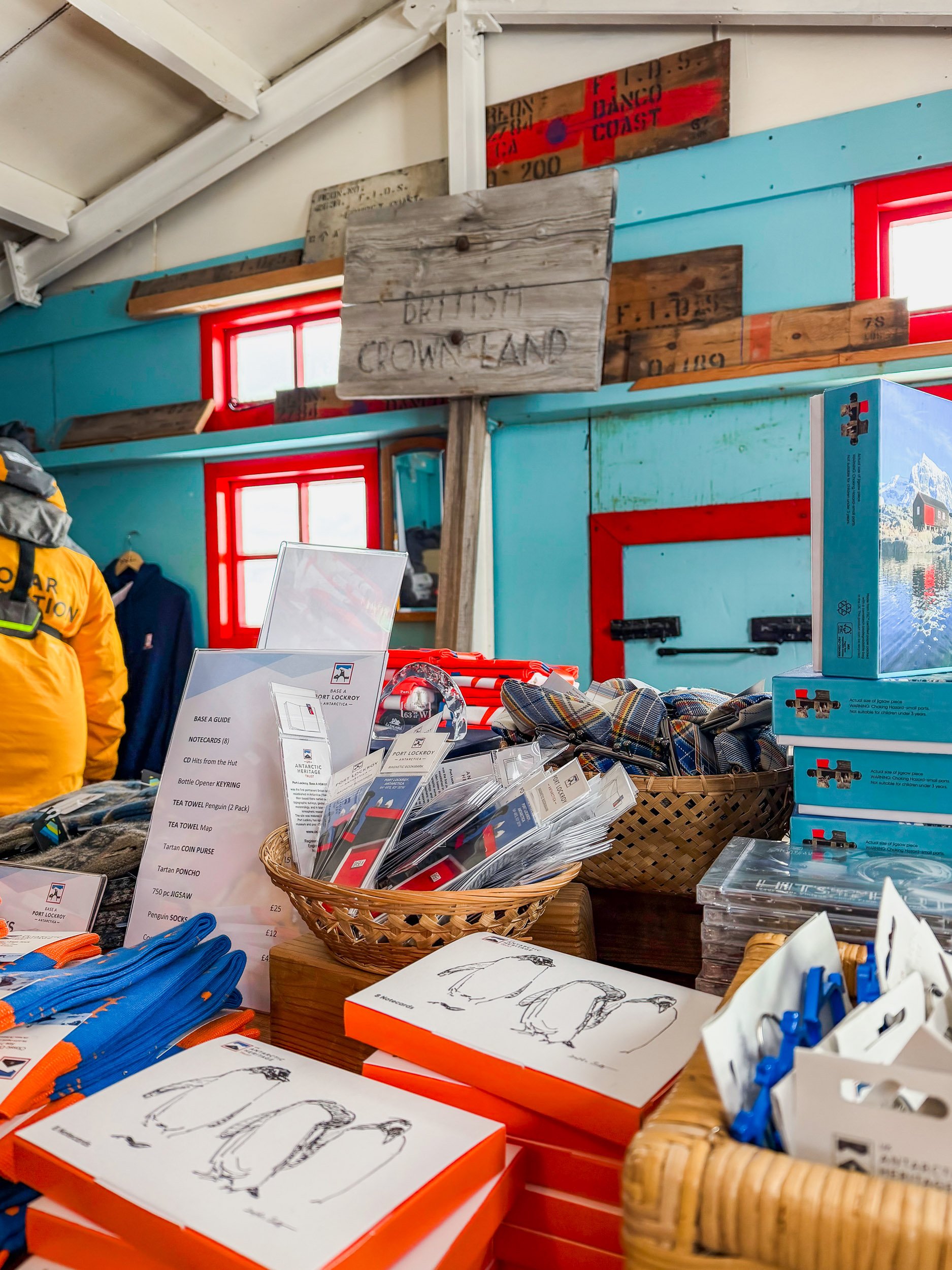
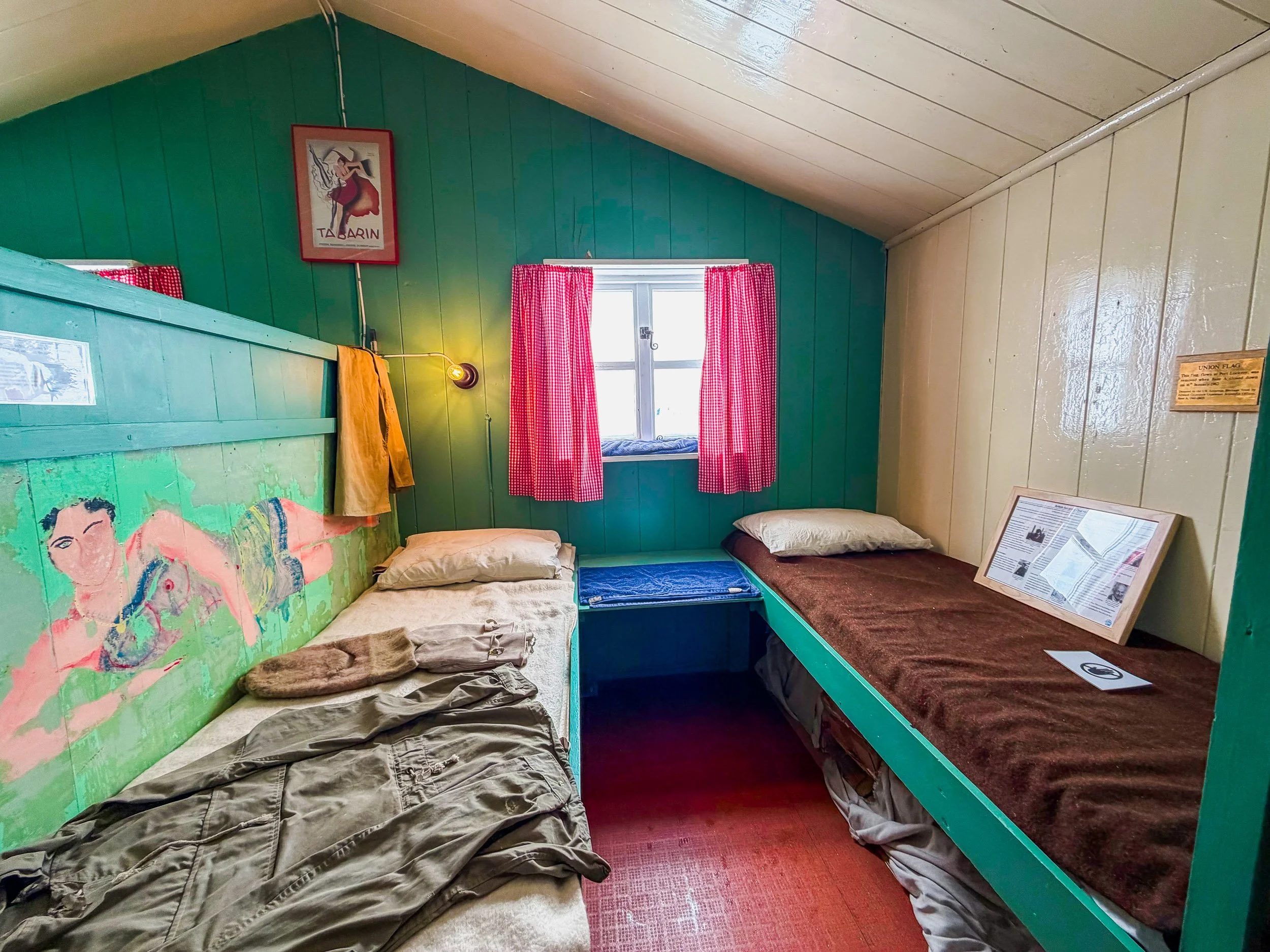
Port Lockroy was established under Operation Tabarin, a secret British expedition during World War II commissioned to establish a permanent presence on the continent. Historically, it served as a whaling base and, eventually, a scientific research base. Currently, it is managed by the UK Antarctic Heritage Trust (UKAHT), with seasonal staff popping by every summer to monitor the growing Gentoo colony in the area, manage visitors, and operate the museum, gift shop, and post office.
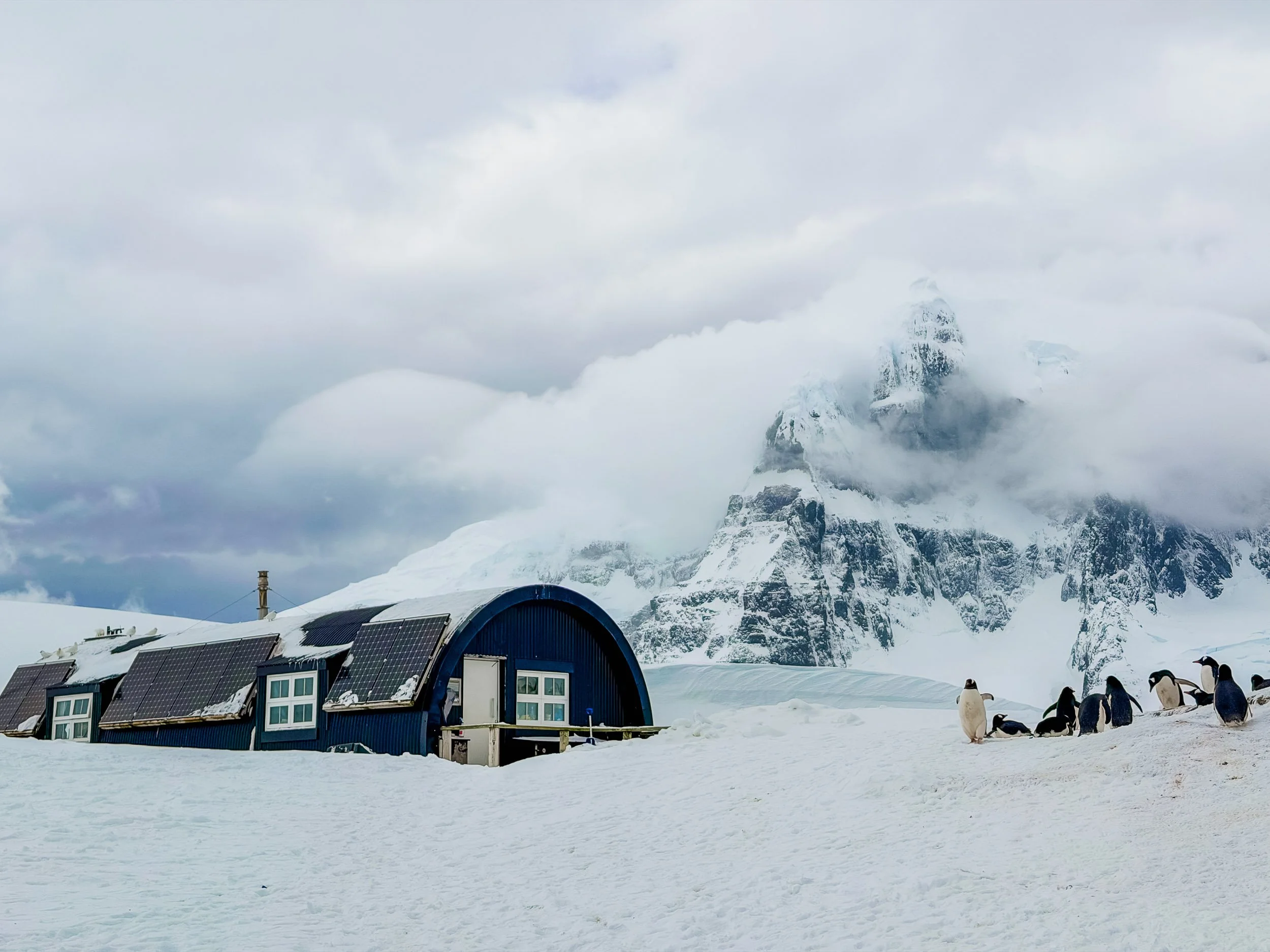
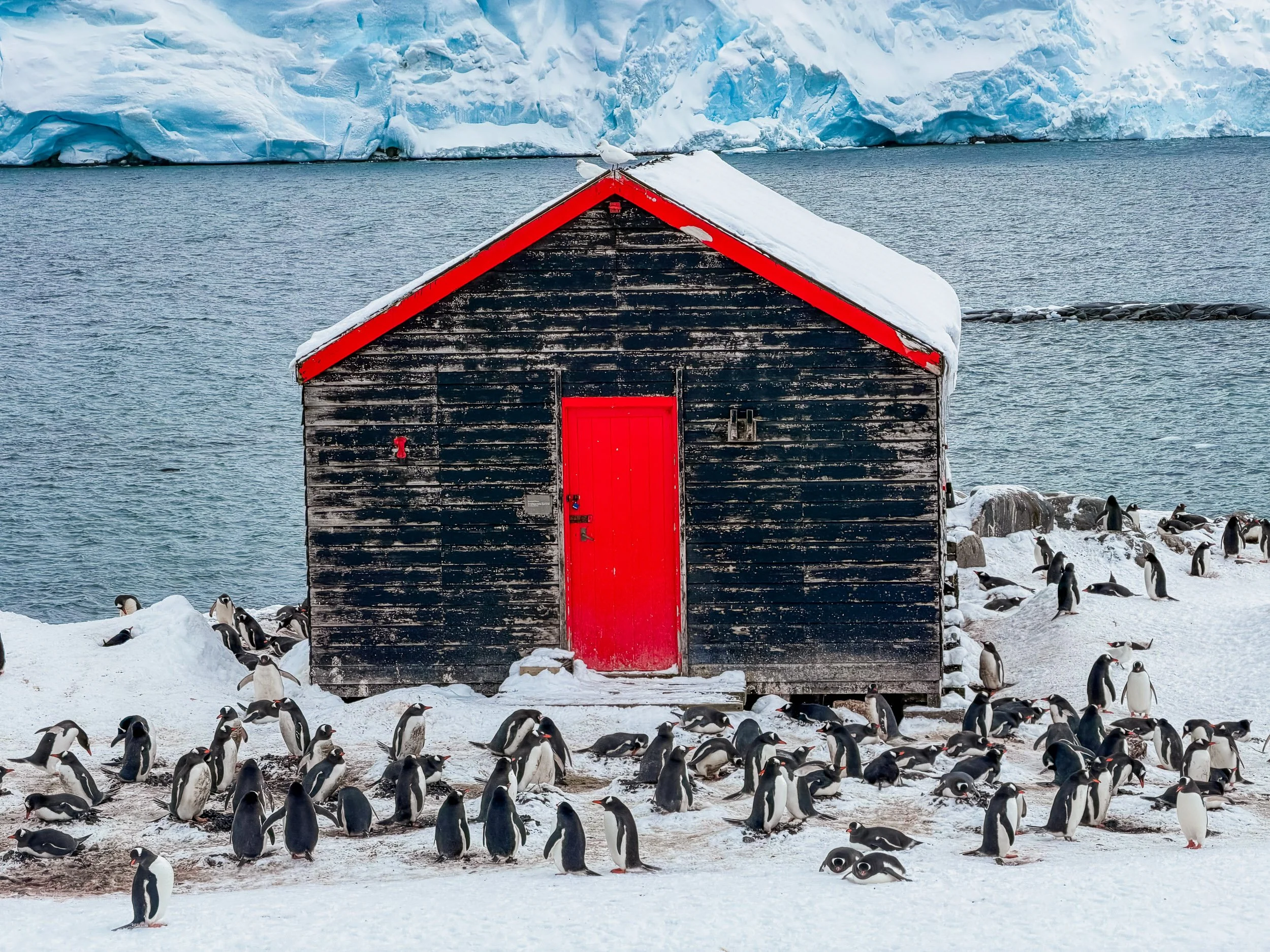
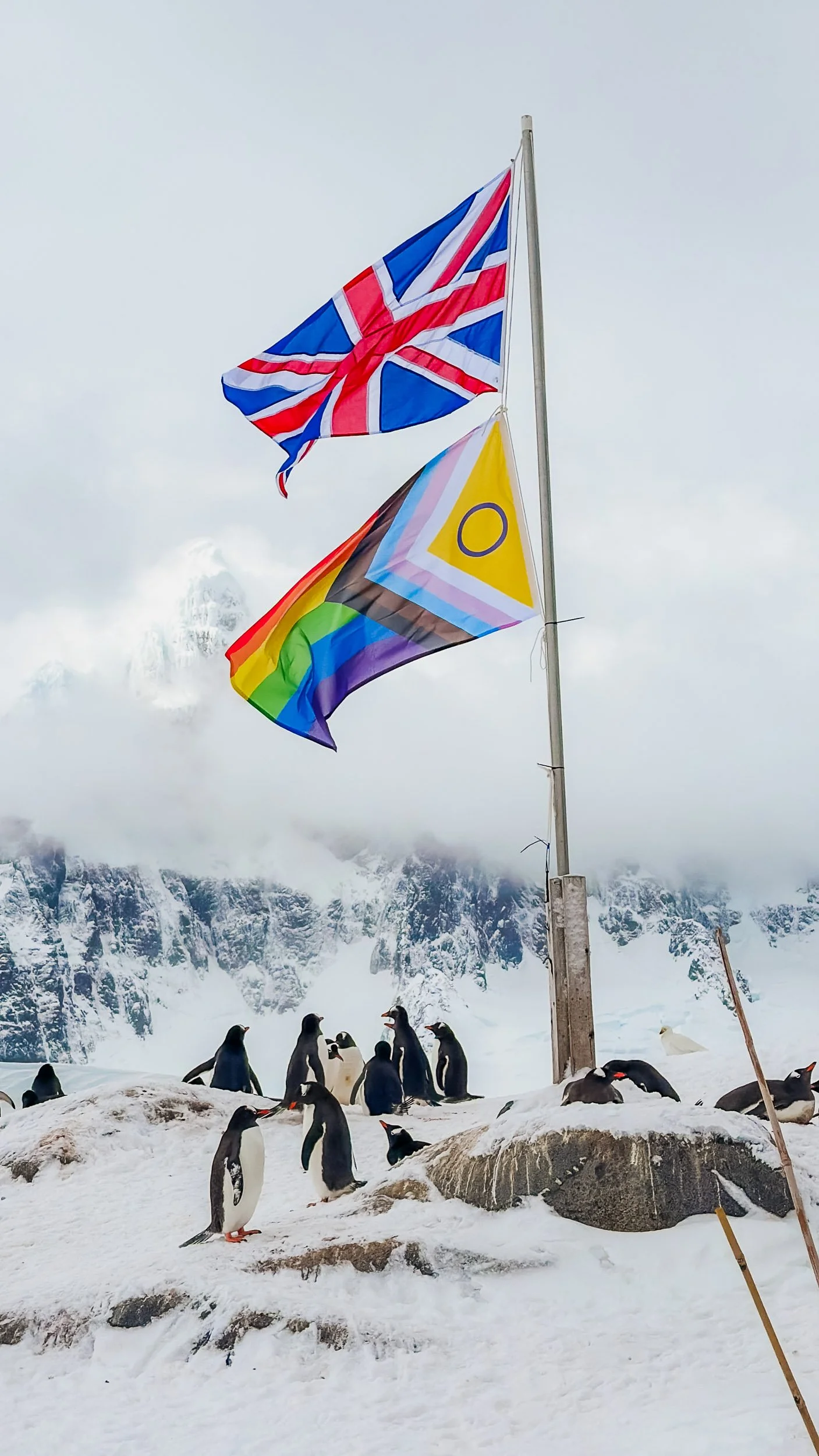
Due to the significant decline in the penguin population on the island in recent years, they have decided to limit the number of visitors to 20 at a time. We were lucky that they were able to accommodate us. For this excursion, we were essentially split into 3 groups - half of the guests stayed on board for a lecture with one of the Trust’s staff; the other half were split again into those who would go to Port Lockroy and those who would go to the nearby Jougla Point.
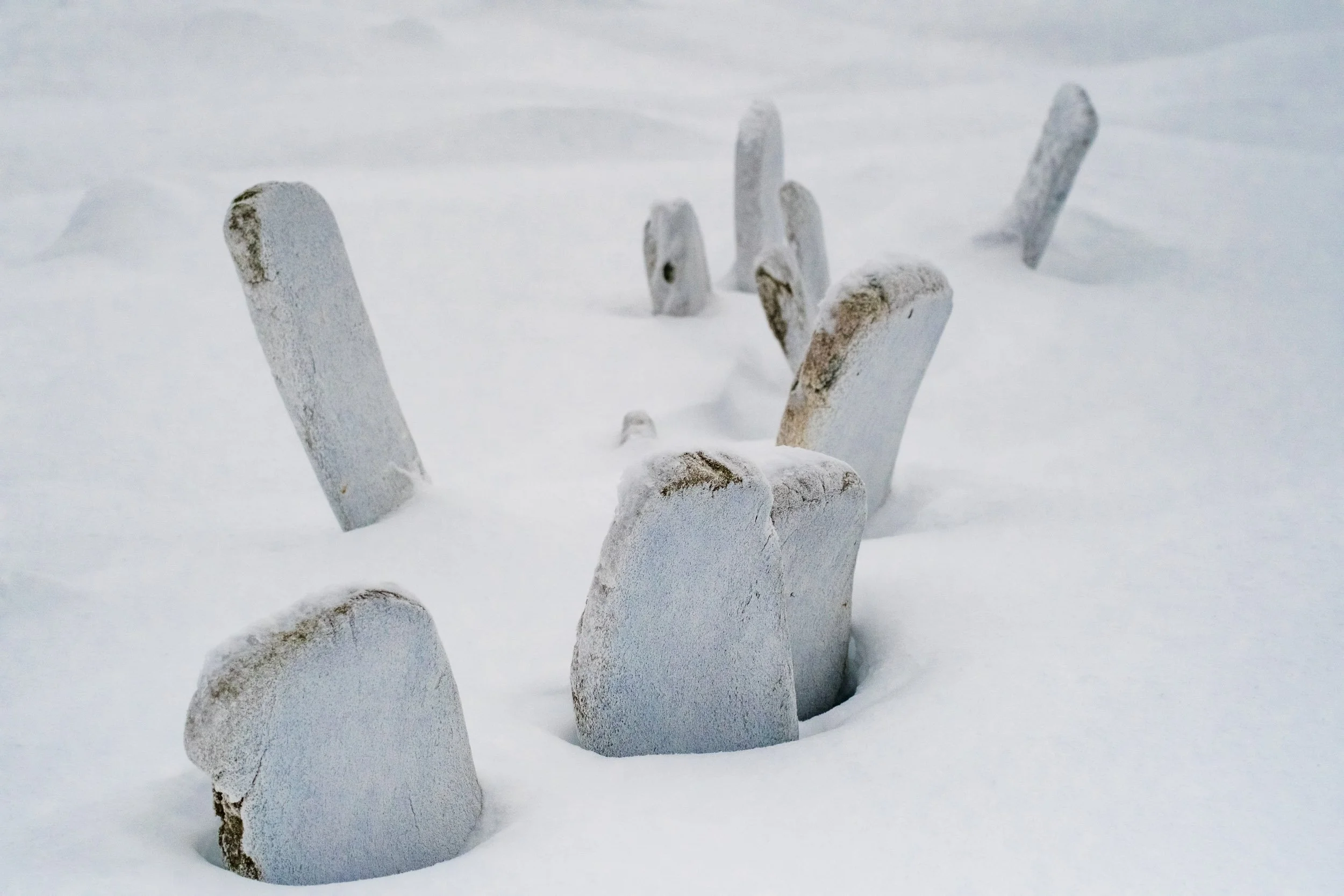
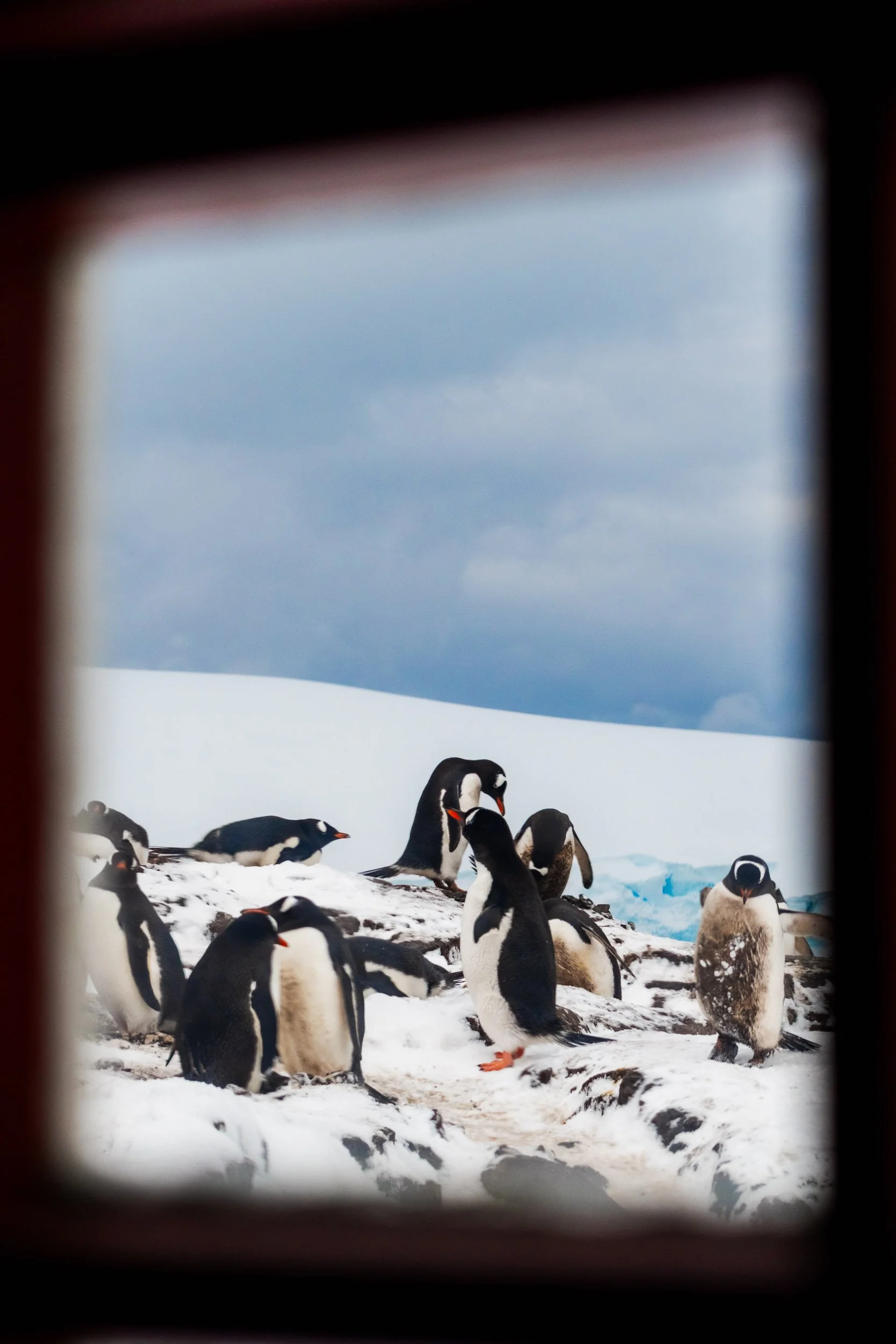
Jougla Point honestly felt like a “waiting room” as we waited for our turn to land at Port Lockroy. Be that as it may, it still had its own charm, aside from the nth Gentoo penguin colony we encountered. We were able to see intact whale bones sticking out of the snow and the majestic Luigi Peak looming spectacularly from across the island.
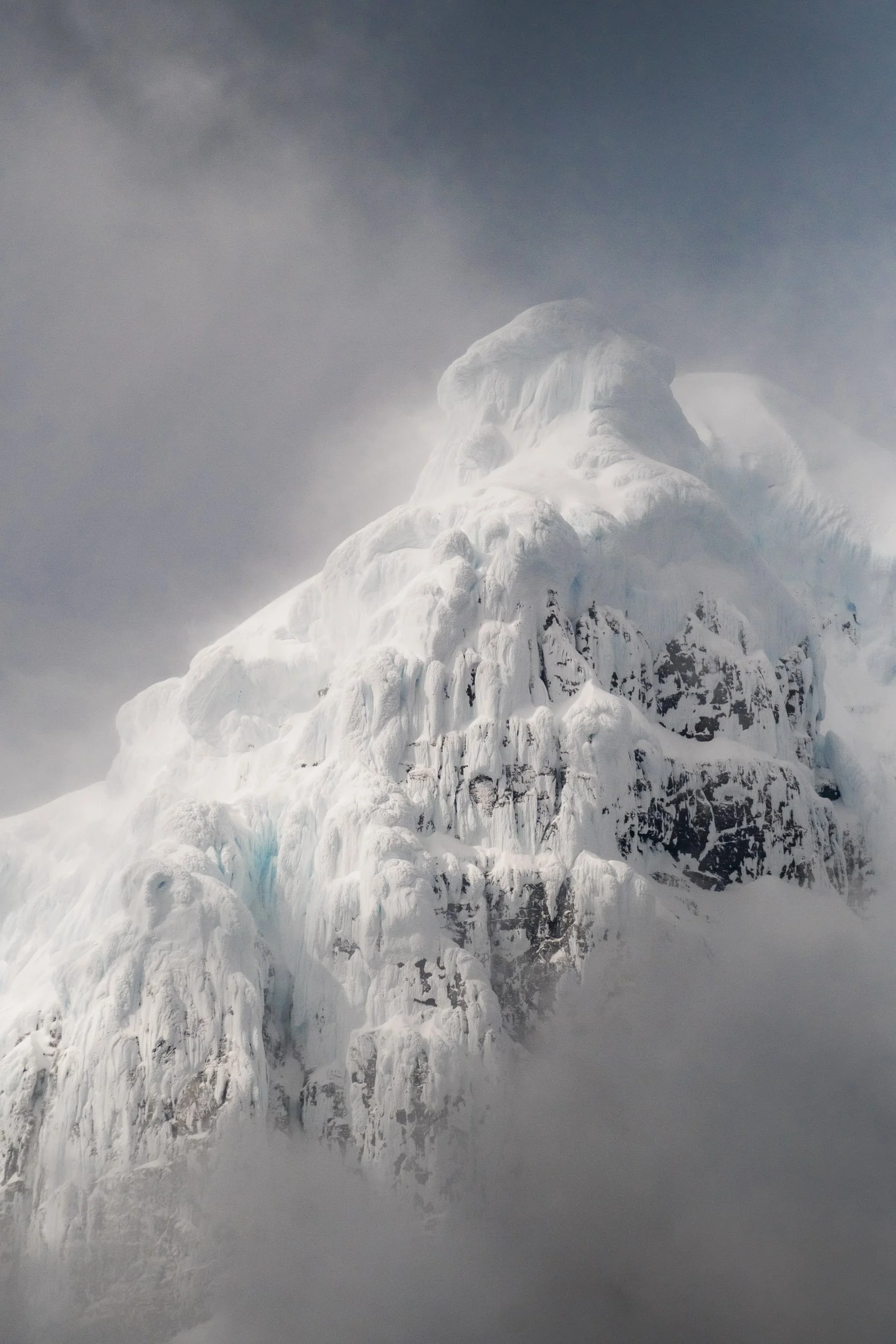
Luigi Peak showing from the clouds
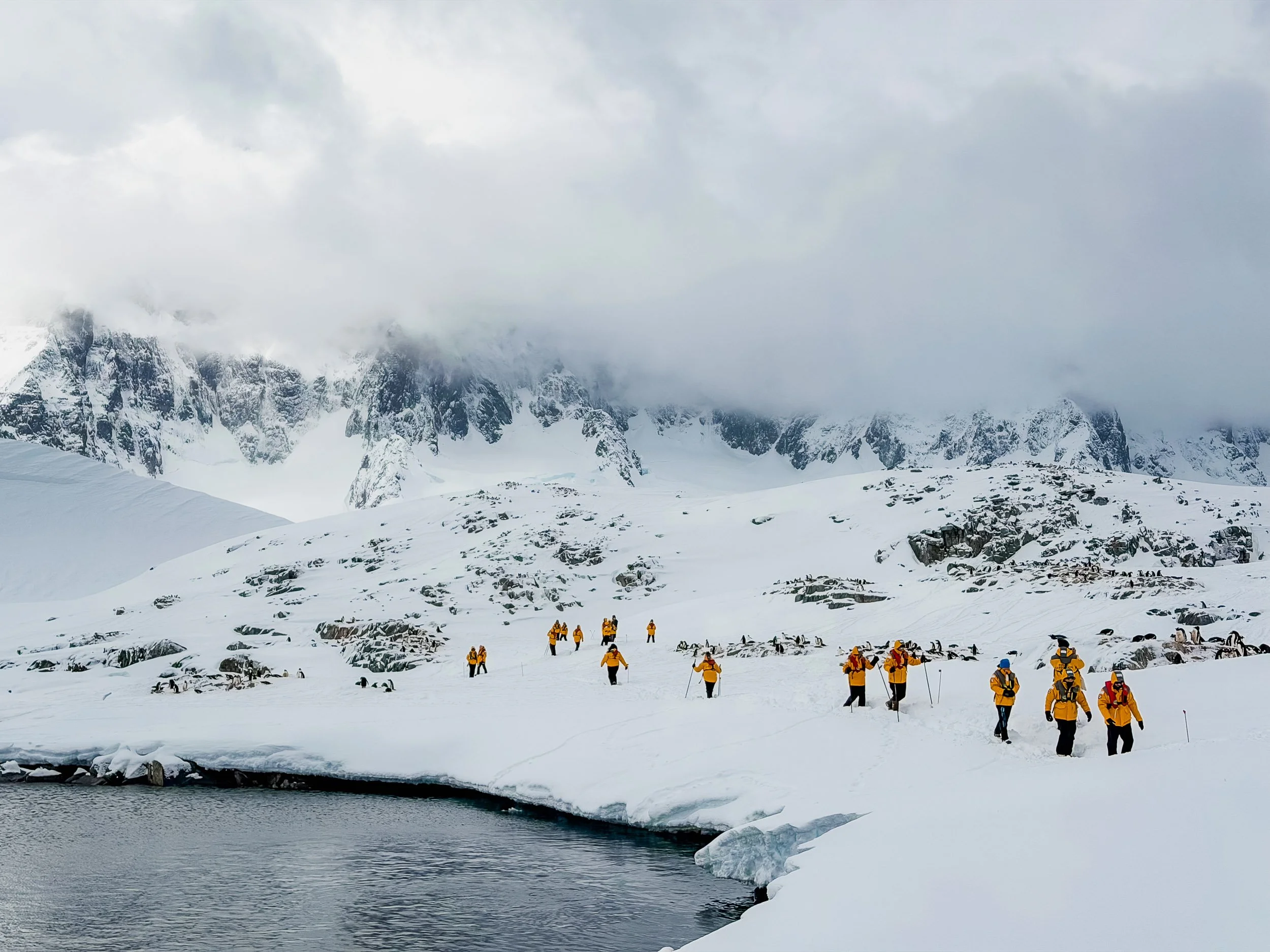
When we got to Port Lockroy, we went overboard with shopping at the gift shop, especially Dionne, who bought 30 USB flash drives! I was also shocked they accepted credit cards as a mode of payment because last time I checked, we were still in Antarctica?! I even brought cash with me but didn't end up using it. I was just genuinely floored at how much human technology had truly advanced.
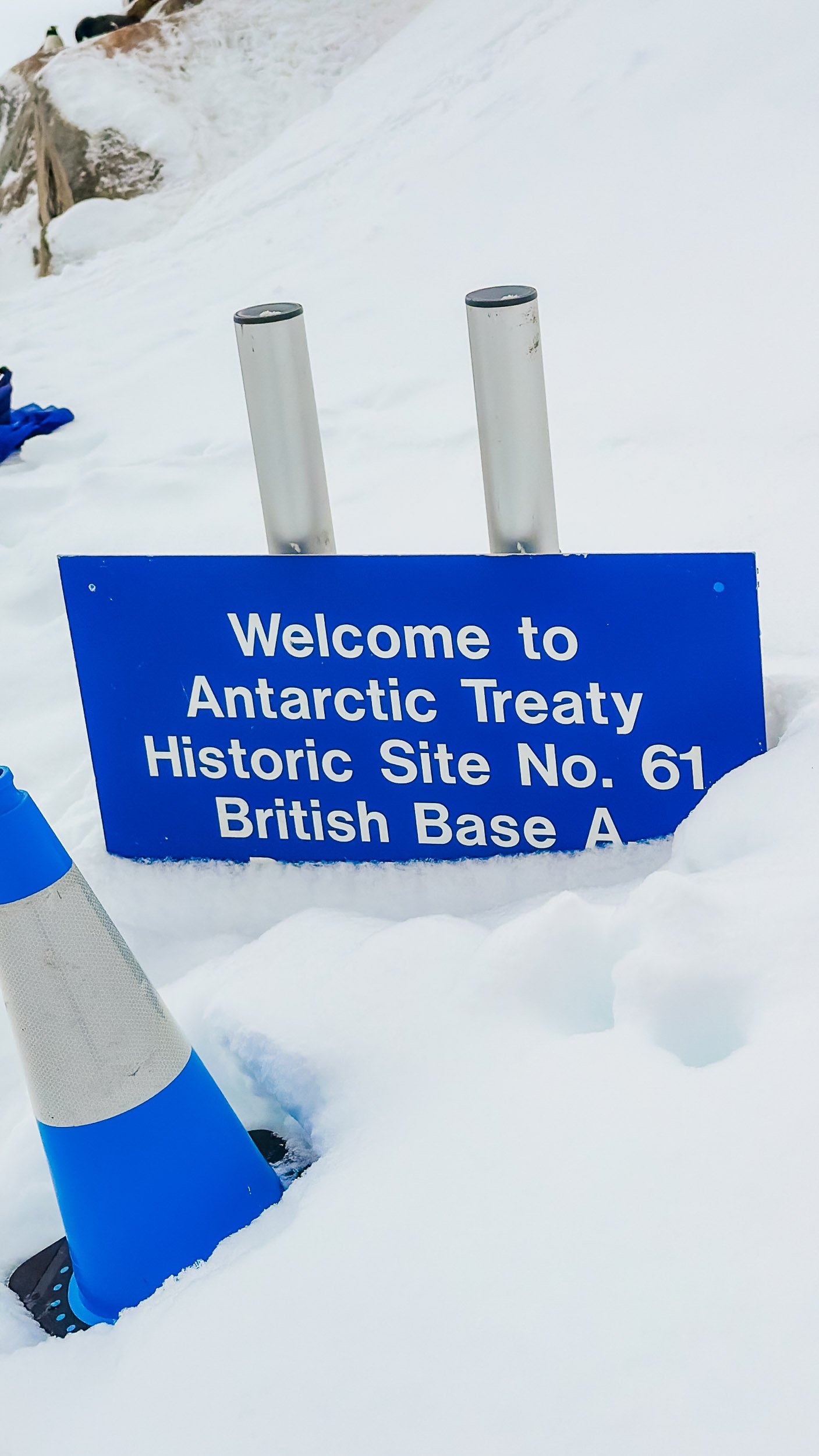
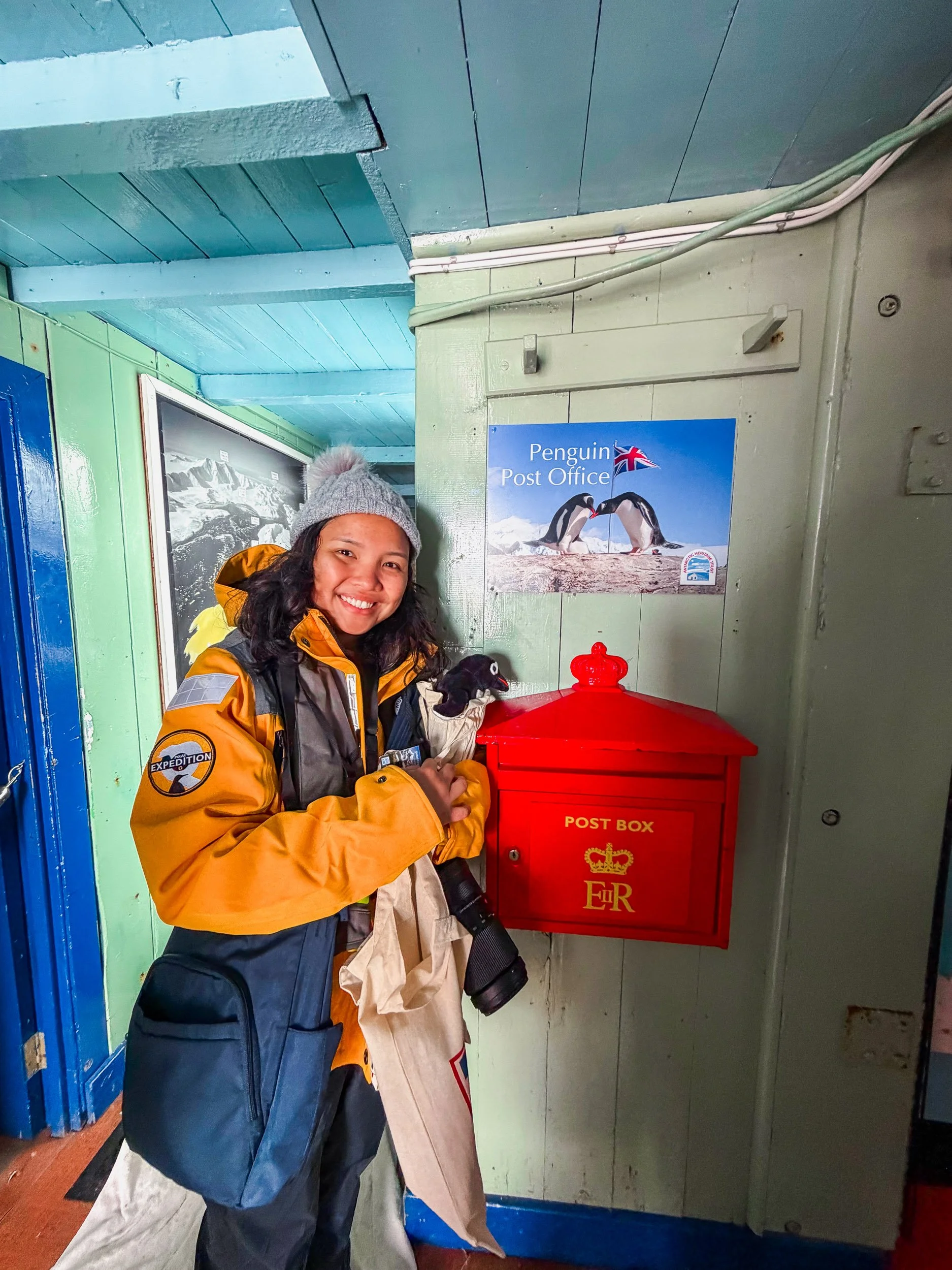
Anyway, as for our postcards, we didn’t have to bring them to Port Lockroy. We actually had a drop-off box for them at our ship’s lobby, available until the day before the end of our voyage. We just had to write our room number on the space where the stamps are placed, so we could be charged for postage. The expedition team would drop them off on their next landing at Port Lockroy, and they would be sent from there. At the time of this writing, 10 months later, about half of the postcards arrived at their recipients, and the other half, unfortunately, vanished.
Damoy Point & Hut
In the afternoon, we headed to another “waiting room”. This time, our destination was Damoy Point, a narrow headland on the western side of Wienecke Island, located just north of Port Lockroy.
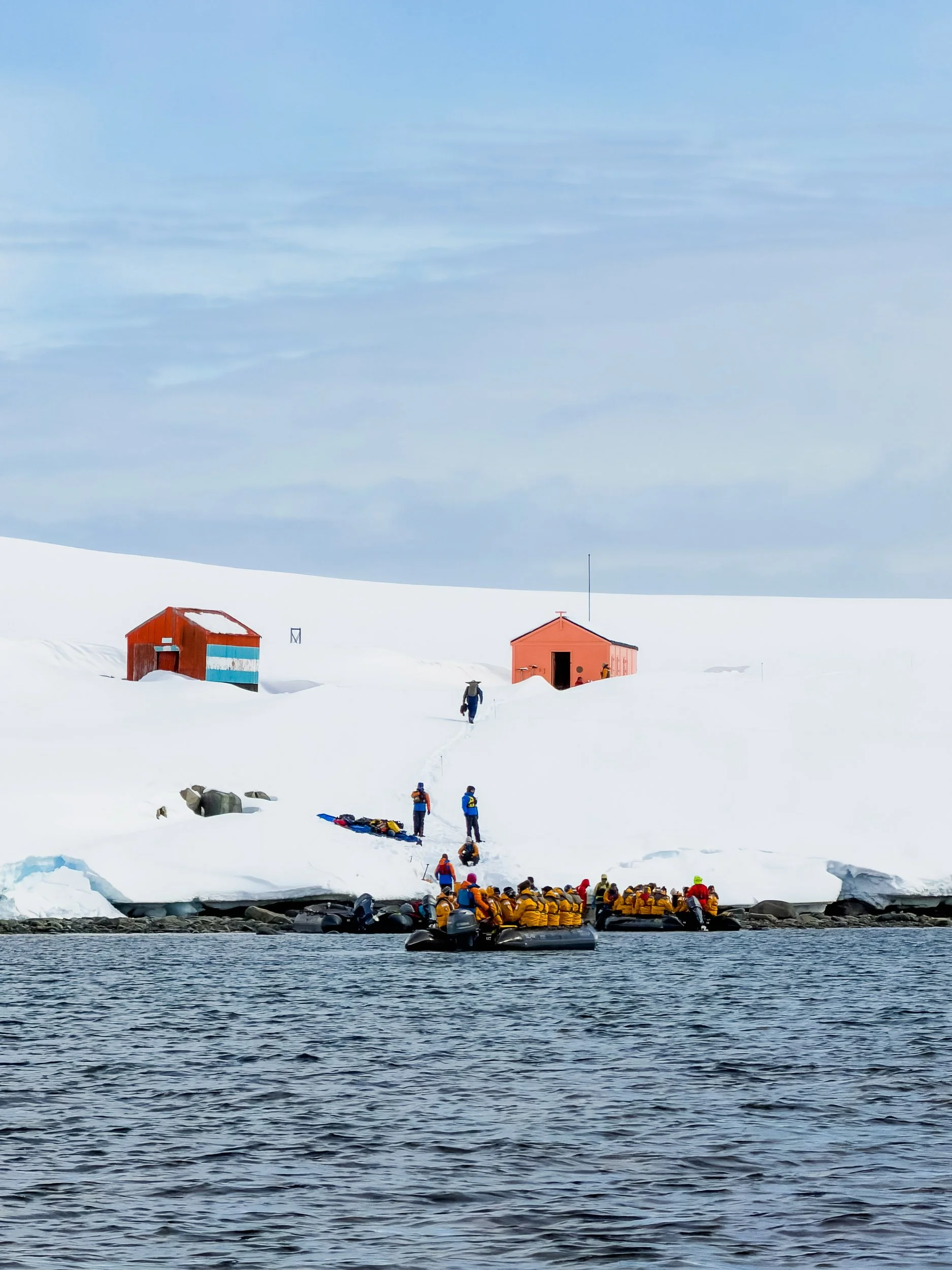
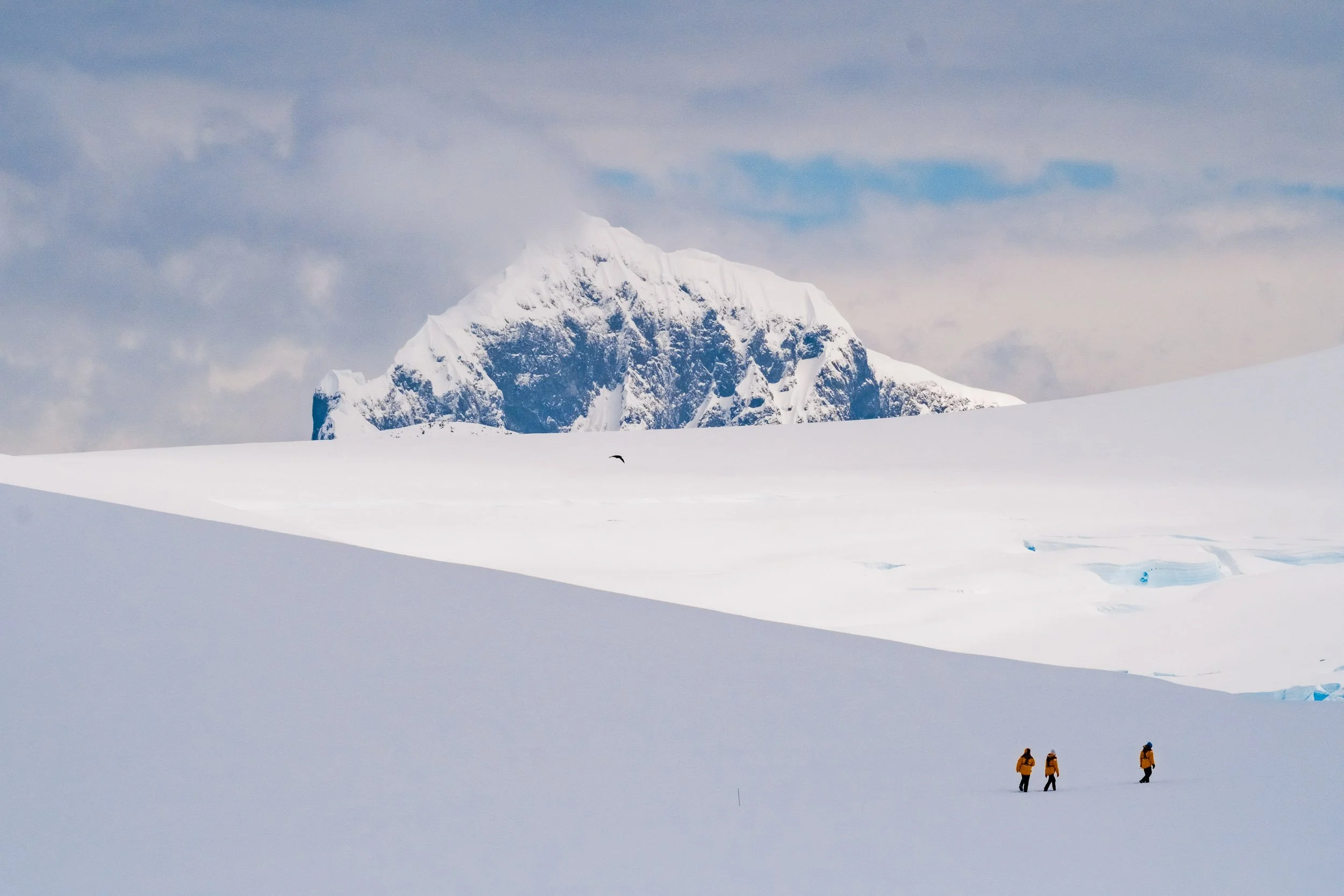
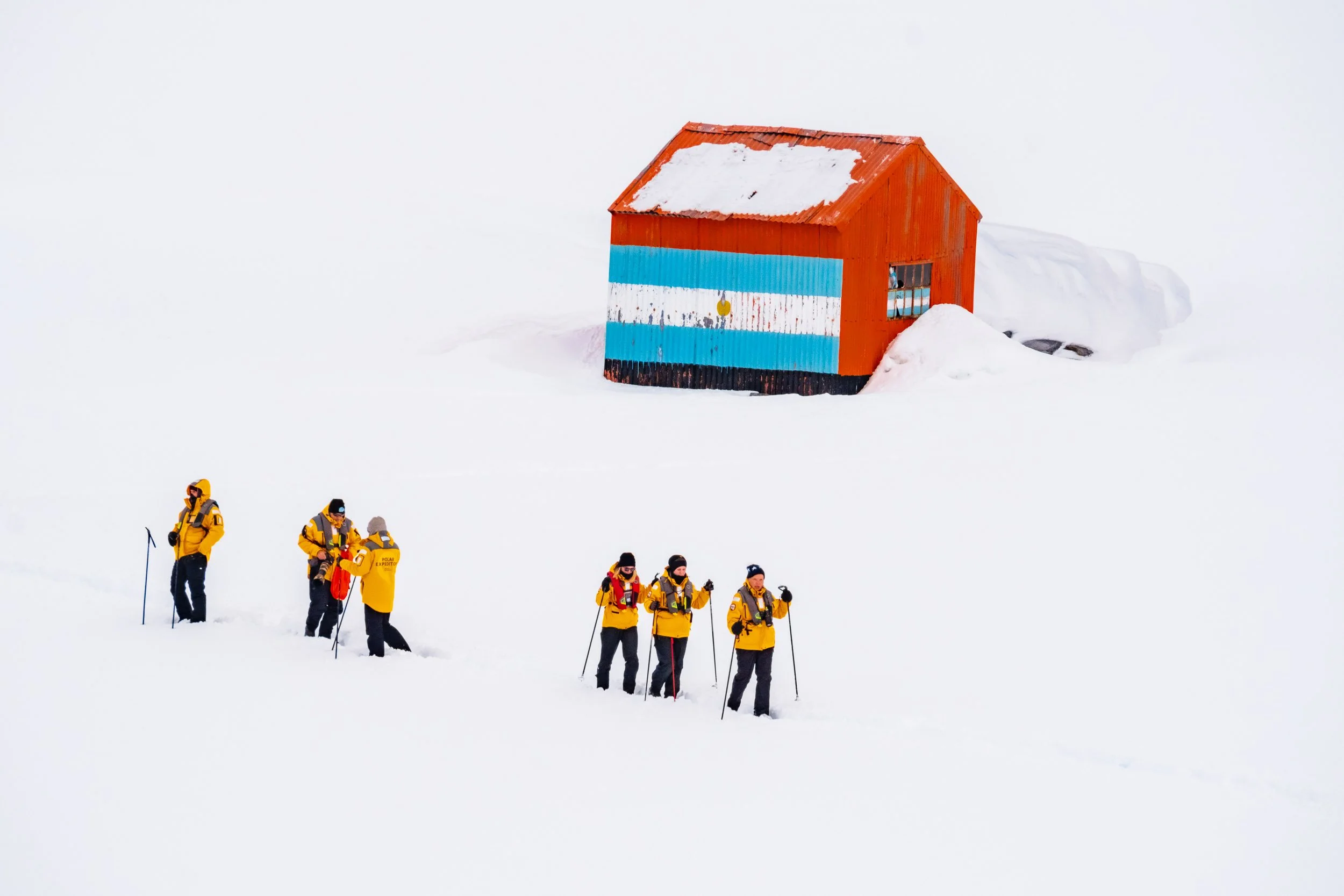
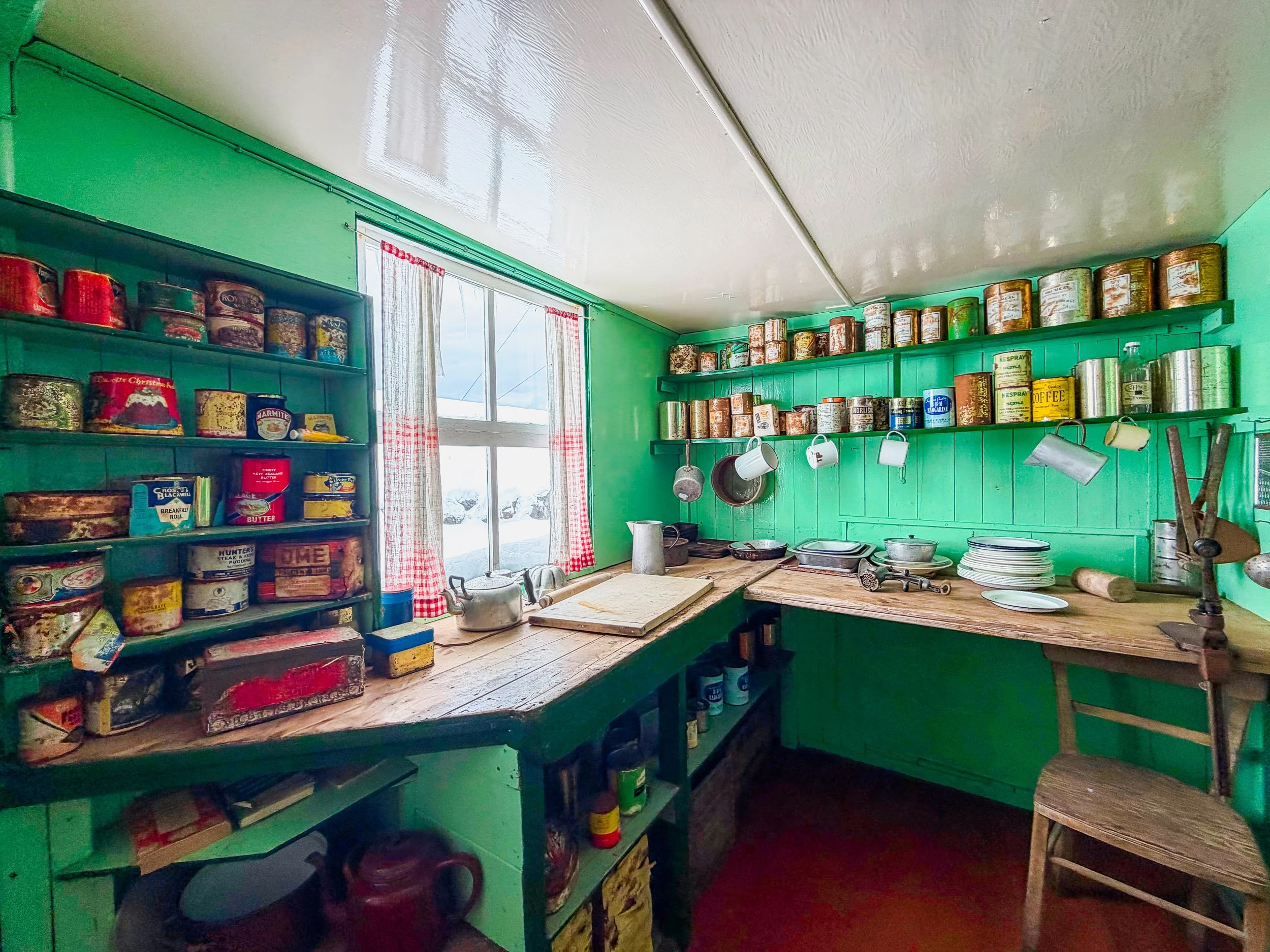
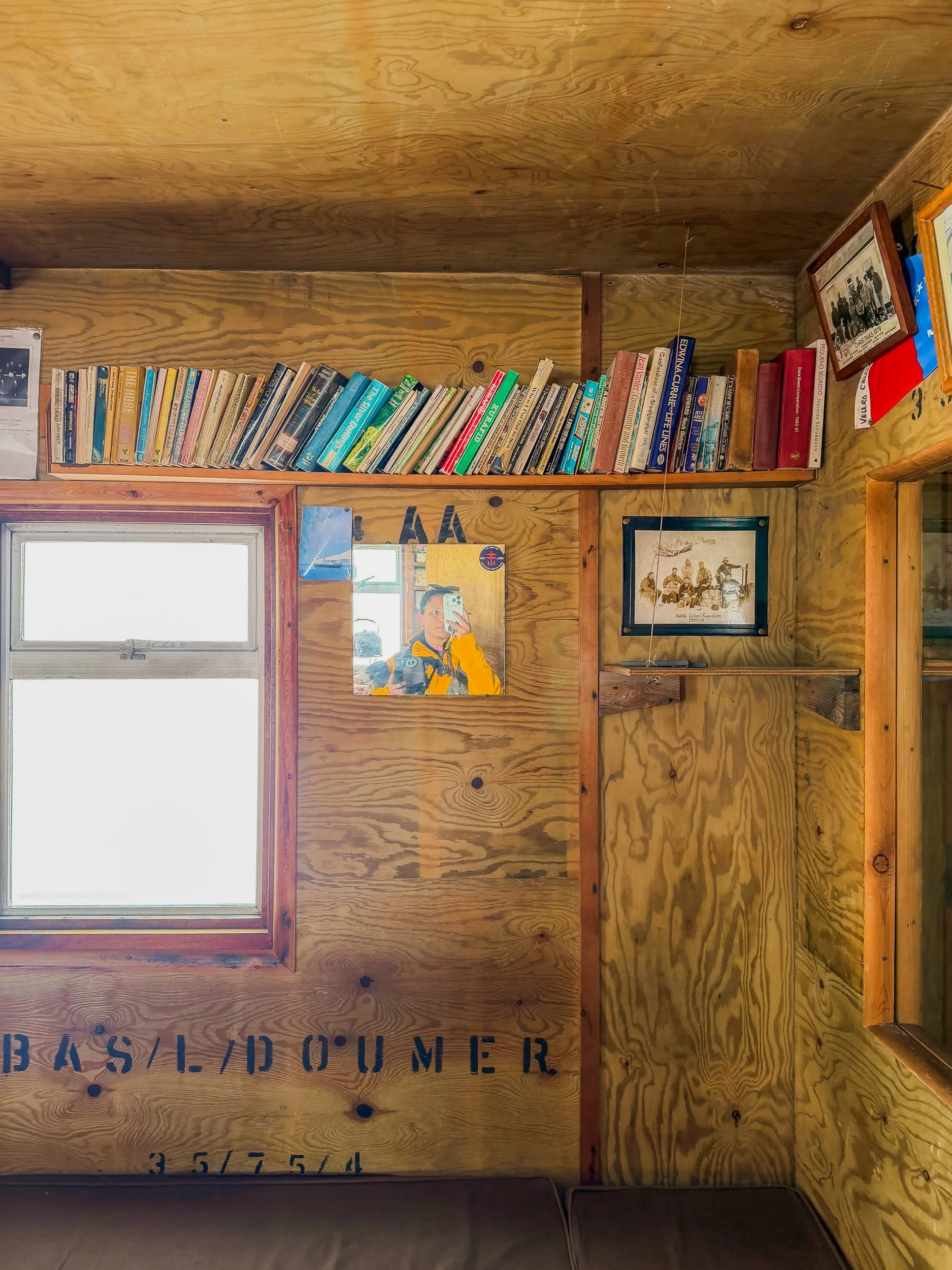
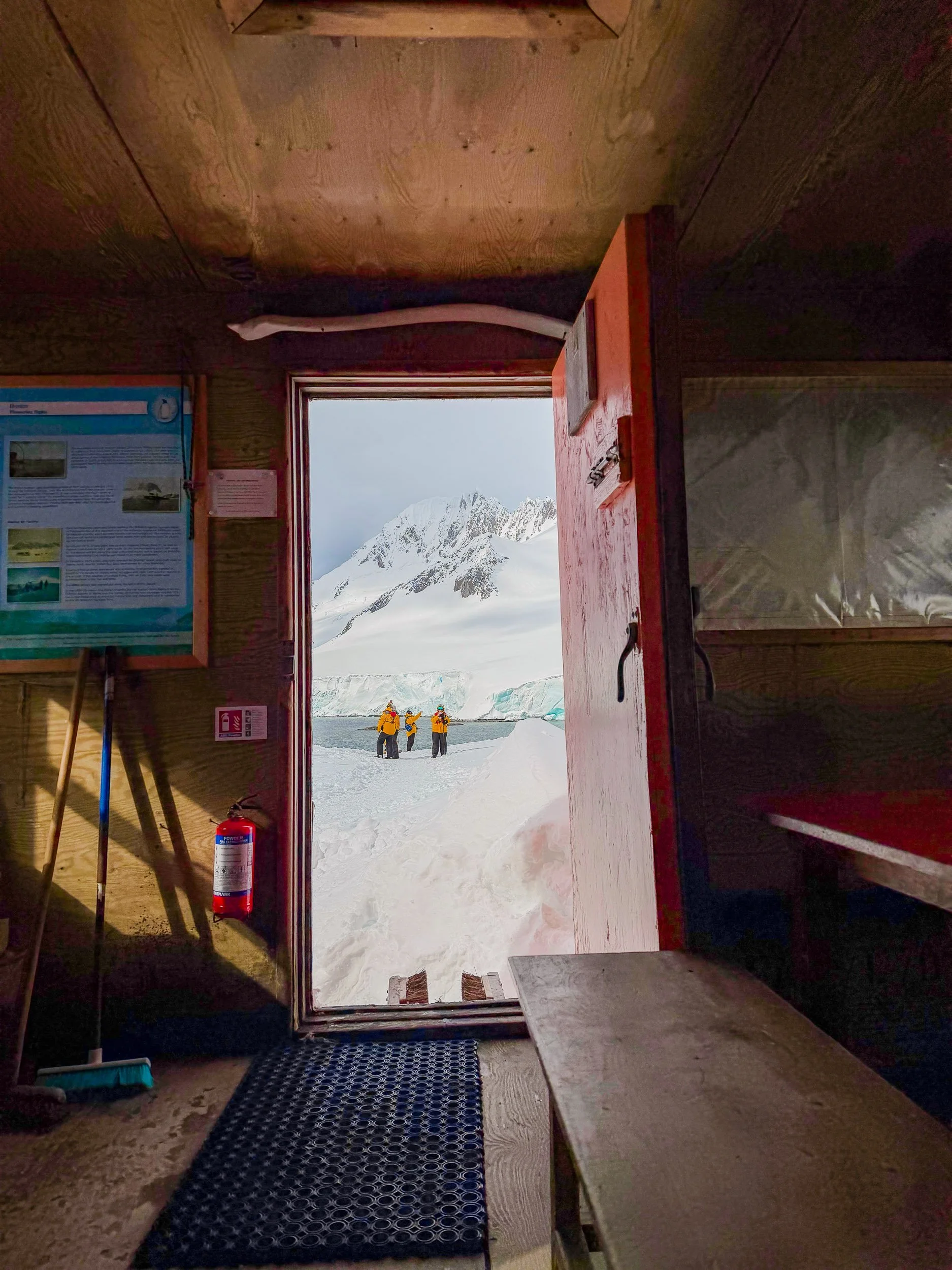
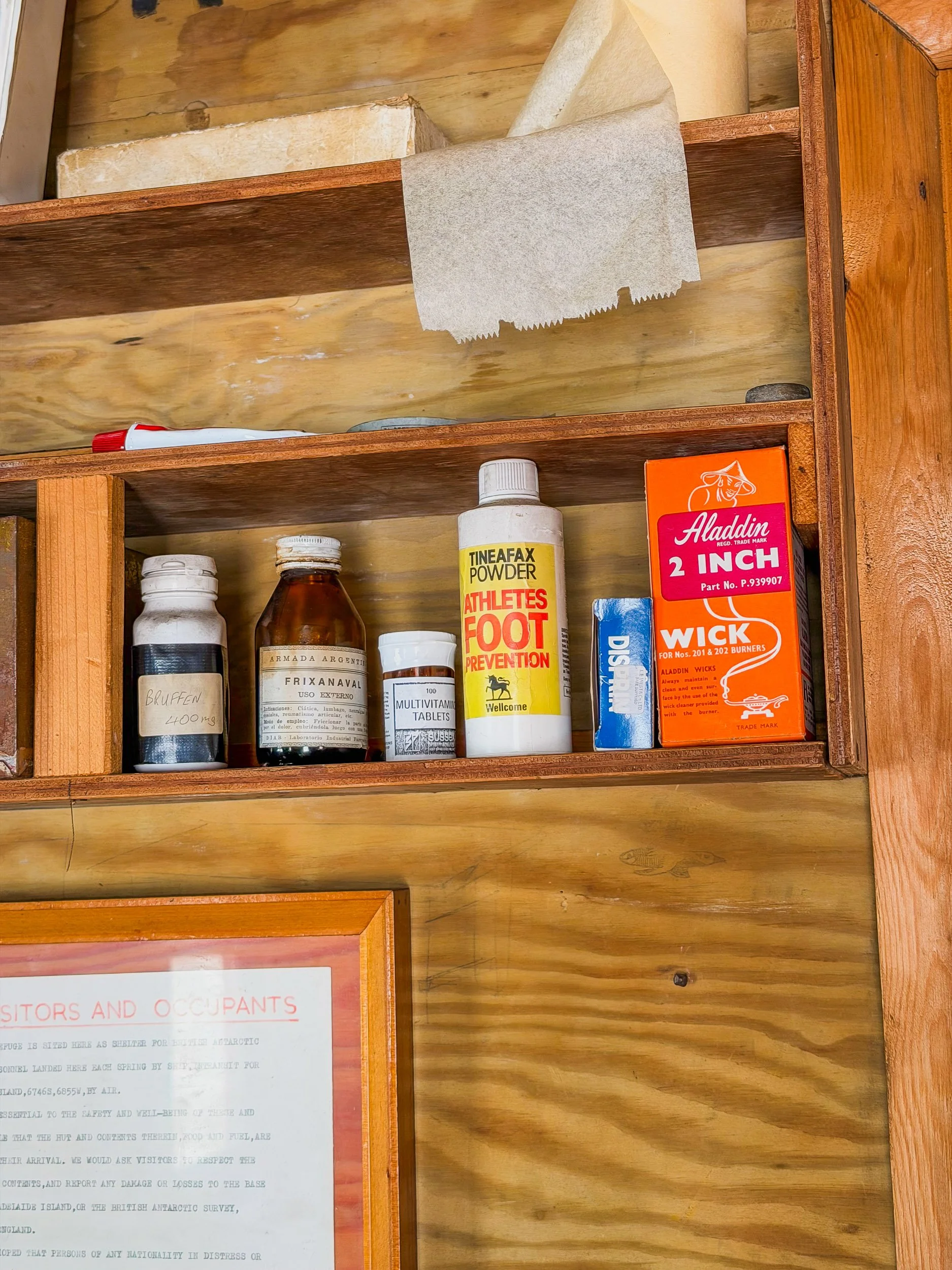
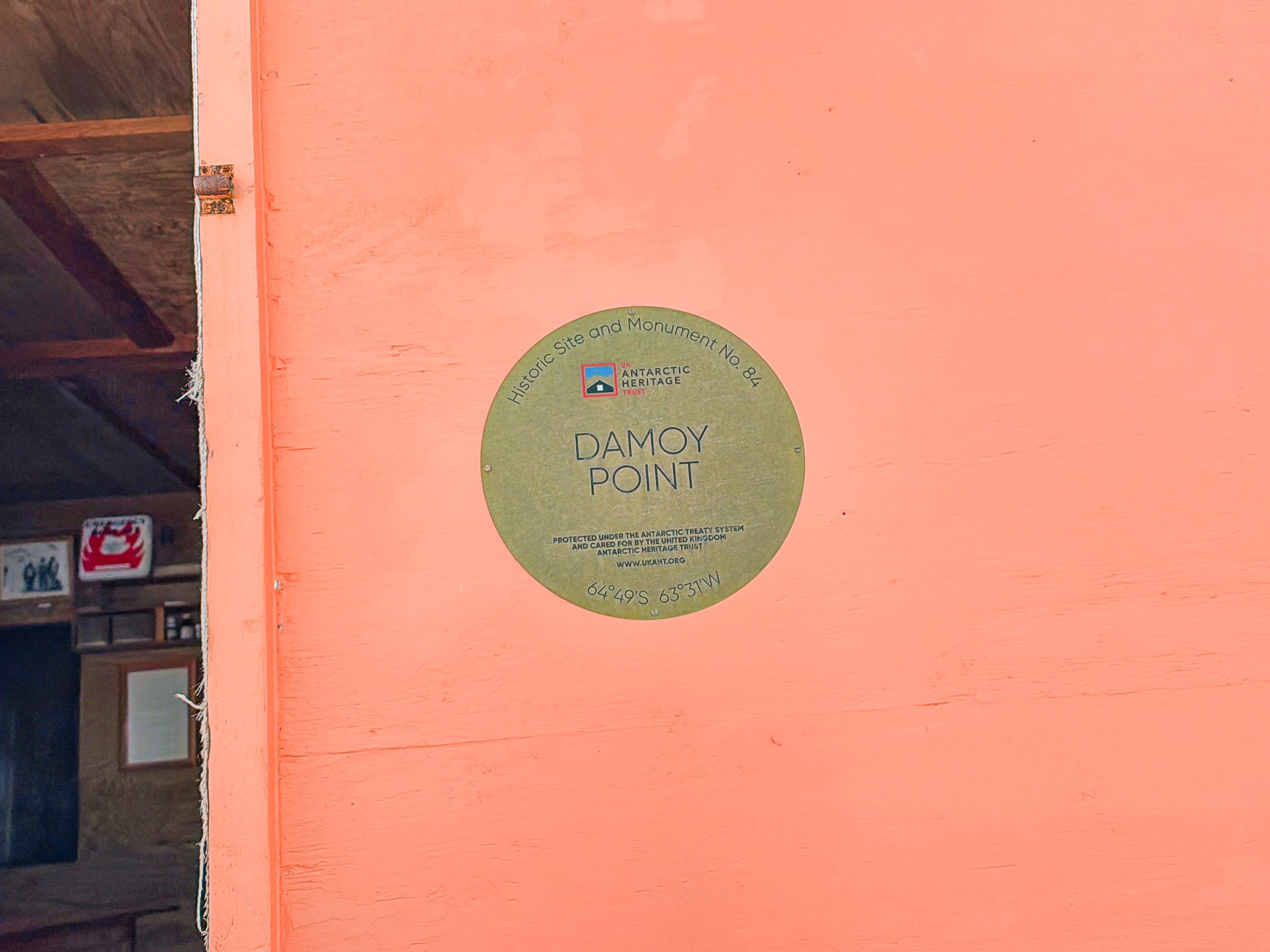
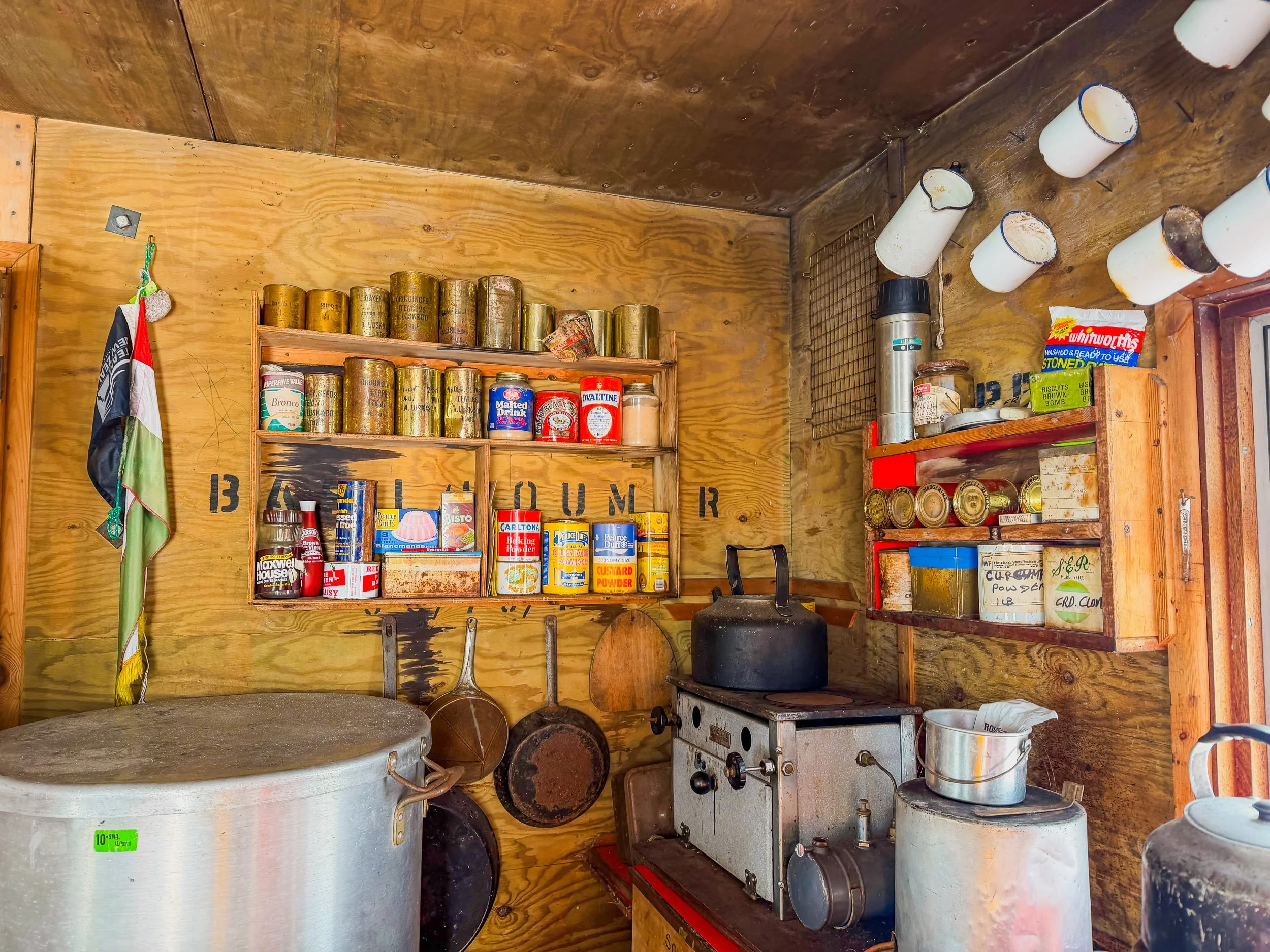
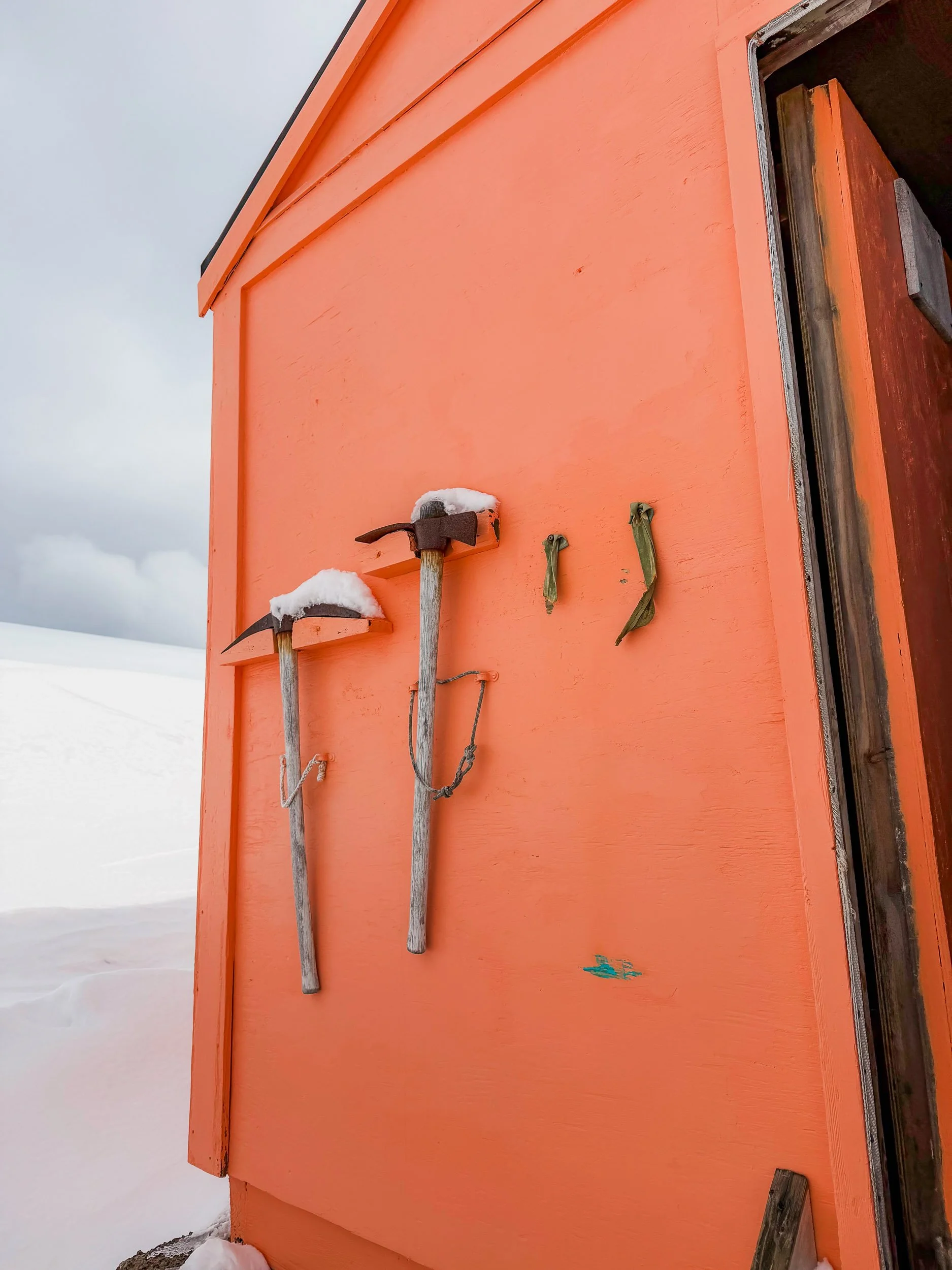
Here, the famed Damoy Hut can be found, a bright orange hut once dubbed the world’s most southerly waiting room. From 1975 to 1993, it served as a shelter and seasonal air transit facility for scientists (including those who discovered the hole in our ozone layer) en route to southern research stations. The hut was well stocked with (mostly canned) food, books, and board games, and had enough bunk beds to accommodate 15 people. Sometimes researchers would get stranded here for weeks at a time when weather conditions were unsafe.
There was also a 400-meter glacial skiway nearby that enabled planes to land.
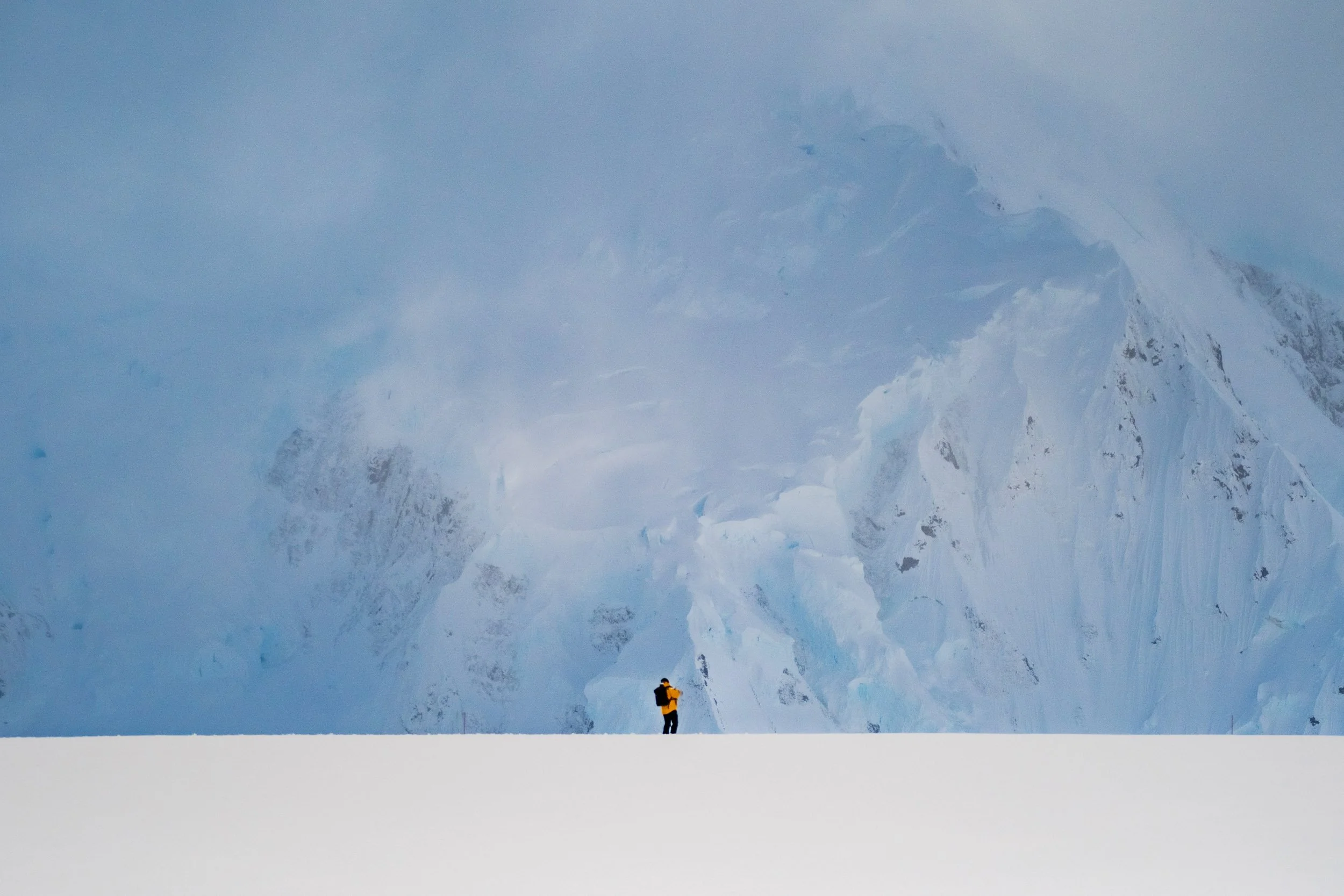
The skiway
Today, it is another historic site managed by the UKAHT. Entering the hut felt like stepping back in time, since most of the things left there by previous occupants were preserved and untouched. It was very fascinating to think how this small and humble hut was an integral part of humanity’s scientific quests in Antarctica.
Portal Point
Up until that point, we’d only been visiting islands, but on our last day in the Antarctic Peninsula, we finally stepped on continental land! It was also the last landing we made.
Portal Point was one of the few places where visitors could make continental landings. Some adventurers also use this as a jump-off point for further inland explorations. It’s located at the northeastern end of the Reclus Peninsula, serving as the southwestern entrance to Charlotte Bay. In 1956, a refuge hut, Cape Reclus Refuge (which has long since been removed), was built here by the British. A route was consequently established from the hut for easy access to the central plateau of North Graham Land. This led to the area being called a portal or gateway. Aside from the dreamlike views, it is also a popular place to spot Weddell and leopard seals, petrels, shags, chinstrap and Gentoo penguins, and even humpback whales.
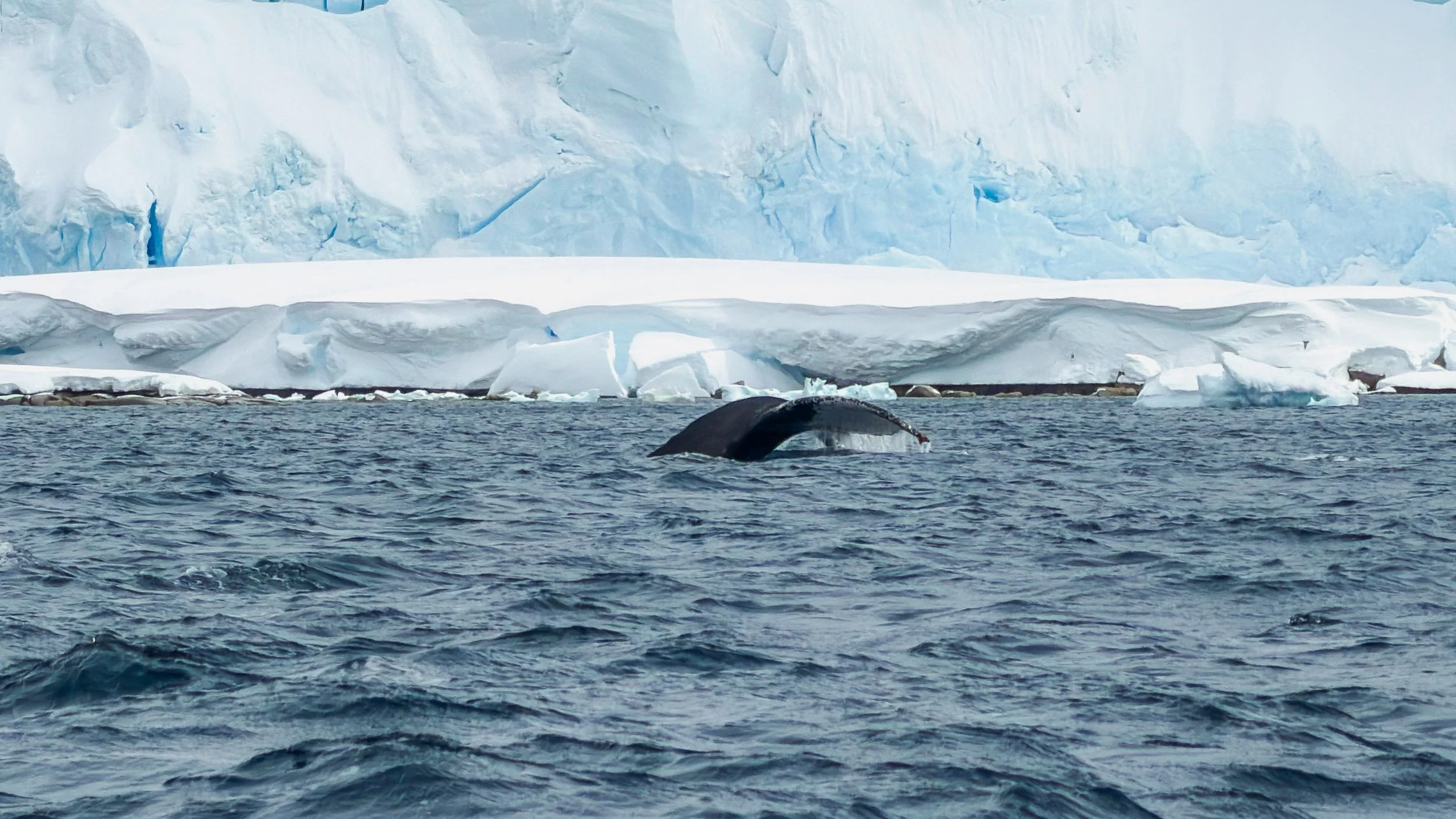
A whale was swimming so close to our boat!
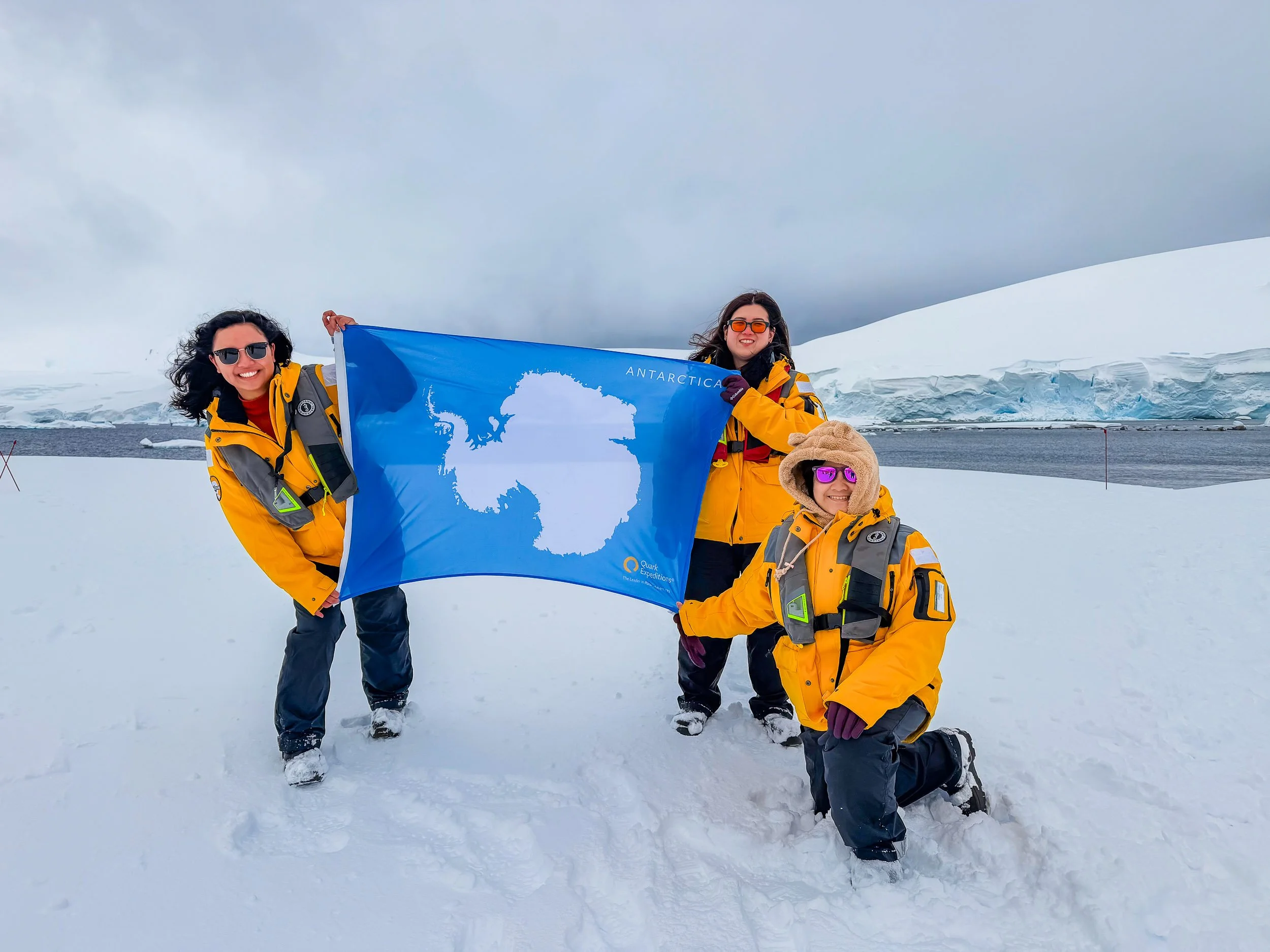
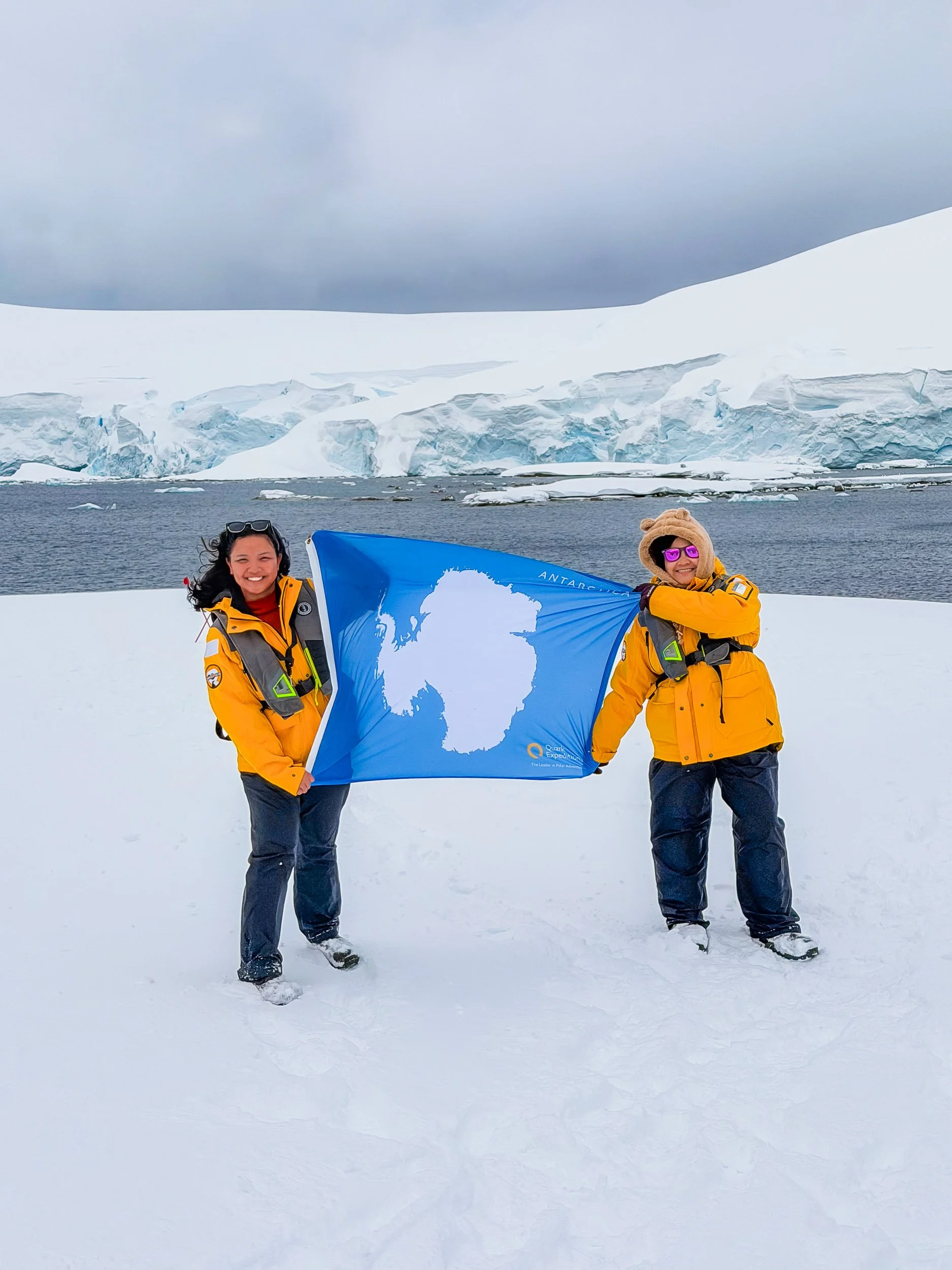
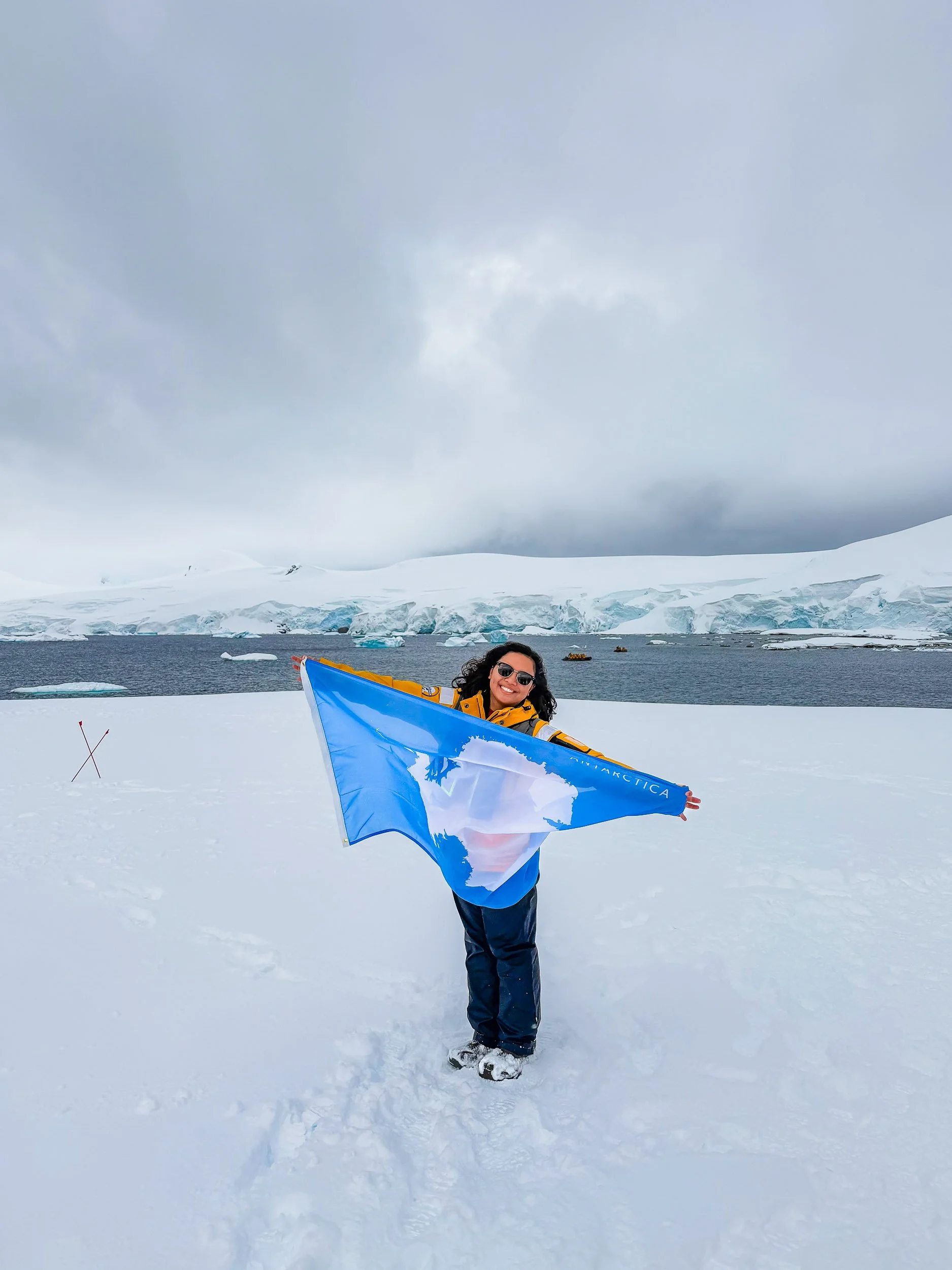
Once we landed, the expedition team whipped up the Antarctic flag for us to take photos with. Now we can officially say we’ve set foot in Antarctica!
Cierva Cove & Base Primavera
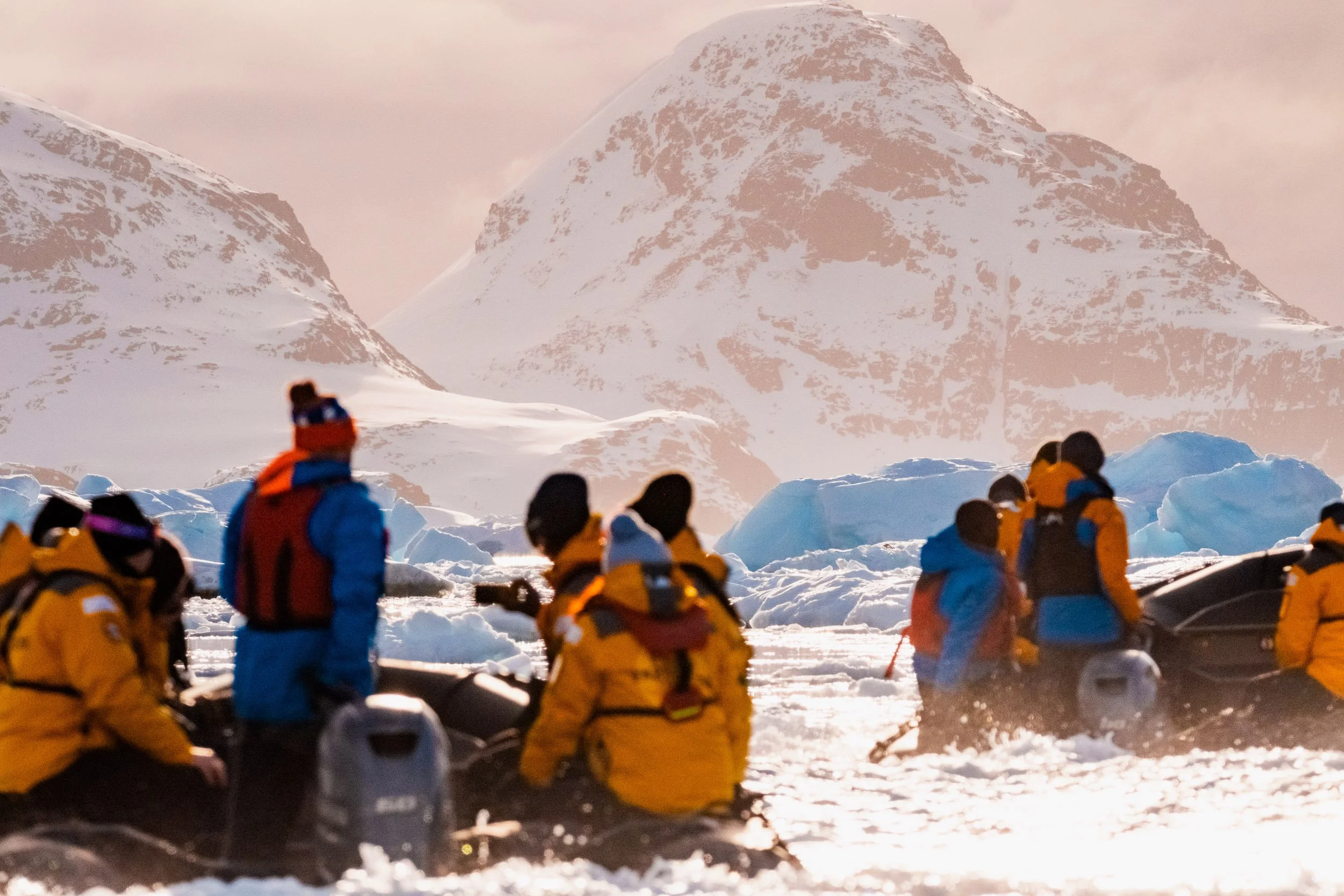
Jarryd, the lead photography guide of the voyage, arranged a photography zodiac cruise for our last excursion. Of course, I signed up for it. It was originally supposed to be only one boat, but ended up being three because many people were also interested. We were the last ones to leave the ship, and the photography guide on our zodiac was Kris.
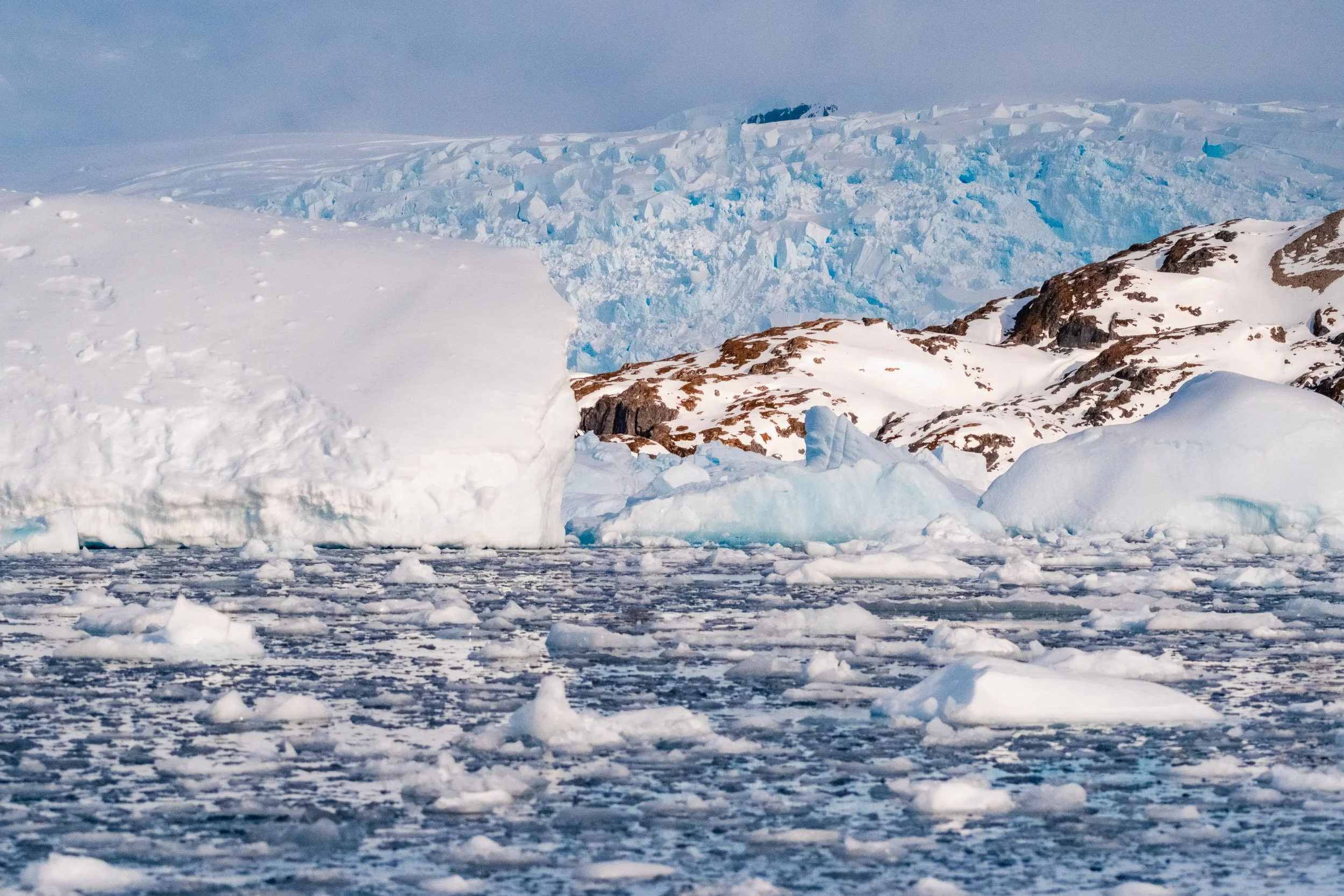
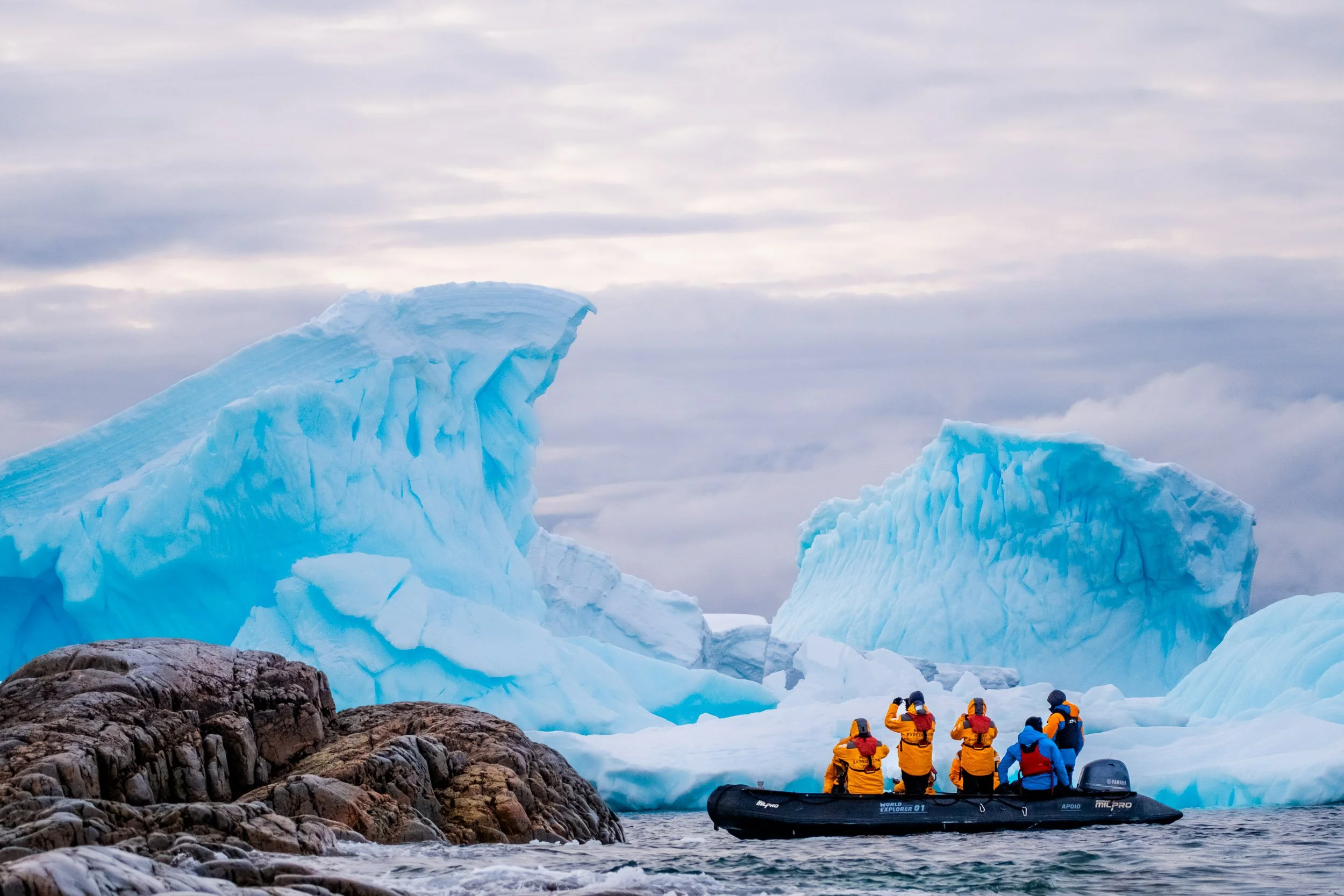
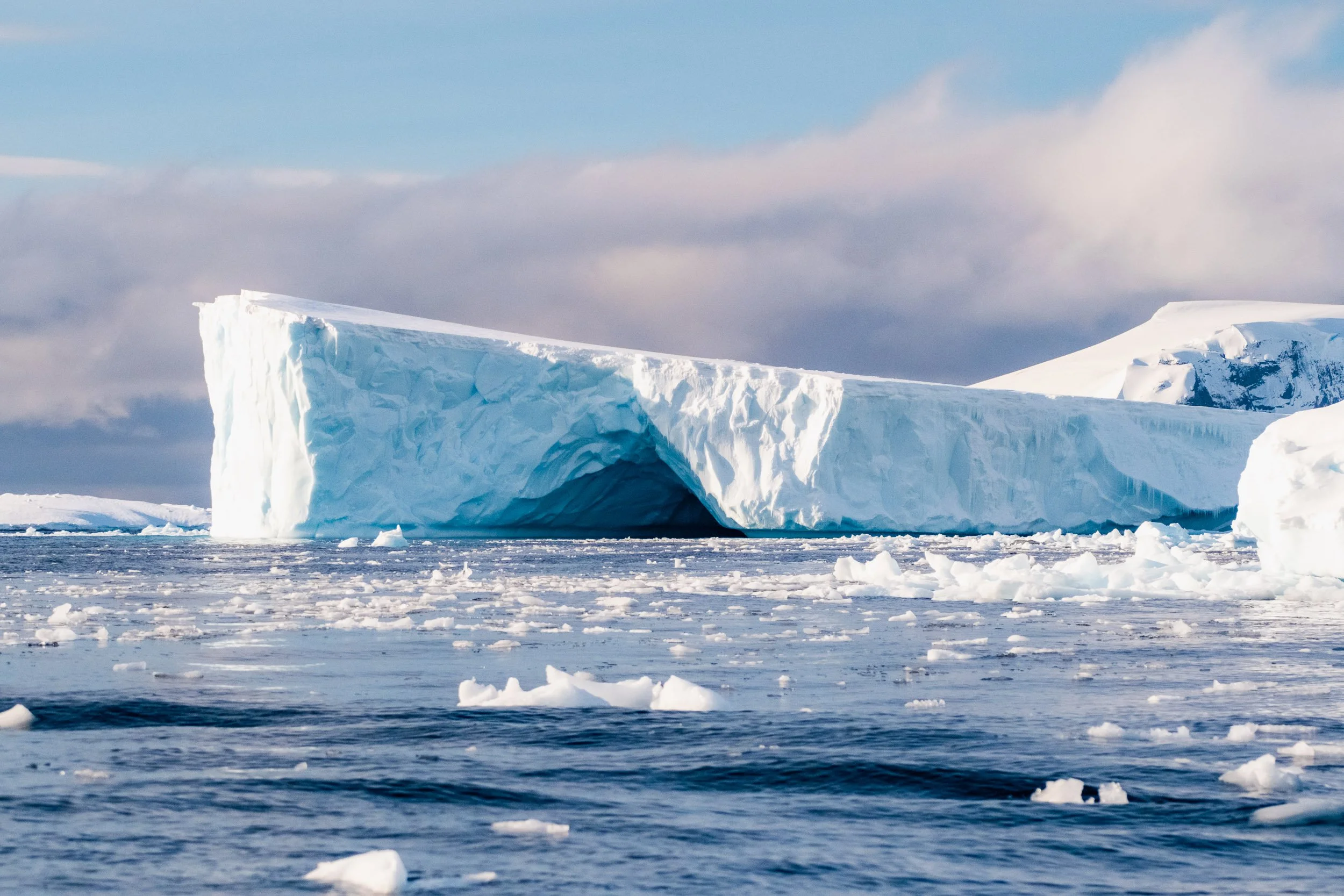
Our final stop was Cierva Cove, a secluded and protected area named after Spanish engineer Juan de la Cierva. He invented the autogyro, a type of rotorcraft that paved the way for modern helicopters. The cove lies at the northern end of Hughes Bay and opens up to the Gerlache Strait. It features an alluring topography defined by icebergs and sea ice, largely attributed to a glacier that continually calves at the back of the cove. It is one of the most biodiverse places in Antarctica due to abundant vegetation and overall hospitable conditions that allow life to thrive.
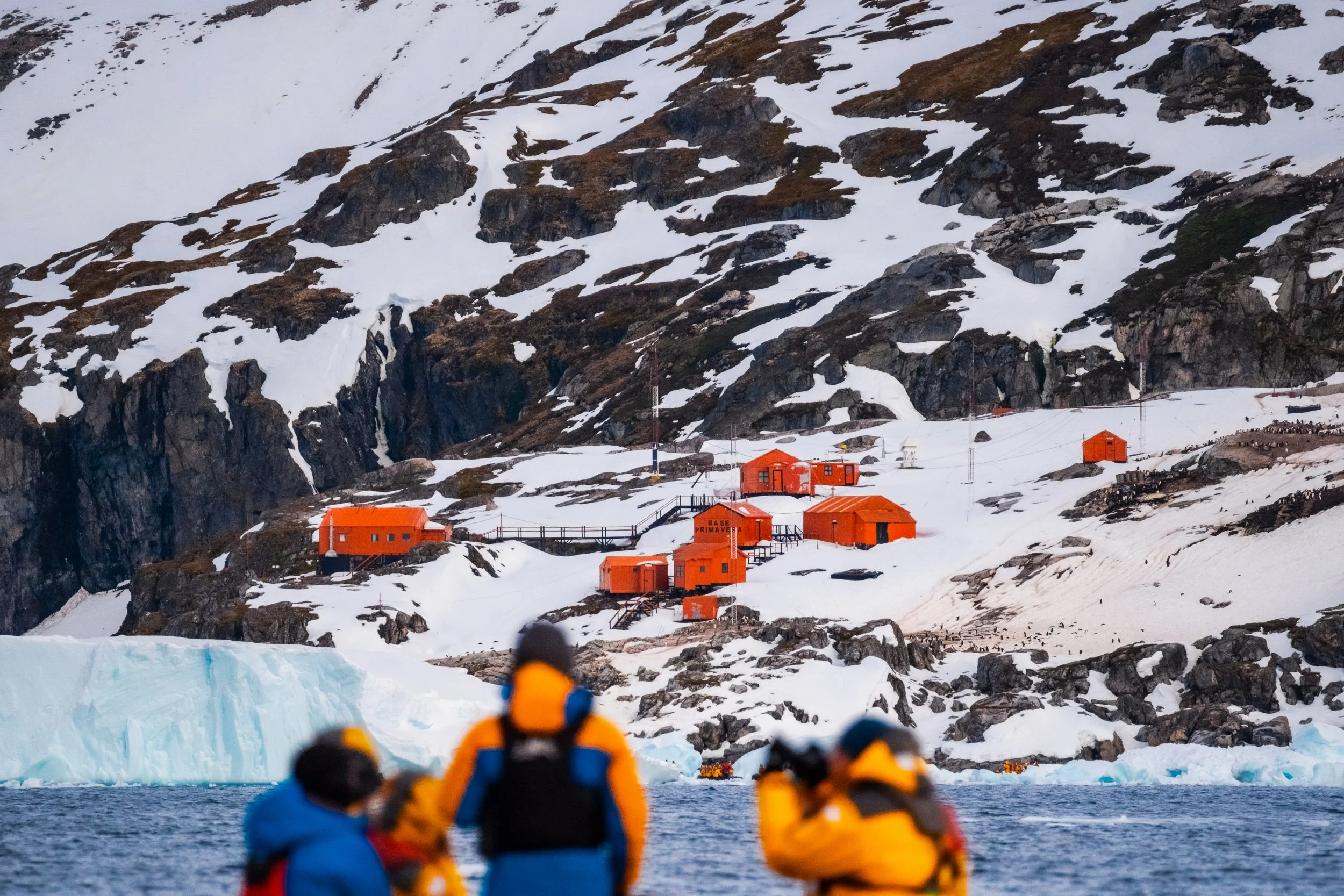
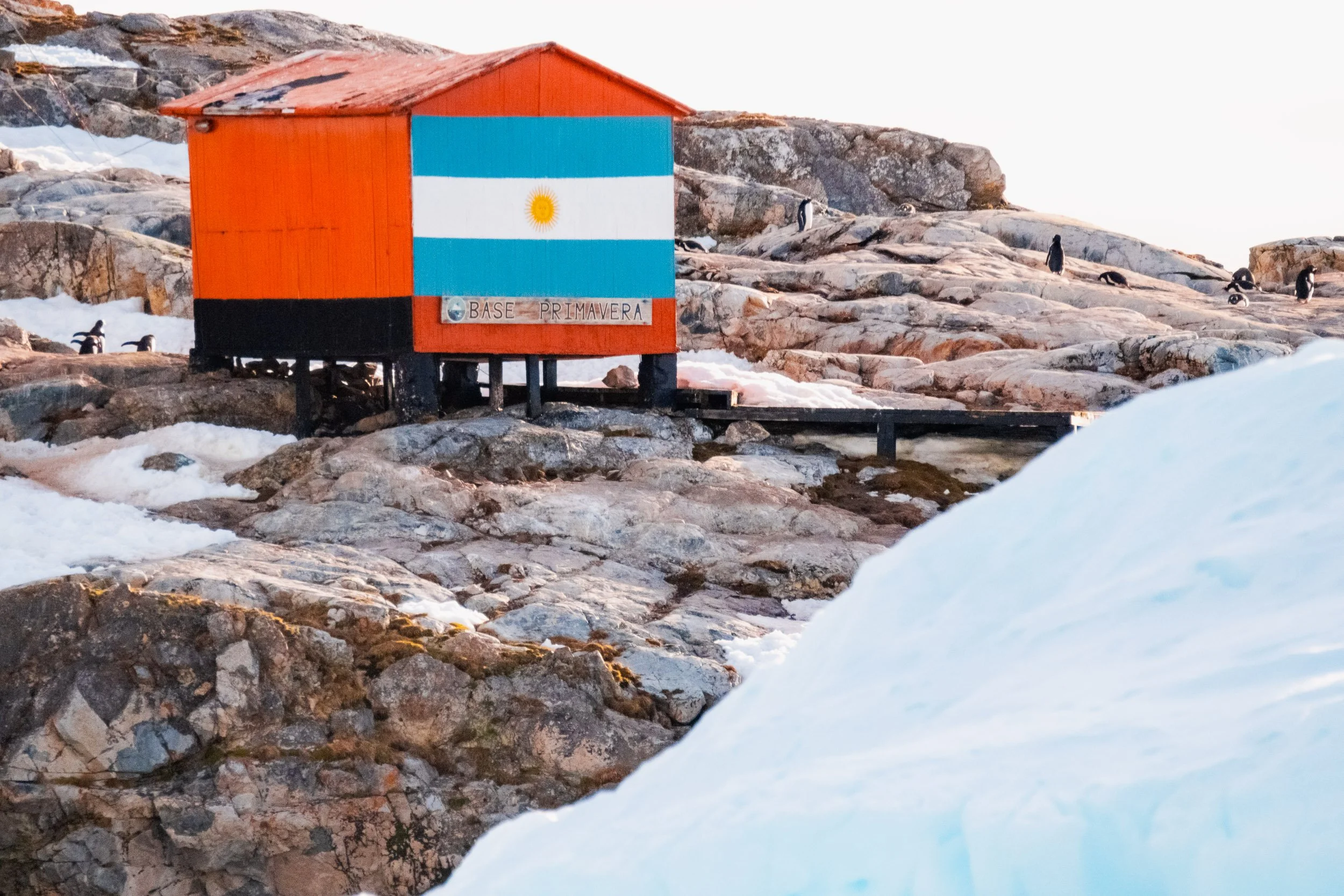
The bright red buildings of the Argentinian Base Primavera are also pretty hard to miss, in contrast to the gray, rocky landscape on which it sits. It’s a scientific research station established in 1977 that still operates to this day during the summer months. They don’t permit visitors, so we just admired it from afar.
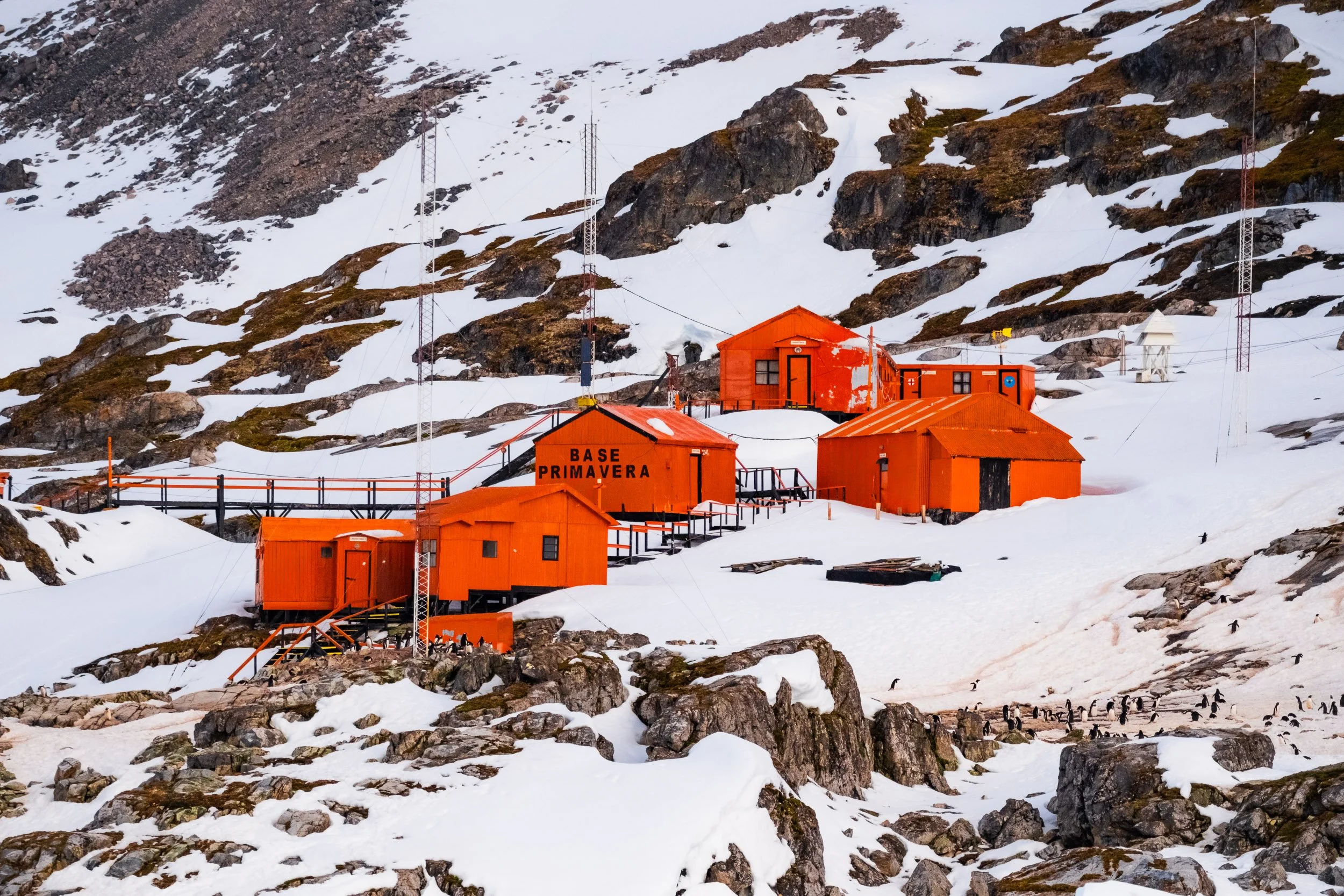
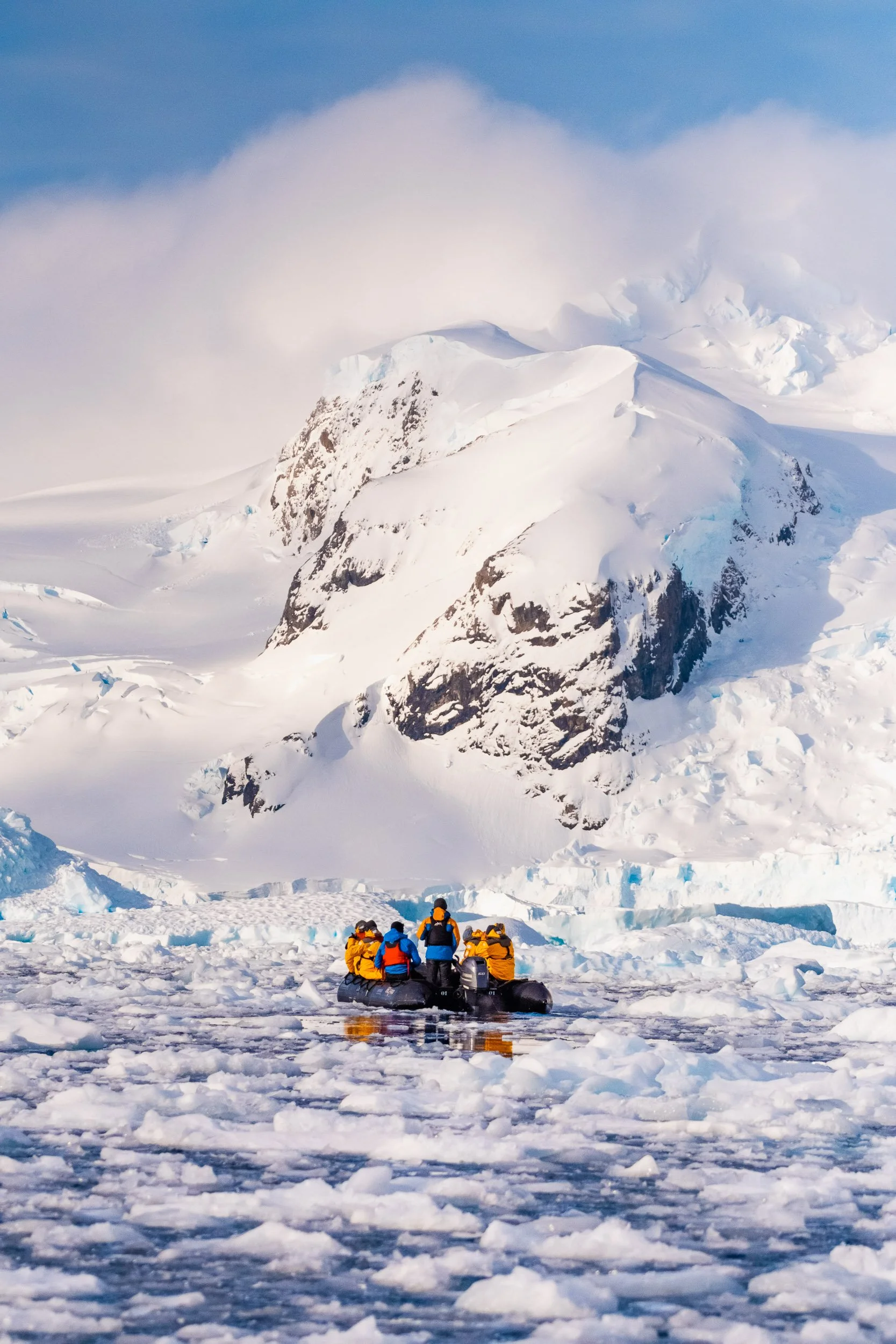
As we threaded through ice-filled waters, we also saw chinstrap penguins sliding down from an iceberg, a sleeping Weddell seal, and Gentoo penguins swimming so close to our boat.
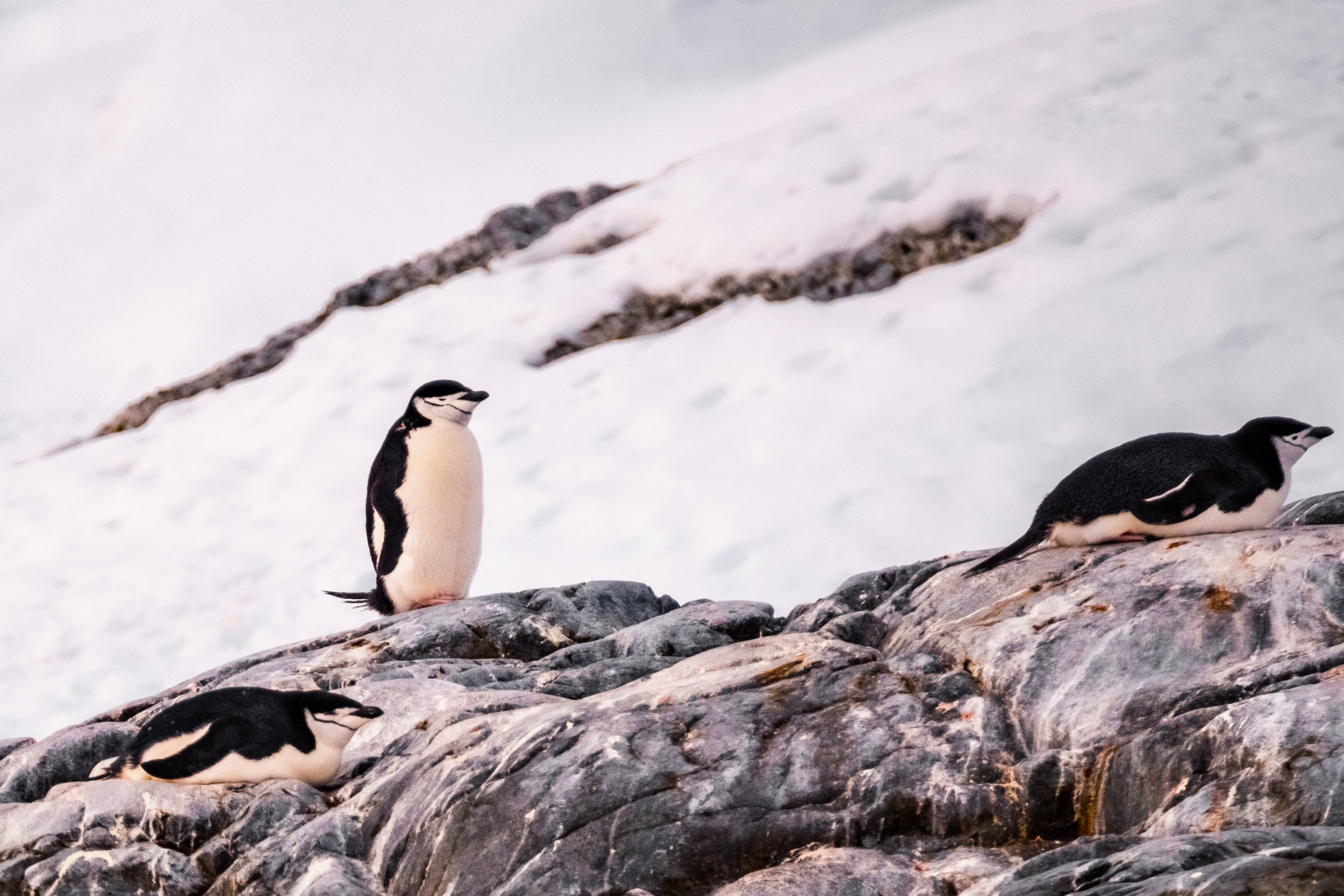
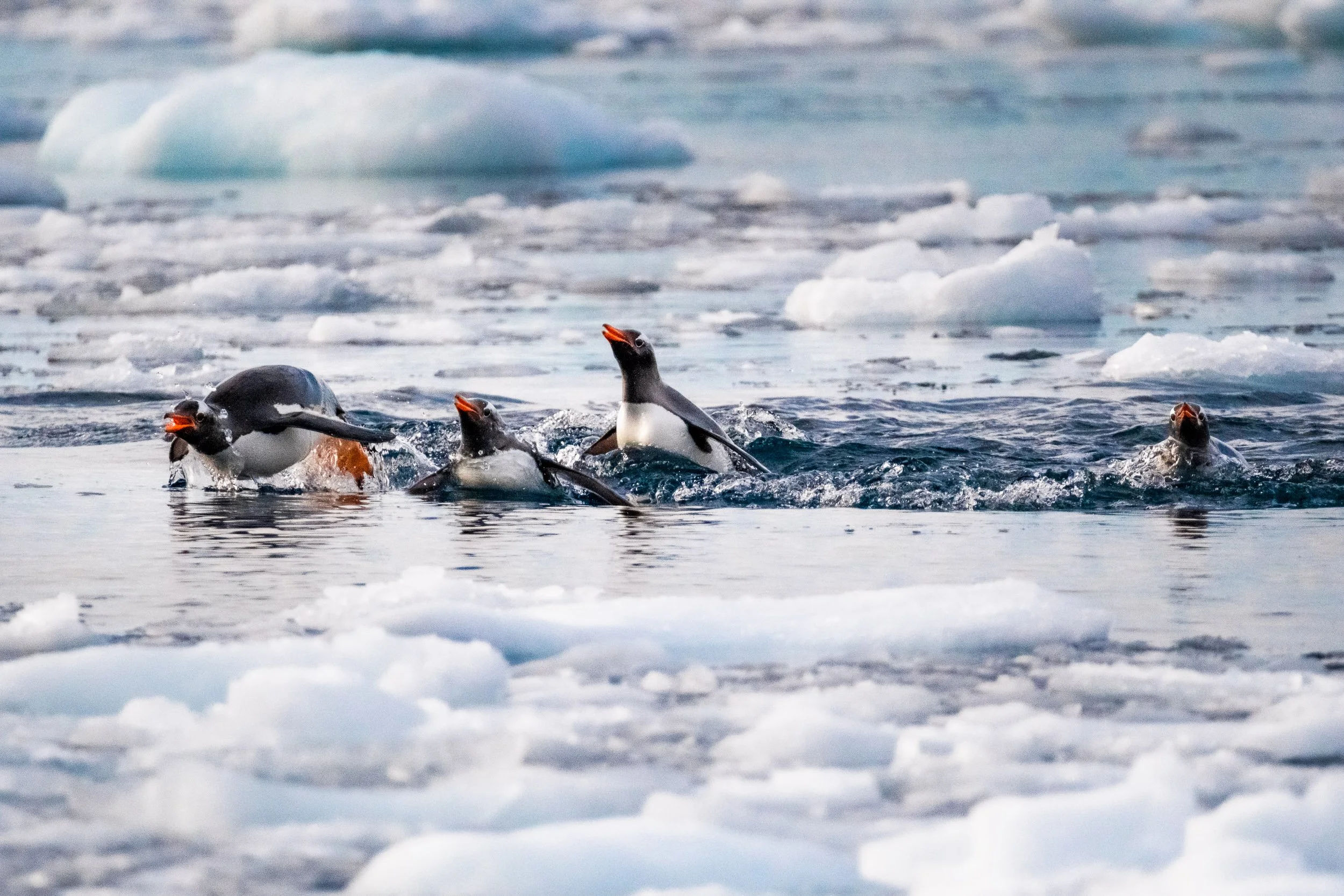
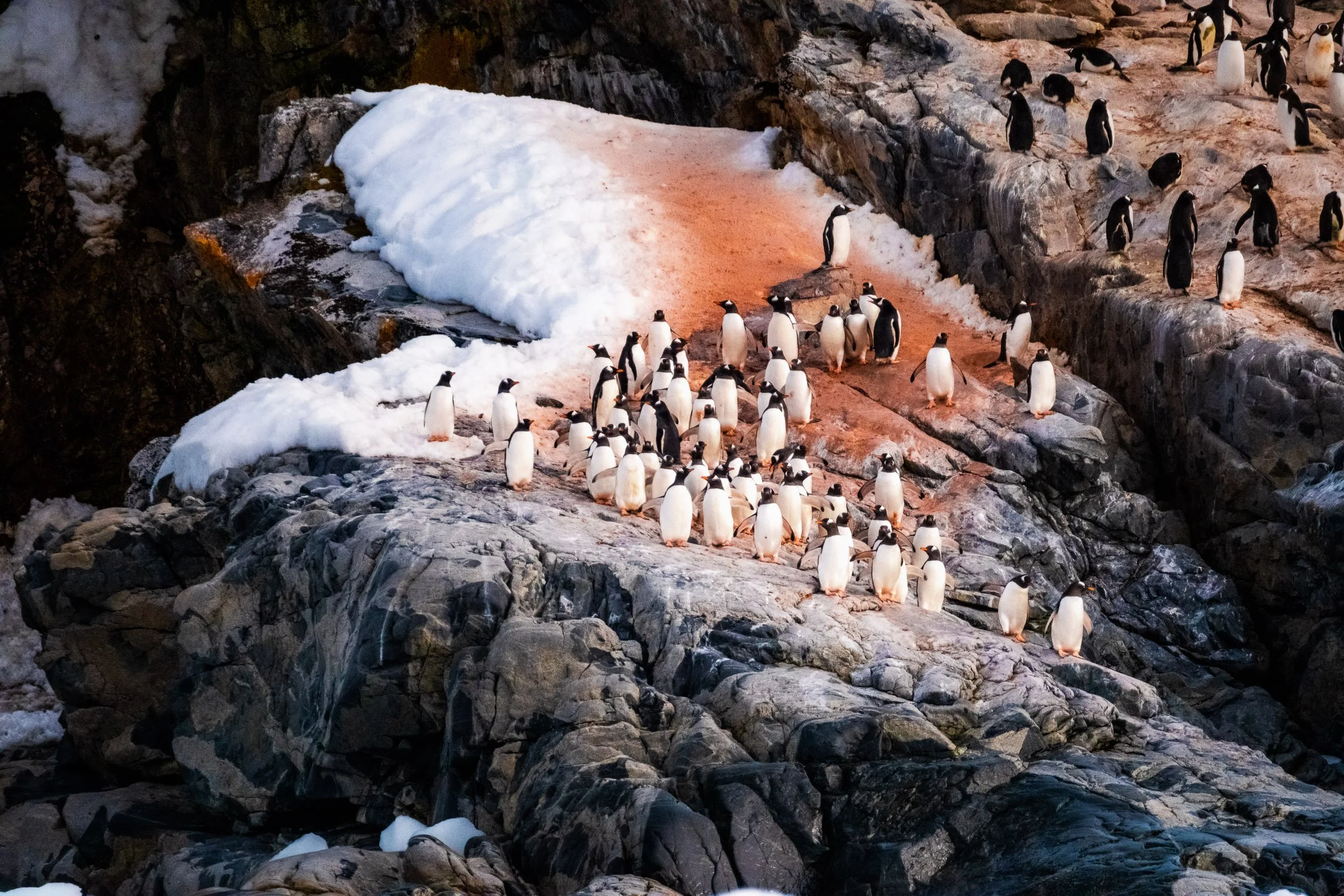
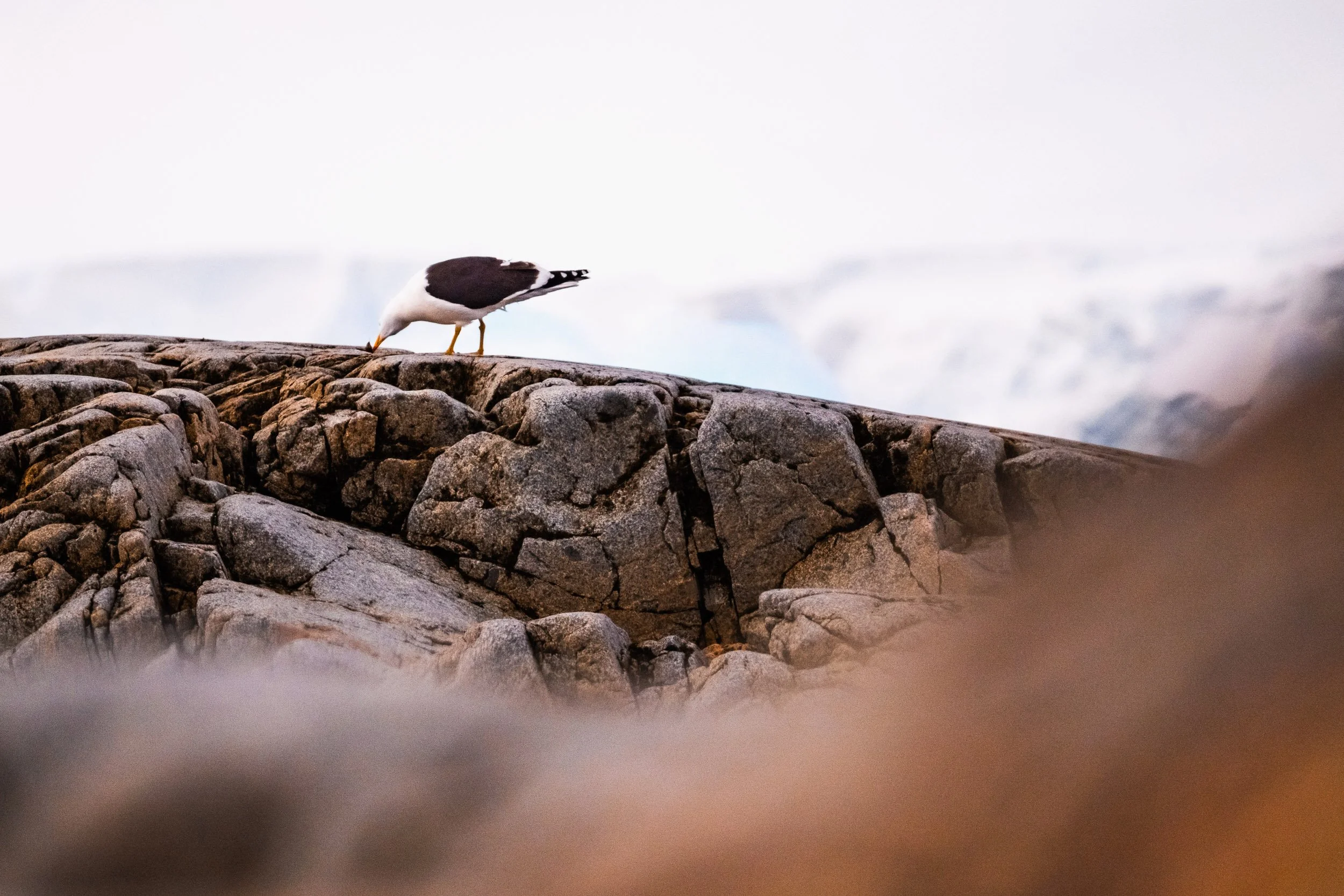
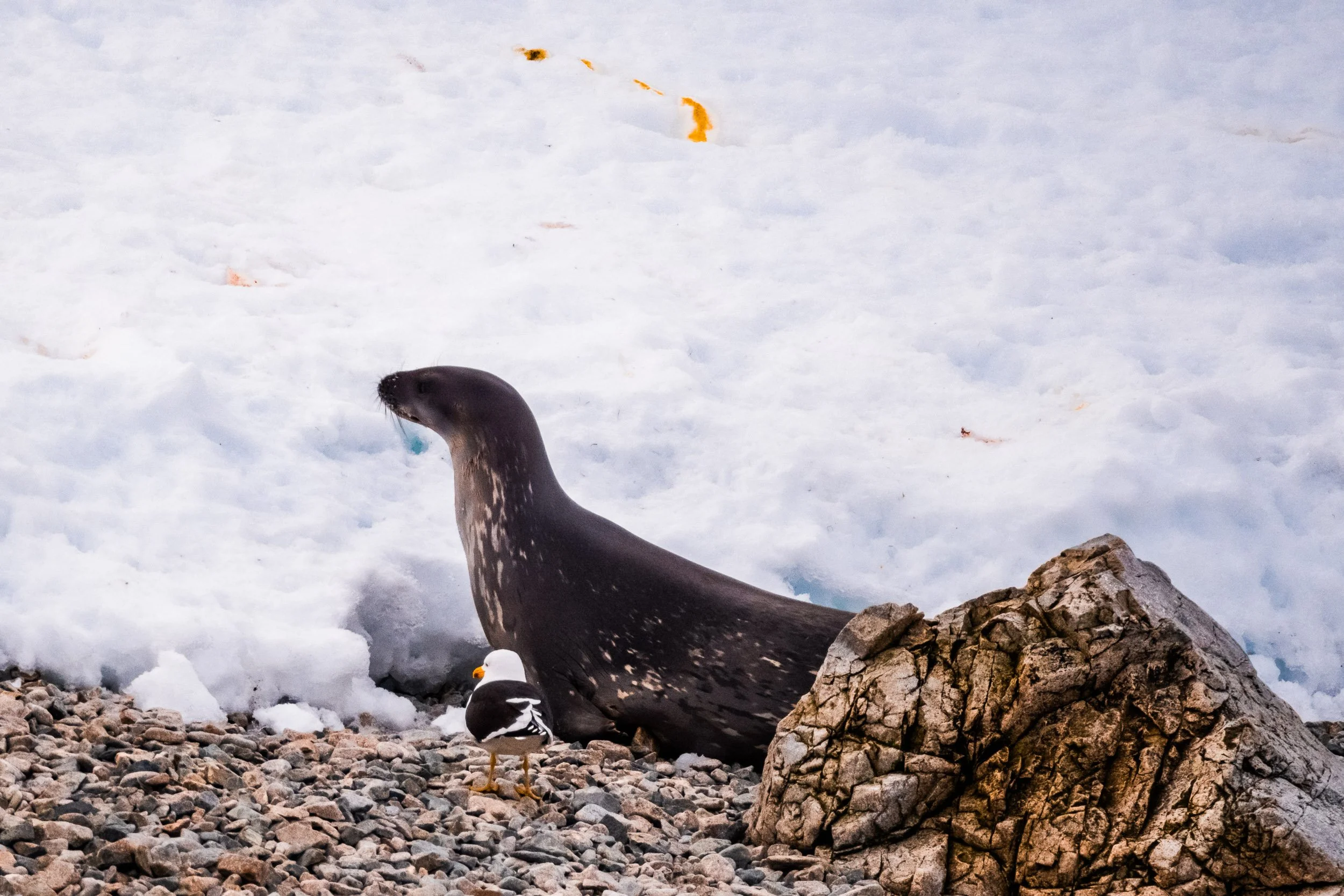
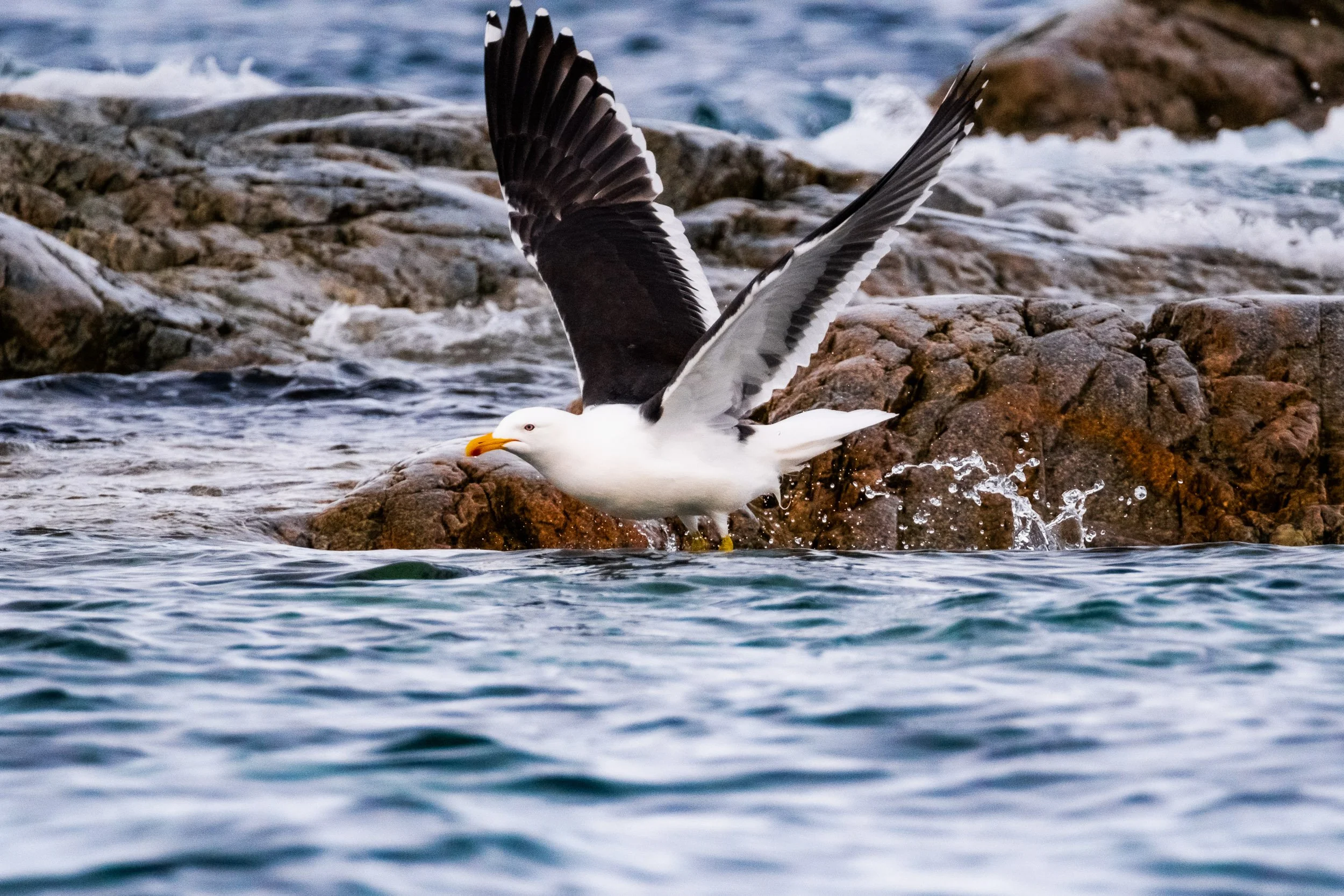
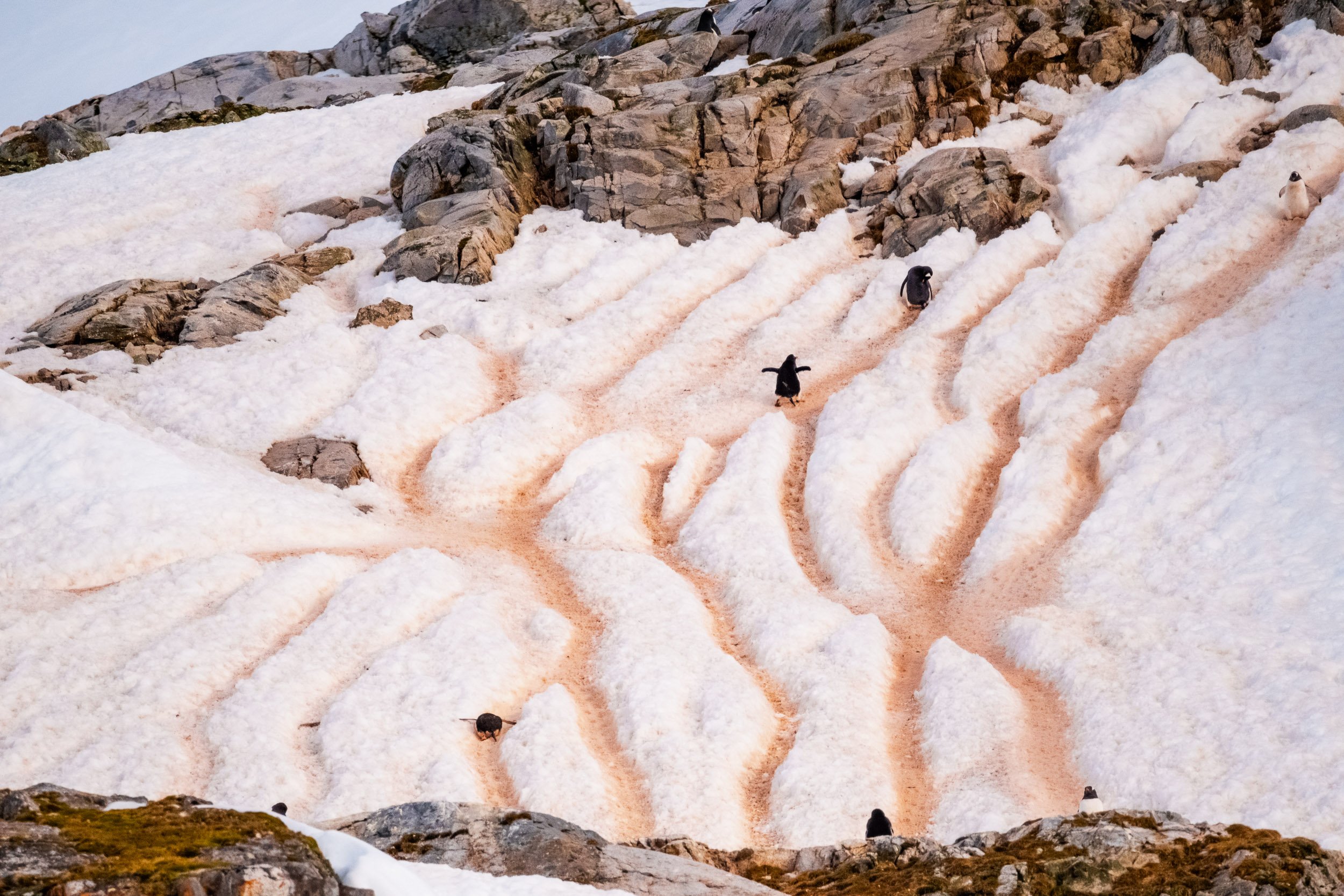
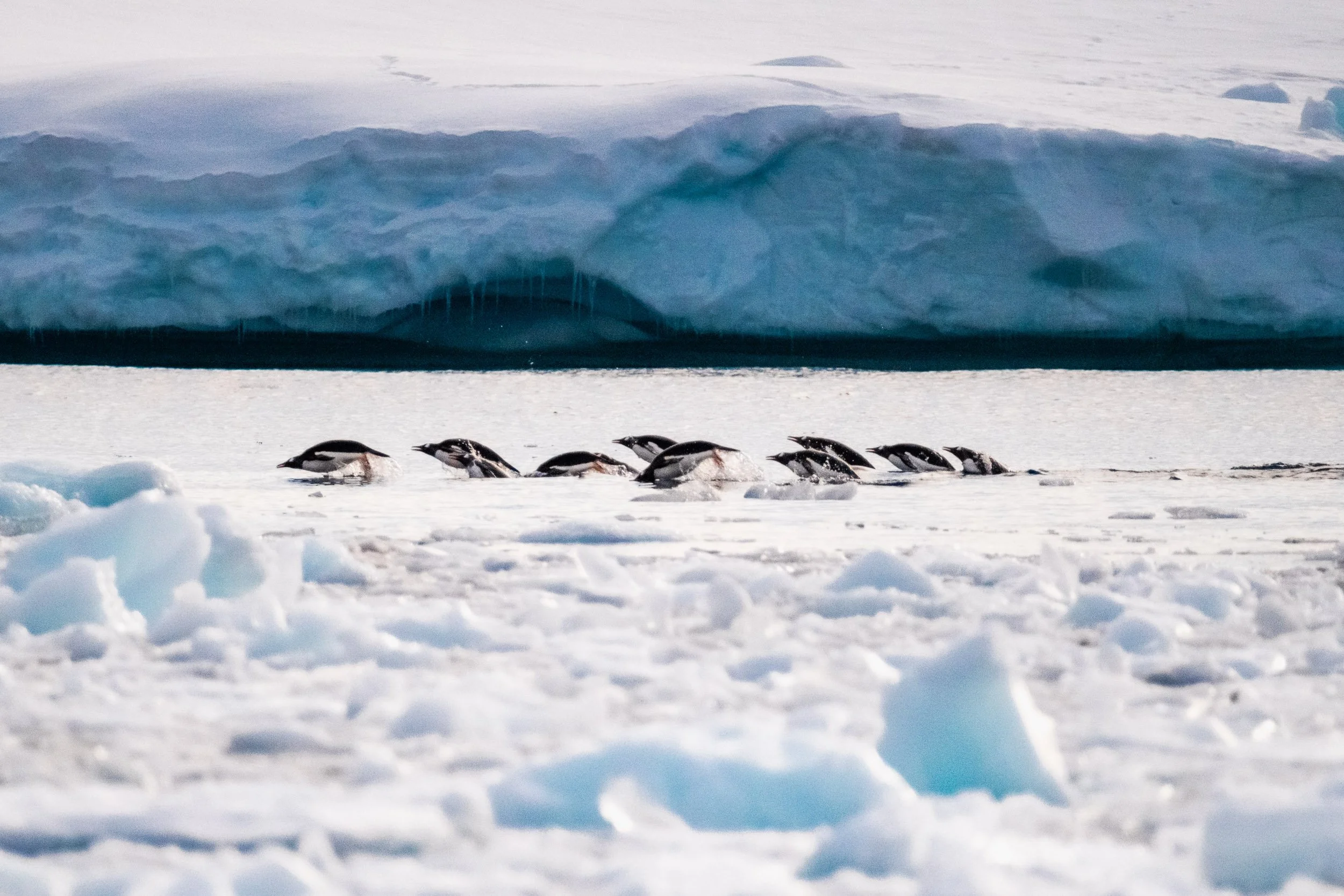
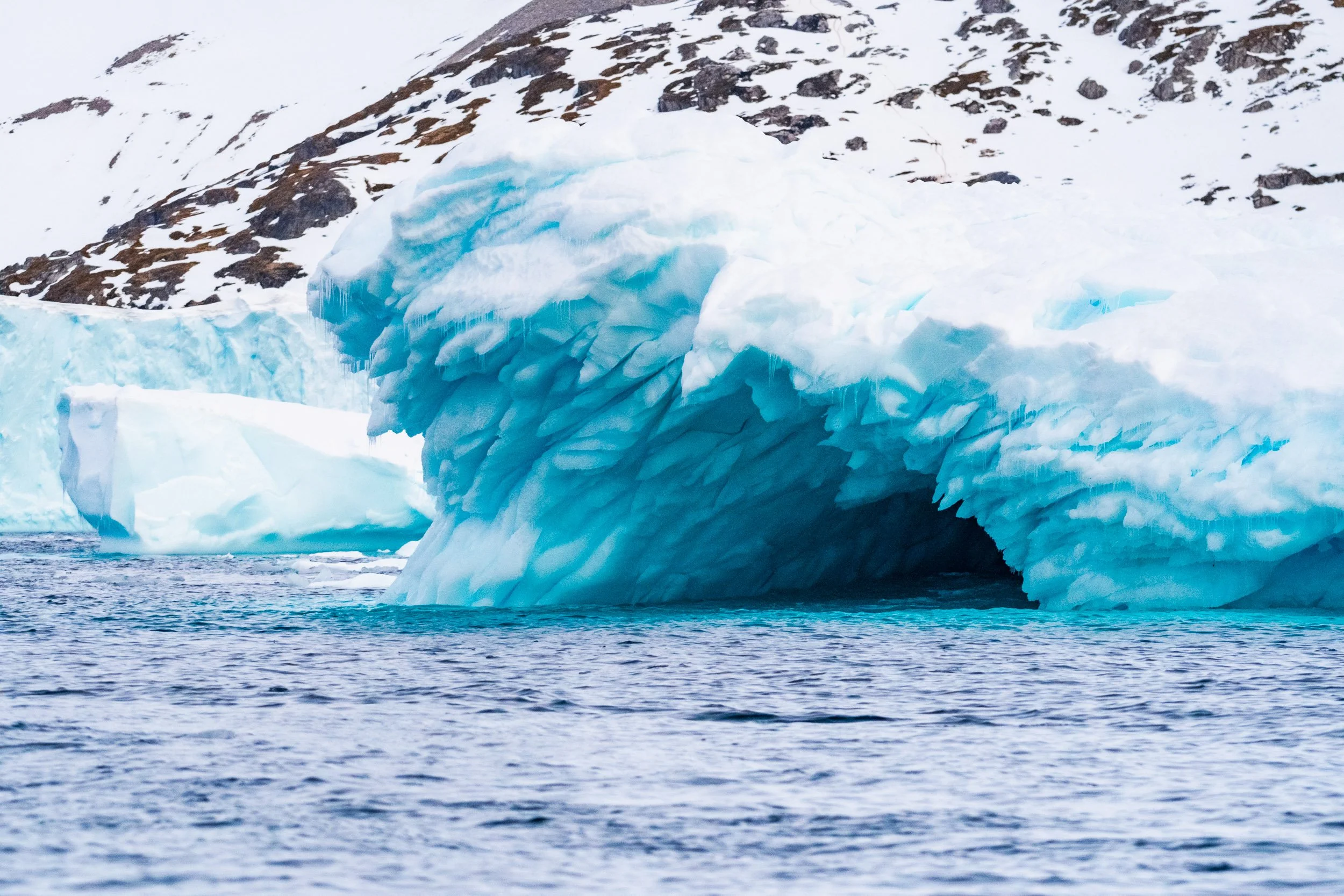
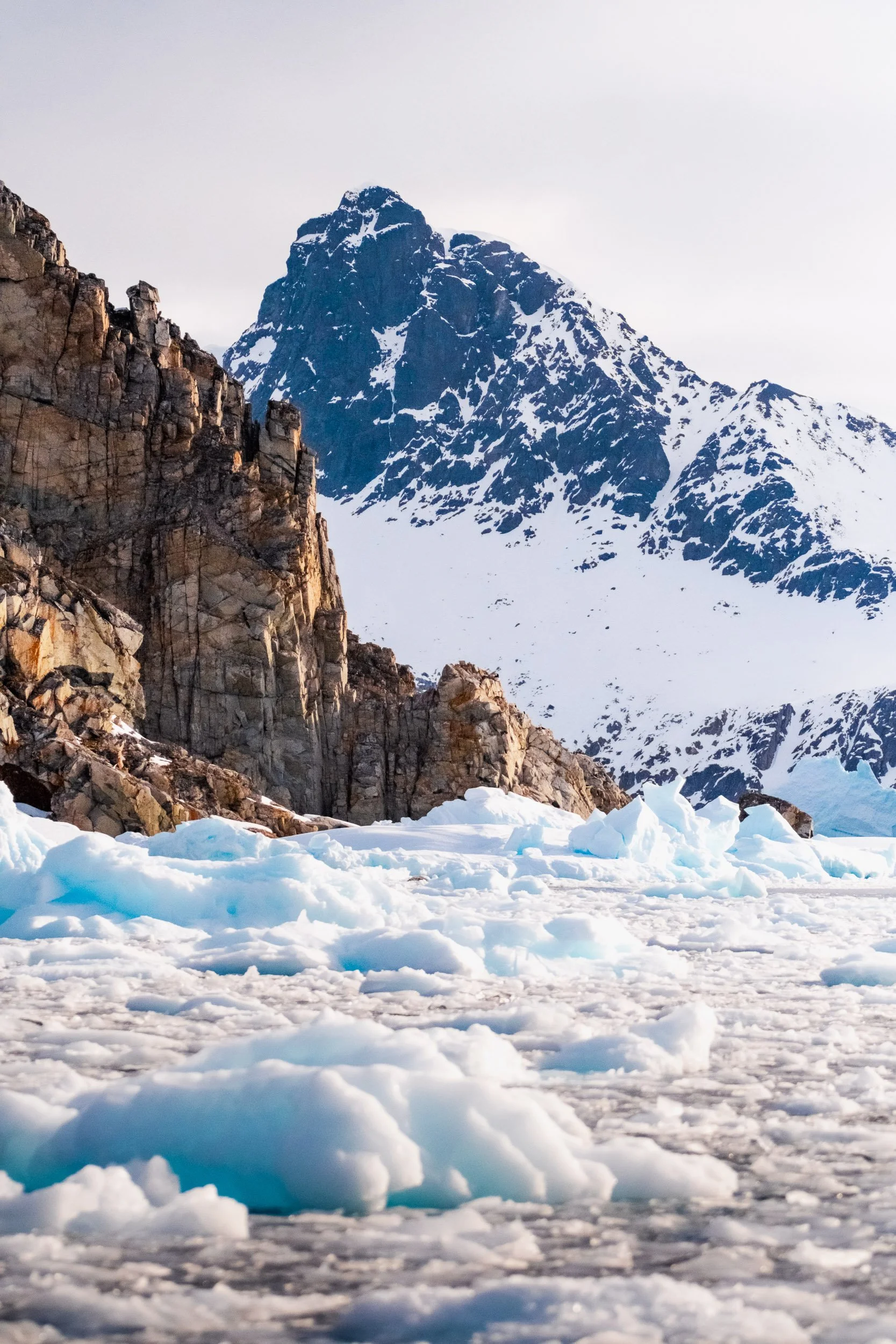
That culminating zodiac excursion at Cierva Cove was my personal favorite, not because I was on a photography cruise, not because it was more stunning than the other places we’ve visited, nor because we saw unique wildlife. On the contrary, there was nothing out of the ordinary (at least, by Antarctic standards). Everything we saw here, we’ve probably already seen at one point in the past few days. Icebergs, penguins, seals, glaciers, whales, research bases…name it, we’ve seen it all.
The only thing that stood out was the sun. However, that alone made the difference.
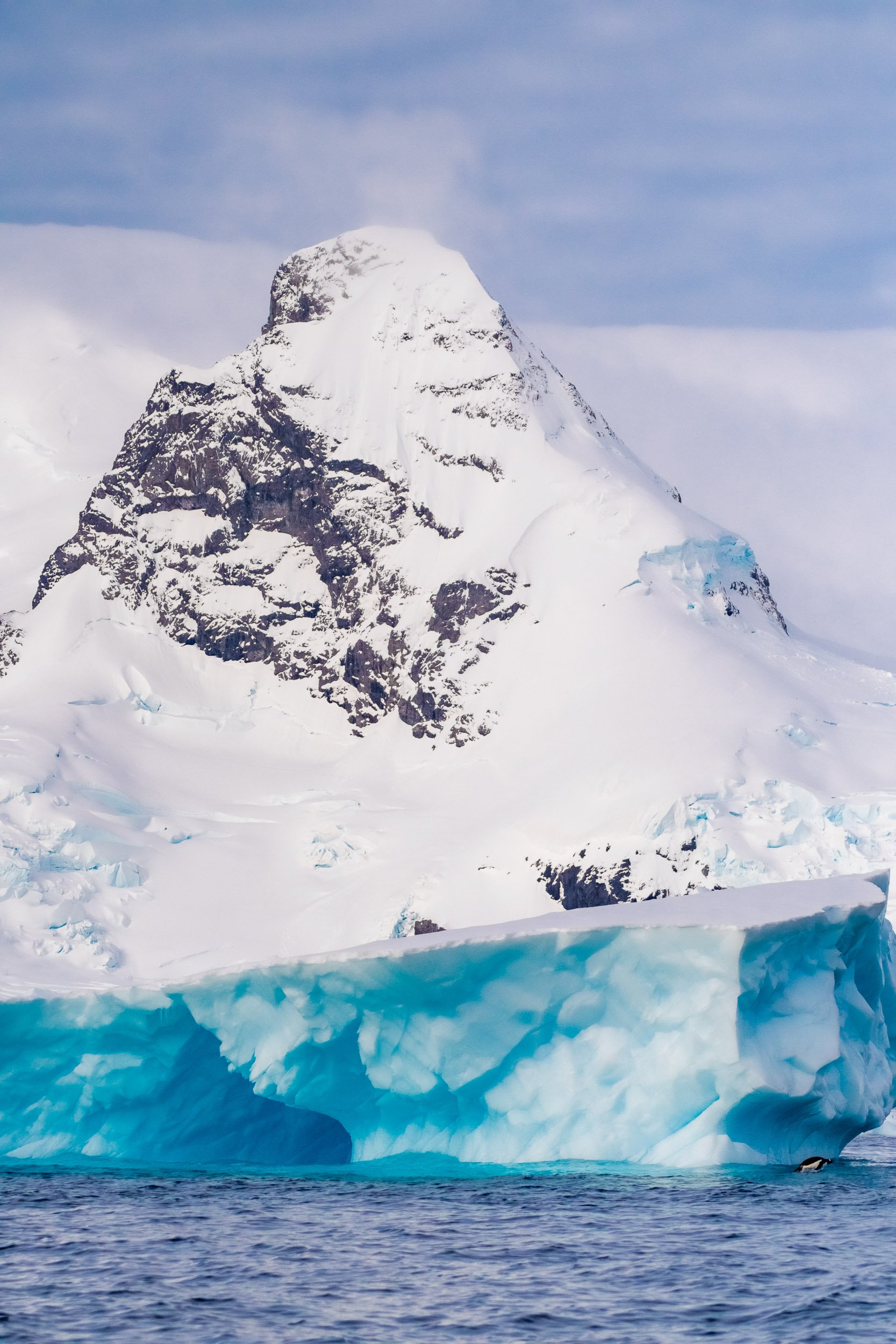
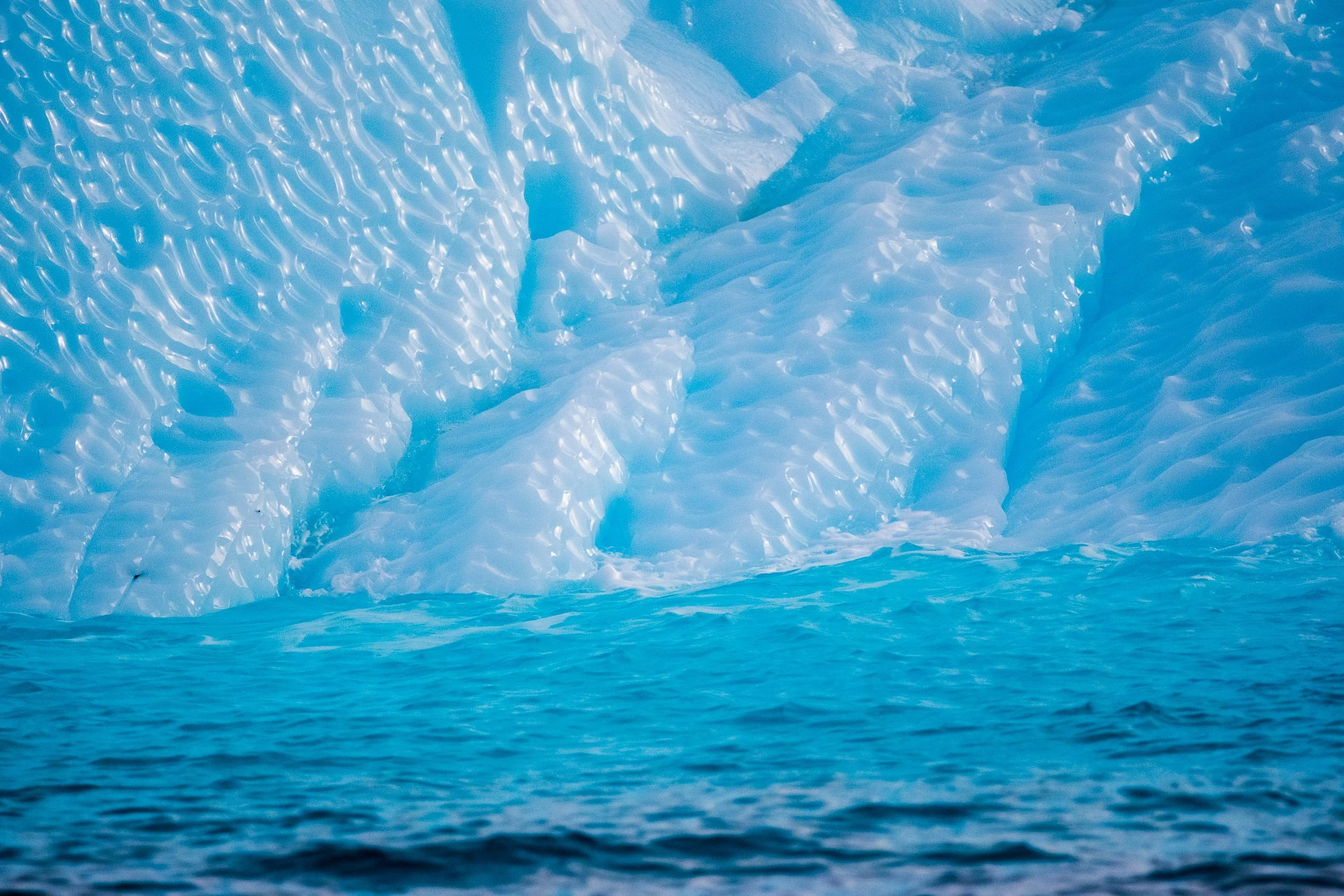
Absolutely insane
Our entire time in the Antarctic Peninsula was full of gloomy days, but that afternoon, the skies cleared up and the sun shone brightly. It rendered the whole experience incomparable. It made the landscape even more enthralling. It genuinely felt as if Antarctica had prepared the most spectacular farewell gift for us. Everything was just surreal from beginning to end.
I knew that no amount of pictures or videos I took could ever do justice to what I was experiencing. I wish I could freeze that moment and live in it forever.
When we got back on the ship, we all gathered on Deck 8 for a final toast to Antarctica. Jake gave a little speech, and Jarryd set up a drone to capture everyone from above.
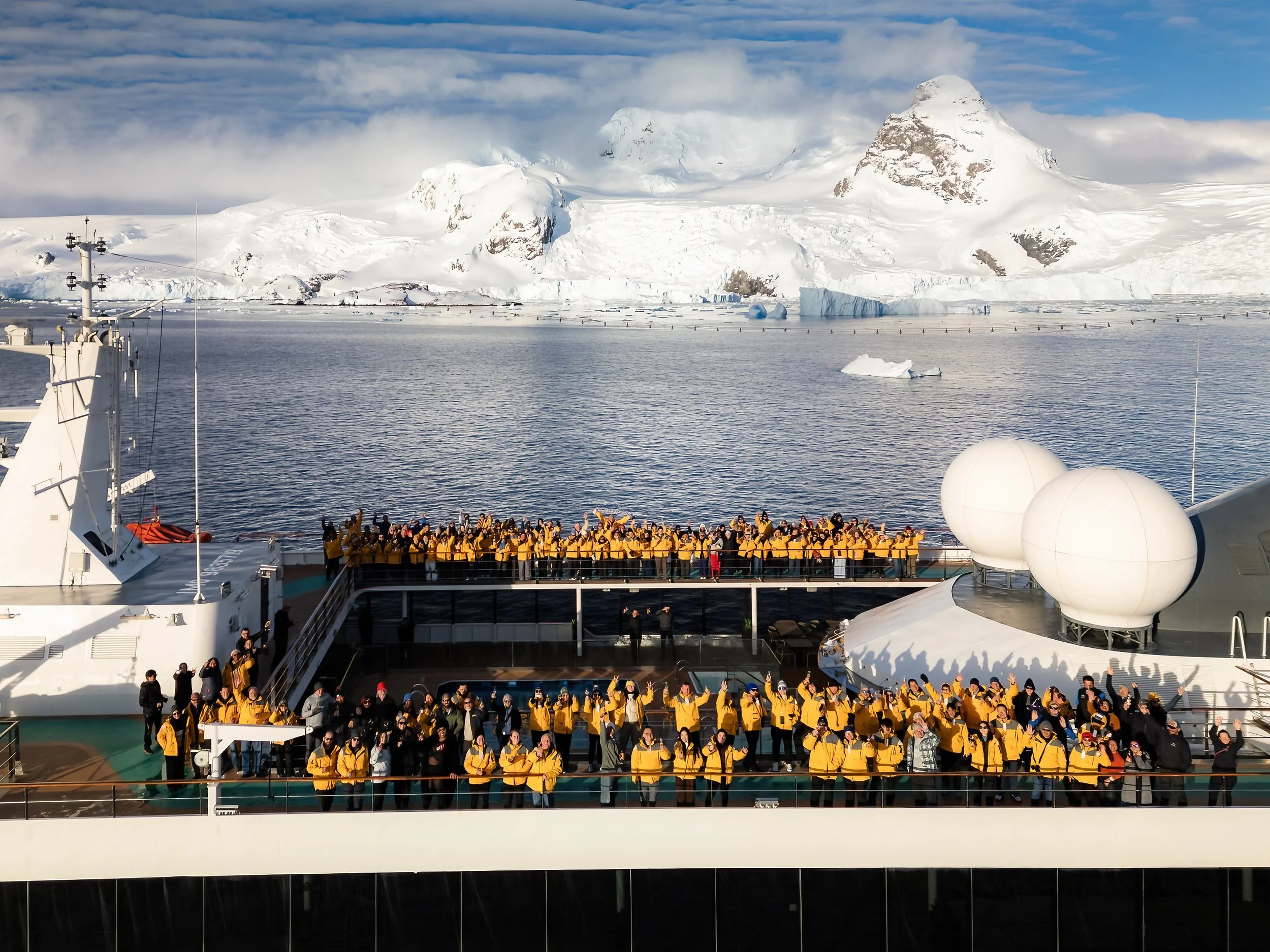
Credits to Jarryd Salem//Quark Expeditions. Can you spot us?
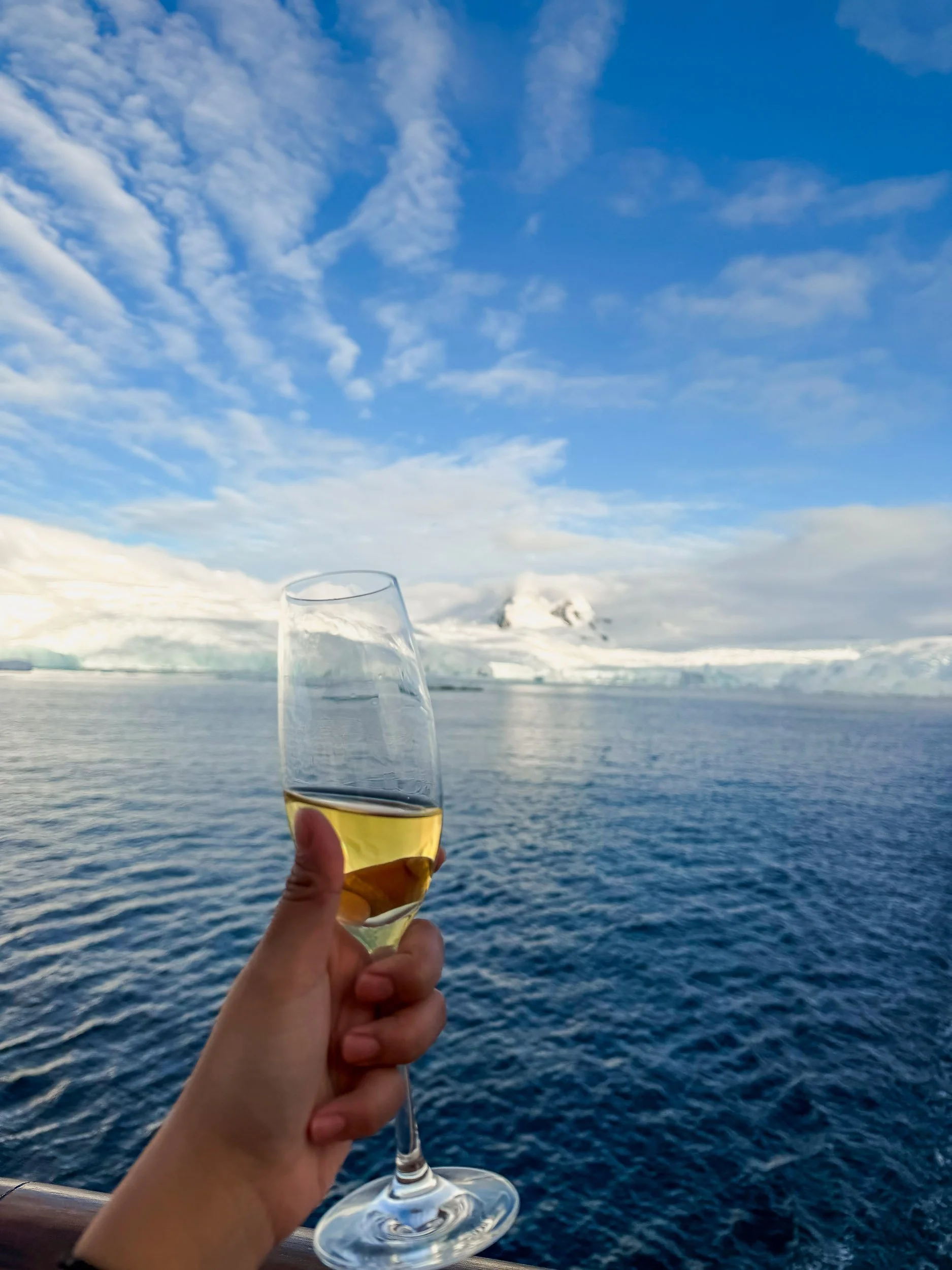
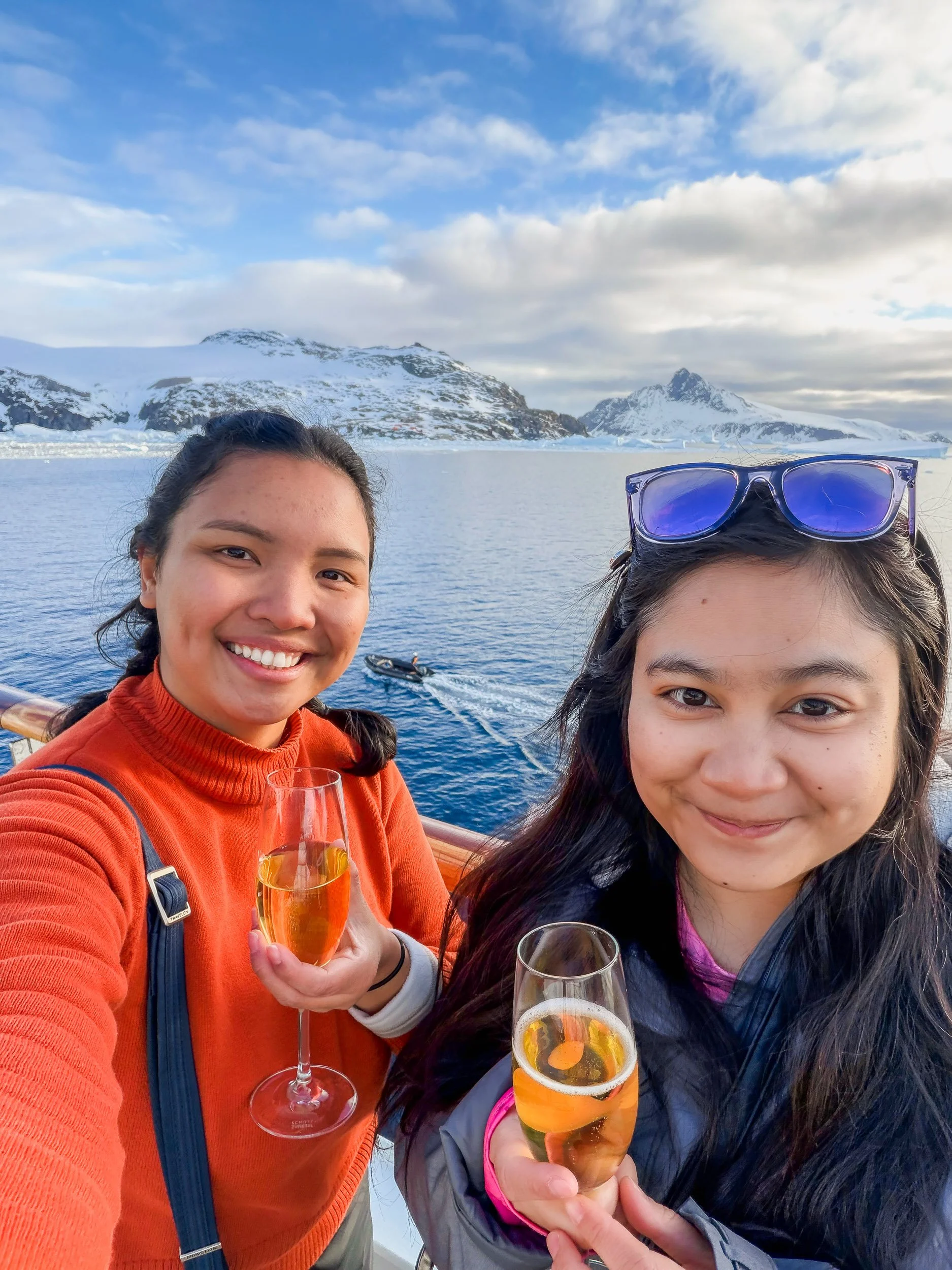
Shortly afterward, we kicked off our course back to Ushuaia, and everyone else went to dinner.
As for me, I went out to our viewing deck. I spent a few minutes alone to reflect, take in those final views, utter a little prayer of thanks, and say goodbye to Antarctica in my own way.
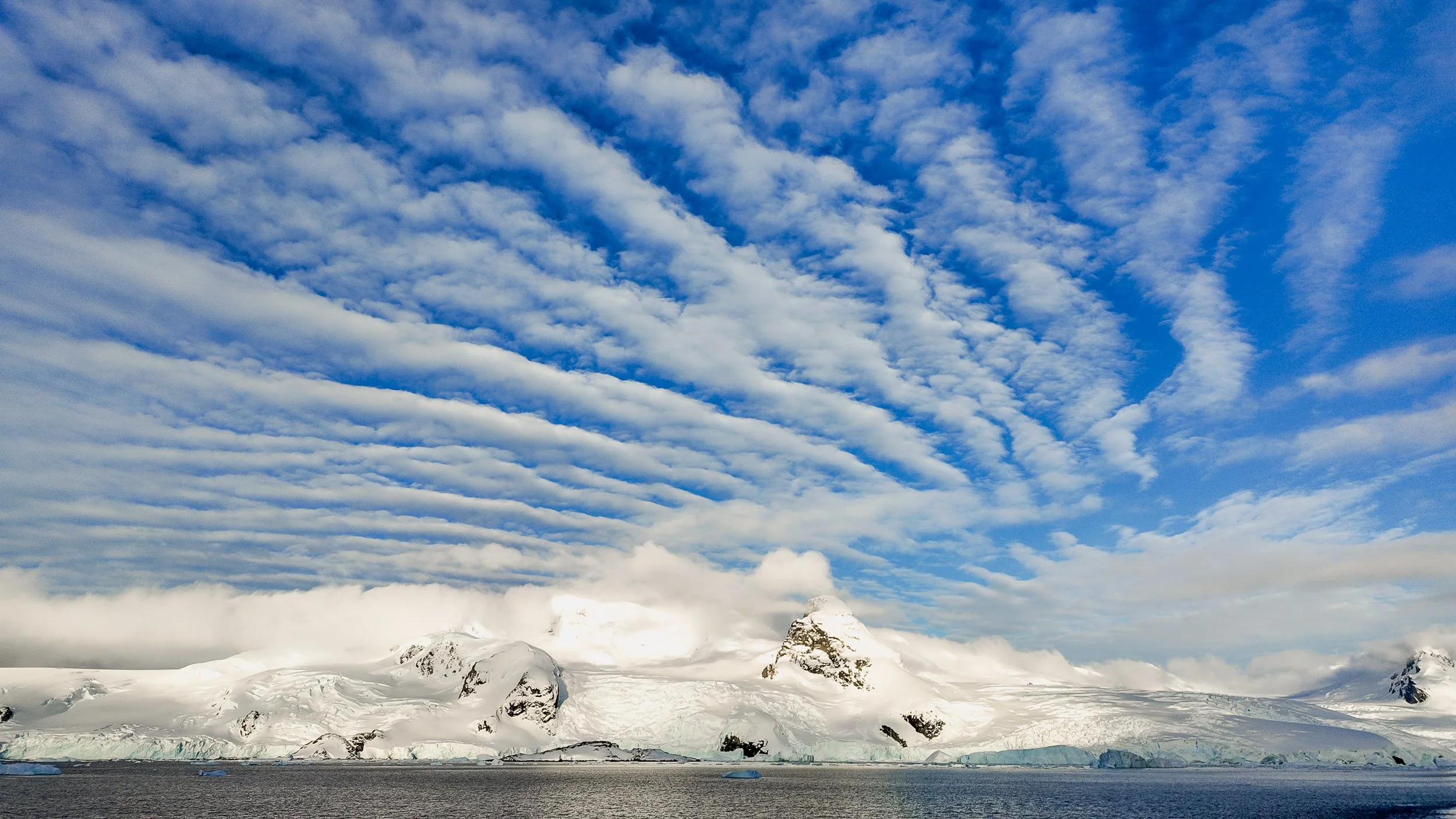
Bye Antarctica! ILY!
Polar Plunge
On our penultimate day on the peninsula, after our zodiac excursion to Damoy Point, came the time for one of the most anticipated (???) activities of this entire trip: THE POLAR PLUNGE.
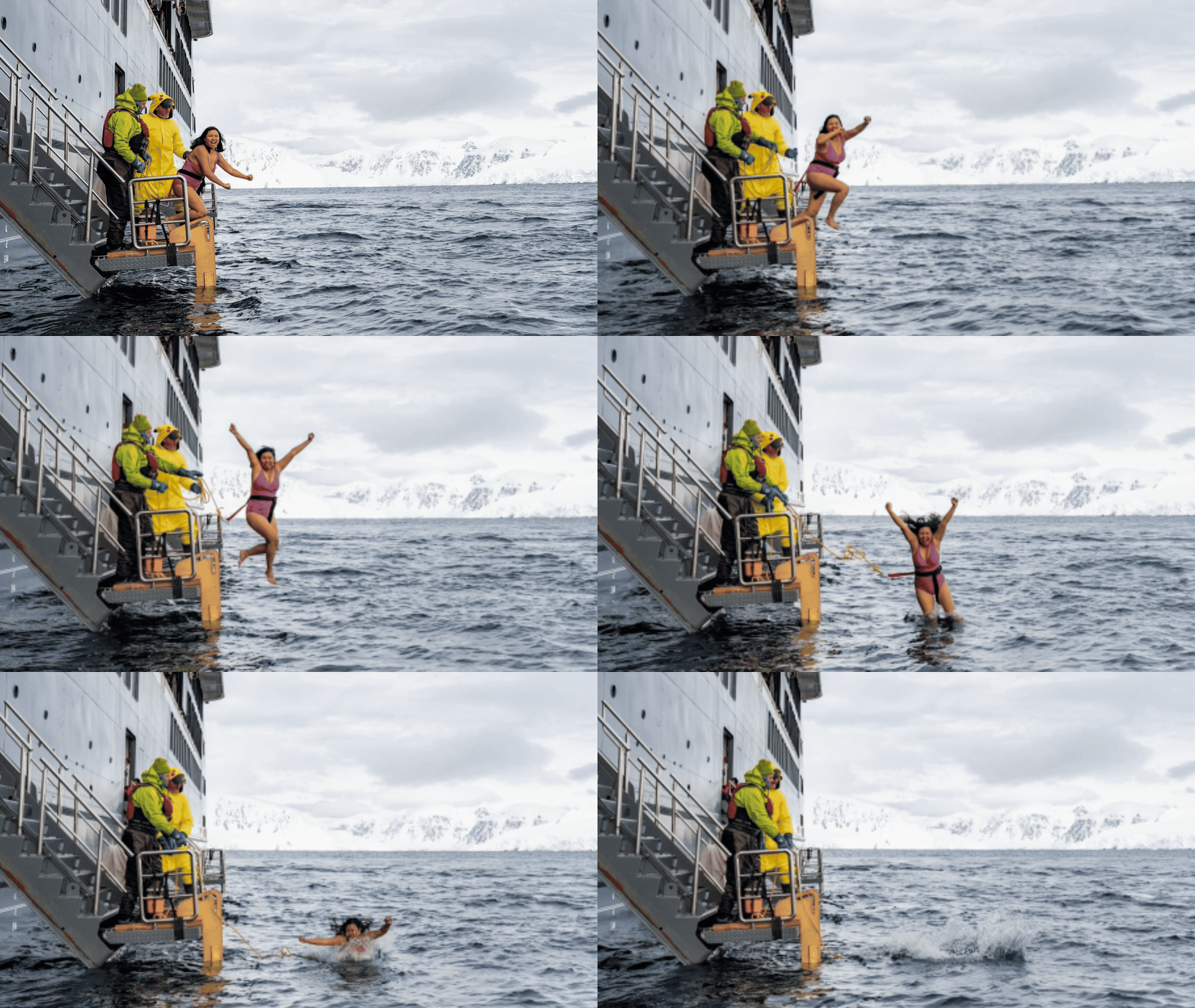
Of course, here’s a little gif to commemorate the affair!
As the name implies, it is a tradition in both polar regions for people to jump into frigid waters. For fun. Though in the inhabited Arctic, they also use this event to raise money for charity. Sounds insane, right?
But it is an interesting part of the polar adventure. I don’t encourage anyone to do it, but I’m not one to discourage either. Of course, if you have medical conditions, check with your doctor first to see whether your body’s well enough to handle the sudden drop in temperature and the risk of hypothermia. I have to reiterate that Antarctica is remote, and the nearest place with adequate medical facilities is at least 72 hours away. It is purely a voluntary affair, so you don’t have to force yourself to do it. Don’t think you’re missing out on anything just because you opt out. You’ll still have so much fun watching those who do the plunge!
If you decide otherwise, however…then you’re in for the experience of a lifetime.
Aside from crossing the Drake, the polar plunge is another thing I was most worried and hesitant about. I kept wondering and overthinking, like, what if I do it and something goes wrong? I didn’t know how to swim!
Thankfully, safety is always the number one priority. With most tour operators in Antarctica, you're made to wear a belt where they attach a rope, so it’s easy for them to pull you out of the water in case something happens. Additionally, the plunge occurs only when weather conditions are favorable; it happens from the ship’s gangway anyway, and there are plenty of people available to rescue you if needed. You could also wear a life vest if you wanted to (but I chose not to wear one because photos > lol). So how could I not feel secure enough to do it, knowing these things?
Honestly, waiting in line for my turn to jump was way more excruciating than the actual plunge, because the harsh, cold wind cut through my skin like electricity. The expedition team made it such a fun occasion, though. They wore cute onesies and blasted music while chatting with us to help calm our nerves. They were ultra supportive, cheering and reassuring us.
When it was my turn, I hesitated for a bit, but I did it anyway! I accidentally swallowed a considerable amount of water that pretty much went to my lungs in the process, but it wasn’t so bad at all. The water wasn’t as cold as I expected. After the plunge, someone immediately wrapped me in a towel and offered tequila shots to warm me up quickly. I believe I drank three shots.
Dionne jumped in after me, and I totally forgot to film her. So we lined up again, and I made her jump a second time (as a true friend).
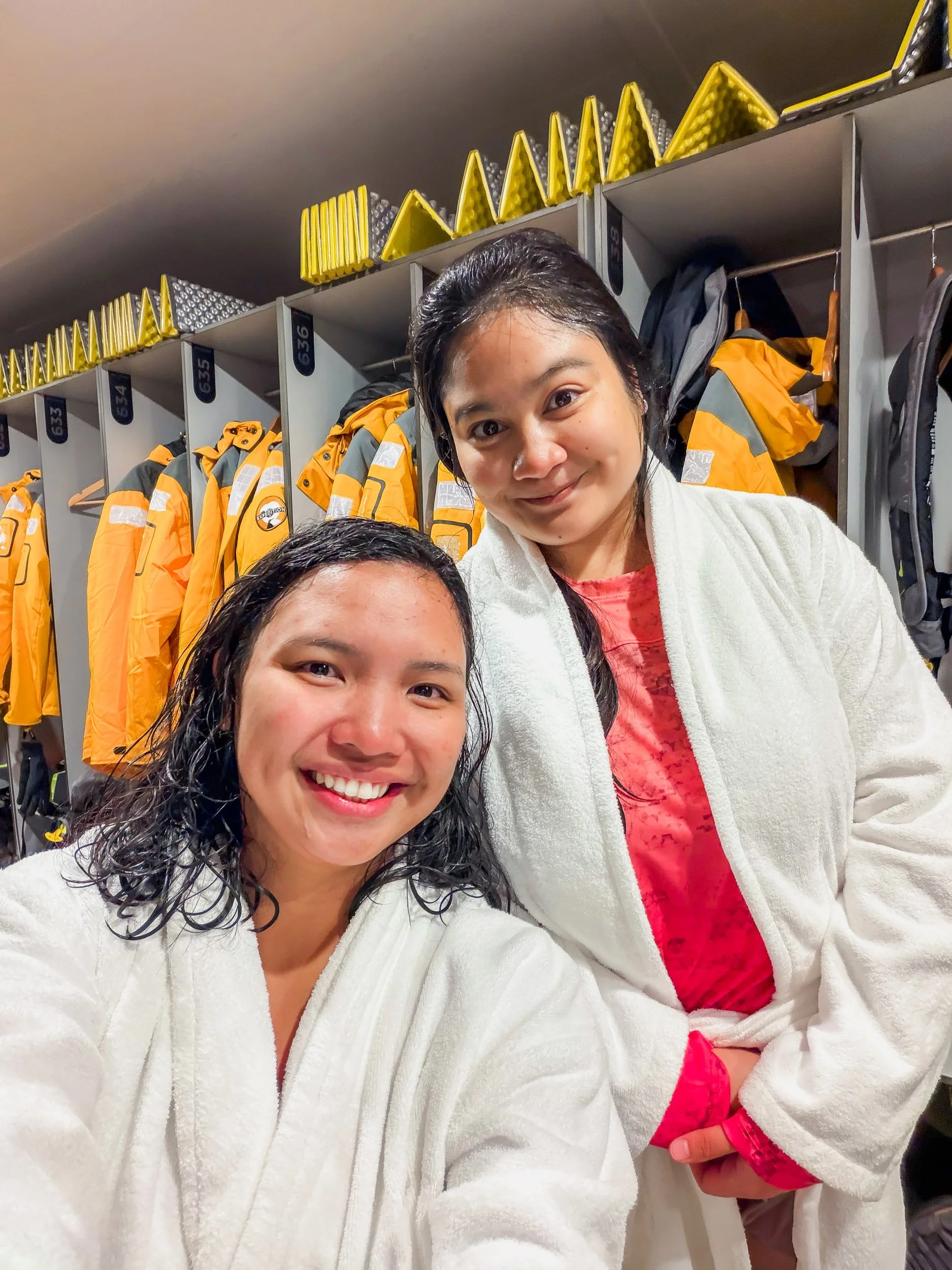
We survived!
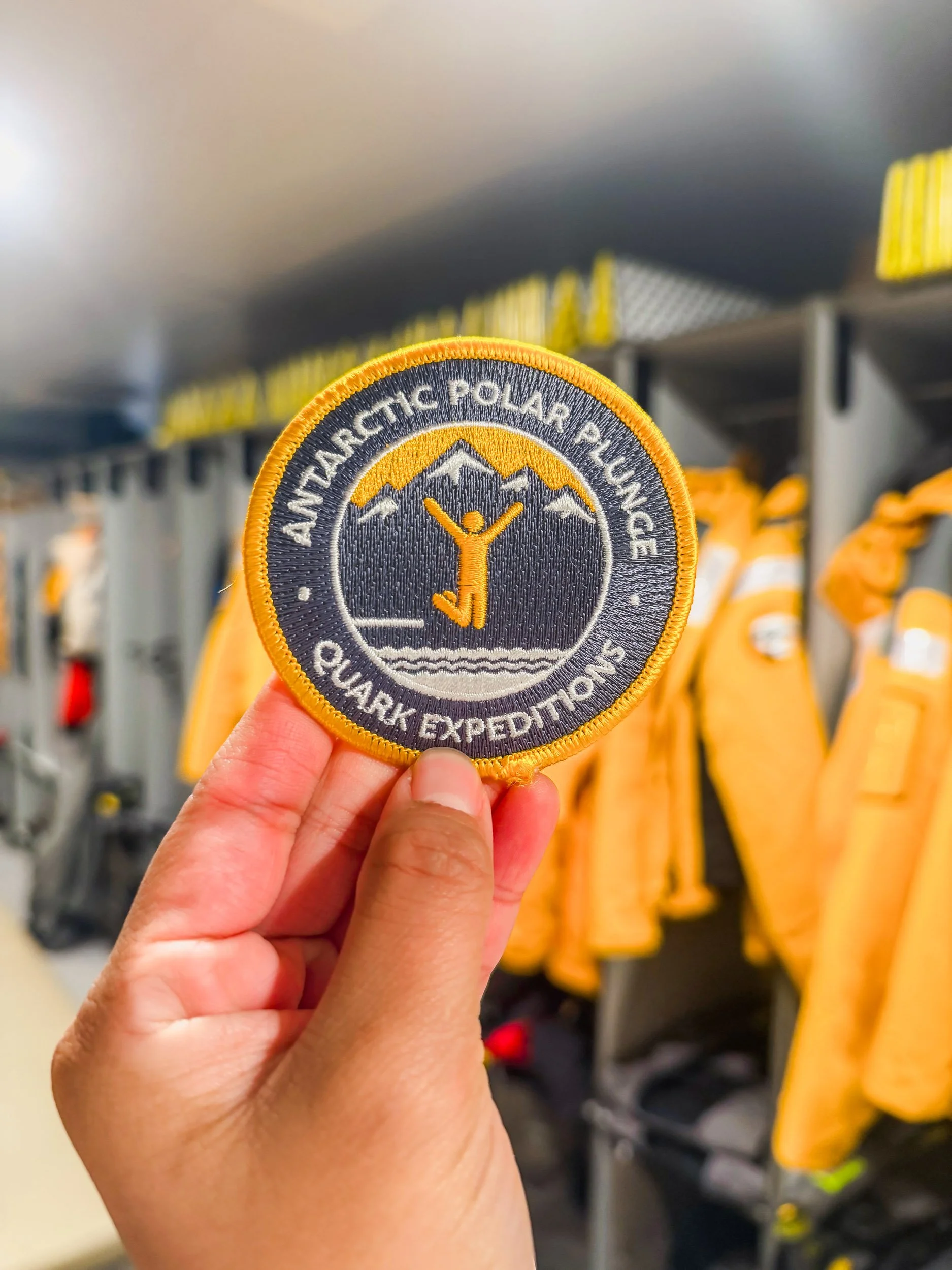
Got a Polar Plunge patch too!
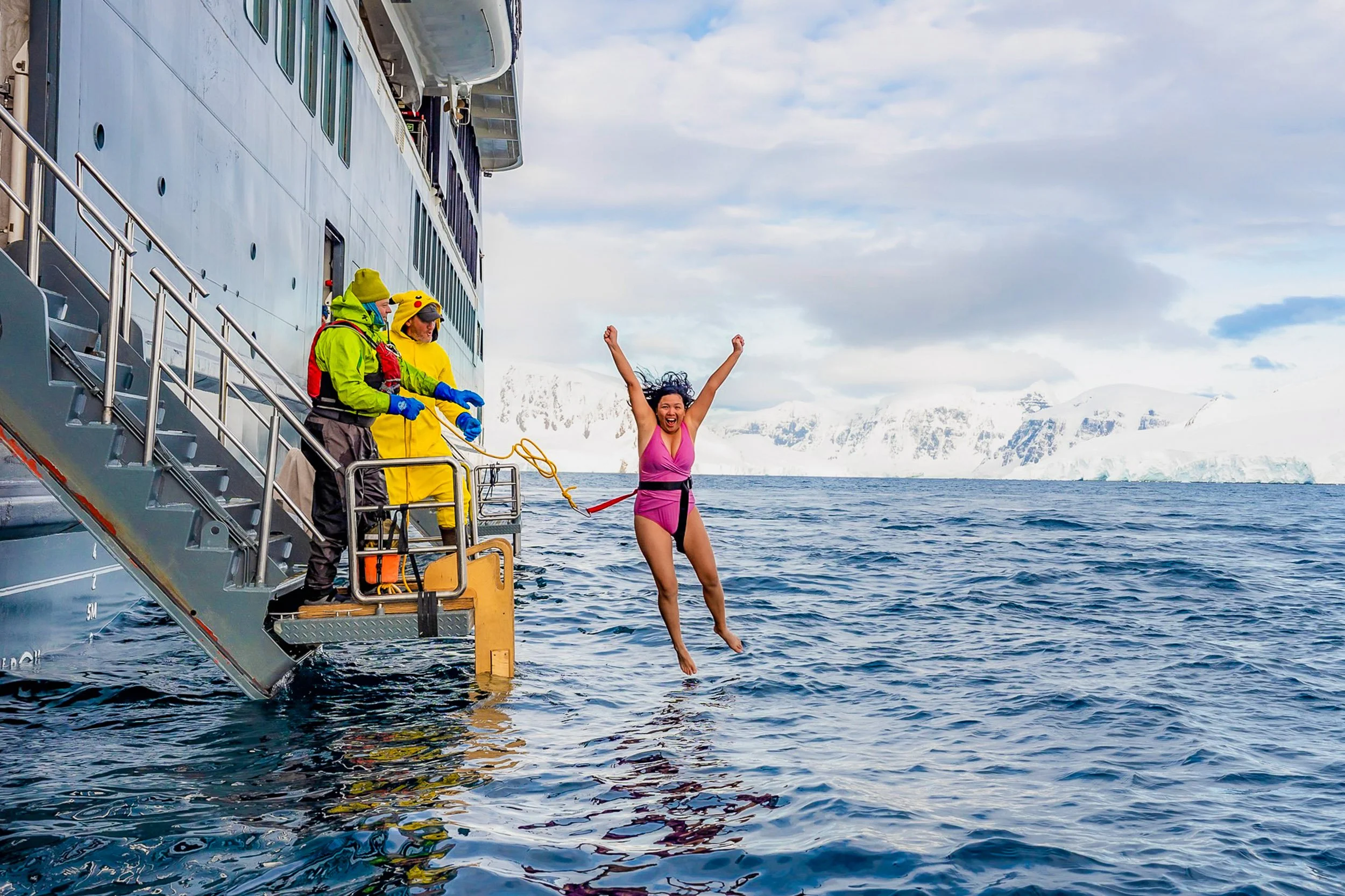
Needless to say, this is not my finest moment lol
I am so glad I mustered up the courage and freaking did this for the plot — absolutely no regrets.
The Gift
What started as an ego trip for me ended up as a spiritual retreat. And I think this sentiment rings true for everyone else who has been fortunate to experience the magic of Antarctica.
It blurs the lines between dreams, fantasy, and reality. It will keep you questioning whether you are still on the same planet you’ve always known. It’s been months since I returned, and sometimes I still wonder if everything I’ve seen and experienced actually happened. I’m not exaggerating; I had to pinch myself a couple of times. This was the first time I've thoroughly browsed the photos and videos I took, and wow, I'm still in awe that they were all real and not products of AI.
To say that I “fell in love” with Antarctica is a platitude and, frankly, a disservice to it. What I felt extended beyond love and gratitude. It evoked many overwhelmingly beautiful emotions I’ve never felt before and can’t even name. It felt like finally finding something important I didn’t even know was missing, like opening a forgotten gift long hidden.
I know something changed in me. It was not monumental. It was subtle but impactful.
In this place overflowing with enigmas, so unreal, so detached from the rest of the world, so distant from other human beings, I’ve never felt more…human. I couldn’t believe how easy it was to forget and let go of the complexities of life, to build connections with people from different nations and backgrounds, to experience what freedom truly means, to let your five senses guide you, to appreciate nature in its purest form, to simply exist and occupy a space, to just be. The fact that no country actually owns it is quite comforting. Despite territorial disputes over it, it remains no man’s land (in a good way): a place that knows no political strife, religion, race, inequality, or suffering. I felt like I reverted to being a child and saw it through the eyes of one — full of innocence, wonder, curiosity, and excitement. I spent countless moments in silence, just staring in disbelief and thanking God for the opportunity to be here and see His creation.
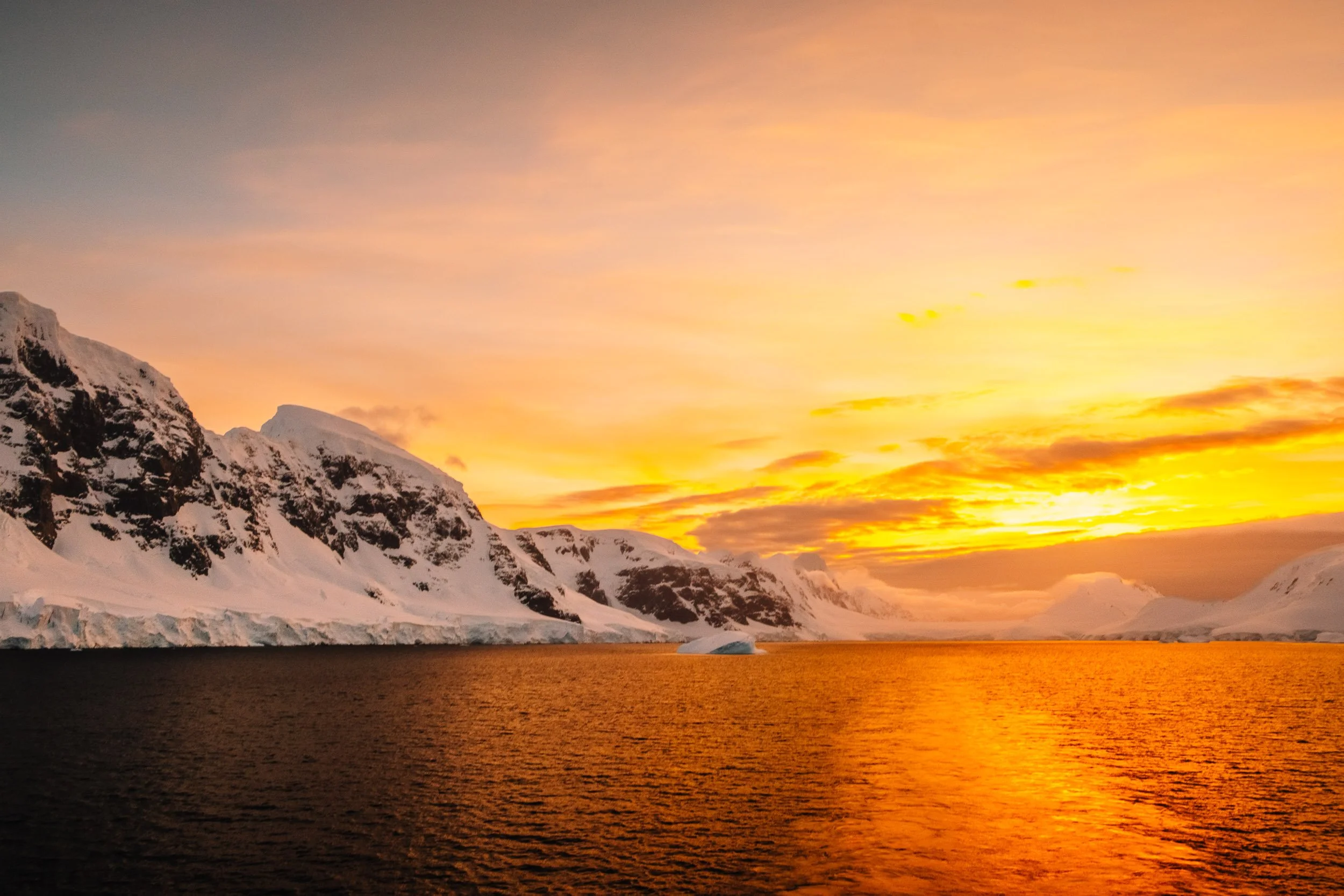
Antarctica used to just be the name of the seventh continent, casually mentioned in passing. I’ve never given it a second thought. Now it’s one of the greatest adventures of my life. It’s become a memory so powerful and meaningful that I would most likely still vividly remember the moments I spent there, no matter how much time passes. It would certainly be part of my life’s reel that will flash during my final moments.
But more than what it personally means to me, more than anything, it is a vital piece of our home, a blessing, and one of our last frontiers.
Its protection is our survival.